
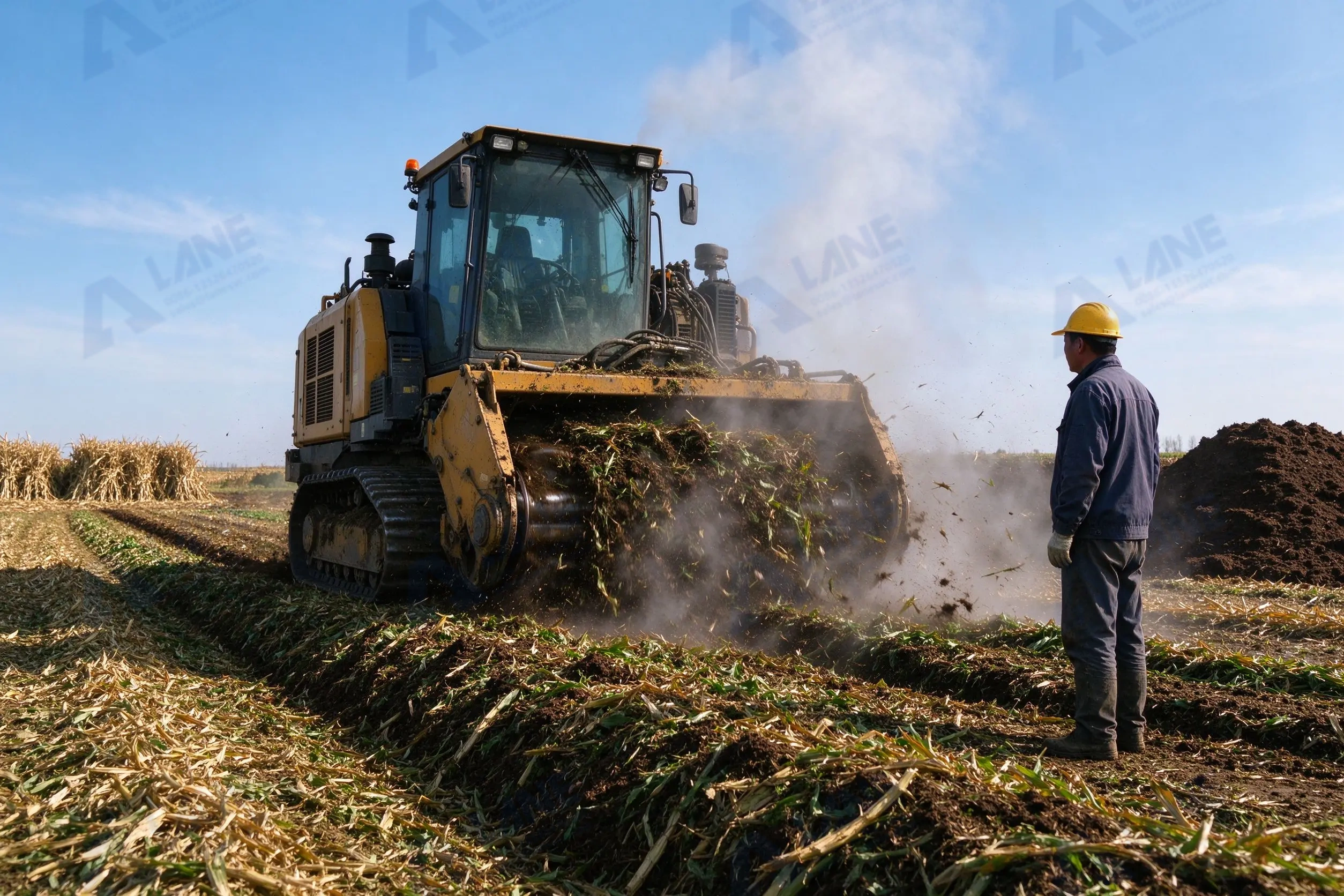
Agricultural waste compost equipment: match windrow turners, rotary fermenters and vertical tanks to your feedstock and scale, with cost checks.
Agricultural waste compost equipment is not one machine but a decision about how you aerate the pile, and that choice sets your land, cycle time and operating cost.Manure, straw and crop residue all compost, but they behave differently in a windrow than in a closed vessel.
This guide is for plant investors and farm operators choosing equipment to turn agricultural waste into stable compost and fertilizer—because the real risk is not the price of the machine but buying a system sized for the wrong feedstock and scale.
The agricultural waste compost equipment you need splits into three families: machines that turn or mix the pile, machines that enclose and aerate the process, and the supporting crushers, screens and conveyors that prepare the feedstock.
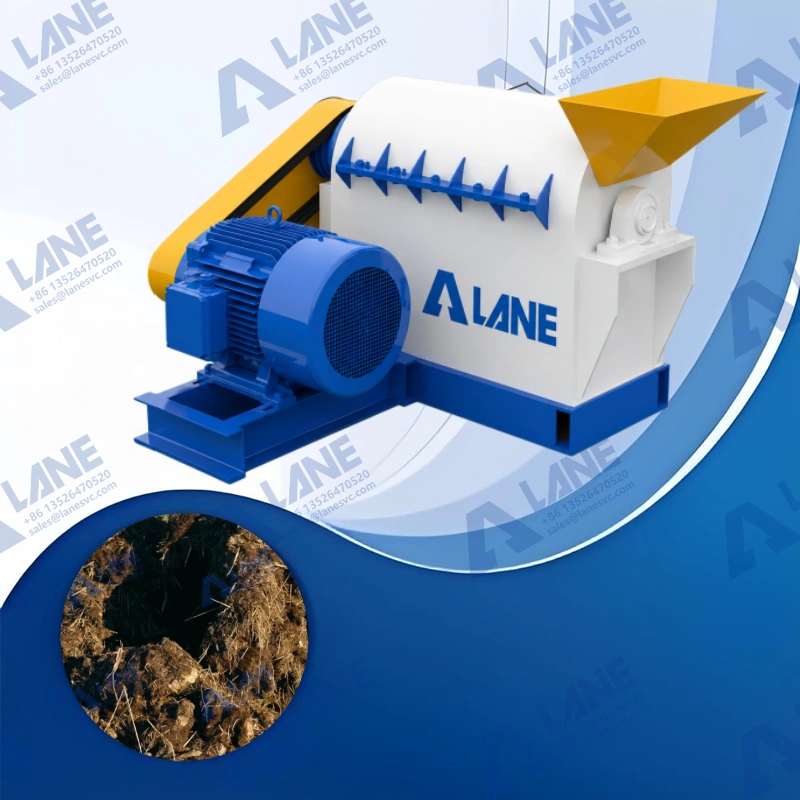
Turning and aeration decide oxygen, temperature and pathogen kill; the enclosure decides odour, space and cycle time. Before you compare brands, fix which family your waste and site demand, because the rest of the line hangs off that choice.
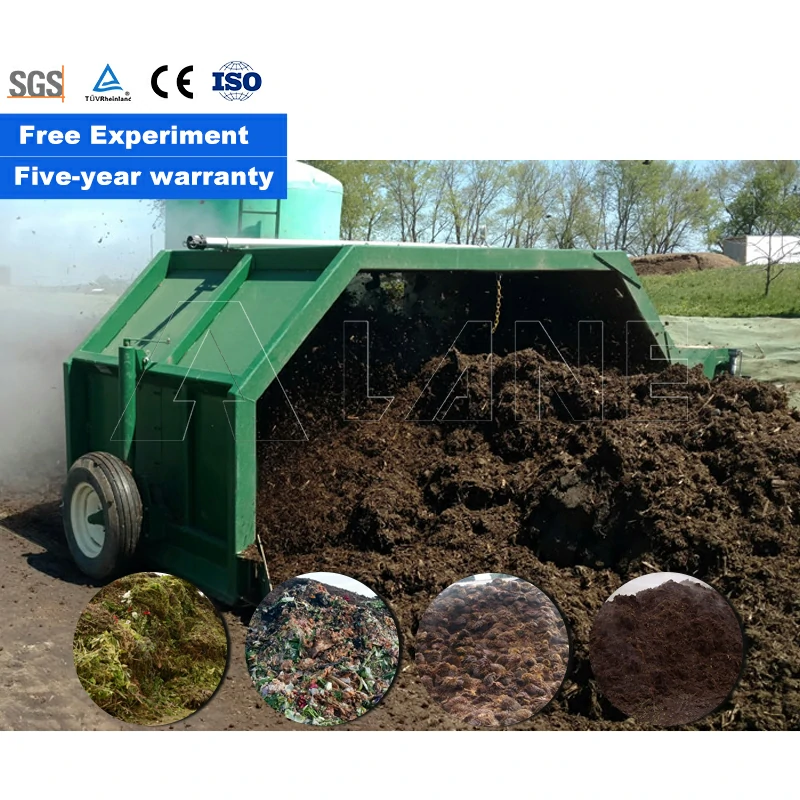
The first split in agricultural waste compost equipment is between open and enclosed. Windrow composting uses turners over an open row, and it is the cheapest to build and the most demanding on space and time.
A tow-behind turner running off a tractor PTO handles 400–1,500 m³/h at ultra-low capital cost, while crawler and wheel-type turners push 500–5,000 m³/h.
In-vessel systems trade capital for land and odour: a rotary drum fermenter tumbles and aerates continuously to finish in 5–8 days, and a vertical fermentation tank cycles in about 7 days in a fraction of the footprint.
Choose windrow when land is cheap and odour is not a constraint; choose a vessel when you are near housing, under permit pressure, or short on space.
|
Approach |
Typical capacity | Cycle time | Main trade-off |
| Tow-behind windrow turner | 400–1,500 m³/h | Weeks |
Lowest capex, needs tractor and space |
|
Crawler / wheel turner |
500–5,000 m³/h | Weeks | Higher throughput, still open-air |
| Rotary drum fermenter | Continuous, high-throughput | 5–8 days |
Enclosed, fast, higher capex |
|
Vertical fermentation tank |
Gravity-flow, ~7-day cycle | ≈7 days | Smallest footprint, fully enclosed |
Feedstock decides which agricultural waste compost equipment actually works for you. Not all agricultural waste composts alike.
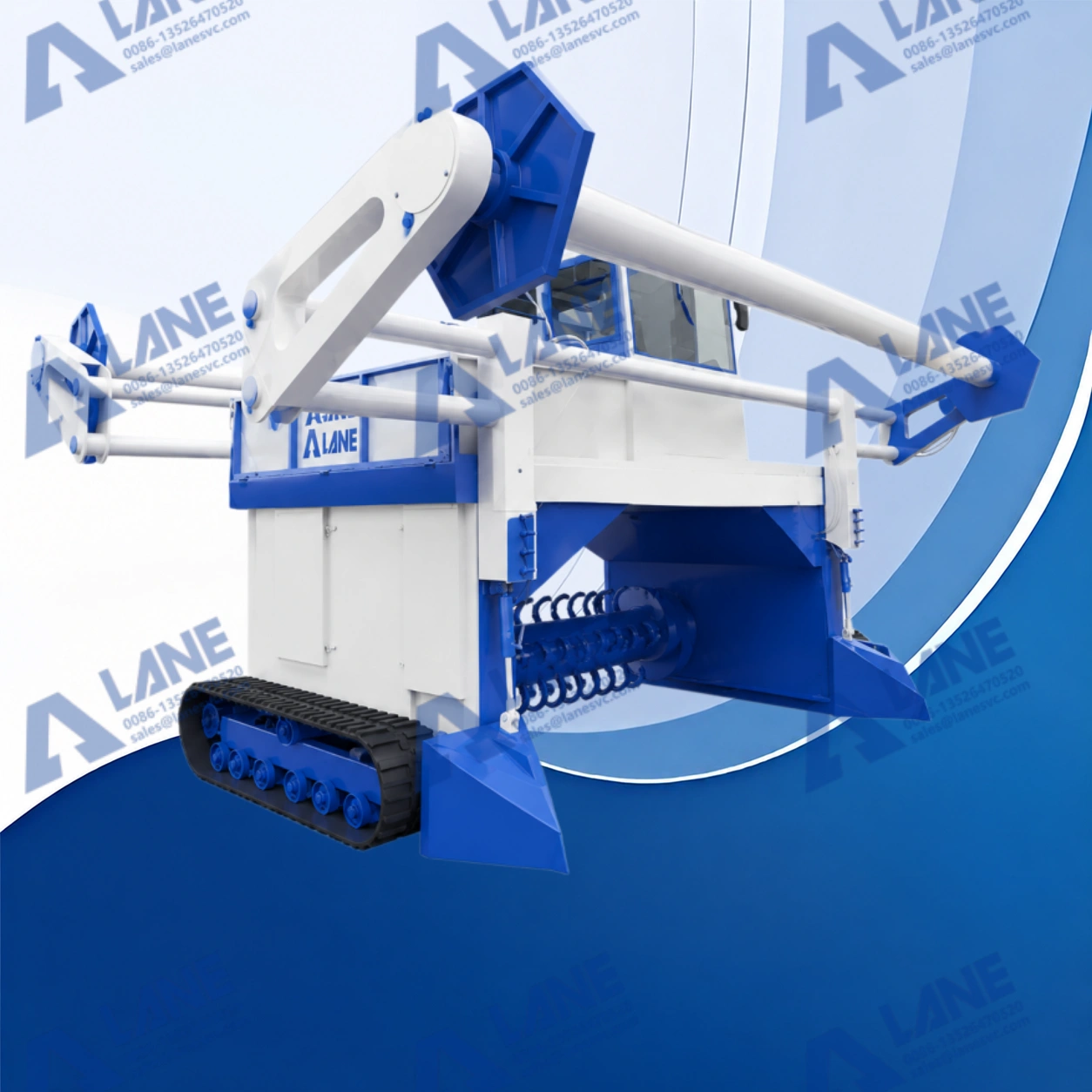
Wet manure and slurry need bulking and aggressive aeration, crop straw wants pre-crushing, and food and kitchen waste pushes odour and moisture to the limit. A chain plate compost turner with VFD speed control and hydraulic lifting suits continuous trench systems for manure, while a film-covered turner wraps the pile and cuts odour by over 90 percent for sensitive sites.
Test your own feedstock before you buy: a machine that excels on dry straw will struggle on wet poultry litter.
Cost is where agricultural waste compost equipment gets mis-budgeted, and it splits into three places: the equipment, the land it needs, and the energy it burns. A tow-behind turner is the low-capital entry; a vertical tank is the premium, space-saving option.
The under-budgeted items are site layout and odour control, because a pile close to housing brings permit and complaint costs that no machine list shows. Feedstock preparation also adds up: straw needs a crusher, and coarse residue needs screening before it can ferment evenly.
Sizing is where buyers over-buy agricultural waste compost equipment. Size the turner or vessel to your actual daily tonnage, not your ambition. A turner rated in m³/h must clear your pile volume in a working shift; a fermentation tank is sized by cycle days and daily feed.
If you process 50 tonnes of wet manure a day with a 7-day cycle, you need storage and feed for roughly a week’s volume upstream. Ask the supplier for a mass and energy balance so turning capacity, crushing and screening all match the same number.
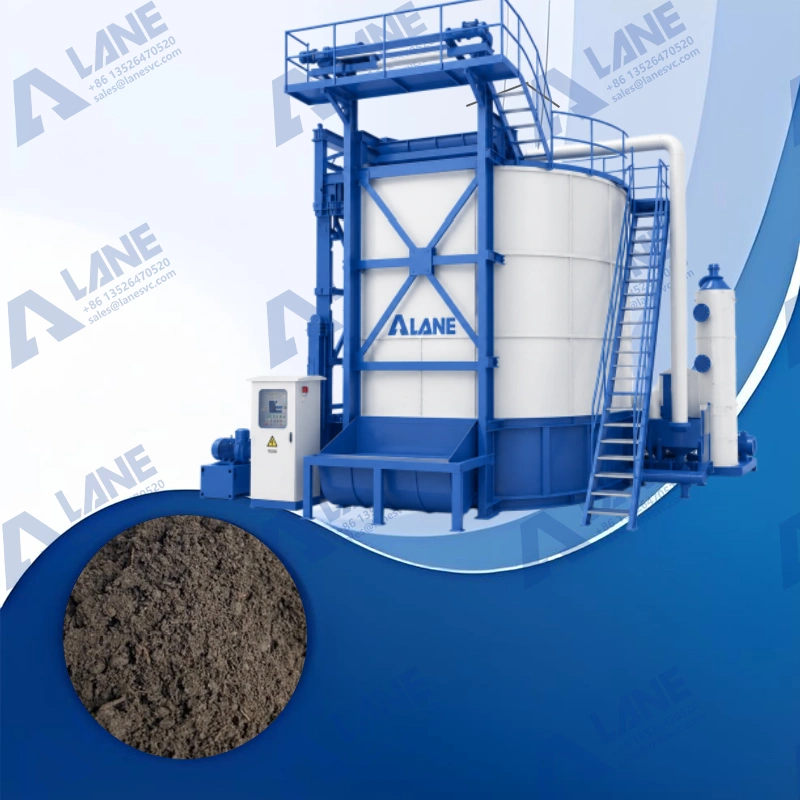
The first mistake in choosing agricultural waste compost equipment is buying a turner before deciding between windrow and vessel, so open-air equipment sits under a permit it cannot satisfy.
The second is undersizing preparation: skipping a crusher for straw or a screen for coarse residue makes the pile slow and uneven.
The third is treating odour as an afterthought on a site near housing.
Fix the process decision, the preparation and the siting first, and the machinery choice becomes obvious.
Supplier due diligence on agricultural waste compost equipment starts with numbers. Ask for the rated capacity, cycle time, power draw, and materials of construction for the contact parts.
LANE publishes CE and ISO 9001 certified compost equipment with a 5-year warranty and overseas installation, which is the warranty length that separates a genuine manufacturer from an importer.
Ask to see a plant running a similar feedstock, and talk to the operators, not the sales team. A supplier who will not commit to a cycle time in writing has not done the engineering.
Is a compost turner or a fermentation tank better for manure?
For wet manure at scale, an enclosed tank or drum cuts cycle to about 7 days and controls odour; an open windrow turner is cheaper but needs more land and weeks.
What capacity of agricultural waste compost equipment do I need?
Size the turner in m³/h against your daily pile volume per shift, and size a tank against cycle days and daily feed; ask for a mass balance.
Can straw and crop residue be composted without pre-crushing?
It composts far better with pre-crushing; a straw crusher reduces particles so the pile aerates evenly and finishes faster.
How long does in-vessel composting take?
A rotary drum fermenter typically finishes in 5–8 days and a vertical tank in about 7 days, versus weeks for open windrows.
What certification should the machinery carry?
CE and ISO 9001, backed by a long warranty; LANE provides a 5-year warranty and overseas installation on turnkey lines.
Before you buy agricultural waste compost equipment, confirm three things with the supplier: the cycle time it guarantees on your feedstock, the capacity matched to your daily tonnage and site, and the odour and permit position it satisfies.
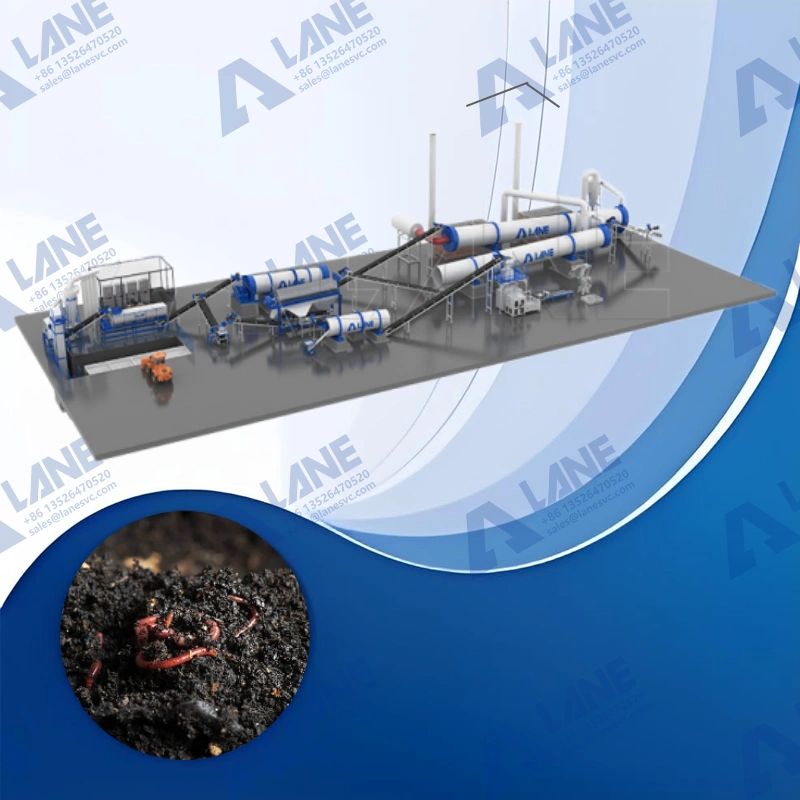
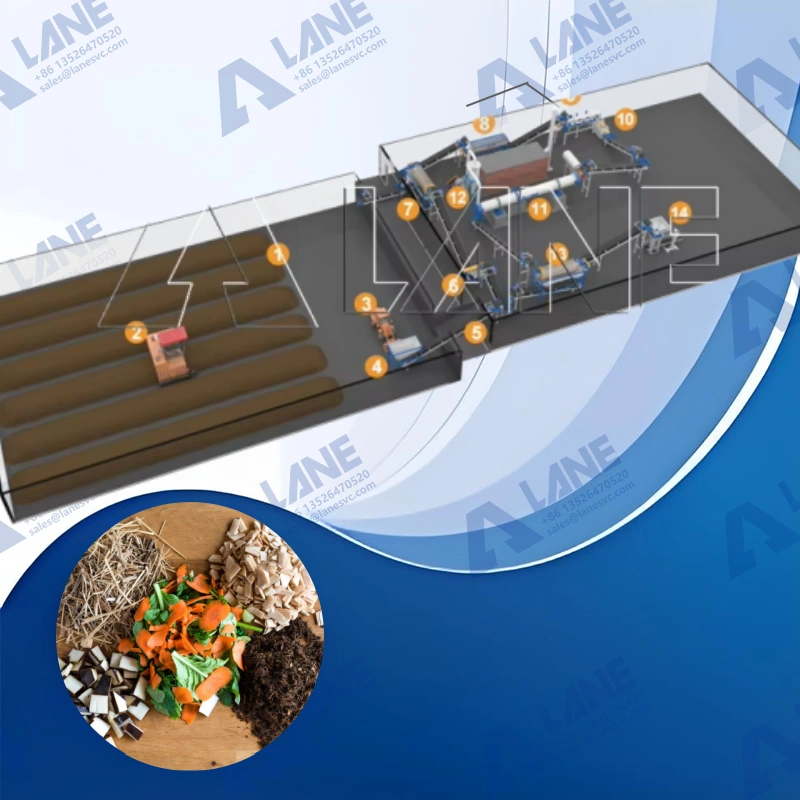
LANE engineers complete turnkey organic fertilizer lines from fermentation to packaging, and can match a windrow turner, rotary drum fermenter or vertical tank to your waste.
Send your feedstock analysis and tonnage at https://organicfertilizerturnkey.com/ or write to sales2@lanesvc.com for a layout and quotation.

Everything you need to know when looking at different types of organic fertilizer equipment, all in one place.
Copyright © 2026. LANE All rights reserved.
Send A Message