
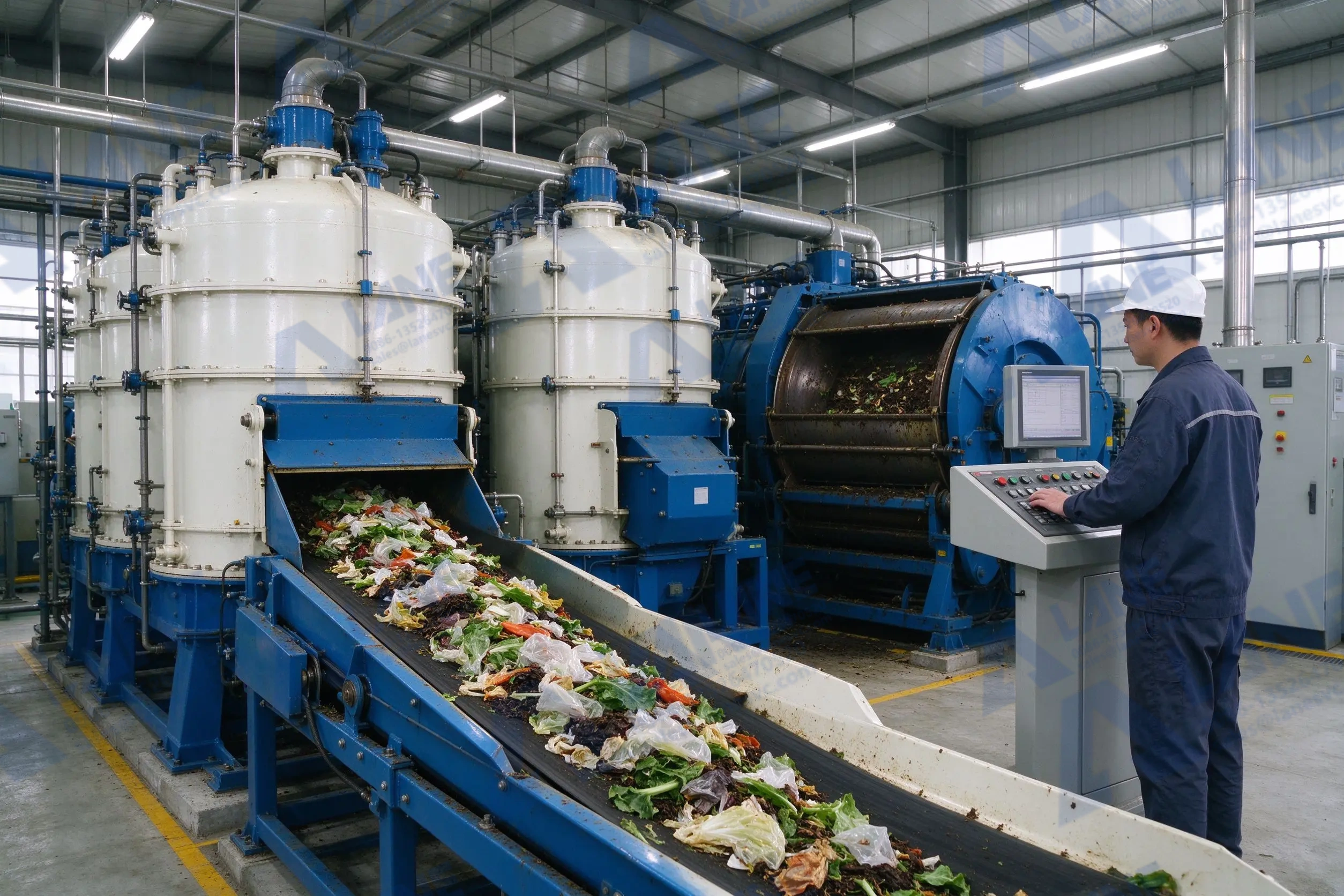
Food waste composting machine: enclosed tanks, rotary fermenters and windrow turners for high-moisture kitchen waste, with cost checks.
Food waste is the hardest feedstock to compost—high moisture, high salt, fast odour—so the machine choice decides whether your line runs clean or draws complaints. The key judgment: enclosed systems win on food waste almost every time, because odour and moisture leave you few safe open-air options.
This guide is for plant investors and waste operators choosing a food waste composting machine for kitchen, cafeteria and food-processing waste—and the real risk is not the price, but buying a system that cannot handle the moisture.
A food waste composting machine exists to do one job: aerate high-moisture organic material fast enough to stay aerobic, kill pathogens and cut odour, without the pile turning sour.That means a way to turn or tumble the waste, a way to control oxygen and temperature, and an enclosure when odour matters.
The three families are windrow turners, rotary drum fermenters, and vertical fermentation tanks, and each changes your space, cycle time and capital.
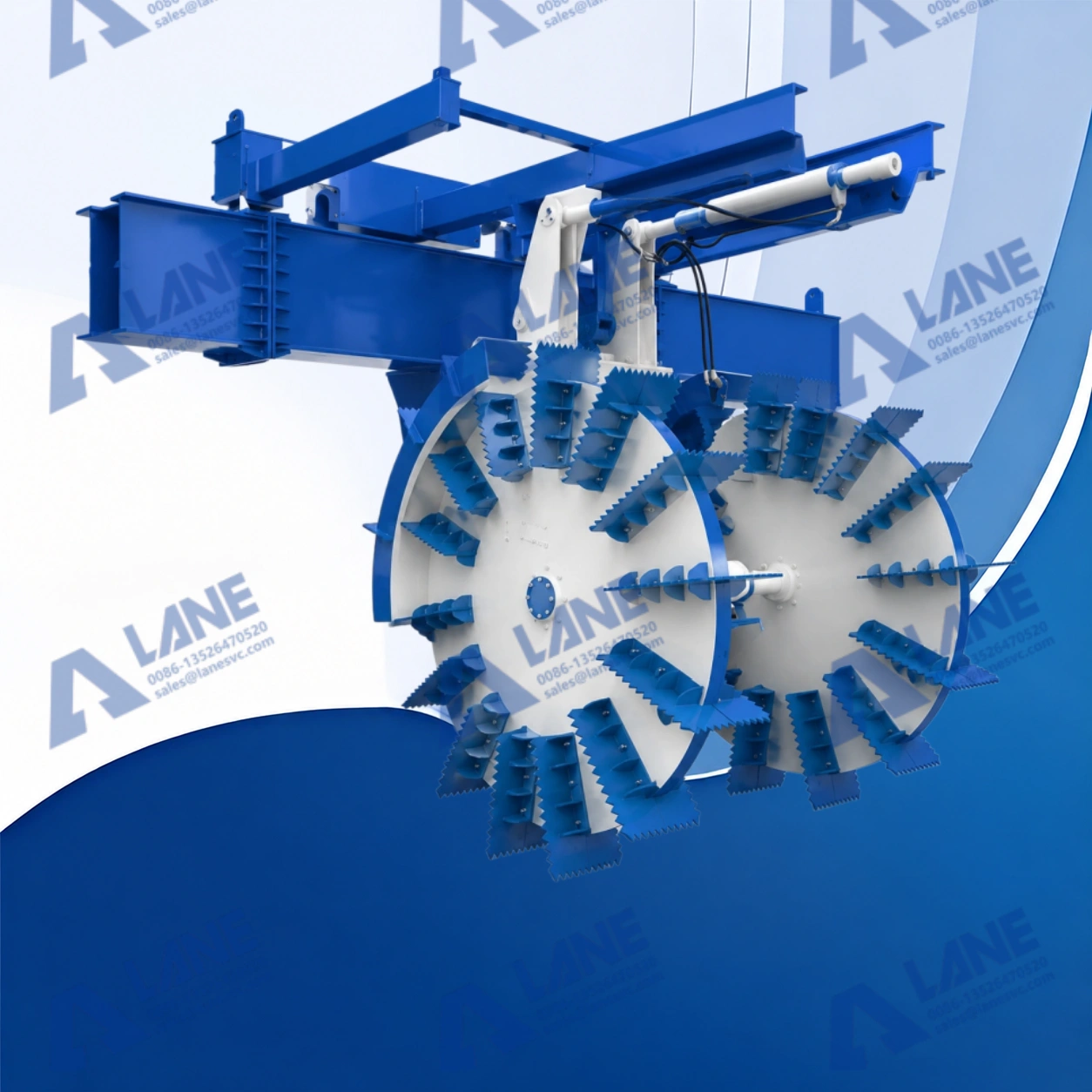
Windrow turning is the cheapest route but the wrong fit for most food waste. A tow-behind or crawler turner over an open row works for drier green waste; food waste at high moisture sours, smells and needs bulking before it will hold air.
In-vessel systems are built for this feedstock: a rotary drum fermenter tumbles and aerates continuously to finish in 5–8 days, and a vertical fermentation tank cycles in about 7 days in a fraction of the footprint. Choose enclosed unless you have cheap land, good bulking material and no neighbours.
|
Approach |
Typical capacity | Cycle time | Main trade-off |
| Windrow turner | 400–1,500 m³/h (tow-behind) | Weeks |
Lowest capex, needs land and bulking |
|
Rotary drum fermenter |
1–20 TPH (customised) | 5–8 days | Enclosed, fast, low energy |
| Vertical fermentation tank | ~7-day cycle, gravity flow | ≈7 days |
Smallest footprint, fully enclosed |
Moisture decides which food waste composting machine you can even run. Fresh food waste runs wetter than most manure, so the machine must handle water and release it without becoming anaerobic.
A rotary drum fermenter accepts pre-shredded waste under roughly 5 cm with moisture adjusted, and the vertical tank’s gravity flow handles dense, wet feed without forced aeration stalling.
A chain plate turner suits drier, pre-bulked trenches. Get a lab check of your feedstock moisture and pH before you buy, because a machine that is perfect on paper will stall on 80 percent-moisture kitchen waste.
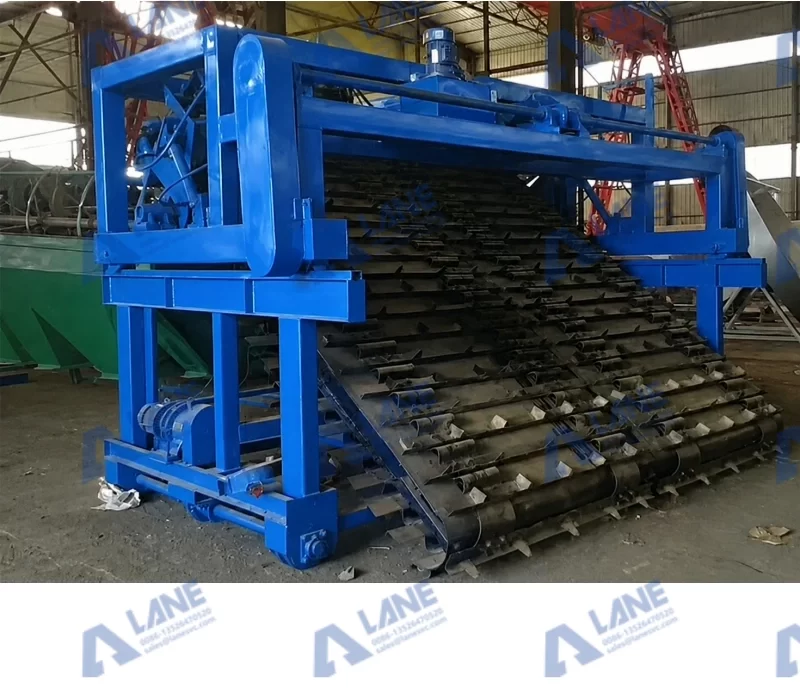
Size the food waste composting machine to the daily tonnage and its cycle days, not the peak you hope for. A rotary drum fermenter is quoted per tonne per hour at 1–20 TPH; a vertical tank is sized by the daily feed and the 7-day cycle it must hold.
Work out the wet tonnes you receive each day, allow for bulking agent, and then check you have storage upstream so the line never starves or backs up. Ask the supplier for a mass balance that includes moisture loss through the process.
For a food waste composting machine, cost concentrates in three places: the vessel, the odour and leachate control, and the feedstock prep. The vessel is the main capital; the vertical tank is the premium, space-saving option, while a turner is the low entry. The under-budgeted items are odour scrubbing and leachate handling, because food waste emits and leaks in ways dry waste does not. Pre-shredding to under 5 cm adds a crusher but is the difference between a 7-day cycle and a stalled pile.

The classic mistake with a food waste composting machine is buying a windrow turner for high-moisture food waste and then struggling to keep the pile aerobic
The second is undersizing storage and bulking, so the line stops when the kitchen rush arrives.
The third is treating odour control as optional on a site near homes—food waste odour is the fastest way to lose your operating permit.
Match the machine to the moisture, buffer the feed, and price the odour system in from the start.
Supplier due diligence on a food waste composting machine starts with numbers. Ask for the accepted moisture range, cycle time on food waste, power draw and materials of construction.
LANE supplies CE and ISO 9001 certified compost equipment with a 5-year warranty and overseas installation, the warranty length that separates a manufacturer from an importer. Ask to see a plant running a similar food waste stream, and talk to the operators, not the sales team. A supplier who cannot state a cycle time in writing has not done the engineering.
Is a windrow turner enough for food waste?
Rarely. Food waste is high-moisture and odorous, so enclosed rotary fermenters or vertical tanks usually win; windrow suits drier green waste with bulking.
What capacity of food waste composting machine do I need?
Size the fermenter in tonnes per hour (1–20 TPH range) against your daily feed, and the tank against daily tonnage and its ~7-day cycle.
Why does food waste need pre-shredding?
Pre-shredding to under roughly 5 cm raises surface area so aeration works; without it, high-moisture waste packs and turns anaerobic.
How long does food waste take in-vessel?
A rotary drum fermenter typically finishes in 5–8 days and a vertical tank in about 7 days, versus weeks for open windrows.
What certification should the machinery carry?
CE and ISO 9001, backed by a long warranty; LANE provides a 5-year warranty and overseas installation on turnkey lines.
Before you buy a food waste composting machine, confirm three things: the moisture range and cycle time it guarantees on your feedstock, the capacity matched to your daily tonnage and storage, and the odour and leachate handling that keeps your site permitted.
The US EPA ranks composting in its food waste management hierarchy, and food scraps and yard waste together make up roughly 20–30 percent of what is discarded—a stream too valuable to landfill.
LANE engineers complete turnkey organic fertilizer lines from fermentation to packaging, and can match a food waste composting machine to your stream.
See the approach at https://organicfertilizerturnkey.com/ or write to sales2@lanesvc.com for a layout and quotation based on your feedstock analysis.

Everything you need to know when looking at different types of organic fertilizer equipment, all in one place.
Copyright © 2026. LANE All rights reserved.
Send A Message