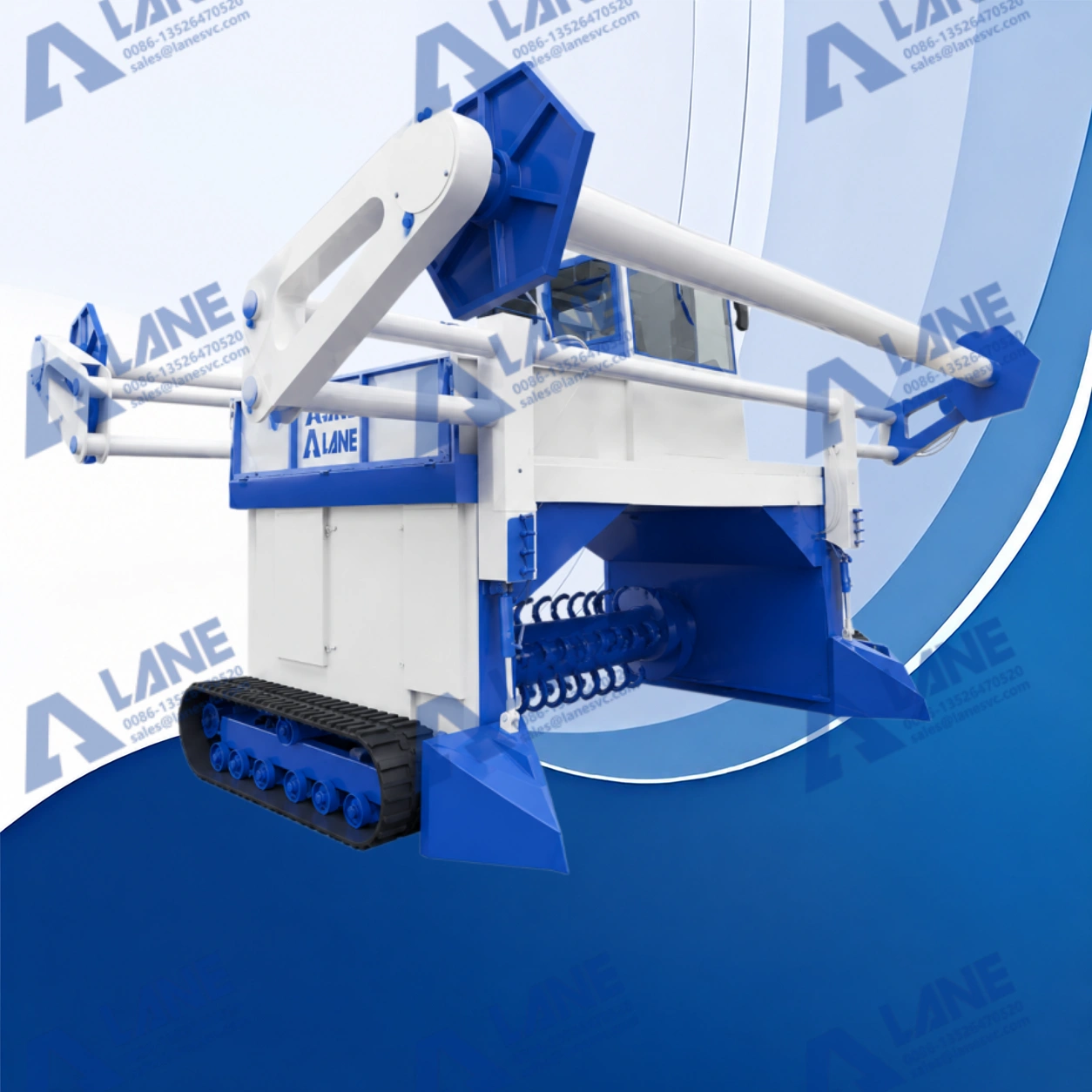
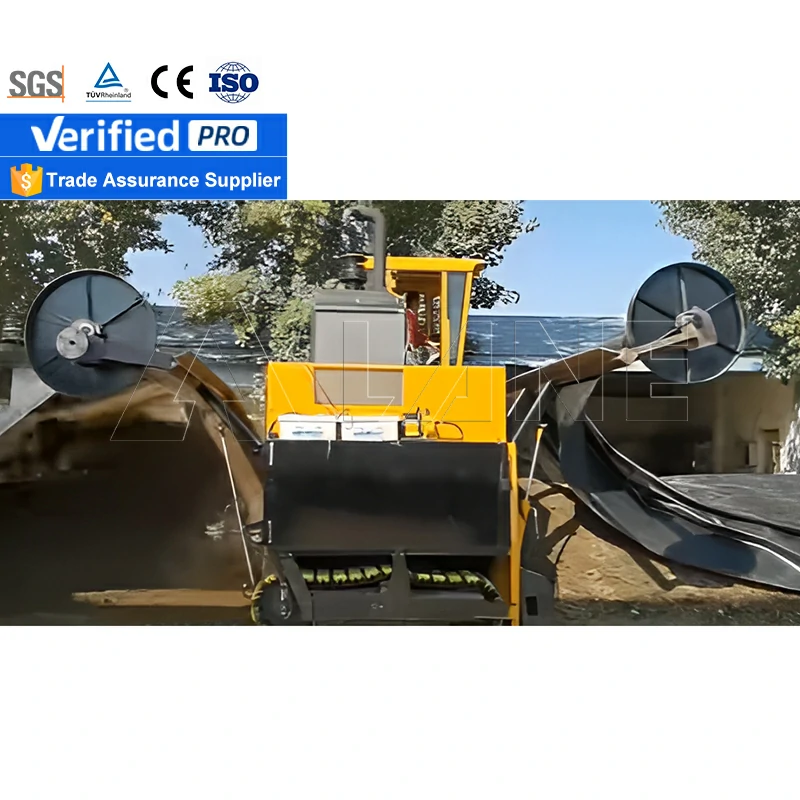
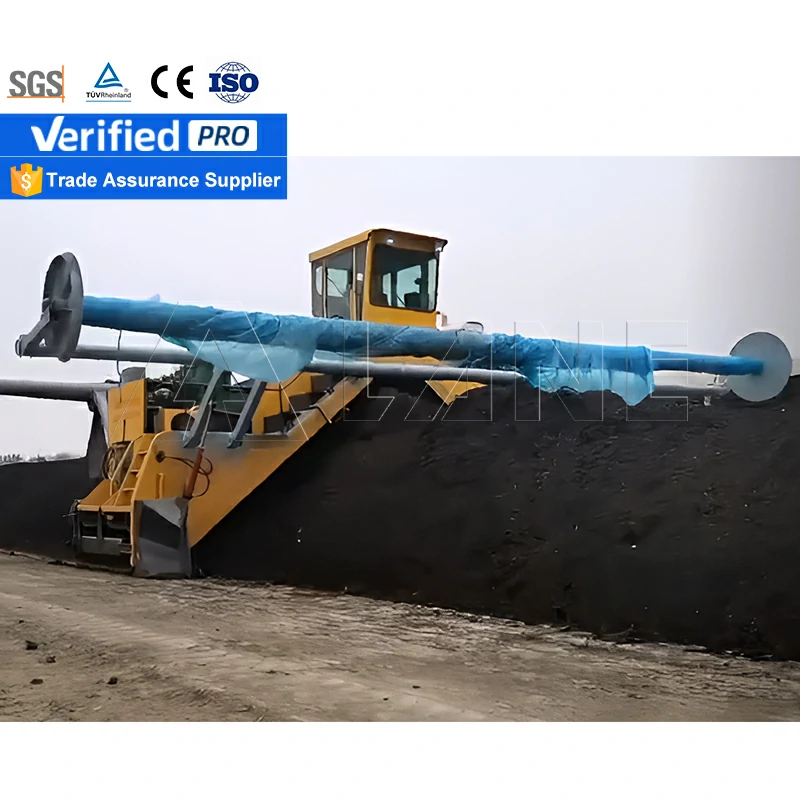
Film-covered compost turner matched with membrane aerobic composting technology. It integrates material turning and film winding in one operation, cutting odor emissions by over 90%. CE certified composting equipment manufactured by LANE Machinery.
The film-covered compost turner is a next-generation crawler-type composting machine that integrates three functions into one automated pass: front film rolling, middle pile turning, and rear film re-covering. It combines the mechanical aeration efficiency of a high-capacity crawler turner with the emission control of nano-membrane composting technology — delivering rapid, odor-controlled fermentation without the cost of enclosed buildings or biofiltration systems.
Engineered by Henan LANE Heavy Industry Machinery Technology Co., Ltd. (LANE Machinery), the LACF series represents the state of the art in environmentally compliant organic waste composting. By pairing a waterproof-breathable e-PTFE membrane cover with aggressive mechanical turning, it achieves >90% reduction in malodorous gas emissions while maintaining the fast 7–15 day fermentation cycles of conventional windrow turning.
Core value proposition: Industrial composting capacity with environmental compliance built in. No separate odor control system. No enclosed buildings. No biofilters. Just the machine, the membrane, and performance that meets the strictest emissions regulations.
1. Three-in-One Automated Operation
2. >90% Odor & Emission Reduction
3. Nano-Membrane Technology — The “Smart Cover”
4. Climate-Independent Fermentation
5. Heavy-Duty Crawler Platform
6. Intelligent Control & Monitoring
7. Dramatic Cost Reduction vs. Enclosed Systems
| Cost Category | Film-Covered Turner | Enclosed Trough System |
|---|---|---|
| Civil Construction | Simple level pad — no building | Factory building + concrete troughs + drainage |
| Odor Control Equipment | Not required (membrane-based) | Biofilter/scrubber system required |
| Energy (kWh/ton) | 1.5–2.8 | 45–60 |
| Total Investment | Baseline | 50–80% higher |
| Footprint | Baseline | ~50% larger |
Phase 1: Pile Preparation
Organic raw material (manure, straw, sludge, etc.) is mixed with bulking agents to achieve the optimal C/N ratio (25:1–35:1) and moisture content (55–60%). The blend is formed into elongated windrows or placed in shallow fermentation bays.
Phase 2: Membrane Deployment
The semi-permeable membrane is laid over the fresh pile. A micro-positive pressure aeration system (optional centrifugal fan with in-floor ducts) supplies oxygen from beneath. The membrane traps solar heat while allowing CO₂ and moisture vapor to escape — creating a controlled aerobic environment.
Phase 3: Temperature Rise & Thermophilic Fermentation
Within 24–48 hours, microbial activity drives pile core temperature to 55–70°C. The membrane cover retains this heat, sustaining thermophilic conditions for efficient decomposition and pathogen kill — even in cold weather.
Phase 4: Integrated Turning Cycle
The film-covered turner drives over the pile: front rollers collect the membrane → turning drum engages the pile (crushing, aerating, reshaping) → rear rollers re-deploy the membrane over the reformed pile. The entire operation takes approximately 15 minutes per 50-meter bay.
Phase 5: Maturation
After 10–20 days of controlled turning (1–2 turns daily in warm season, every 2–3 days in winter), the compost enters a ~10-day maturation/curing phase with reduced turning frequency. Final moisture is reduced to ≤30%.
Phase 6: Membrane Removal & Product Harvesting
The finished compost — dark brown, crumbly, with an earthy smell — is removed from the fermentation pad. The membrane is cleaned, inspected, and re-deployed for the next batch.
| Category | Examples | Notes |
|---|---|---|
| Livestock Manure | Cattle, chicken, pig, sheep, poultry | High nitrogen — pair with carbon-rich bulking agents |
| Agricultural Waste | Straw, stalks, husks, bagasse, bean dregs | Provides carbon and structure |
| Industrial Organics | Distiller’s grains, vinegar residue, sugar filter mud, coffee pulp | Often high moisture — adjust C/N ratio |
| Municipal Organics | Food waste, yard waste, biosolids | Membrane contains odors in urban/near-residential sites |
| Sludge | Sewage sludge, river sludge, biogas digestate | e-PTFE membrane prevents pathogen aerosolization |
1. Environmentally Regulated Composting Sites
For facilities operating under strict air quality and odor regulations — near residential zones, in urban-fringe locations, or in jurisdictions with aggressive emissions standards. The membrane system provides passive, maintenance-free odor control.
2. Large-Scale Organic Fertilizer Plants (10,000+ TPY)
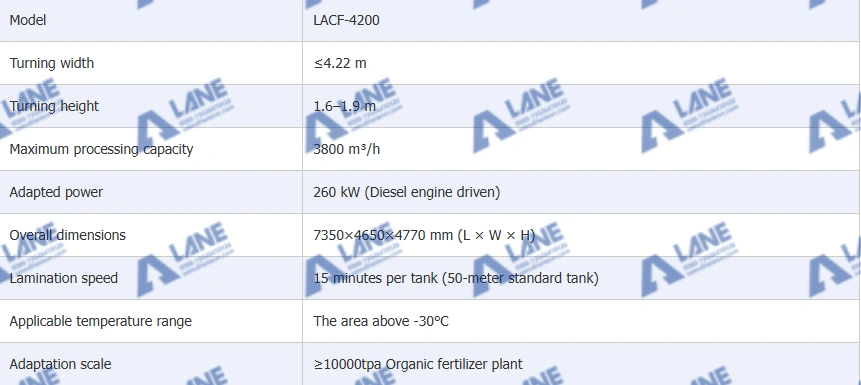
High-capacity, continuous operation with environmental compliance engineered into the core process rather than bolted on as an afterthought. The LACF-4200 and LACF-5000 models align with industrial granulation line throughput.
3. Cold-Climate Composting Operations
In regions where winter temperatures halt conventional windrow composting, the membrane’s greenhouse effect and thermal retention keep fermentation active year-round. Minimum operating temperature: −30°C.
4. Municipal Sludge & Biosolids Treatment
Pathogen kill requirements (Class A biosolids) demand consistent thermophilic temperatures across the full pile profile. The membrane’s heat retention + the turner’s complete inversion ensures compliance.
The controlled, enclosed fermentation environment produces compost with superior consistency, lower ash content, and fewer contaminants — commanding premium pricing in high-value organic fertilizer markets.
| Factor | LANE Machinery | Industry Typical |
|---|---|---|
| Technology Integration | In-house membrane system + turner engineering — one supplier, one warranty, one support team | Turner from one supplier, membrane from another — integration gaps |
| Engineering Capability | Complete turnkey from process design to commissioning | Equipment supply only |
| Customization | Tailored membrane specifications, turning parameters, and control logic for your climate and materials | Standard configurations |
| Membrane Expertise | Direct experience with e-PTFE, PE, and PVC membrane systems across climates | Limited to basic film products |
| After-Sales Support | On-site commissioning, operator training, membrane maintenance guidance, spare parts, and technical support | Variable |
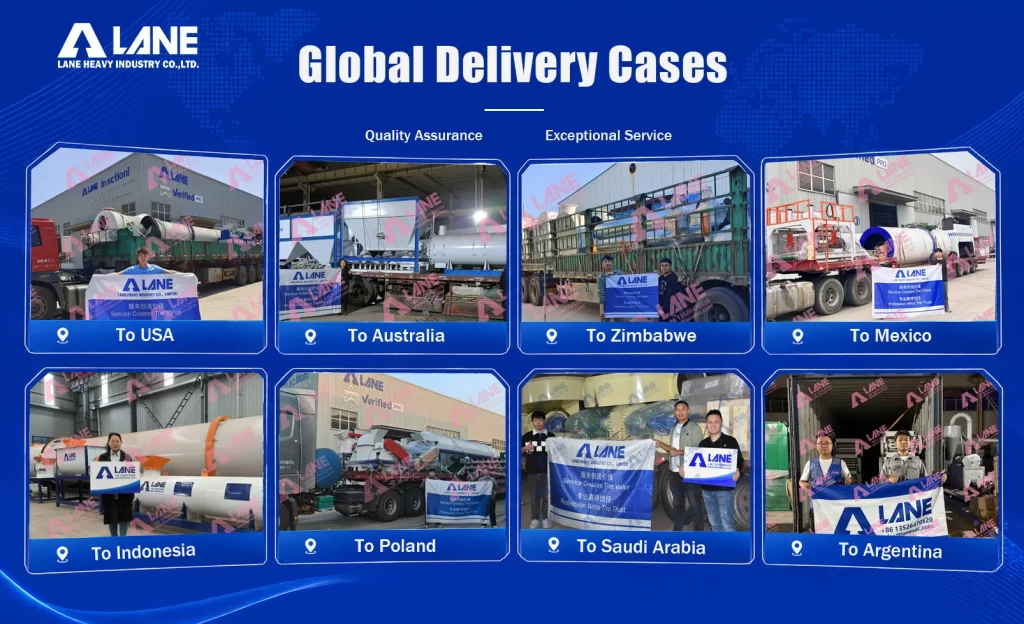
| Global Experience | Proven export track record with international commissioning | Domestic-focused |
| Certification | CE certified | Varies |
Q: How does the film-covered turner compare to a conventional crawler turner + separate odor control system?
The film-covered turner eliminates the need for a separate biofilter, scrubber, or chemical deodorization system — reducing total project investment by 30–50%. It also provides weather-independent fermentation (cold/rain does not stop the process) and more consistent compost quality due to the controlled micro-environment under the membrane.
Q: How long does the membrane last, and what does replacement cost?
e-PTFE membranes typically last 8–10 years under normal handling conditions. Proper training on rolling/unrolling technique extends membrane life. Replacement cost is approximately 5–8% of the machine purchase price — budgeted as a once-per-decade operating expense.
Q: Can the machine operate in winter?
Yes. The membrane’s greenhouse effect and thermal retention keep the pile actively composting at ambient temperatures as low as −30°C. The LACF series includes cold-weather engine starting aids and low-temperature hydraulic fluid.
Q: What happens to the membrane during turning?
The machine’s front rolling arms collect and tension-roll the membrane before the turning drum reaches that section of the pile. After turning, the rear mechanism re-lays the membrane over the reformed pile. The membrane never contacts the turning drum — it is handled entirely by the dedicated rolling system.
Q: Do I still need an aeration system under the pile?
For maximum throughput and fastest cycle times, a micro-positive pressure floor aeration system (centrifugal fan + perforated ducts) is recommended but not mandatory. The membrane + mechanical turning alone provides sufficient oxygen for aerobic fermentation. Aeration systems reduce required turning frequency and further shorten cycle times.
Q: What maintenance does the membrane require?
Minimal. Periodic inspection for tears or UV degradation (visual check every 3–6 months). Cleaning with water and mild detergent as needed. Proper storage when not in use (rolled, not folded). LANE Machinery provides a complete membrane care guide with each system.
Q: Can the membrane be used with any compost turner?
Technically yes — standalone membrane covers can be deployed manually. However, the LACF series is engineered so that film handling is integrated into the turning pass. Manual membrane deployment/removal adds significant labor and time. The integrated system’s value is automation and single-pass efficiency.
Q: Is on-site installation and training provided?
Yes. LANE Machinery engineers commission the machine on your site, train your operators on turning protocol, membrane handling, and routine maintenance, and remain available for ongoing technical support.
Environmental compliance doesn’t have to mean compromise. LANE Machinery delivers high-capacity composting with built-in emission control — engineered for your materials, your climate, and your regulatory environment.
LANE Machinery — Your Trusted Partner in Organic Fertilizer Production Equipment. From Raw Material to Finished Product, We Engineer Complete Solutions.


Everything you need to know when looking at different types of organic fertilizer equipment, all in one place.
Copyright © 2026. LANE All rights reserved.