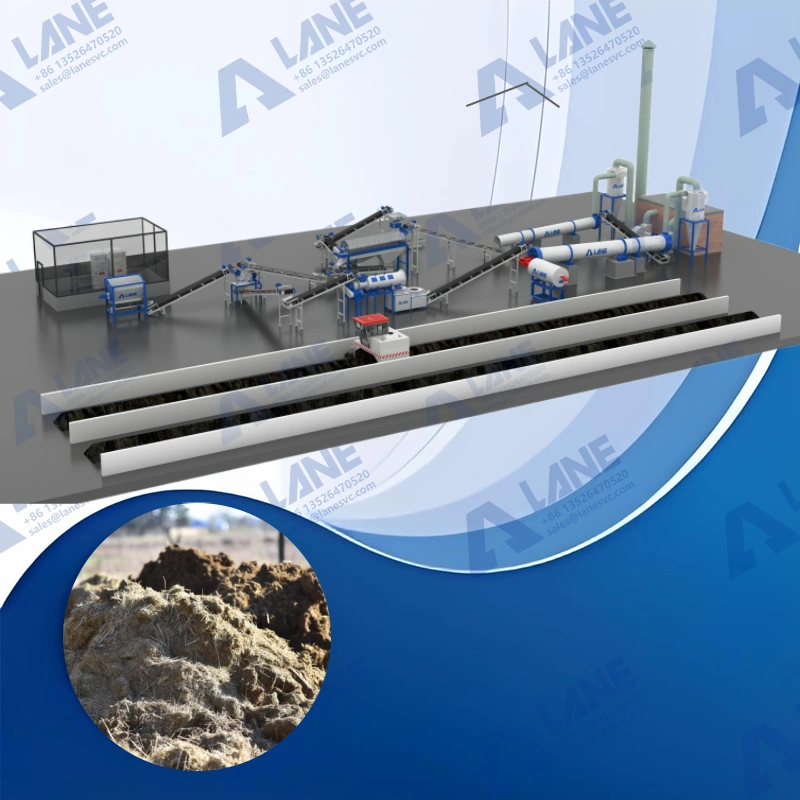
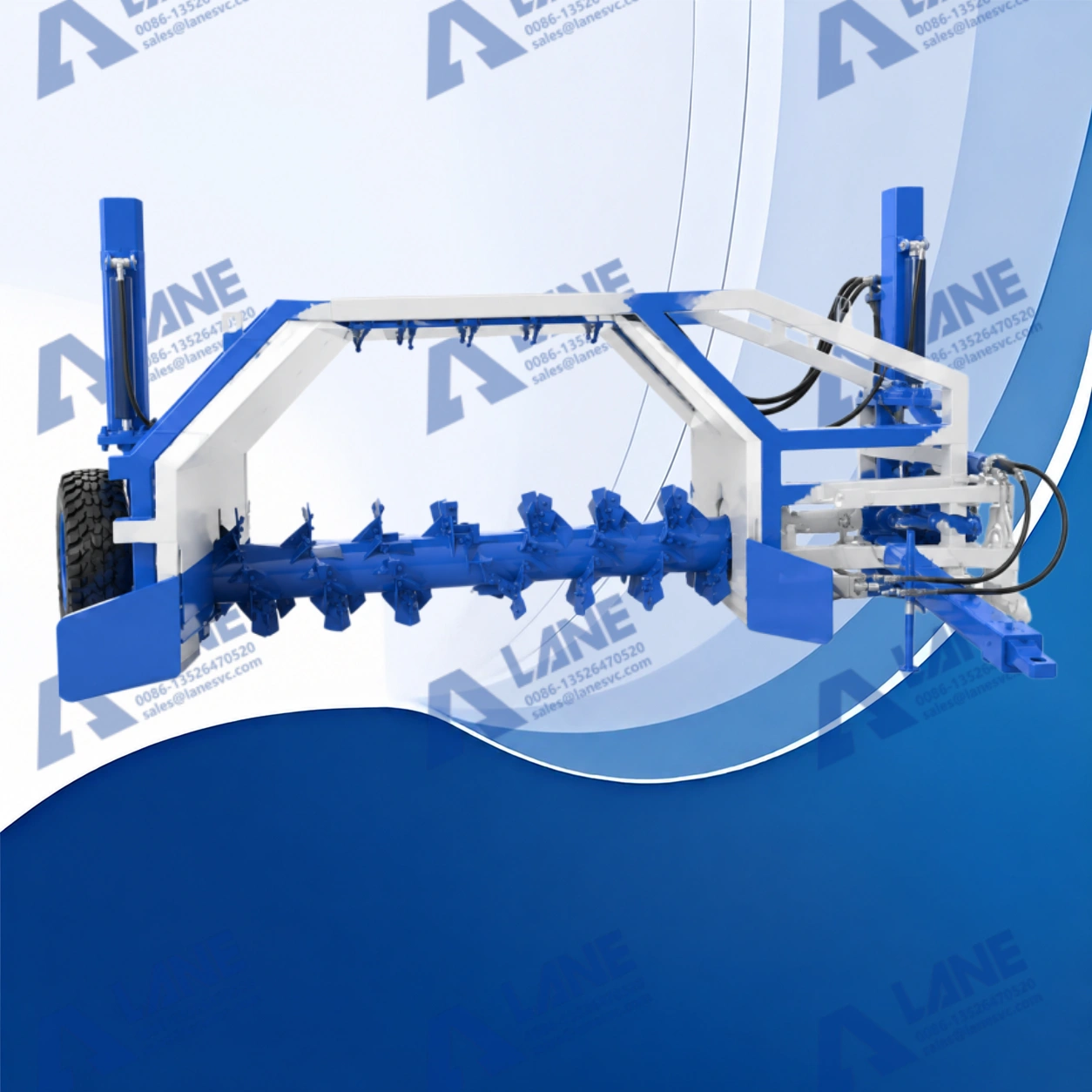
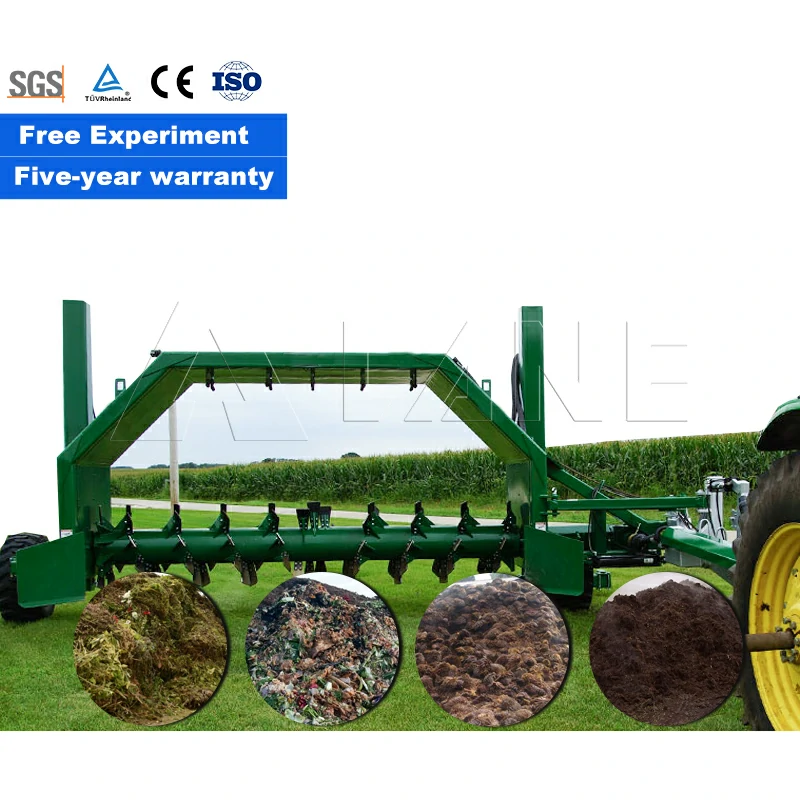
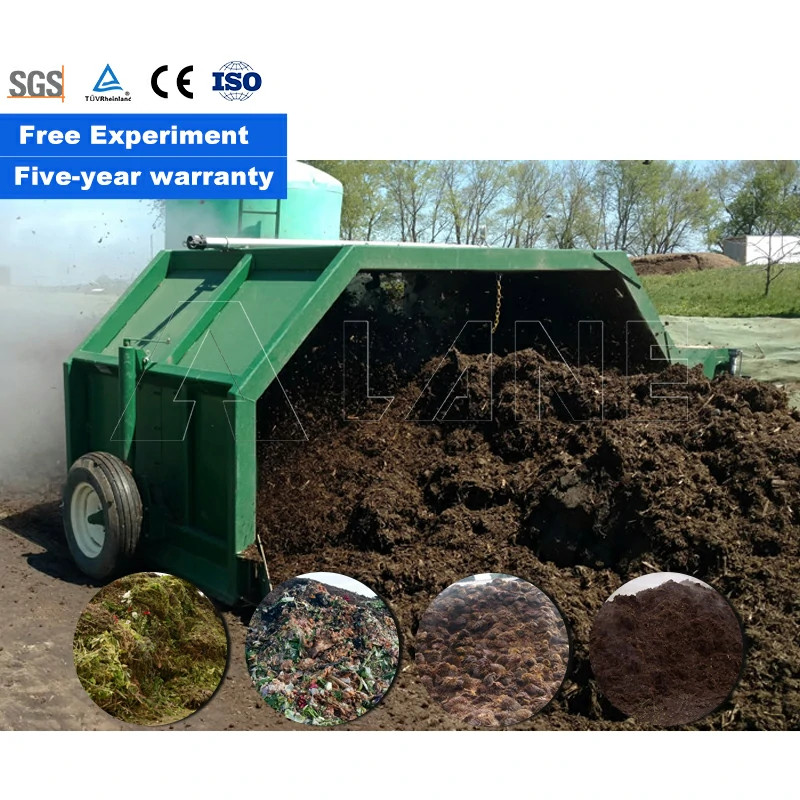
Tow-behind compost turner powered by tractor PTO. It is a trailed windrow composting machine with working capacity of 400–1500 m³/h, featuring ultra-low investment cost. CE certified compost equipment supplied by LANE Machinery.
The tow behind compost turner is a PTO-driven, tractor-towed windrow composting machine that leverages your existing tractor as the power source and mobility platform. Towed via a standard hitch or 3-point linkage and driven by the tractor’s PTO shaft, it turns, aerates, and reshapes organic windrows at a fraction of the capital cost of a self-propelled machine. It is the most economical entry point into mechanized composting — ideal for farms, small-to-medium fertilizer operations, and multi-site contract composting.
Built by Henan LANE Heavy Industry Machinery Technology Co., Ltd. (LANE Machinery), the tow behind series delivers professional-grade composting performance (400–1,500 m³/h) without requiring a dedicated engine, hydraulic system, or self-propelled chassis. If you already have a tractor, you already have the power plant.
Core value proposition: The lowest capital investment in the compost turner category. Hitch it to your tractor, engage the PTO, and start turning — no dedicated engine to maintain, no separate fuel budget, no specialized operator training beyond tractor familiarity.
1. Leverage Your Existing Tractor Investment
2. Lowest Purchase Price in the Turner Category
3. PTO-Driven Rotor — Simple, Robust, Proven
4. Hydraulic Offset & Height Adjustment
5. Optional Wetting & Inoculation System
6. Low Maintenance, Long Service Life
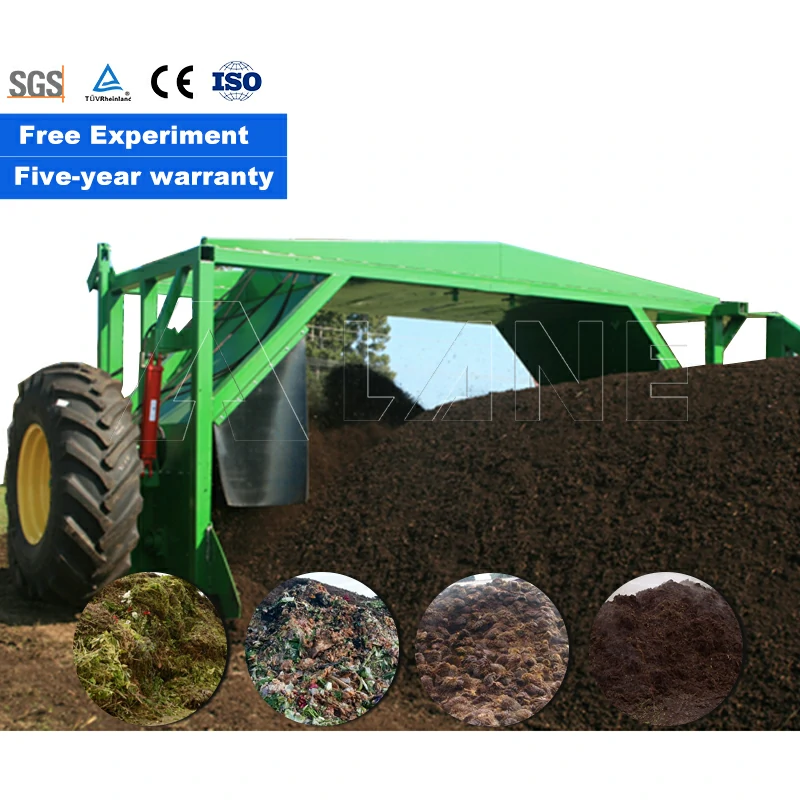
Hitch Up: The tow behind turner connects to the tractor via a drawbar hitch (standard models) or 3-point linkage (compact models). The PTO shaft connects to the tractor’s PTO output.
Position the Turner: Using the tractor’s hydraulics, the operator lowers the rotor to the desired working height and offsets the turner to align with the windrow. The tractor drives alongside the windrow, not over it.
Engage the PTO: The tractor’s PTO drives the turner’s gearbox, spinning the rotor at 180–540 RPM depending on the model. Hardened blades or paddles engage the windrow face.
Lift, Shred & Cast: The spinning rotor cuts into the pile, lifts material from the base, shreds clumps, and casts the processed material to the side — forming a reformed, aerated windrow adjacent to the original.
Offset Operation: The turner’s swing cylinder positions the rotor to the side of the tractor, allowing the tractor to drive on level ground while the turner processes the windrow without the tractor climbing over the pile.
Repeat: The operator makes 1–2 passes per windrow per day during the active thermophilic phase. One tractor + turner combination can manage multiple windrows in daily rotation.
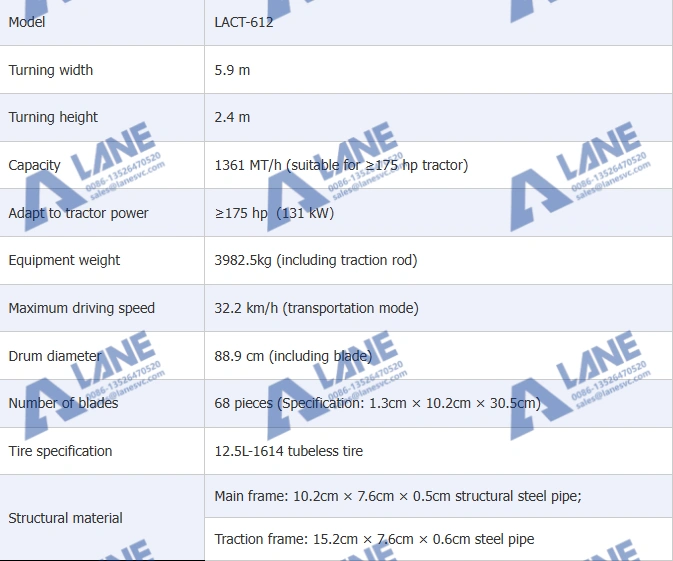
Custom sizing available. Contact LANE Machinery with your tractor specifications and windrow dimensions for a matched recommendation.
| Category | Examples | Notes |
|---|---|---|
| Animal Manure | Cattle, chicken, pig, sheep, horse, poultry litter | Primary use case — on-farm manure management |
| Crop Residues | Straw, corn stalks, rice husks, cotton stalks | Excellent carbon source for C/N balance |
| Mushroom Substrate | Spent mushroom compost | PTO turners are widely used in mushroom farms for substrate turnover |
| Green Waste | Grass clippings, leaves, garden waste | Light materials — high throughput |
| Food & Kitchen Waste | Vegetable waste, fruit peels | Requires blending with drier bulking agents |
| Sludge (Blended) | Dewatered sewage sludge + bulking agent | Must be pre-mixed with structural material |
1. On-Farm Manure Composting
The #1 application. Livestock and poultry farms use their existing tractor to turn manure windrows — converting a daily waste stream into saleable organic fertilizer or high-quality bedding material. No dedicated composting machine needed.
2. Small Organic Fertilizer Plants (1,000–5,000 TPY)
For startup and small-scale fertilizer operations, the tow behind turner provides professional-grade composting at a capital cost that keeps the business case viable from day one. Upgrade to self-propelled later as production scales.
3. Mushroom Farms
Spent mushroom substrate (SMS) requires regular turning for composting and reuse. Tow behind turners are the standard tool for mushroom farms — compact, maneuverable, and already compatible with the farm’s tractor fleet.
4. Multi-Site Contract Composting
For operators who compost at multiple customer locations (farms, feedlots, processing plants), the tow behind turner travels on a trailer behind the same truck that moves the tractor. No dedicated transport for the composting machine.
5. Agricultural Cooperatives
Shared equipment model — a cooperative purchases one tow behind turner and members use it with their own tractors on a rotating schedule. Maximizes utilization while minimizing individual investment.
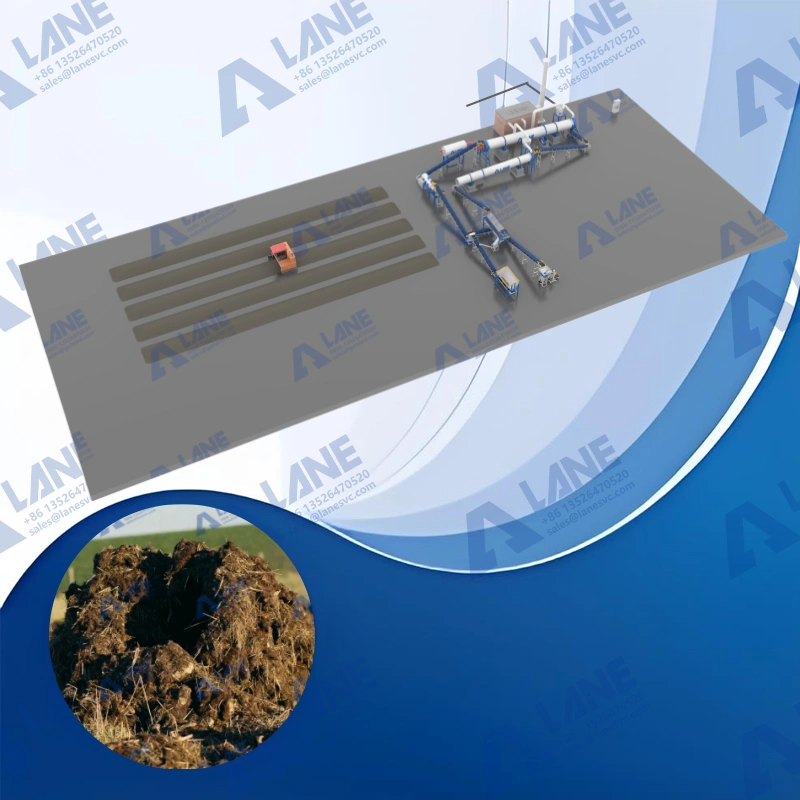
For small-to-medium organic fertilizer plants, the tow behind turner is the fermentation-stage entry point that makes the entire line financially viable:
Tow Behind Turner (Fermentation, tractor-powered) → Conveyor → Crusher → Screen → Mixer → Disc/Drum Granulator → Dryer → Cooler → Packing Machine
As production scales, the tow behind turner can be retained as a backup/overflow machine even after a self-propelled turner becomes the primary fermentation unit.
| Factor | LANE Machinery | Industry Typical |
|---|---|---|
| Tractor Compatibility | Detailed compatibility assessment — we match the turner to YOUR tractor | Generic “fits most tractors” claim |
| Blade Quality | Hardened steel or Hardox options; individually replaceable | Mixed quality; some require full rotor replacement |
| Custom Engineering | Tailored hitch, PTO, and hydraulic configurations | Fixed standard configuration |
| After-Sales Support | Installation check, operator training, ongoing technical support, spare parts | Limited post-sale contact |
| Certification | CE certified for international markets | Varies |
| Export Experience | Proven global delivery with customs clearance and shipping support | Domestic-focused |
Q: Do I need a special tractor to use a tow behind compost turner?
No special tractor is required, but a creeper gear (extra-low speed) or hydrostatic/IVT/CVT transmission is strongly recommended. Standard gear tractors may not achieve the slow, consistent forward speed (6–8 m/min) needed for effective turning. LANE Machinery assesses your tractor specifications before making a model recommendation.
Q: What’s the advantage of a tow behind vs. a self-propelled compost turner?
Cost. A tow behind turner costs 60–80% less to purchase than a self-propelled model of equivalent capacity — you are not paying for an engine, transmission, chassis, or operator cab. Maintenance is simpler (no engine to service). The trade-off: you need a compatible tractor and operator; mobility between distant sites requires transporting both tractor and turner.
Q: Can I use it on wet, sticky manure?
Yes. The hardened steel blades cut through wet, compacted manure effectively. For materials above 70% moisture, pre-blending with dry bulking agents (straw, sawdust) improves processing and composting performance.
Q: How many windrows can one tractor + turner handle per day?
A mid-size setup (LANE-TB300 with a 100+ HP tractor) can process 8–12 windrows per day at 1–2 passes each, depending on windrow length and site layout. This supports a plant producing 3,000–8,000 tons of finished organic fertilizer per year.
Q: What maintenance does the PTO turner require?
Routine maintenance is straightforward: daily visual inspection of PTO shaft guards and blade condition; greasing of driveline U-joints and rotor bearings (every 8–10 operating hours); periodic gearbox oil check; blade rotation or replacement as needed. No engine oil changes, no fuel filters, no coolant — because there’s no engine.
Q: Can the turner be transported on public roads?
The turner itself is not road-legal as a towed vehicle at highway speeds. It is transported on a trailer or lowboy between sites. For on-farm movement between fields, it can be towed at low speed behind the tractor.
Q: Is operator training provided?
Yes. LANE Machinery provides operation and maintenance training materials, and our engineers can provide on-site or remote training on setup, operation, and blade maintenance.
Tell us about your tractor and your composting goals. We’ll match you with the right LANE-TB model — no guesswork, no compatibility surprises.
LANE Machinery — Your Trusted Partner in Organic Fertilizer Production Equipment. From Raw Material to Finished Product, We Engineer Complete Solutions.


Everything you need to know when looking at different types of organic fertilizer equipment, all in one place.
Copyright © 2026. LANE All rights reserved.