
Waste to fertilizer machine selection for manure, food waste, and sludge: process routes, equipment rules, capacity sizing, costs, and what quotes omit.
Buyers usually start a waste to fertilizer machine project with one machine in mind. A turner, a granulator, a dryer they saw at a trade show. Then the first engineering question arrives, and it turns out the machine was never the decision.
The decision is what your waste does when you handle it. Wet manure and dry poultry litter move through completely different equipment. Food waste needs a different front end than straw. Sludge brings a regulatory layer that changes the whole plant layout.
This guide works backward from the feedstock to the machine set, and covers what each stage costs, where quotes go wrong, and which questions separate a supplier who has built these lines from one who has only sold them.
Before any quotation, get these on paper.
Moisture. Below 40 percent, you can dry and granulate directly. Above 70 percent, you need dewatering or a bulking agent before composting. Between the two, the whole design is negotiable, which is why moisture is the number suppliers ask for first.
Carbon to nitrogen ratio. Composting wants roughly 25 to 30 to 1. Poultry litter is nitrogen-rich and needs carbon; straw is carbon-rich and needs nitrogen. Getting this wrong costs you weeks of stalled pile time.
Contaminants. Plastic, stones, and metal destroy crushers and screen mesh. A magnetic separator and a manual picking station cost less than a week of downtime.
Volume and seasonality. A plant sized for average weekly tonnage will fail in the week the barn is cleaned out.
Composting is the route for wet organic waste: manure, food waste, green waste, digestate. Organic waste composting produces compost, sold as powder or upgraded into granules.
Dry and granulate is the route for drier material such as poultry litter or separated solids. The product is an organic or organo-mineral granule with a guaranteed analysis.
Digest, then compost is the route when you want energy as well. A digester takes the wet fraction, and the digestate goes through the same composting and granulation train.
Most projects end up in the first or second route. The third is a bigger capital decision and belongs in a separate feasibility study.
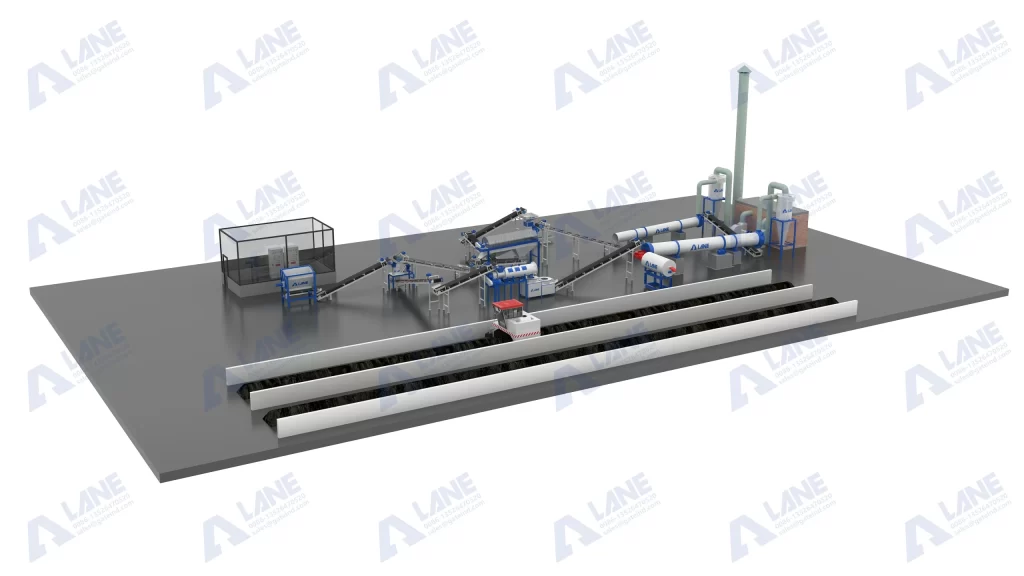
A complete organic waste composting line runs through six stages, and each stage has a selection rule.
Dewatering and pretreatment. A screw press or inclined screen brings slurry to a workable moisture. A semi-wet crusher reduces particle size, and a mixer blends in bulking agents or inoculants.
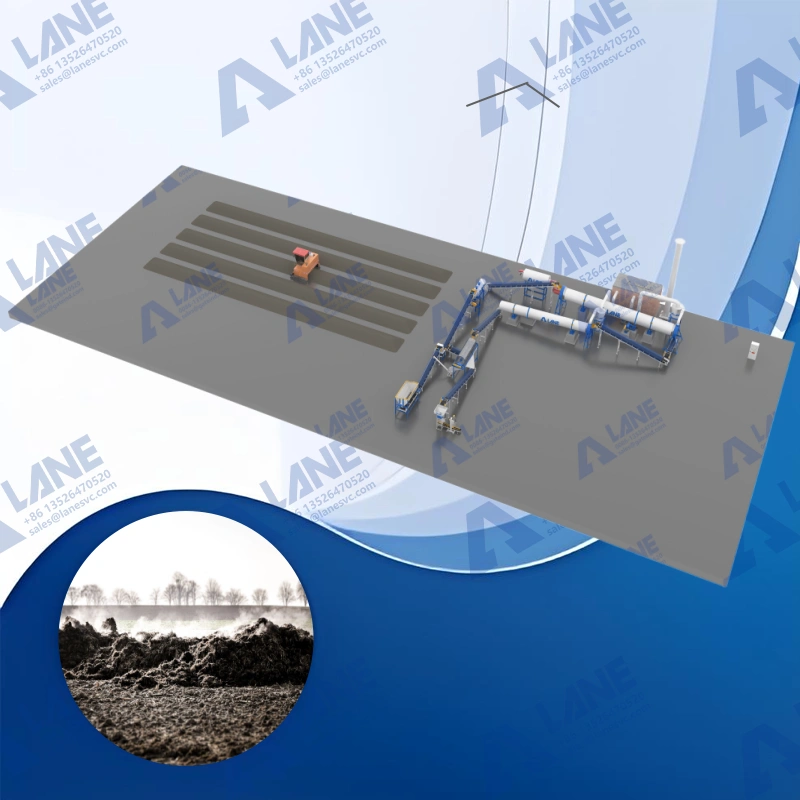
Composting. Windrow turners, aerated static piles, or in-vessel systems. This is the stage where most of the capital and almost all of the odor risk sits.
Screening. A rotary or vibrating screen separates finished compost from oversize material, which returns to the crusher.
Granulation. The fertilizer granulation machine turns powder into a product that bags, ships, and spreads.
Drying and cooling. Only needed for granules. Organic material is heat-sensitive, so the dryer has to be gentle.
Coating and packing. Anti-caking coating, then weighing and bagging into 25 or 50 kilogram bags or bulk bags.
Three options for organic waste composting, and the choice is about land, labor, and neighbors rather than technology.
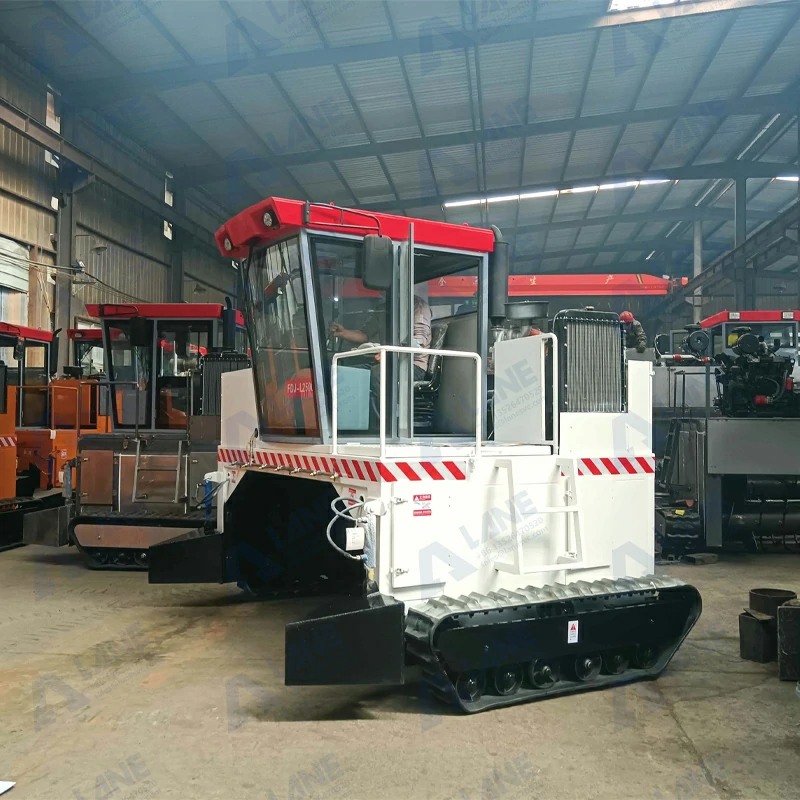
A windrow turner is the lowest capital option and the most land-hungry. Self-propelled turners handle large volumes; tow-behind units suit smaller sites. Odor control is limited to pile management.
Aerated static piles replace turning with forced air through perforated pipe. Labor drops, control improves, and you need blowers, a control system, and a biofilter if neighbors are close.
In-vessel systems contain the process in a tunnel or vessel, giving the tightest odor and pathogen control in the smallest footprint, at the highest cost per ton.
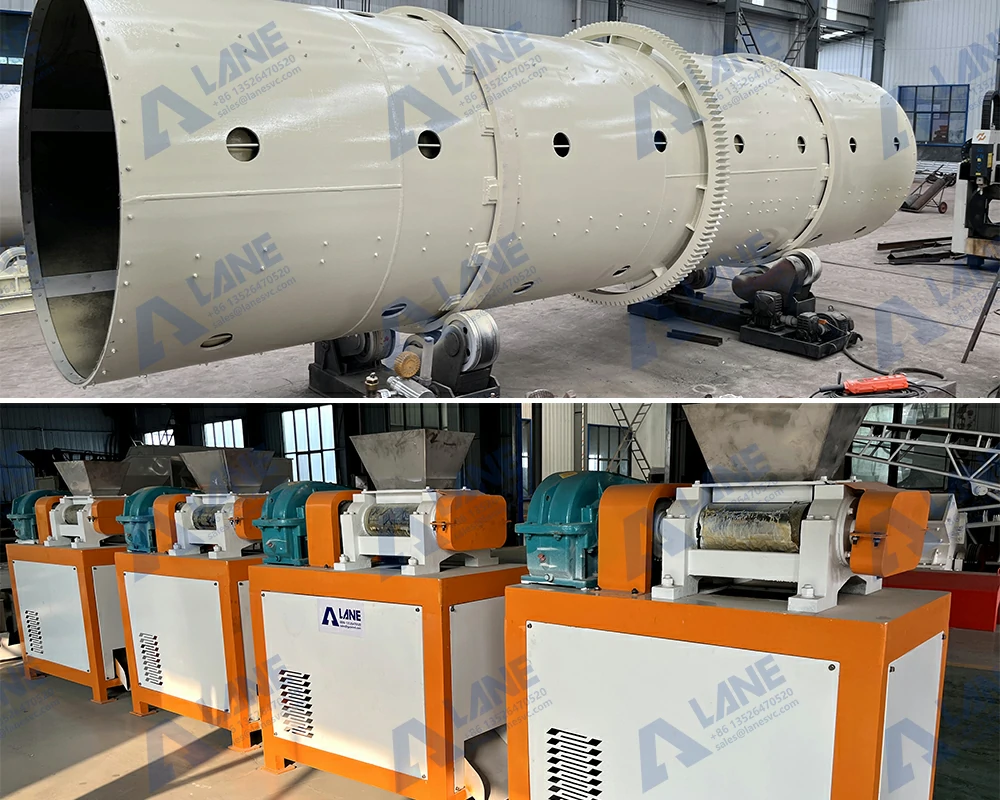
Four types of fertilizer granulation machine cover most organic lines, and the feedstock decides which.
A disc pan granulator suits compost and mixed organic powder at small to mid capacity. It is simple, forgiving of fiber, and cheap to run.
A rotary drum granulator suits higher tonnage and organo-mineral blends where mineral nutrients are added. It handles abrasive material better than a pan.
A double roller press works dry, without a dryer, and produces a flatter granule. It is the lowest-energy option when the feed is already dry.
A stirring-pin granulator handles high-fiber material that will not ball in a pan or drum.
A granulation machine is not a commodity purchase; sizing it needs the feed moisture and the target granule size. The rule that matters: moisture at the feed decides whether the fertilizer granulation machine runs or plugs. Compost at 25 to 35 percent moisture balls well in a pan. Compost at 15 percent dusts. Compost at 45 percent turns the pan into a mud mixer.
A common and expensive mistake is sizing the plant on finished product.
Composting loses 30 to 40 percent of the input mass to water vapor and carbon dioxide. Add screening losses and you may need 1.6 to 1.8 tons of raw waste for every ton of bagged product.
So a plant marketed as 5 tons per hour of output needs roughly 8 to 9 tons per hour of feed, and every machine upstream has to be sized for the feed. Ask suppliers whether their capacity figure refers to input or output. The answer changes the price by 40 percent.
Published LANE guidance puts a small organic powder line at roughly USD 100,000 to 150,000 and a larger granular line at roughly USD 350,000 to 550,000. Those figures describe processing equipment, not the site.
Four items sit outside most waste to fertilizer machine quotations. The composting pad, which is paved, drained, and sized for the windrow layout. Leachate collection and treatment. Odor control, which is a real cost anywhere with neighbors. And the civil works for a granulation hall, which is taller and heavier than a powder shed.
Equipment usually runs 45 to 60 percent of total project cost, with civils, installation, and commissioning taking the rest. A quote that is 30 percent below the others is almost always a quote with a smaller battery limit, not a better price.
If the product will be sold as organic fertilizer in the European Union, Regulation (EU) 2019/1009 sets the component material rules and contaminant limits, and the finished product has to fit a defined category. Compost and digestate are separate component materials with different processing requirements, and that distinction changes what you can put in the pile.
If sewage sludge is in the feedstock, the US framework under 40 CFR Part 503 applies, including pathogen reduction and vector attraction requirements. The time and temperature conditions for composting are specific, and a plant designed without them cannot sell the product as Class A biosolids.
Even outside regulated markets, buyers now ask for pathogen and heavy metal data. Build the laboratory bench into the plant, not into a later retrofit.
Odor is the risk that stops organic waste composting projects. A pile that goes anaerobic produces hydrogen sulfide and ammonia, and neighbors complain before the lab confirms anything.
Leachate is the second. A wet pile produces a strong liquid that finds the lowest point on the site.
Dust explosion is the third, and the one most often ignored. Organic dust in a dryer or a bagging room is combustible. It needs collection, grounding, and explosion venting, not just a filter bag.
Wear is the fourth: turner tines, crusher hammers, screen mesh, and granulator scrapers. Budget 3 to 5 percent of equipment capital per year and keep a two-year stock of the parts that stop the line.
For any waste to fertilizer machine quotation, ask for a mass balance, not an equipment list. The mass balance shows input tons, moisture, and output tons, and it is the document that proves the supplier did the arithmetic.
Ask what happens when the feedstock arrives wetter than specified. A designer answers with a bulking agent ratio and a capacity derate. A reseller answers with a change order.
Ask for references at your feedstock and your scale, then call them. A supplier with twenty poultry litter plants may never have composted food waste.
What machine turns waste into fertilizer?
There is no single machine. The line starts with dewatering and crushing, moves through composting, then screening, granulation, drying, cooling, coating, and bagging. The composting stage and the granulator are the two that decide product quality.
Can food waste be turned into fertilizer?
Yes, by aerobic composting, usually blended with a carbon source such as green waste or straw. Food waste is wet and nitrogen-rich, so it needs bulking and careful odor control.
How long does composting take?
Organic waste composting takes four to six weeks of active phase plus two to three weeks of curing for most manure and food waste mixtures. Shredding, turning frequency, and climate move that window significantly.
Do I need a fertilizer granulation machine?
Only if you sell bagged product at a premium. Powder compost sells locally in bulk at a lower price. Adding a fertilizer granulation machine brings a dryer, cooler, screen, and dust collection with it.
What is the difference between organic and organo-mineral fertilizer?
Organic fertilizer is made from biological material. Organo-mineral fertilizer combines organic material with mineral nutrients, which lets you guarantee a specific NPK analysis while keeping organic matter in the granule.
How much space does the plant need?
In organic waste composting, windrows dominate the footprint. A plant handling 20 tons of feed per day needs a pad and curing area measured in thousands of square meters. In-vessel systems shrink the footprint and raise the capital cost.
Which standards apply?
Regulation (EU) 2019/1009 for products sold in the EU, 40 CFR Part 503 where sewage sludge is involved in the US, and national organic fertilizer registration elsewhere. ISO 9001 is commonly requested in tenders.
Send three things before requesting a waste to fertilizer machine quotation: the waste type with its typical moisture and carbon to nitrogen ratio, the daily tonnage available, and the site location. That is enough to build a mass balance and a machine list that fits the feedstock rather than the catalog.

Everything you need to know when looking at different types of organic fertilizer equipment, all in one place.
Copyright © 2026. LANE All rights reserved.
Send A Message