
Disc Granulator vs Roller Granulator: pan granulation vs dry roller extrusion on cost, energy and granule shape. Get a LANE factory price.
Disc Granulator vs Roller Granulator: Which to Choose. When choosing granulation equipment, the difference between disc granulator and roller granulator decides both your capital cost and your final granule shape.
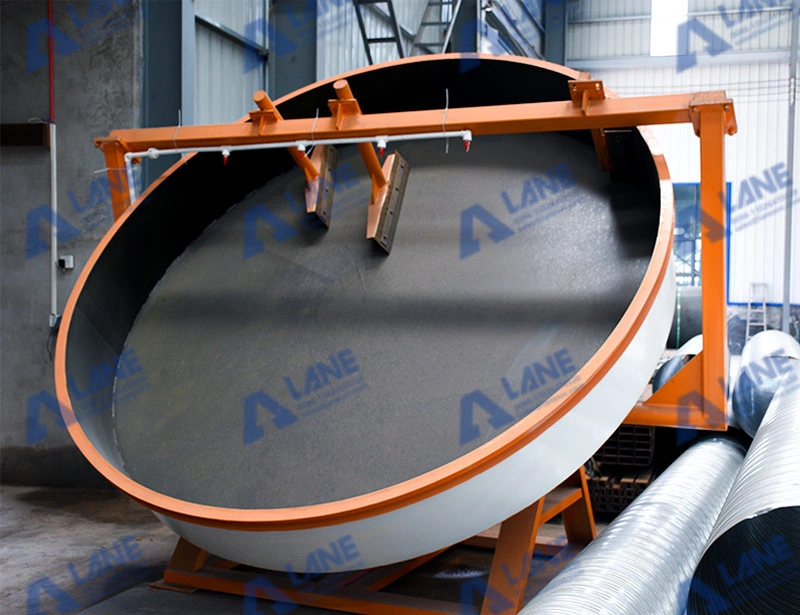
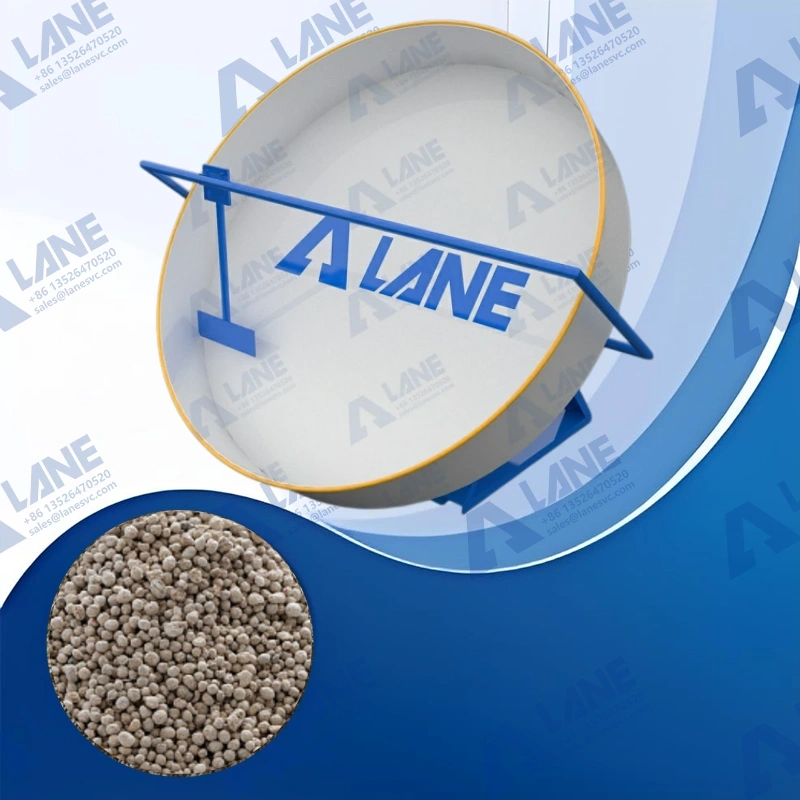
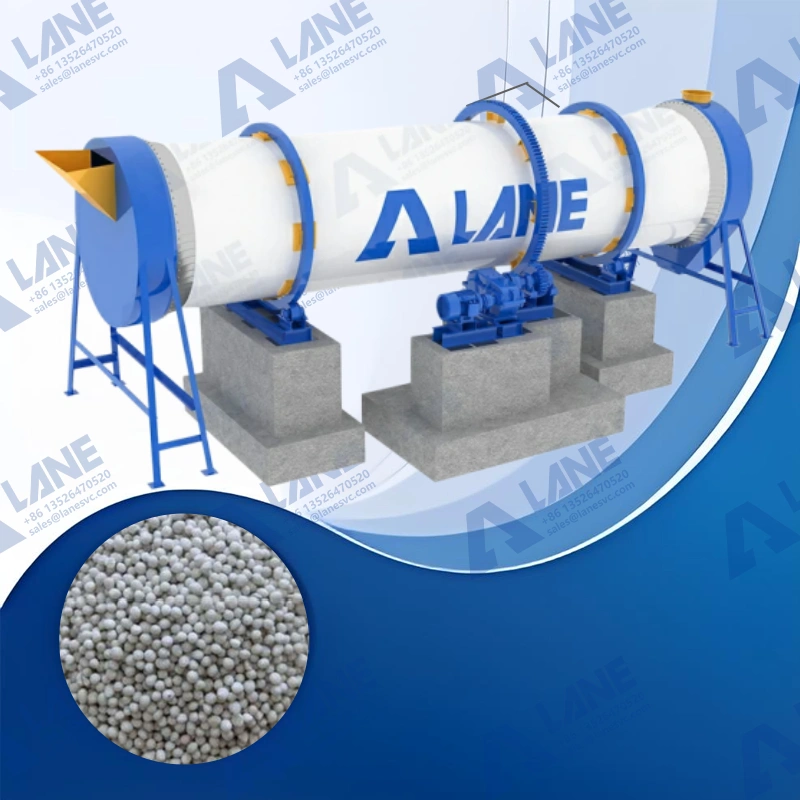
The disc granulator, also called a pan granulator, rolls powder into round granules on an inclined rotating pan.
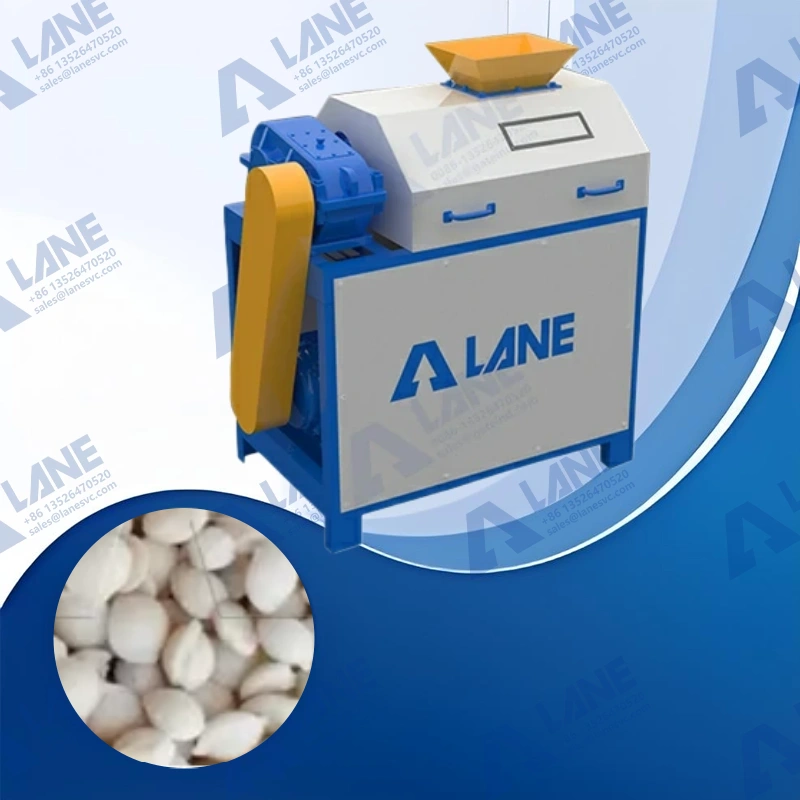
while the roller granulator compresses dry powder into angular granules between two counter-rotating rollers.
This guide compares the disc granulator and roller granulator on cost, energy, product quality and maintenance, so you can pick the right machine for your fertilizer line.
The disc pan and the roller machine differ in more than shape. The pan tilts at 40-60 degrees and classifies granules by size as it turns, while the roller pair compacts under 8-15 MPa.
Either unit can anchor a granulation line, but the right fit depends on your raw material, moisture, output target and acceptable granule shape.
Granule shape: the disc granulator and roller granulator produce visibly different products. The disc pan gives round granules, while roller extrusion gives angular granules with sharp edges.
Wet versus dry: the disc granulator and roller granulator differ in process. Disc granulation adds water or a binder and often a drying step, while roller extrusion runs completely dry, with no dryer, steam or binder.
Capital and energy: the two machines differ on budget and power. Roller extrusion cuts total line cost by 30-40% and uses only 25-35 kWh per ton, while the disc pan consumes 35-50 kWh.
Maintenance also separates them. The disc pan has one rotating assembly and scrapers as the only wear part, replaceable in 15-20 minutes. The roller machine depends on the roller surfaces, which last 4,000-6,000 hours on standard NPK but need an early spare set.
|
Feature |
Disc Granulator | Roller Granulator |
|
Granule shape |
Round granules |
Angular granules |
|
Process |
Wet (binder spray + pan agglomeration) |
Dry (8-15 MPa compaction, no dryer) |
|
Energy |
35-50 kWh/ton |
25-35 kWh/ton |
|
Capital cost |
About 25-35% lower than drum |
About 30-40% lower than drum |
|
Capacity |
0.5-6 TPH |
1-10 TPH |
|
Wear parts |
Scrapers (15-20 min to replace) | Roller surfaces (4,000-6,000 h) |
| Best feedstocks | NPK, composted organic, bio-organic |
Dry NPK, urea-based, ammonium sulfate |
Table 1. Disc granulator vs roller granulator comparison
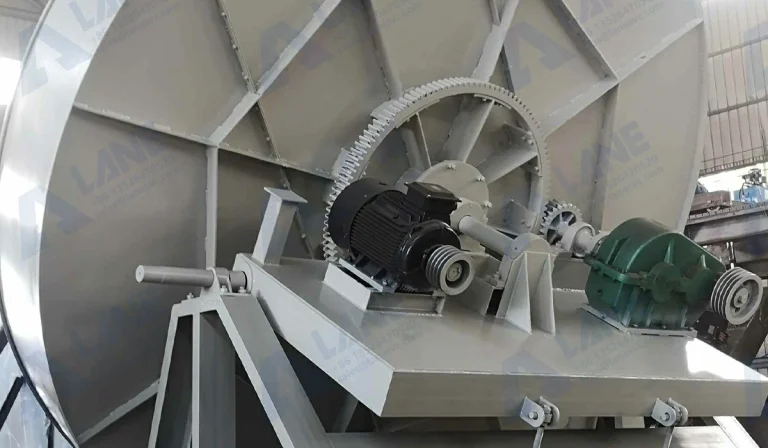
Disc granulator: an inclined circular pan tilted 40-60 degrees and rotating at 10-25 rpm, with scrapers and a binder spray system. Capacity runs 0.5-6 TPH, and the pan classifies granules by size automatically, keeping the recycle ratio low.
Roller granulator: two counter-rotating rollers compact dry powder under 8-15 MPa, then a crusher and screener produce 2-4 mm granules. Capacity runs 1-10 TPH with a compact footprint and no drying train.
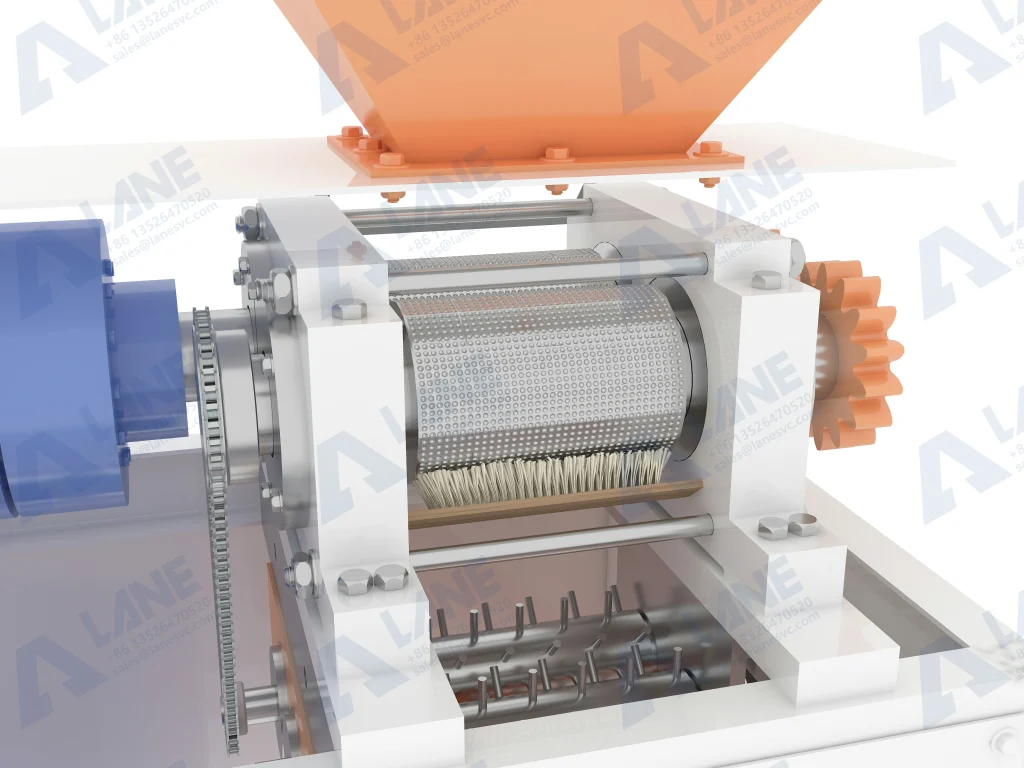
So when comparing the two granulators, check pan angle and rotation speed for the disc, and roller cavity shape and compaction pressure for the roller machine.
For a concrete example, LANE’s LAZD disc series spans from LAZD-500 at 0.05-0.1 TPH to LAZD-6000 at 6-10 TPH, while the LAZR roller series covers LAZR-1.0 at 0.8-1 TPH up to LAZR-3.0 at 3-4.5 TPH. Matching the series to your throughput avoids over- or under-sizing.
The two granulators suit different feedstocks. The disc pan handles NPK powders, composted organic fertilizer and bio-organic blends at 1-5 TPH, and it works best with a consistent particle size.
Capacity is another cue. If your target is 1-5 TPH with a limited number of formulas, a disc pan gives the best dollars per ton per year. If you need quick start-stop and a small footprint, a dry roller line fits warehouses better.
The roller granulator suits dry NPK, urea-based and ammonium sulfate compounds, but struggles with high-fiber organic material and wet powder above 5% moisture.
For organic fertilizer startups with a modest budget, the choice between disc granulator and roller granulator often comes down to whether you can accept angular granules at a slight discount to round product.
What is the main difference between disc granulator and roller granulator?
The disc makes round granules by wet agglomeration, while the roller makes angular granules by dry compaction.
Which is cheaper?
Both machines beat drum granulation, with roller extrusion offering the lowest line cost when no drying step is needed.
Does disc output need a dryer?
Usually yes, because disc granulation is a wet process, while roller output needs no dryer at all.
Which granule is better for broadcasting?
Round disc granules throw slightly more uniformly from spreaders, while angular roller granules work fine by hand, drill or banding.
Can both make organic fertilizer granules?
The disc granulator works well with composted organic material, while the roller granulator does not suit high-fiber or wet organic feeds.
How is granule size controlled on a disc pan?
Adjust the pan angle, rotation speed and binder spray rate to change discharge granule size.
Do roller granules need a binder? For standard NPK formulas with soluble salts, no binder is needed under compaction pressure.
Now that you understand the disc granulator and roller granulator, LANE can recommend the right machine for your material, budget and target granule shape. Contact us for a factory price and a complete granulation line proposal.

Everything you need to know when looking at different types of organic fertilizer equipment, all in one place.
Copyright © 2026. LANE All rights reserved.
Send A Message