Heavy-duty fertilizer belt conveyors for 10-500 TPH material handling. Chevron belts, VFD speed control, up to 25-degree incline. Custom lengths and belt types available.
If a fertilizer plant were a body, belt conveyors would be the circulatory system. Raw materials in, finished product out, and everything in between. When a conveyor goes down, the plant bleeds money by the minute. Nobody budgets for that.
We design belt conveyors for the realities of fertilizer production: dusty environments, corrosive contact, shift-after-shift runtime, and operators who need to fix things fast when something goes wrong. Chevron belts, sealed bearings, quick-release tensioners. The stuff that turns a breakdown into a 20-minute adjustment instead of a 3-hour repair.
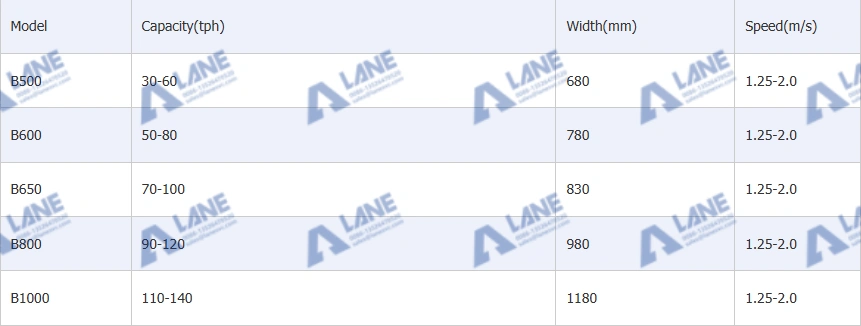
Belt width from 500 mm to 2,000 mm. Length up to 100 meters per section (longer with booster drives). Capacity from 10 to 500 TPH. If your numbers fall outside these ranges, we will still spec it. These are the sweet spots, not hard limits.
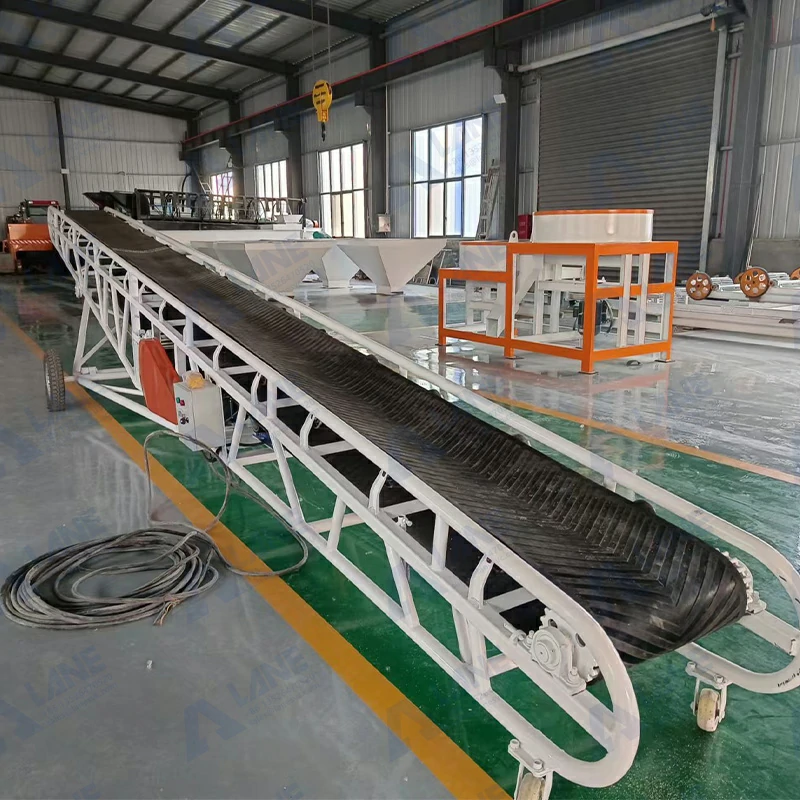
The belt is the heart of the system, and we do not ship cheap belts. For flat or low-angle runs (under 8 degrees), a standard smooth EP fabric belt handles most fertilizer materials without issue. For inclines above 8 degrees, chevron-pattern belts are the default. The raised V-shaped ribs grip the material and stop it from sliding backward. We have run chevron belts at 22 degrees on compound fertilizer without rollback. At 25 degrees, we add taller cleats.
Idlers are the second thing that fails on cheap conveyors (the belt is the first). Our idler shells are welded steel tube with sealed deep-groove ball bearings. They spin freely at startup and stay quiet for years. No regreasing. No seized rollers chewing through the belt underside.
Speed control comes from a VFD on the drive motor. Dial it up for high-volume transfer runs. Dial it down for accurate feeding into a weigh hopper or granulator. The VFD also soft-starts the conveyor, which extends belt life by reducing startup shock. A 500-meter belt snapping on direct-on-line startup is expensive. We have replaced belts for plants that learned this the hard way.
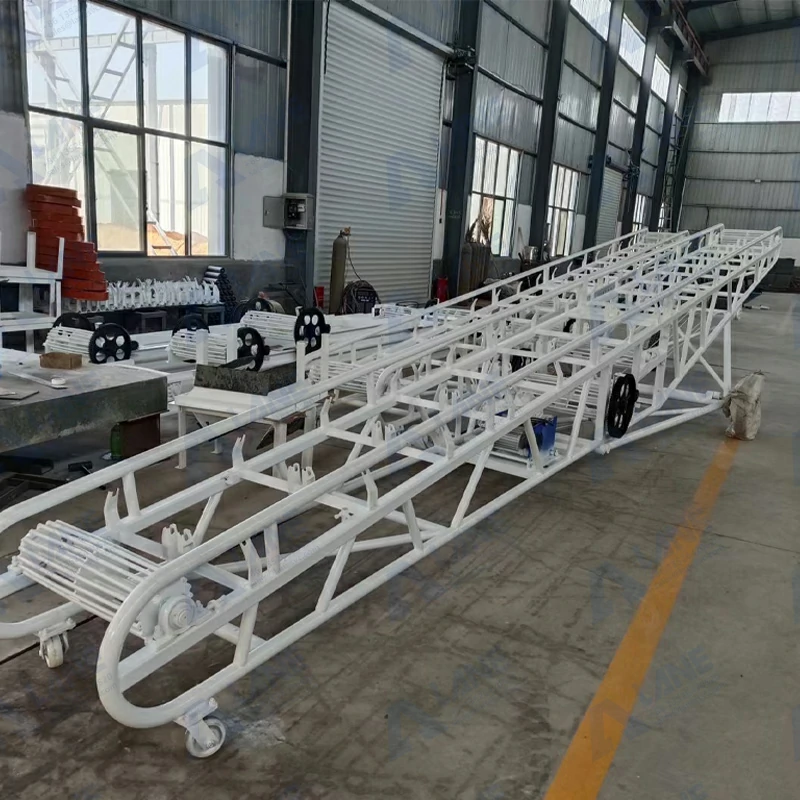
The quick-release tensioner is a detail operators appreciate. Instead of loosening 8 bolts and prying a bearing housing, you release two locking levers and the take-up slides. Swap a belt in under an hour. For mobile conveyors, we use gravity take-up units that self-adjust as the belt stretches.
Side skirts at the loading point keep material on the belt. Corrosion-resistant idlers handle the acidic dust that eats standard steel in weeks. Emergency stop pull cords run the full length, both sides. Pull anywhere, the conveyor stops.
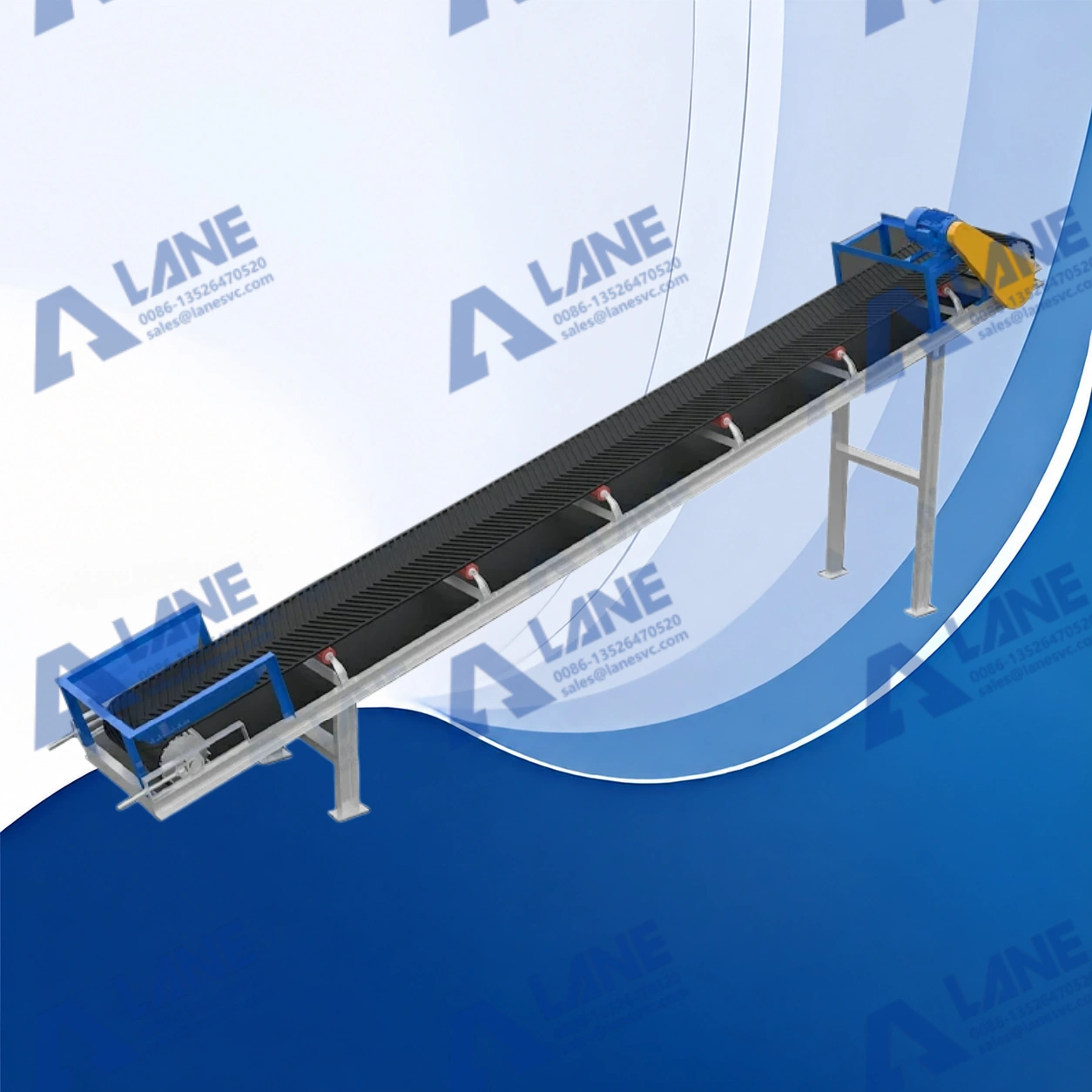
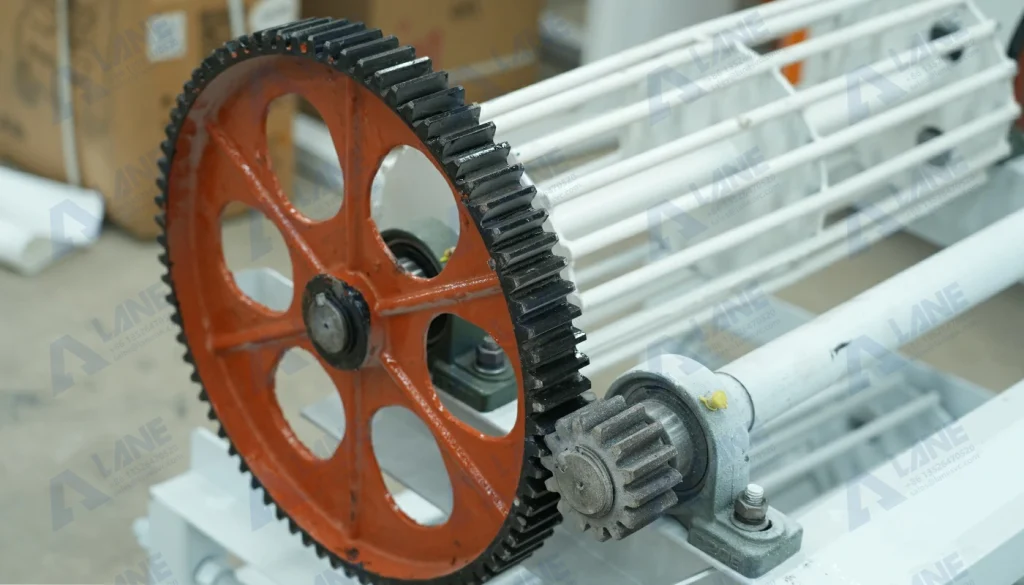
The motor drives the head pulley. Friction between the pulley and the belt surface pulls the belt forward. Material loads onto the belt at the tail end (or at intermediate points through tripper cars) and rides to the head end, where it discharges over the head pulley. The empty belt returns on idlers below the carrying run. Belt tension is maintained by a screw-type or gravity-type take-up unit at the tail.
Flat belt or chevron belt?
Flat for horizontal runs and inclines under 8 degrees with free-flowing material. Chevron for anything steeper. The V-pattern ribs grip the material. Without them, granules slide backward on the belt and pile up at the tail end. If you hear grinding at the tail pulley, your angle is too steep for the belt you are running.
How steep can a belt conveyor go?
25 degrees with a chevron belt and cleats. Beyond that, material stability becomes unreliable and you should look at a bucket elevator for the vertical section. We have pushed chevron belts to 28 degrees with very dry, free-flowing granules, but 25 is the practical ceiling we guarantee.
How do I calculate capacity?
Belt cross-sectional area times belt speed times material bulk density. Troughing idlers increase the cross-sectional area by forming the belt into a U-shape. A 20-degree trough angle adds roughly 30% more capacity than a flat belt at the same width. We run these numbers as part of every quote. Send us your material density and target throughput.
Mechanical fasteners or vulcanized splice?
Vulcanized splices last longer and run quieter. They also cost more and require a technician on site. Mechanical fasteners let you replace a belt section in an hour with basic tools. For permanent conveyors that run continuously, we recommend vulcanized splices. For mobile conveyors or temporary setups, mechanical fasteners are the practical choice. We can supply either.
What is belt replacement cost as a percentage of the conveyor cost?
The belt is roughly 25 to 35 percent of the total conveyor cost, depending on length and width. Replacement every 2 to 4 years is typical in fertilizer service. The belt is a wear part. Budget for it.
My belt keeps tracking to one side. What is the fix?
Check three things in order: idler alignment (the most common cause), belt tension balance (one side tighter than the other), and material loading centering (material landing off-center pushes the belt sideways). Our conveyors ship with belt misalignment switches that alert you before the belt walks off the pulleys and damages itself.
What about dust enclosure?
Full-length dust covers are available as an option. They bolt onto the conveyor frame and create a sealed tunnel. Combined with dust extraction ports connected to your baghouse, this keeps indoor plants clean. For outdoor conveyors handling dusty materials, covers also keep rain and wind out of the product stream.
Tell us your material, capacity, conveyor length, and incline angle. We will spec the right belt conveyor with a layout drawing, typically within 48 hours.


Everything you need to know when looking at different types of organic fertilizer equipment, all in one place.
Copyright © 2026. LANE All rights reserved.