
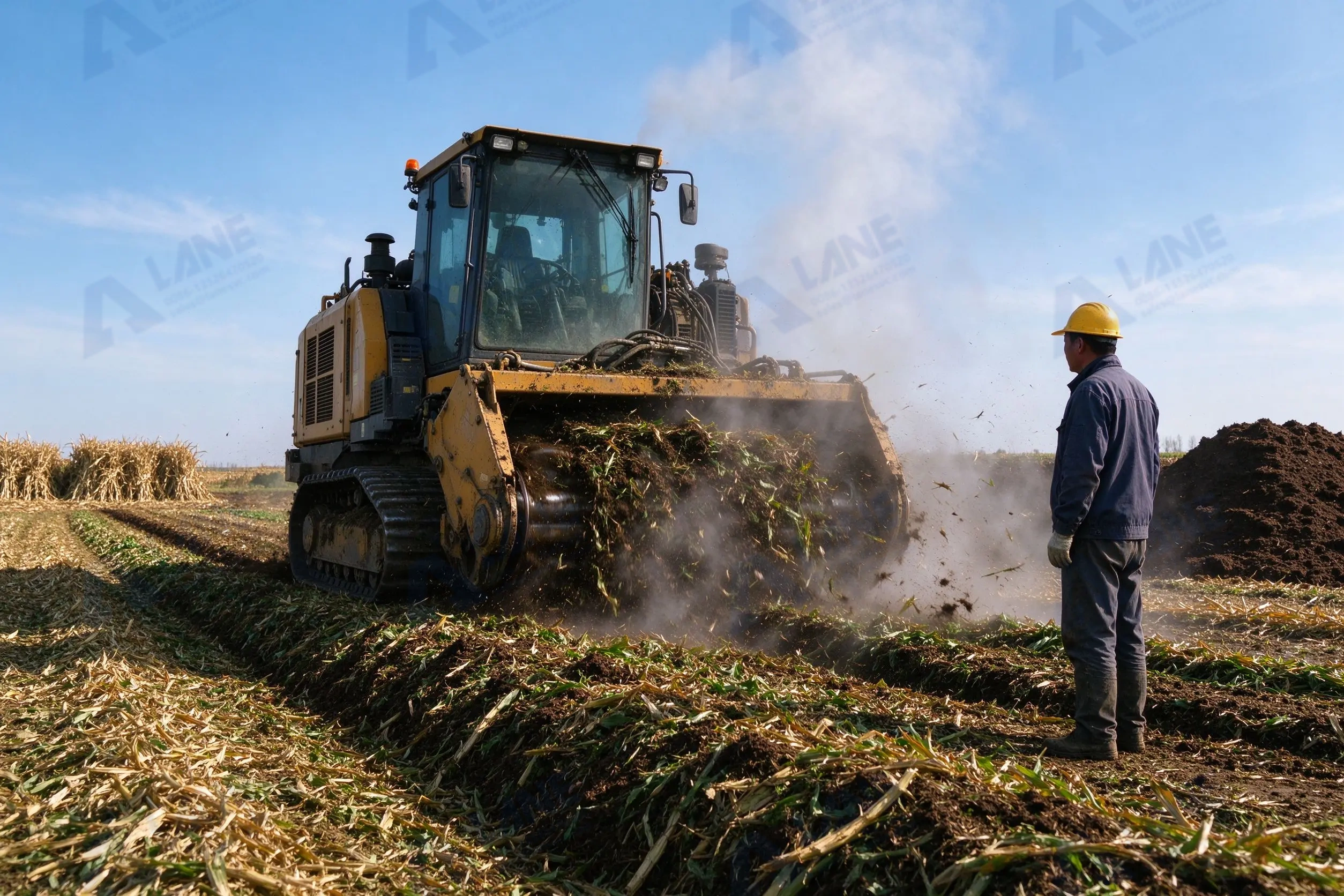
Choose a windrow compost turner by capacity, feedstock and site layout. Compare machine types and key specs before buying.
A windrow compost turner is used in aerobic composting facilities to turn long rows of organic material, restore porosity and distribute moisture and heat throughout the pile. For an organic fertilizer plant, the equipment choice affects more than turning speed: it determines how much yard space is needed, how material moves through the fermentation area, and how consistently the feedstock is prepared for downstream processing.
The right machine depends on the actual windrow dimensions, feedstock condition, daily material volume and available turning area. A large capacity figure on a product page is not enough to make a purchase decision. Buyers should compare the working width, turning depth, drive arrangement and operating conditions before selecting a model.
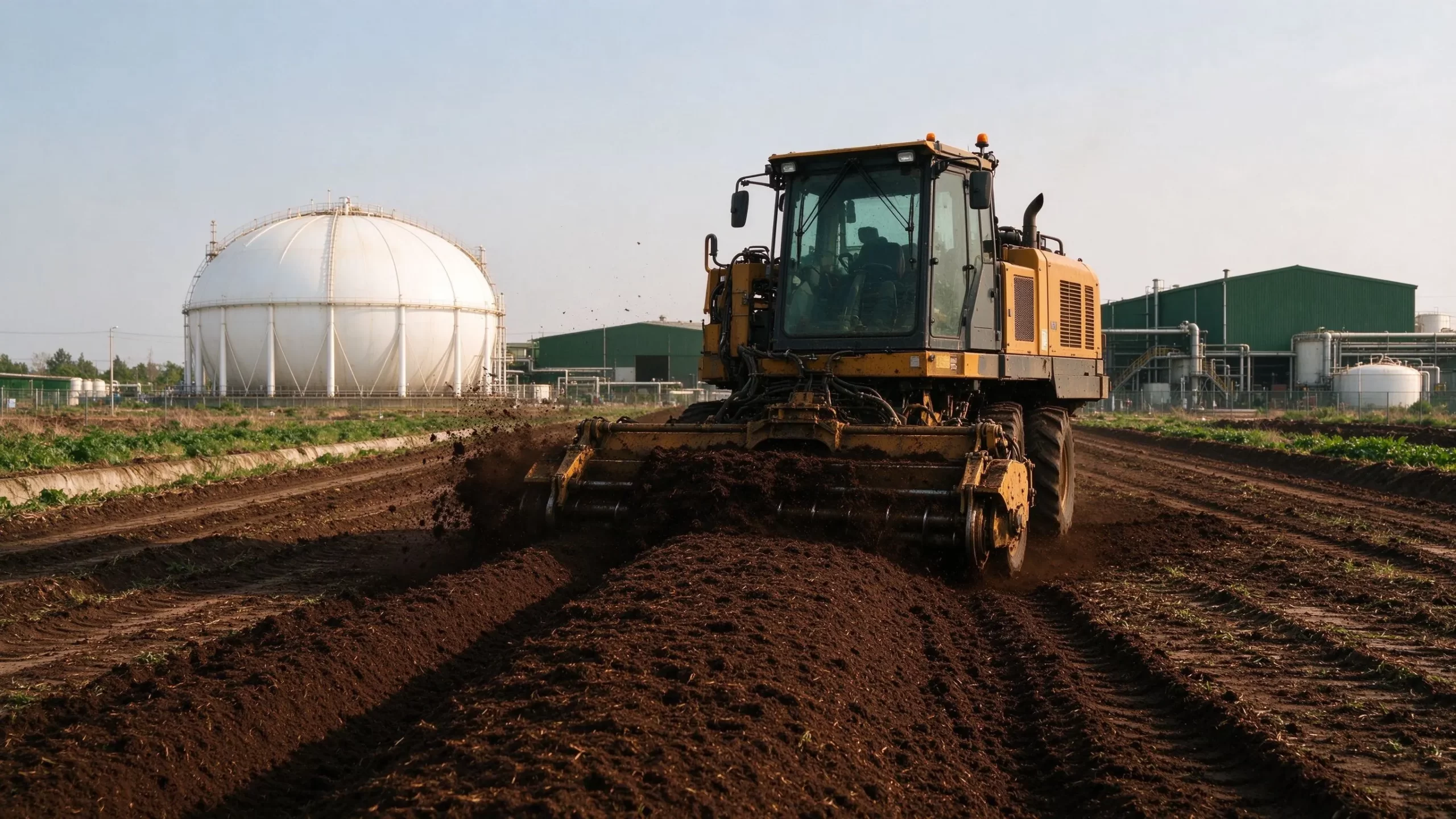
A windrow compost turner works on elongated piles of mixed organic materials. Depending on the machine design, it travels along or over the pile while rotating blades, teeth or a turning drum lift, break up and redistribute the material.
This operation serves three practical purposes:
Aeration: Turning loosens compacted material and creates air spaces for aerobic microorganisms.
Material redistribution: Outer and inner layers are exchanged, helping reduce uneven decomposition.
Moisture and temperature management: Turning helps redistribute moisture and release excess heat when the pile becomes too hot.
The machine does not independently control the entire fermentation process. Feedstock composition, moisture, particle size, pile geometry and turning frequency still need to be managed by the plant operator.
Cornell Cooperative Extension explains that turning should move material from the outside toward the center while loosening the pile to improve air movement. This is why a properly sized windrow compost turner is a process-control machine, not simply a material-handling unit.
Not every compost turner is designed for the same yard layout. LANE’s equipment range includes tractor-towed, crawler and wheel-type designs. Buyers should distinguish open-yard windrow operation from rail-mounted trough operation before comparing prices.
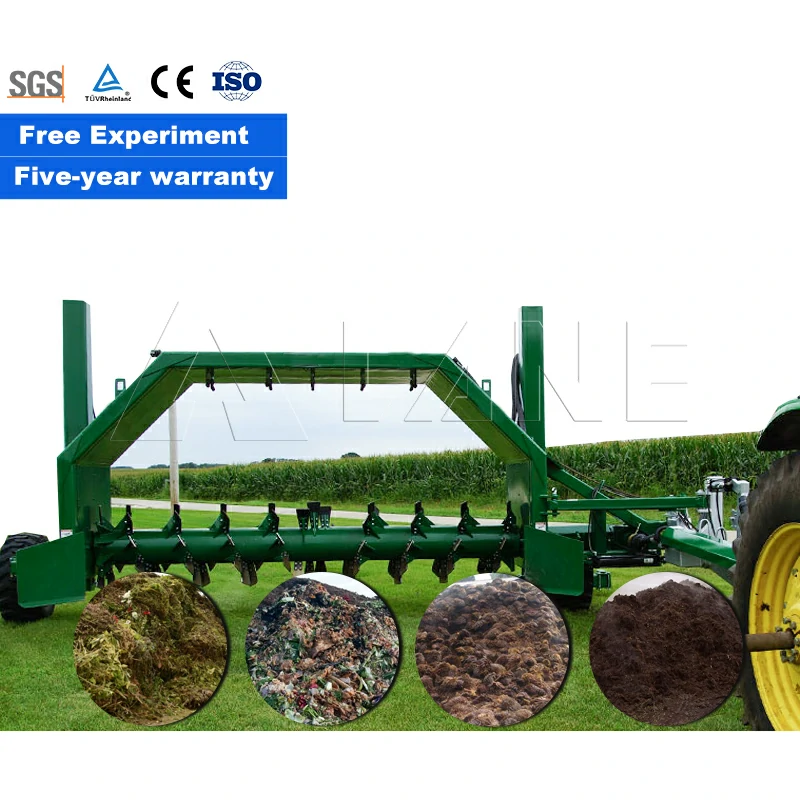
A tow-behind model is connected to a tractor and powered through the tractor’s PTO system. It is a practical option when the plant already owns a suitable tractor and wants to avoid purchasing a separate self-propelled chassis.
LANE’s equipment category lists a working capacity of 400–1,500 m³/h for this type. The actual operating result depends on tractor power, material condition, pile dimensions and working speed.
This design is worth considering for smaller or medium-sized composting yards, farms and facilities where equipment investment needs to remain controlled. Before ordering, confirm the required tractor horsepower, PTO compatibility, turning width and transport arrangement.

A crawler-type machine moves on tracks and works directly over open windrows. It does not require a concrete fermentation trough or fixed rail system, which gives the plant more flexibility when arranging rows or expanding the composting area.
The published LANE category range is 500–1,800 m³/h. Its dedicated product page further lists three reference configurations:
2,400 mm turning width: 500–700 m³/h
2,600 mm turning width: 1,000–1,200 m³/h
3,000 mm turning width: 1,300–1,800 m³/h
The same page describes a tracked chassis, hydraulic depth adjustment and a dual-spiral rotor arrangement. These are useful details to compare when reviewing a technical proposal.
For larger plants processing manure, straw, sludge or mixed organic residues, a crawler windrow compost turner is often the more suitable starting point when the site has enough open working area.

LANE’s equipment category describes the wheel type as suitable for windrow composting, with a listed capacity range of 400–5,000 m³/h. However, its dedicated wheel-type product page describes a rail-mounted machine for fermentation troughs, with reference groove widths of 10 m, 15 m and 20 m.
These descriptions are not fully consistent. Buyers should therefore ask LANE to confirm whether the quotation is for an open-yard windrow configuration or a rail-mounted trough installation. Do not select it solely because the category page uses the term windrow.
| Machine Type | Drive / Movement | Published Category Capacity | Main Selection Consideration |
|---|---|---|---|
| Tow Behind | Tractor-towed, PTO-driven | 400–1,500 m³/h | Tractor compatibility and lower equipment investment |
| Crawler Type | Self-propelled tracked chassis | 500–1,800 m³/h | Open-yard operation and larger windrows |
| Wheel Type | Configuration needs confirmation | 400–5,000 m³/h | Confirm open-yard or rail-mounted trough design |
Important: These are the capacity ranges shown on LANE’s equipment category page, not guaranteed output figures for every material or operating condition. The dedicated wheel-type page describes a trough installation, so its actual configuration must be confirmed before purchase.
Engineering note: The capacity figures above are published category-page ranges. They should not be treated as guaranteed throughput for every feedstock. Request a project-specific capacity confirmation and operating conditions before comparing quotations.
Planning a fertilizer project?
Contact LANE engineering team to get a free 3D plant layout drawing, motor power calculation, and factory-direct quote within 4 hours.Request 3D Layout & Budget Estimate →
The working width and rated capacity are only the starting point. A windrow compost turner must match the pile geometry and the physical properties of the material. If the machine cannot reach the bottom of the pile, or if its rotor cannot handle the feedstock, nominal capacity will not translate into consistent fermentation.
Before requesting a quotation, prepare the following information:
Windrow width and height: Provide the actual pile cross-section, not just the available yard width. The machine’s turning width and maximum turning depth must cover the full pile.
Feedstock composition: Identify the main materials, such as poultry manure, cattle manure, straw, sludge or food-processing residues. Fibrous and sticky materials behave differently during turning.
Moisture content: Wet material can compact around the rotor, while excessively dry material can create dust. Provide the normal operating range and any seasonal variation.
Daily processing volume: State the incoming volume per day and the number of operating hours available for turning.
Drive and maintenance requirements: Confirm engine or tractor power, hydraulic components, wear-part access, lubrication points and replacement blade availability.
For crawler models, LANE lists turning widths of 2,400–3,000 mm and a turning-depth adjustment range of 600–1,800 mm on its product page. These values are useful reference points, but the final machine must be matched to the buyer’s actual windrow dimensions.
A machine that works well with loose straw and manure may not perform the same way with wet sludge or dense food-processing residues. Feedstock condition affects rotor loading, material flow, turning resistance and the amount of material that can be handled in one pass.
For example:
Poultry and livestock manure: Check moisture, fiber content and the proportion of bedding material. Wet manure may need dry bulking agents before windrow formation.
Straw and crop residues: Confirm that the turning mechanism can break up long fibers and redistribute them without leaving large compacted sections.
Dewatered sludge: Check stickiness and solids content. A material that adheres to the rotor can increase cleaning and maintenance requirements.
Mixed food and agricultural waste: Check for plastic, stones, metal and oversized debris before the turning stage.
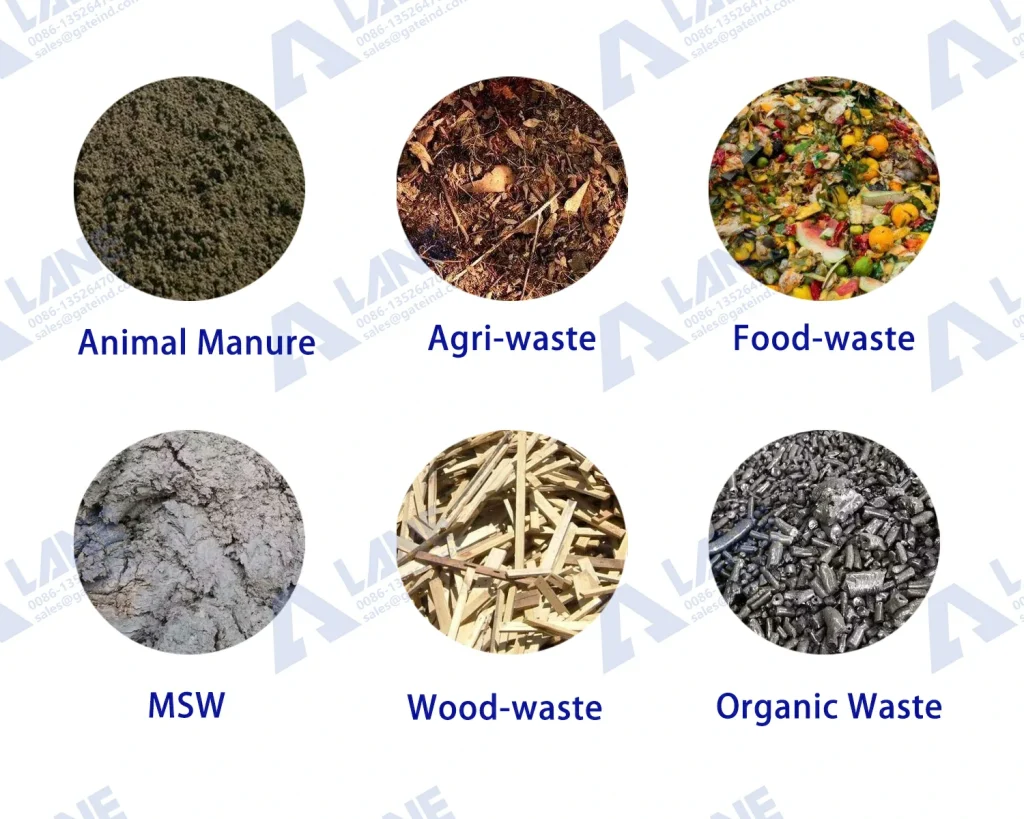
Yard design matters just as much. The operating lane must allow the machine to travel, turn around and reposition between rows. Leave enough clearance for loaders, feedstock delivery vehicles and finished-compost removal. The windrows should not be so close together that the chassis or turning mechanism damages adjacent piles.
The UK Environment Agency’s open-air composting guidance also emphasizes adapting windrow dimensions to feedstock, heat generation, space, aeration and equipment access.
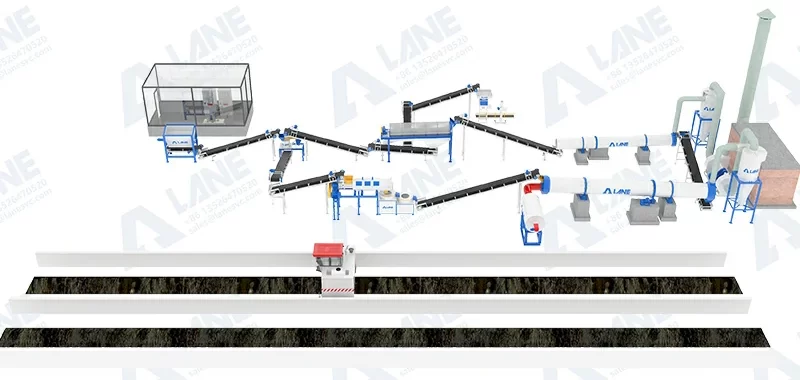
The turning machine handles the active composting stage. It does not replace the equipment required for preparing, refining and granulating the finished compost.
A typical process arrangement is:
Raw Material Receiving → Mixing and Moisture Adjustment → Windrow Formation → Compost Turning and Fermentation → Crushing → Screening → Mixing → Granulation → Drying and Cooling → Packaging
After fermentation, the material may still contain lumps, oversized fibers or foreign particles. A suitable organic fertilizer crusher can reduce the particle size before screening and subsequent processing.
If the plant intends to manufacture commercial granular fertilizer, the composting area should also be planned in relation to the downstream production line. The fermentation section must provide a steady supply of mature material without forcing the crusher, mixer or granulator to wait for irregular batches.
A windrow compost turner should therefore be selected as part of the complete process layout, rather than purchased as an isolated machine.
Turning organic waste is a demanding duty. Manure, sand, straw and sludge can expose blades, bearings, chains and hydraulic components to abrasion, impact and corrosion.
A practical maintenance plan should include:
Before each shift: Inspect the rotor, blades, hydraulic hoses, tracks or tires, guards and visible fasteners.
During operation: Watch for abnormal vibration, noise, material buildup and changes in turning depth.
Weekly or at the specified service interval: Lubricate designated bearings and inspect drive chains, belts and hydraulic connections according to the manufacturer’s manual.
When wear is detected: Replace damaged or excessively worn blades before they reduce turning performance or create imbalance.
Ask the supplier to provide a wear-parts list with part numbers, materials, recommended inspection intervals and replacement procedures. For crawler models, LANE describes manganese-steel turning blades and a hydraulic system on its product page. Buyers should confirm the actual blade material and component specifications in the final technical agreement.
A quotation should describe the complete working configuration, not just the machine name and rated capacity. Two machines with similar capacity figures may have different drive systems, turning widths, service requirements and site limitations.
Ask the supplier to specify:
Machine model and overall dimensions
Turning width, maximum pile height and turning depth
Rated capacity and the test material used to determine it
Engine or motor power and fuel or electricity requirements
Rotor design, blade material and replacement cost
Hydraulic system and travel arrangement
Required operating area and turning clearance
Spare parts supplied with the machine
Installation supervision, commissioning and operator training
Packing dimensions, shipping weight and proposed delivery terms
Do not accept a capacity guarantee without the feedstock conditions and operating assumptions. A capacity figure measured on loose, uniform material may not represent the result with wet, dense manure or sludge.
Yes, provided the machine is matched to the material’s moisture, density and fiber content. LANE’s crawler product information lists livestock manure, agricultural residues, sludge and food waste among its potential feedstocks. However, very wet or sticky materials may require dewatering or mixing with dry bulking agents before turning.
LANE’s category page lists 400–1,500 m³/h for tow-behind models and 500–1,800 m³/h for crawler models. These are volumetric handling figures, not tons per hour. Actual performance depends on pile dimensions, feedstock properties, turning depth and working speed.
No, not for an open-yard crawler or tractor-towed configuration. These machines are designed to work with elongated windrows on an operating yard. Rail-mounted trough systems use a different installation arrangement and should not be confused with open-yard windrow equipment.
There is no single turning interval suitable for every feedstock. Operators should use pile temperature, moisture and oxygen conditions to determine when turning is needed. Cornell’s guidance recommends monitoring the process rather than relying on a fixed schedule alone.
The delivery period must be confirmed in the project quotation; there is no verified universal lead time for every configuration. Manufacturing schedule, customization, inspection, export packing and shipping route all affect the timeline. Ask the supplier for the production lead time, estimated shipping schedule, packing dimensions and installation scope in writing.
A suitable windrow compost turner should match three things: the actual windrow cross-section, the physical condition of the feedstock and the required daily processing volume. Buyers should also verify the machine’s turning mechanism, wear-part specification and maintenance access before signing the purchase contract.
For an open-yard composting operation, a crawler model is worth evaluating when the plant needs self-propelled movement and flexible windrow arrangement. A tow-behind model may be more economical when a compatible tractor is already available. For wheel-type equipment, confirm the installation design carefully because the published category description and dedicated product page show different application arrangements.
LANE can review the feedstock, site dimensions and production target before recommending a configuration. For a complete project proposal, request a machine specification, layout drawing and itemized quotation rather than relying on a capacity figure alone.
For more details, please feel free to contact us.
Henan Lane Heavy Industry Machinery Technology Co., Ltd.
Email: sales@lanesvc.com
Contact number: +86 13526470520
Whatsapp: +86 13526470520

Everything you need to know when looking at different types of organic fertilizer equipment, all in one place.
Copyright © 2026. LANE All rights reserved.
Send A Message