
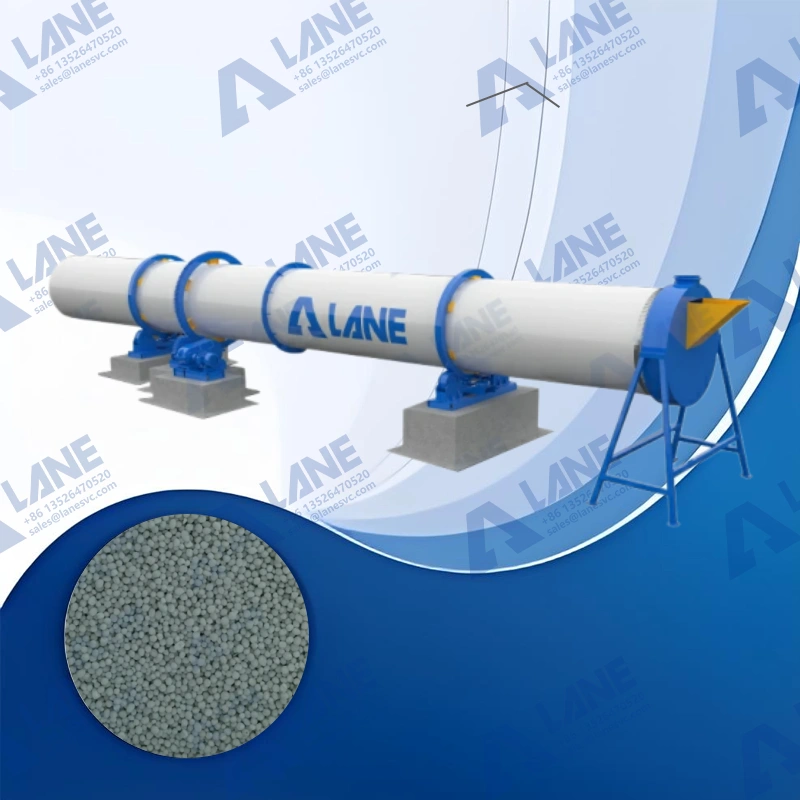
Choose an organic fertilizer cooling machine by capacity, airflow and material. Check key specs before requesting a quote.
An organic fertilizer cooling machine removes residual heat from granules after drying, helping prevent caking, moisture reabsorption and handling problems before screening and packing. For a plant manager, the real purchasing question is not simply how quickly the machine cools the product. It is whether the cooler can handle the actual dryer discharge, material characteristics and required finished-product temperature without creating a bottleneck.
A common procurement mistake is to select a cooler using the granulator’s rated capacity alone. The cooler must be matched to the actual dryer output, including operating hours, feed moisture variation and the amount of material returned from screening. A machine that looks adequate on a quotation sheet may struggle when the line runs continuously.
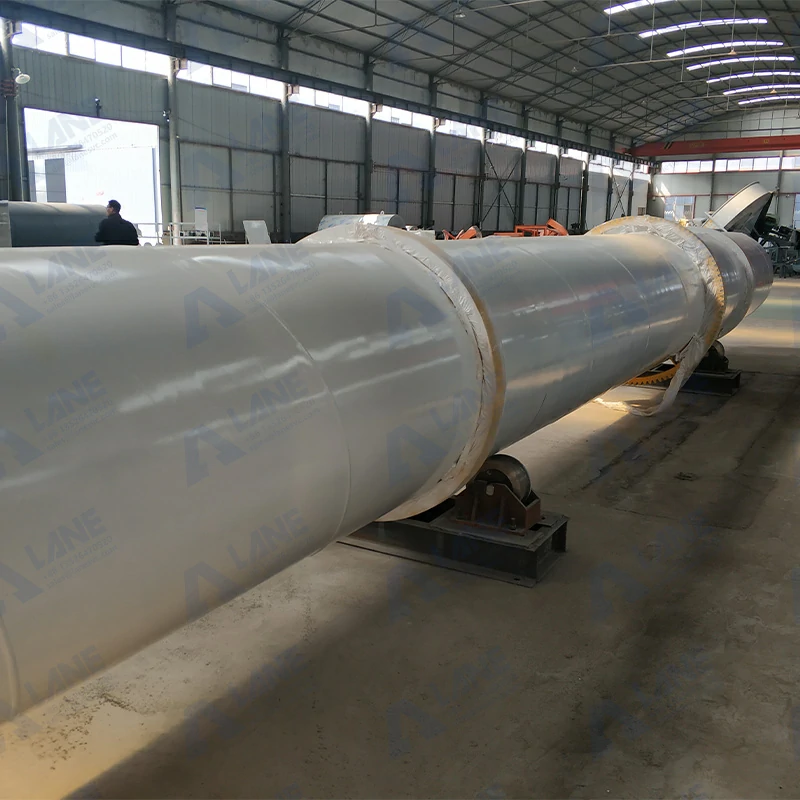
This guide is intended for fertilizer plant owners, production managers and equipment procurement teams comparing cooling equipment for manure-based fertilizer, compost granules and other organic fertilizer products.
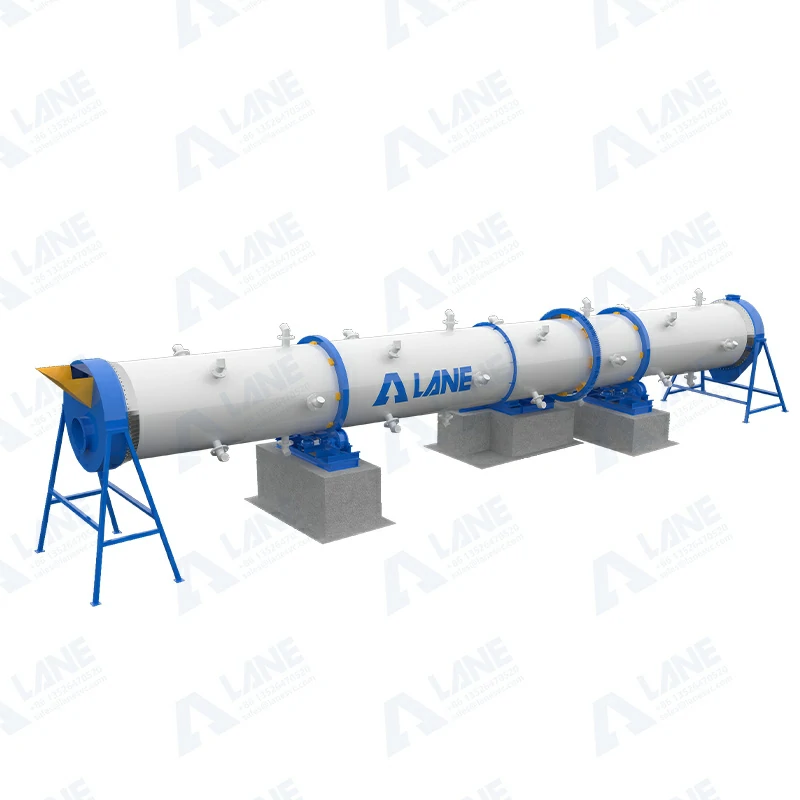
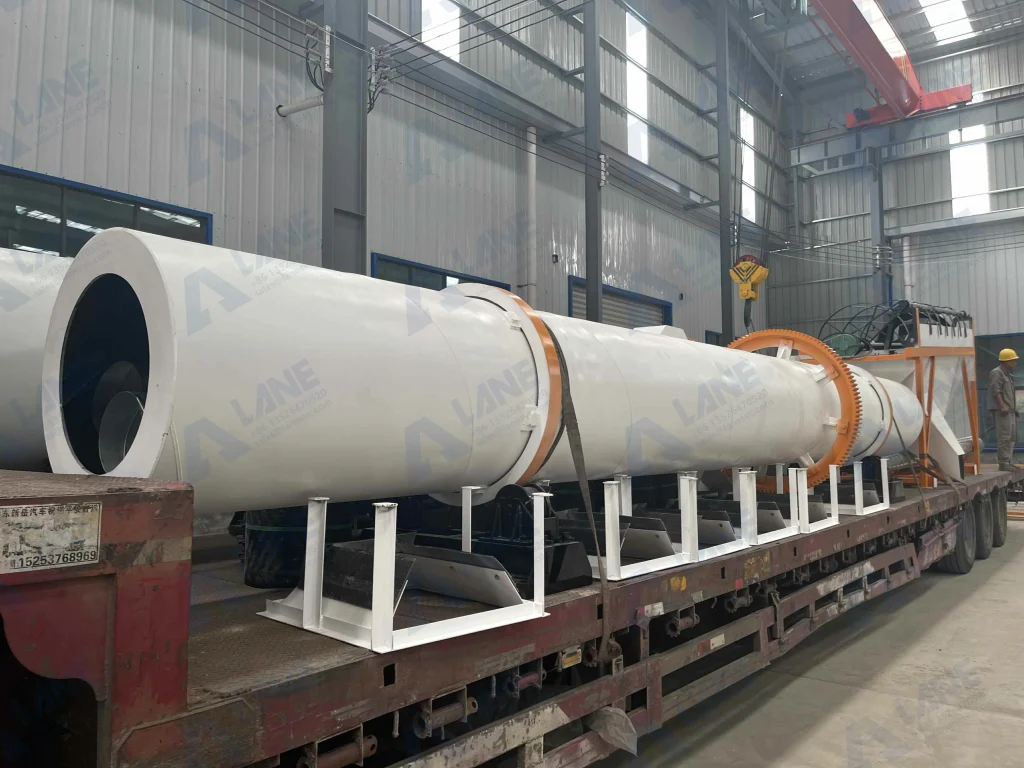
A rotary drum cooler generally uses counter-current airflow. Hot granules enter one end of the inclined rotating drum, while cooling air moves in the opposite direction. As the drum rotates, internal lifting plates raise and distribute the material, allowing it to fall through the air stream. Heat transfers from the granules to the air, and the cooled product leaves through the discharge end.
The arrangement is straightforward, but the design details determine whether the machine performs consistently.
FEECO’s technical article on rotary coolers in fertilizer production explains that cooler design should account for bulk density, particle size distribution, granule fragility and heat-transfer properties. These factors affect drum sizing and the arrangement of internal lifting flights, so buyers should provide actual material data rather than relying on nominal capacity alone.
For a typical fertilizer application, the LANE product page describes a drum inclination of approximately 2–5° and a rotation speed of 3–6 r/min. It also describes a counter-current arrangement and a target discharge temperature of no more than 40°C under the stated operating conditions. These are reference values, not universal settings for every organic material or site. The final design should be confirmed against the feed temperature, ambient conditions and required product temperature.
One point deserves attention: an organic fertilizer cooling machine does not correct poor drying. If granules leave the dryer with excessive moisture, cooling alone will not make them storage-stable. Dryer performance, cooler capacity and screening should be evaluated as one connected section.
Planning a fertilizer project? Contact LANE engineering team to get a free 3D plant layout drawing, motor power calculation, and factory-direct quote within 4 hours. Request 3D Layout & Budget Estimate →
The first sizing input should be the dryer’s real discharge rate, not an isolated capacity figure from a brochure. Buyers should provide the supplier with the material type, hourly output, inlet temperature, target outlet temperature and local ambient temperature. Without these details, a capacity recommendation is only preliminary.
| Model | Capacity (TPH) | Drum Size (mm) | Rotation Speed (r/min) | Steel Plate Thickness (mm) | Lift Plate Thickness (mm) | Power (kW) |
|---|---|---|---|---|---|---|
| LARD0808 | 1–2 | Φ800 × 8000 | 5 | 8 | 4 | 5.5 |
| LARD1010 | 2–3 | Φ1000 × 10000 | 5 | 10 | 6 | 5.5 |
| LARD1212 | 3–5 | Φ1200 × 12000 | 5 | 10 | 6 | 7.5 |
| LARD1515 | 5–8 | Φ1500 × 15000 | 5 | 12 | 6 | 15 |
| LARD1616 | 8–12 | Φ1600 × 16000 | 5 | 12 | 6 | 18.5 |
| LARD1818 | 12–15 | Φ1800 × 18000 | 4 | 14 | 6 | 22 |
| LARD2020 | 20–25 | Φ2000 × 20000 | 4 | 14 | 6 | 37 |
| LARD2222 | 25–30 | Φ2200 × 22000 | 4 | 16 | 6 | 37 |
| LARD2424 | 30–35 | Φ2400 × 24000 | 4 | 16 | 6 | 45 |
| LARD2626 | 35–40 | Φ2600 × 26000 | 3 | 18 | 6 | 55 |
| LARD2828 | 40–45 | Φ2800 × 28000 | 3 | 18 | 6 | 75 |
| LARD3028 | 45–50 | Φ3000 × 28500 | 3 | 18 | 6 | 90 |
Capacity Note: LANE’s product overview lists a customized capacity range of 1–20 TPH. The technical parameter table also presents 12 reference models with listed capacities ranging from 1–2 TPH to 45–50 TPH. Buyers should confirm the applicable model, actual throughput and final configuration with LANE’s engineering team.
Engineering note: The listed motor power ratings provide a useful reference for preliminary equipment selection. Buyers should still request separate motor ratings for the drum drive and induced-draft fan, together with the fan airflow and static-pressure duty. Confirm the total installed electrical load and check whether the selected configuration matches the actual material properties and production requirements.
The material options have different cost implications:
Do not assume that a stainless-steel drum means every internal component is stainless steel. Request a component-by-component material list. LANE lists Q235B/Q345B carbon steel as standard construction options, with SS304/316L available, and identifies wear-resistant alloy steel or SS304 options for lifting plates.
| Component | Manufacturer’s Specification |
|---|---|
| Drum Material | Q235B / Q345B carbon steel; SS304 / SS316L optional |
| Lifting Plate | Wear-resistant alloy steel / SS304 |
| Supporting Roller | ZG45 / ZG55 cast steel |
| Reducer | ZQ / ZSY series hard-tooth surface gear reducer |
| Motor | Siemens / ABB / domestic brand according to customer requirements |
| Sealing | Multi-layer labyrinth seal |
| Dust Collection | Cyclone separator standard; baghouse filter or wet scrubber optional |
| Exhaust Fan | Centrifugal induced draft fan, sized according to drum volume |
A senior engineer’s sizing advice: Do not select a drive motor exactly at the calculated steady-state load. The engineering team should check starting torque, loaded restart conditions, mechanical resistance and the actual operating duty before finalizing the motor and reducer. At the same time, avoid excessive motor oversizing: it can increase purchase and operating costs without solving an undersized airflow system. Request the drive and fan calculations as separate items in the technical proposal.
Not all organic fertilizer granules behave in the same way. Composted poultry manure, cattle manure, straw-based compost and sludge-derived materials can differ in bulk density, particle strength, residual moisture and dust generation. These differences affect heat transfer and the risk of material sticking to internal surfaces.
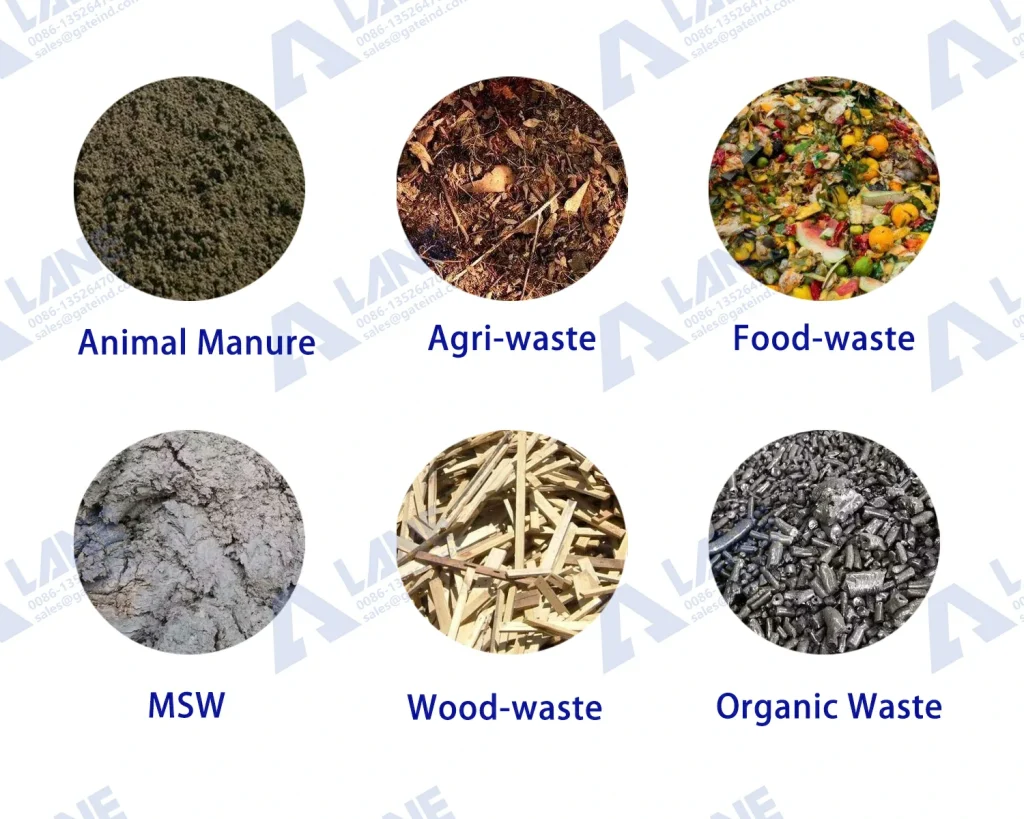
For relatively dry, mechanically stable granules, a standard carbon-steel drum with a properly designed lifting system may be sufficient. Where the formulation contains corrosive salts or the operating environment creates a higher corrosion risk, stainless-steel contact parts may be justified. The decision should follow a review of the actual formulation rather than a general claim that stainless steel is always better.
For fragile granules, ask the supplier how the lifting plates are arranged and whether the discharge transition creates unnecessary impact. Excessive cascading can increase fines. Those fines may then enter the dust collector or return through the screening circuit, reducing saleable output.
An organic fertilizer cooling machine should also be selected with the downstream equipment in mind. The cooler discharge must feed the screener steadily. If the screening section is undersized, the cooler may be forced to stop or operate below its intended throughput.
A practical process sequence is:
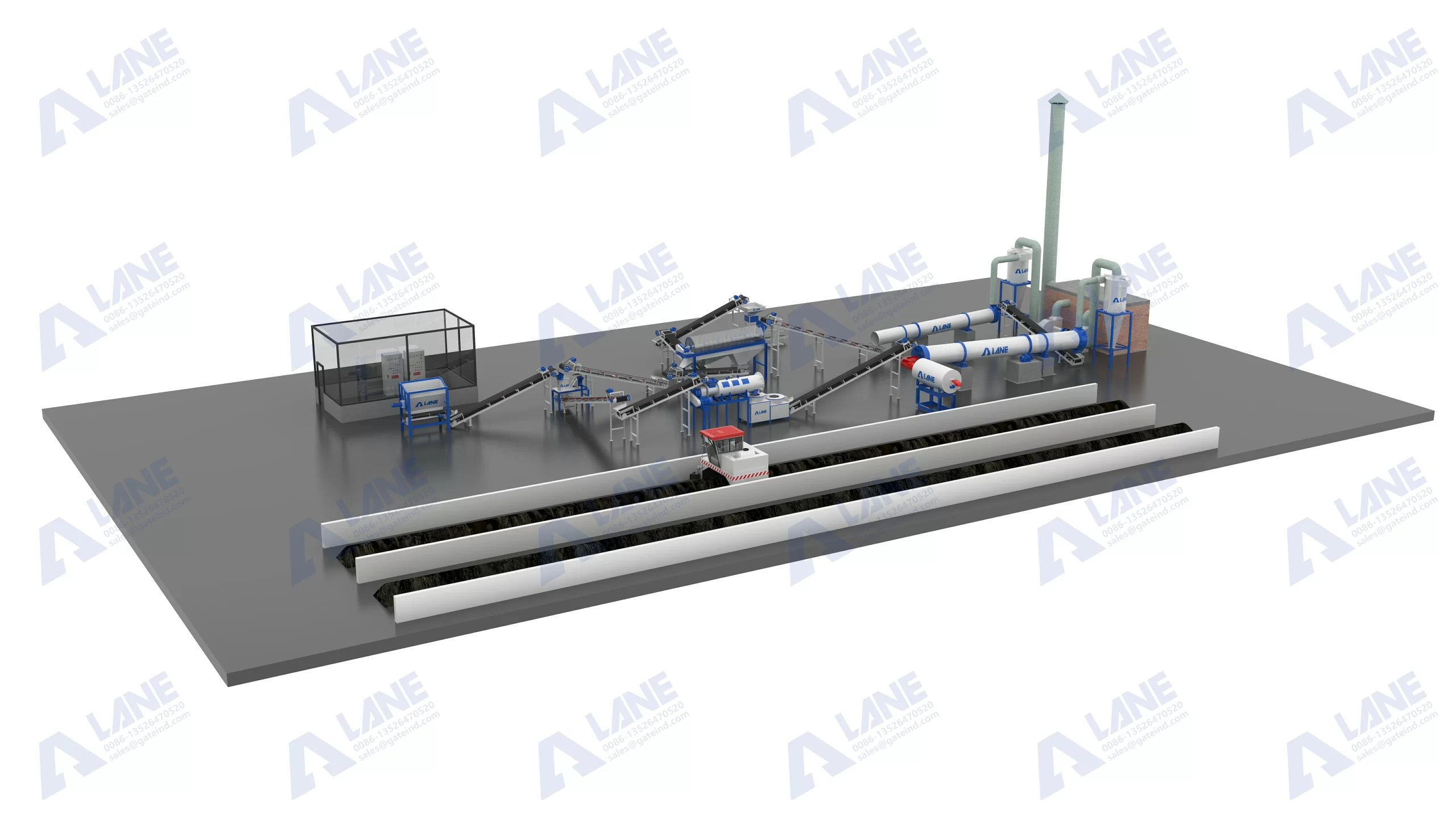
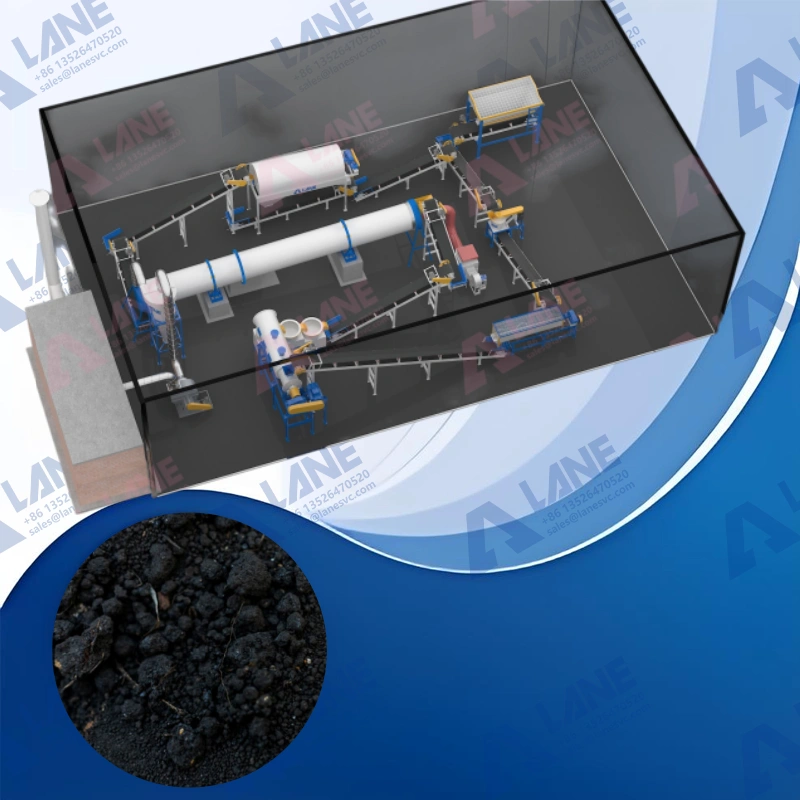
The cooler is therefore not an isolated purchase. It is one part of a material-handling system. LANE’s organic fertilizer equipment information also identifies the rotary dryer, rotary cooler, rotary screener and optional coating and packing equipment as connected stages in a granulation line.
The quoted machine price is only one part of the investment. Buyers should compare the complete supply scope, especially when quotations come from different manufacturers.
The first item to clarify is the fan and dust collection package. Check whether the quotation includes the induced-draft fan, cyclone, connecting ducts, dampers, motor and electrical controls. If these are excluded, the buyer may need to source them locally and take responsibility for matching the airflow.
The second item is the installation scope. A rotary drum cooler needs suitable foundations, support alignment, access for maintenance and a workable arrangement for inlet and discharge conveyors. Ask the supplier to provide foundation loads, overall dimensions, equipment weight and maintenance clearance requirements before civil work begins.
The third item is electrical integration. Confirm the number of motors, starting method, control panel scope, cable requirements and whether variable-frequency control is included or optional. The motor brand should be written into the quotation if it is a purchasing requirement.
Finally, review wear and maintenance costs. Lifting plates, seals, support rollers and bearings are not interchangeable consumables. Their expected inspection intervals and replacement procedures should be included in the maintenance documentation.
A low quotation deserves closer inspection if it does not identify steel grades, plate thicknesses, reducer specifications or fan duty. A cheaper shell can become an expensive purchase if the machine needs frequent repairs or cannot maintain the required output.
Before placing an order, ask the manufacturer to provide a technical proposal based on your actual process conditions. A useful inquiry package should include:
The proposal should identify the equipment model or custom dimensions, drum drive motor, fan motor, reducer, bearing arrangement, sealing method and dust collection configuration. It should also define what will be checked during factory acceptance testing (FAT), such as no-load operation, rotation direction, vibration, noise and the completeness of supplied components.
Do not treat a general statement such as “suitable for organic fertilizer” as proof of capacity. Ask the supplier to confirm the design conditions in writing. If your feed material changes significantly between seasons or batches, provide representative samples or reliable material data before the final design is approved.
1. Can one cooler process poultry manure, cattle manure and straw-based fertilizer granules?
Yes, one customized cooler may handle different organic fertilizer granules, provided the capacity, airflow and material-contact construction are suitable for each product. Share the material properties and operating conditions with the manufacturer before confirming the configuration.
2. What outlet temperature should buyers specify?
A typical reference target is no more than 40°C, while the required value depends on ambient temperature, product characteristics and storage requirements. LANE’s product page describes cooling granules to within approximately 5–8°C of ambient air under its stated design conditions.
3. How often does the cooler require maintenance?
A weekly inspection and lubrication routine is a sensible starting point, but the final schedule should follow the supplied maintenance manual and actual operating hours. Check support rollers, bearings, seals, reducer oil and lifting plate wear at the intervals specified by the manufacturer.
4. Can the cooler be connected to an existing dryer from another supplier?
Yes, a standalone cooler can be designed for an existing dryer, subject to checking its discharge capacity, temperature, outlet height and conveyor arrangement. Provide the dryer nameplate data and site drawings so the connection can be reviewed before manufacture.
5. How long does manufacturing and delivery take?
The exact lead time must be confirmed in the order-specific quotation. It depends on the selected drum dimensions, material grade, motor and reducer availability, fabrication schedule and inspection requirements. Ask the supplier to separate manufacturing, inspection, packing and estimated sea-freight transit time rather than accepting an unsupported delivery promise.
Before approving an organic fertilizer cooling machine, make sure the technical agreement clearly confirms these three points:
A cooler should be purchased as part of the production process, not selected by capacity alone. Matching the cooler to the dryer, material properties and downstream screening section is the more reliable way to protect finished-product quality and avoid production interruptions.
For a customized equipment proposal, provide your material details, target output and dryer operating data to the LANE engineering team. The team can review the process requirements and prepare a suitable configuration for your plant.
For more details, please feel free to contact us.
Henan Lane Heavy Industry Machinery Technology Co., Ltd.
Email: sales@lanesvc.com
Contact number: +86 13526470520
Whatsapp: +86 13526470520

Everything you need to know when looking at different types of organic fertilizer equipment, all in one place.
Copyright © 2026. LANE All rights reserved.
Send A Message