
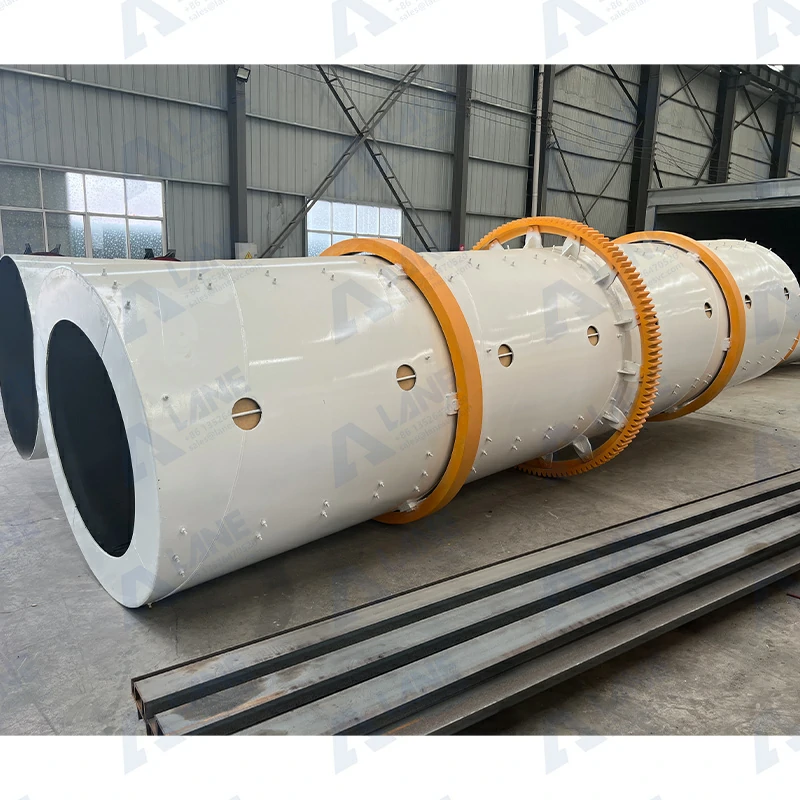
Plan a chicken manure granulator machine line: granulator types, drying load, capacity sizing, cost drivers, maintenance, and supplier checks for plant buyers.
Poultry litter leaves the house at 20 to 30 percent moisture once bedding is counted in, while fresh layer manure can arrive above 70 percent. The drying step decides how much of a chicken manure granulator machine’s rated output you see at the bagging scale, and whether the granules survive an export container.
This guide is written for the people who approve the purchase: fertilizer manufacturers adding organic capacity, investors sizing an organic fertilizer production line, engineers writing the machine specification, procurement managers comparing quotations that look nothing alike, and EPC contractors who must make the process pass a test.
Spreading manure on the nearest field used to solve the problem. Nutrient rules have narrowed that option. The EU Nitrates Directive 91/676/EEC caps the nitrogen livestock manure may deliver per hectare, several US states regulate application by phosphorus index instead of nitrogen alone, and USDA NRCS Conservation Practice Standard 590 ties nutrient application to a written management plan. Once land application is constrained by rules and by hauling cost, volume reduction and a stable product acquire a price per ton.
Buyers pay for consistency more than for nutrients. Granules dried below roughly 10 percent moisture store without heating, bag without caking, and flow through a spreader without dust. Poultry integrators, compost operators, and fertilizer blenders add granulation to an organic fertilizer production line for that reason, and FAO guidance on integrated plant nutrient management treats organic amendments as a partner to mineral fertilizer. Regulation (EU) 2019/1009 created a CE-marking route for fertilising products in Europe, with pathogen and contaminant limits a granulated poultry manure product must satisfy first.
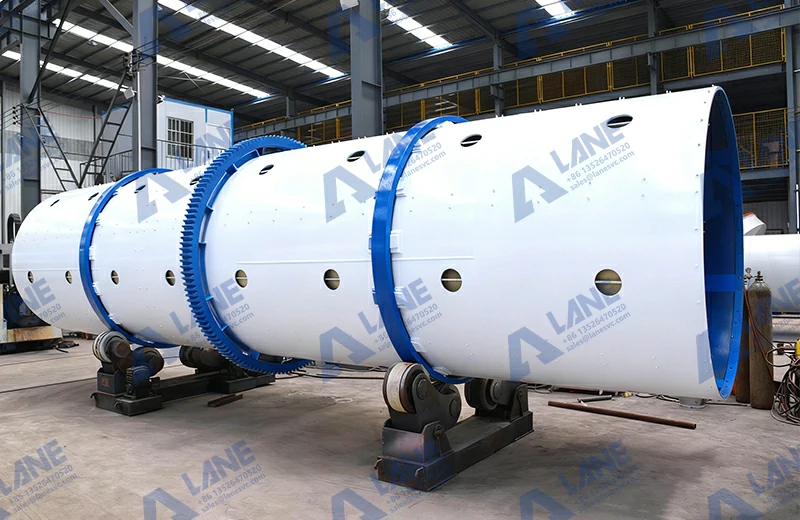
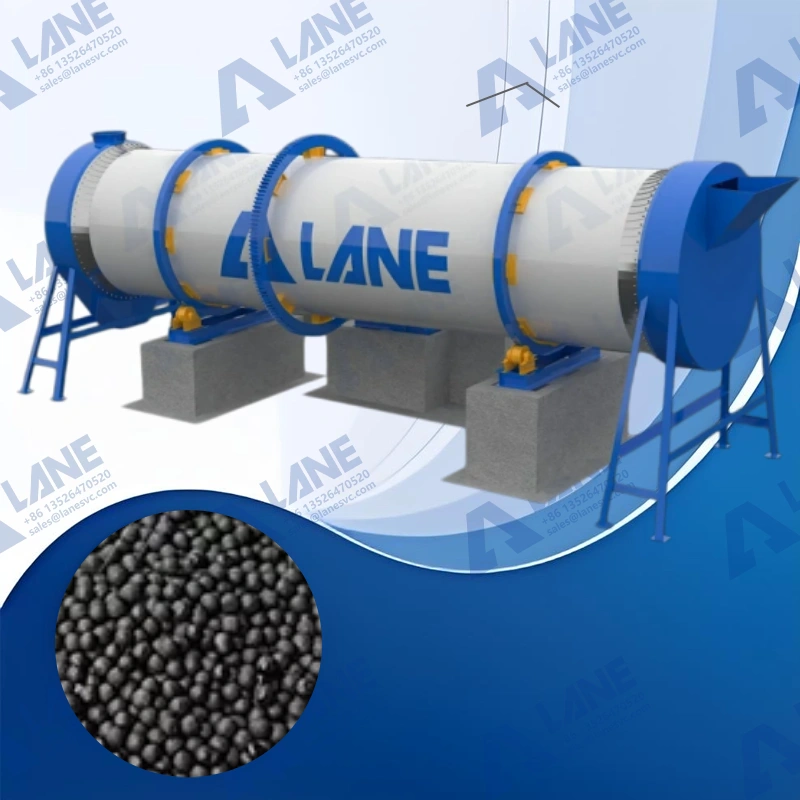
Granulation is agglomeration. In a rotary drum granulator, powder enters an inclined rotating cylinder and meets a binder solution sprayed onto the rolling bed. Particles stick on contact and grow by layering as fresh fines keep feeding in. Drum slope, speed, fill ratio, and spray rate set the size distribution and the recycle load; operators adjust all four to shift a product from a 3 mm granule to a 4 mm one.
Litter makes that harder than a mineral powder does. It is fibrous, low in bulk density, and its moisture and nitrogen content shift from delivery to delivery. A rotary drum granulator generally wants feed in the 15 to 30 percent moisture band, with the exact figure set by binder type and the granule strength target. Bentonite, clay, starch, molasses, and lignosulfonate all work, and each one changes strength, drying load, and the nutrient analysis printed on the label.
| Granulator type | Feed moisture | Typical scale | Granule form | Practical notes |
|---|---|---|---|---|
| Rotary drum granulator | 15-30% | medium to large, from about 3 t/h up | round, 2-5 mm | Handles organic-inorganic blends and high tonnage. Needs binder solution, drying capacity, and a recycle loop. |
| Disc (pan) granulator | 20-30% | small to medium | round, fairly uniform | Simple and low on power. Sensitive to moisture swings, hard to push toward high tonnage. |
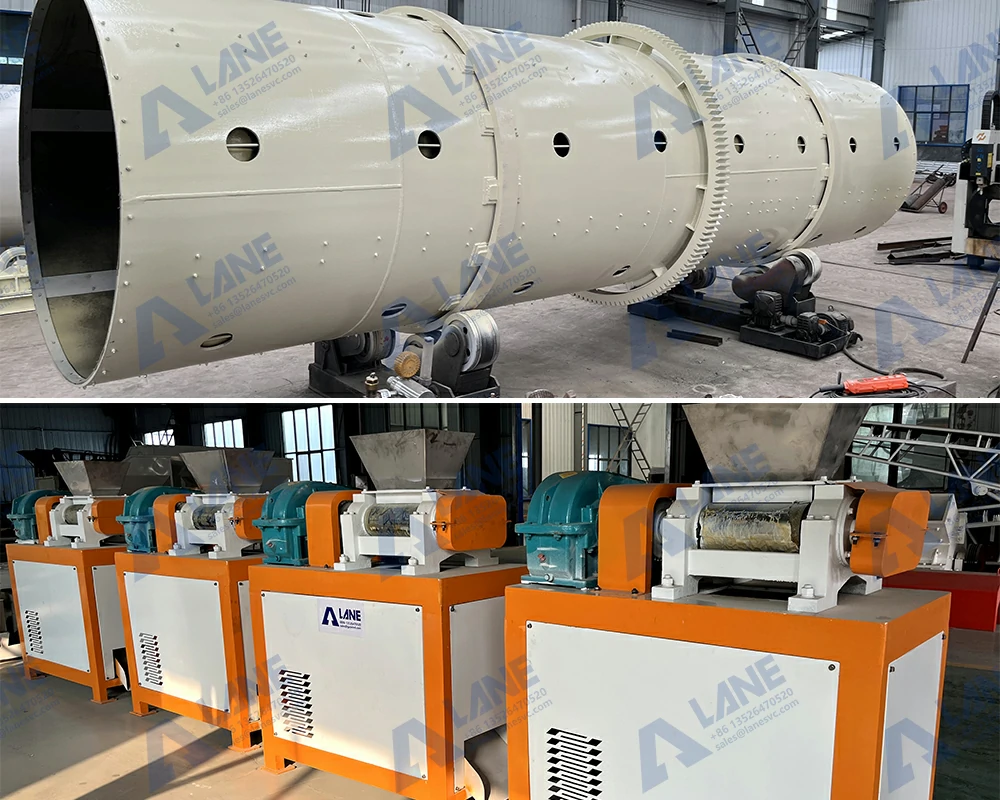
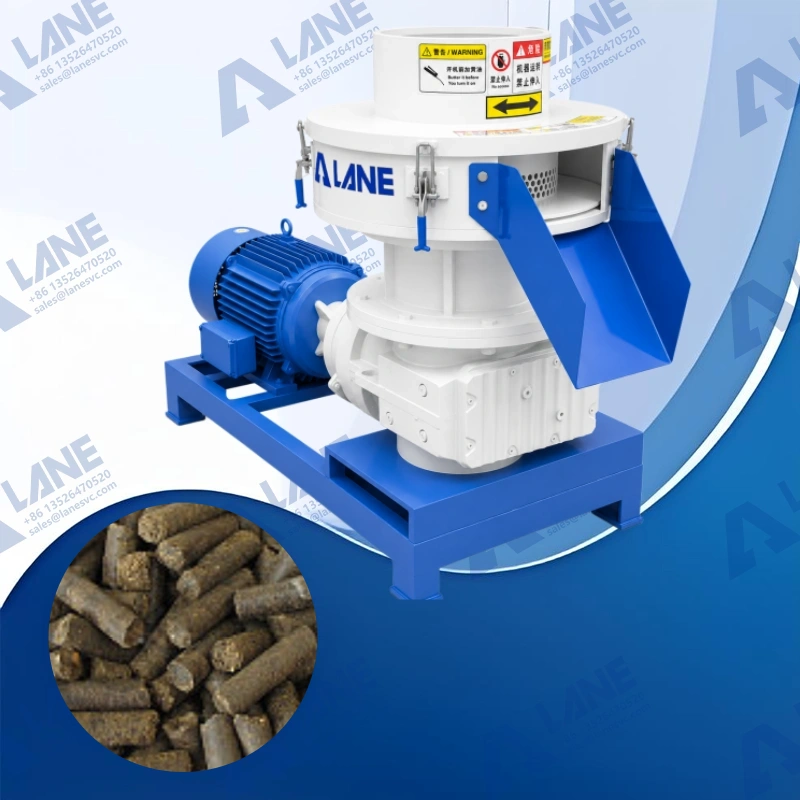
| Flat-die pellet mill | 12-18% | small to medium | dense cylindrical pellets | Often runs without a binder. Die wear rises with fibrous litter, and feed needs fine grinding. |
| Stirring-tooth granulator | 25-40% | medium | round, slightly rougher | Tolerates wetter feed and reduces pre-drying, which suits some pure organic recipes. |
For a plant that bags several tons an hour and runs a mix of manure and mineral fines, the rotary drum granulator is usually the practical choice, so the quotation should show a heat balance behind its throughput claim.
Work backward from the bagging scale. A line that packs 5 tons per hour of finished granules does not buy a 5 t/h chicken manure granulator machine, because fines and oversize recirculate. Recycle loads 30 to 60 percent above finished output are normal, and every downstream unit must be sized for that flow.
Drying carries the largest utility load. Bringing granules from about 25 percent moisture down to 8 to 10 percent removes roughly 165 to 170 kilograms of water per ton of wet feed, and an industrial dryer needs on the order of 3,000 kilojoules of fuel energy per kilogram of water evaporated once stack and radiation losses are counted. That figure sets the fuel bill and the size of the furnace or steam system behind an organic fertilizer production line.
Quotations for the same nominal capacity can differ by a factor of two or three. The gap usually sits in steel weight, gearbox and bearing brands, the dryer heat source, the level of PLC and SCADA automation, and dust and odor control. Freight, duty, and civil works add more where a site has no covered storage or power supply.
Operating cost deserves more attention than purchase price. Energy per ton of water evaporated dominates running cost, followed by wear parts, labor, and spare-parts logistics, and those four decide payback more reliably than the rotary drum granulator price does. Compare quotations on cost per ton of saleable product over five years, section by section across the organic fertilizer production line.
Chicken manure brings two site problems a mineral fertilizer plant does not have: ammonia corrosion and odor. Lay out reception, fermentation, and drying downwind and under negative pressure, with a biofilter or scrubber on the exhaust air, and specify coatings or stainless grades for enclosures, panels, and steel in the wet areas.
Plan the power supply early. Motors commonly need 380, 415, or 440 V at 50 or 60 Hz, and installed power grows quickly once crushers, fans, conveyors, and the bagging line are counted. Transformer capacity, motor starting, earthing, compressed air, process water, and covered storage belong in the civil and electrical package.
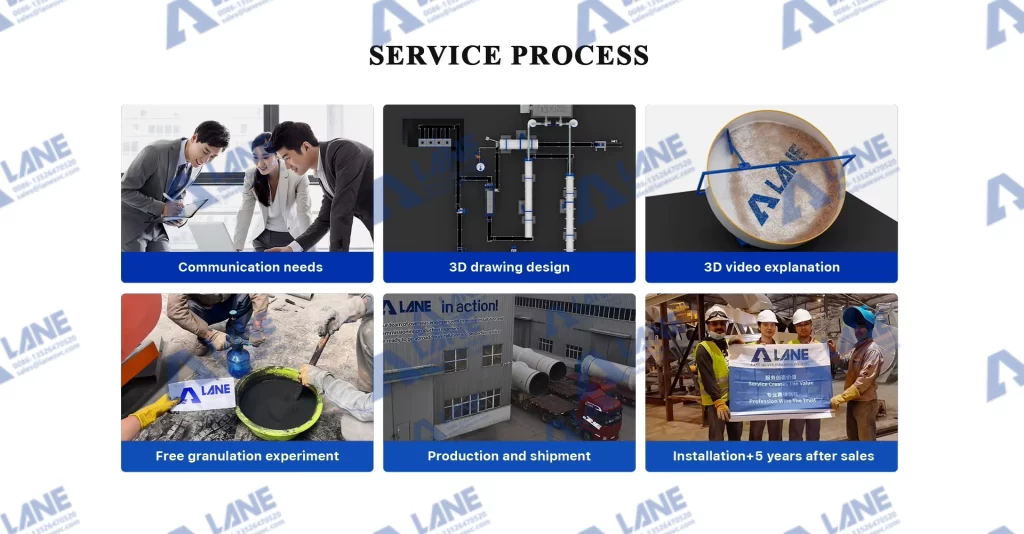
An equipment-only purchase leaves process design, mass balance, and commissioning with the buyer; a turnkey scope moves that risk to the contractor. Either way, the technical annex should name the guaranteed feedstock, the product specification, the guaranteed capacity in tons per hour, and the tolerance on moisture and granule size.
Ask for a material test on your own litter before the purchase order, with data on moisture in, moisture out, binder dosage, size distribution, and crushing strength. A factory acceptance test, documented commissioning, operator training, spare-parts lead times, and a defined warranty period belong in the same document. What separates suppliers is the feedstock and moisture range their guarantee covers.
Daily rounds matter more than annual overhauls here. Check binder dosing and spray nozzles, watch for buildup in the discharge chute, sample granule moisture, and listen for changes in the drum drive and crusher. Buildup is the first sign that material has drifted outside its window.
On a weekly and monthly cycle, grease bearings, check rotary drum granulator liner bolts and gear mesh, inspect screens and crusher hammers, compare the dryer temperature profile against burner settings, and clean the dust collector. Keep liners, screens, hammers, belts, and bearings on site, because wear-part lead time from an overseas supplier can idle a plant for weeks.

For EU destinations, machinery must carry CE marking. Directive 2006/42/EC applies today, and Regulation (EU) 2023/1230 takes over from 20 January 2027 with stricter documentation and safety requirements. Electrical equipment of machines falls under EN 60204-1, and dust-generating sections can bring Directive 2014/34/EU into scope.
Ask for the declaration of conformity, risk assessment, electrical diagrams, and control documentation in your maintenance team’s language. ISO 9001:2015 indicates a managed quality system and ISO 14001:2015 points to environmental management, yet neither replaces a review of local emissions and odor permits.
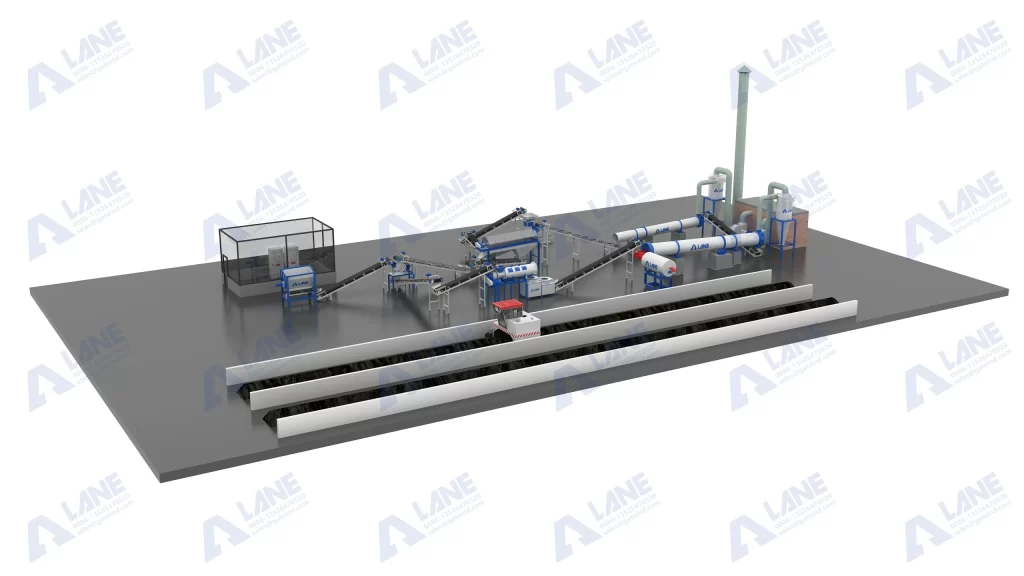
A 3 t/h organic line processing composted poultry litter typically pairs a dryer and crusher with a mixer, chicken manure granulator machine, dryer and cooler, two screens, a coating drum, and a bagging machine, all vented to a biofilter. A 10 t/h organic-inorganic blend keeps the same sequence with larger drums and a second drying pass. Both are illustrative shapes for scoping rather than quotations.
What does a chicken manure granulator machine cost?
Price depends on capacity, granulator type, and how much of the line you buy at once. A single granulator with motor, reducer, and frame is a small share of a complete line that also includes drying, cooling, and bagging.
What moisture does chicken manure need before granulation?
Drum granulation works best with feed between roughly 15 and 30 percent moisture. Raw layer manure above 70 percent must be dewatered or composted first, and litter with bedding usually needs drying.
Can fresh chicken manure be granulated without composting?
It can be dried and granulated, but the product is harder to stabilize, carries a higher pathogen load, and smells in storage. Composting first is the usual route for regulated markets.
Is a rotary drum granulator better than a pellet mill?
They make different products. A rotary drum granulator produces round granules at higher tonnage and handles organic-inorganic blends. A flat-die pellet mill produces dense cylindrical pellets at lower tonnage and often needs no binder.
Do I need a binder?
Most rotary drum lines use one. Bentonite, clay, starch, and lignosulfonate are common, and each affects granule strength, drying load, and the label analysis.
What capacity do I need for a 5 ton per hour plant?
Size upstream equipment for the circulating load, typically 30 to 60 percent above finished output, and confirm the dryer can evaporate the water your feedstock actually contains.
Can one organic fertilizer production line make both organic and organic-inorganic grades?
Yes, with a mixer that doses mineral fines accurately and a granulator sized for the denser blend. Recipe changes take time and testing.
How long does installation and commissioning take?
Installation commonly takes one to three months after equipment reaches site, plus two to four weeks of commissioning, testing, and operator training. Site readiness and local labor set the final schedule.
Send your feedstock analysis, target capacity, and product specification to suppliers, then compare chicken manure granulator machine proposals on their mass balance, heat balance, and test report from your own material.
These are the public documents and standards named in the body text. Verify the current version before quoting any of them in sales material or a contract annex.

Everything you need to know when looking at different types of organic fertilizer equipment, all in one place.
Copyright © 2026. LANE All rights reserved.
Send A Message