Disc granulator (pan granulator) for NPK and organic fertilizer production. Inclined disc design with 0.5–6 TPH capacity. Automatic granule size classification, low recycle ratio, and low energy consumption. Factory-direct pricing.
The disc granulator — also called a pan granulator or disc pelletizer — uses an inclined rotating pan to turn powder into round granules. It’s one of the oldest granulation designs still in wide use, and for a specific set of operating conditions, it remains the most cost-effective option on the market.
Here’s what makes it different from a rotary drum: the disc pan classifies granules by size automatically as it rotates. Smaller particles stay in the pan bed and continue accumulating material. Larger granules migrate to the surface and spill over the rim. No external screener needed for the granulation step itself — the machine does its own sorting.
It’s the right choice when you run 1–5 TPH, your raw material has consistent particle size distribution, you’re producing a limited number of NPK formulas (say, 3–8 rather than 20+), and capital cost matters more than absolute maximum throughput. For small to mid-size compound fertilizer plants and organic fertilizer startups, the disc granulator often delivers the best $/ton/year among all wet granulation options.
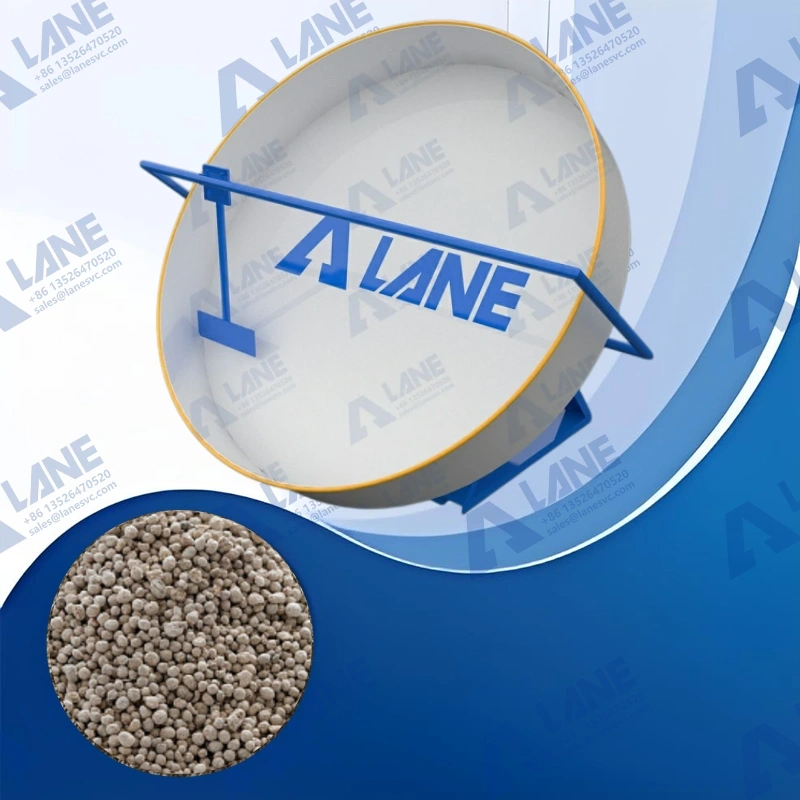
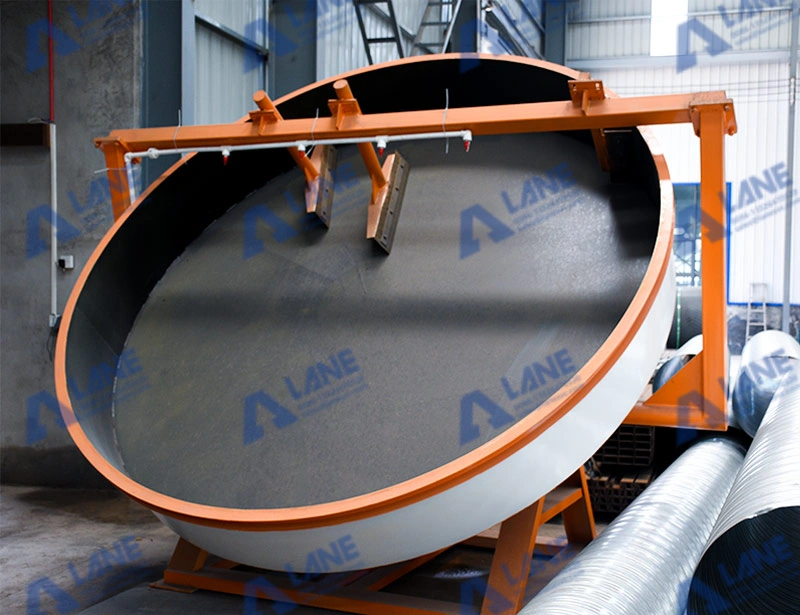
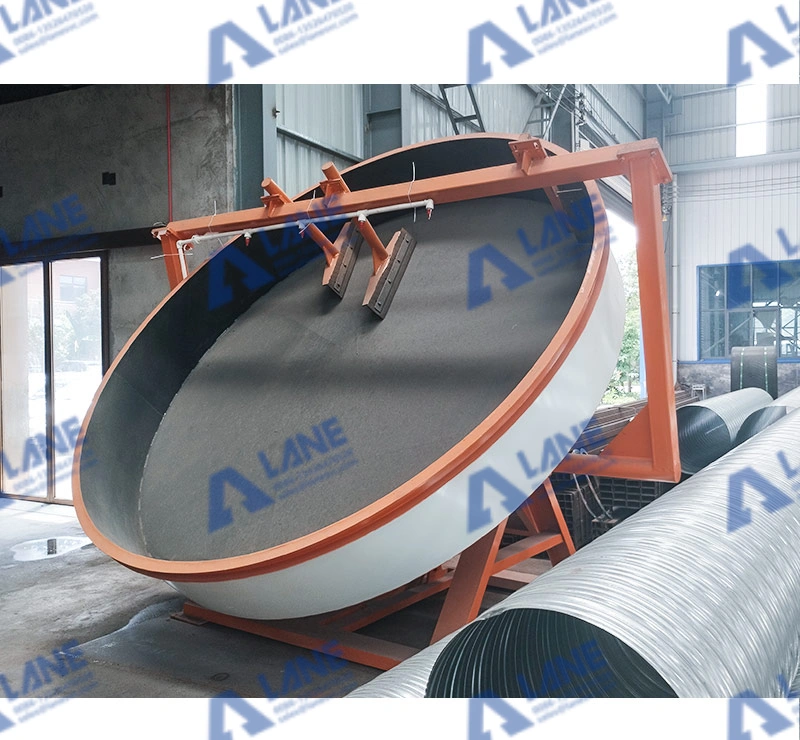
The key components: an inclined circular pan (typically 2–6 meters diameter), a variable-speed drive system (motor + gearbox + V-belt or gear drive), a scraper assembly to prevent material buildup on the pan surface, and a liquid spray system for binder addition.
The pan tilts at 40–60° from horizontal and rotates at 10–25 RPM depending on diameter. Dry or moistened powder feeds onto the pan from above, landing in the rotating material bed. As the pan turns, powder particles tumble and collide. A binder — typically water, steam condensate, or a lignosulfonate solution — sprays onto the rolling bed through atomizing nozzles.
Under the combined action of rotation, gravity, and capillary binding forces from the liquid, fine particles agglomerate into progressively larger granules. The pan’s incline creates a natural classification effect: smaller, denser granules remain near the pan bottom where they pick up more material; larger, less-dense granules ride the surface layer and eventually spill over the rim at the discharge point.
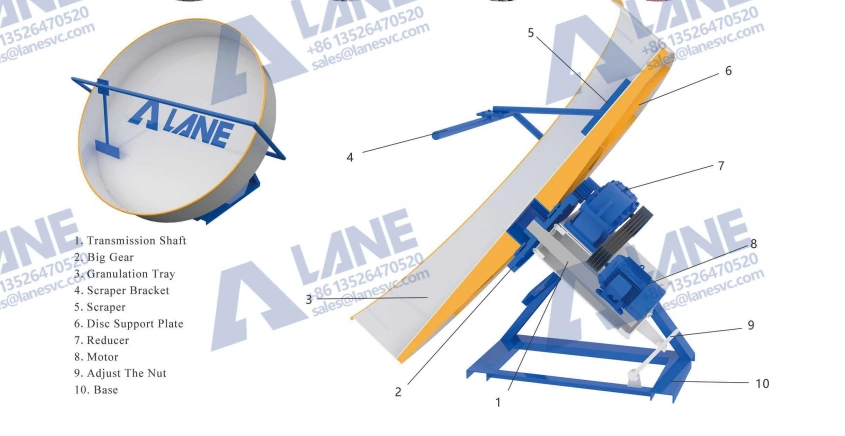
The granule size is controlled by adjusting three variables: pan angle (steeper = smaller granules), rotation speed (faster = finer), and binder spray rate (more liquid = faster agglomeration, larger granules). Getting all three right takes about 2–3 hours of trial during commissioning. Once dialed in for a specific formula, the settings typically hold stable for weeks of continuous production.
Automatic granule classification inside the pan. This is the disc granulator’s signature advantage. Because smaller particles naturally remain in the lower bed layer and larger ones migrate to the rim, the machine discharges a relatively narrow size distribution. Typical recycle ratio: 0.2:1 to 0.5:1 — compared to 0.5:1 to 1:1 for rotary drum granulation. Lower recycle means smaller downstream crushers, dryers, and conveyors. That’s a genuine capital and operating cost advantage, not a marketing bullet.
Lower capital cost. A complete 3 TPH disc granulation setup (disc + frame + drive + spray bar) costs 25–35% less than an equivalent rotary drum granulator. For a startup plant or a company adding a second production line on a budget, that capital difference matters.
Visual process monitoring. The open pan design lets operators see granule formation happening in real time. They can spot issues — uneven binder spray, material clumping, pan speed needs adjustment — before they become off-spec production problems. In an enclosed drum, you don’t know what’s happening inside until material hits the screener. In an open disc pan, you watch it form.
Low energy consumption. A 3 TPH disc granulator draws roughly 15–22 kW for the pan drive. No steam generation needed. Combined with the reduced recycle load (less crusher and conveyor run time), the per-ton energy cost for disc granulation is 35–50 kWh versus 45–65 kWh for equivalent drum granulation.
Simple maintenance. One rotating assembly, one drive motor, one gearbox. The scrapers are the only wear item that needs regular attention — replacement takes 15–20 minutes per scraper. No internal lifter bars, no drum seals, no complicated bearing supports.
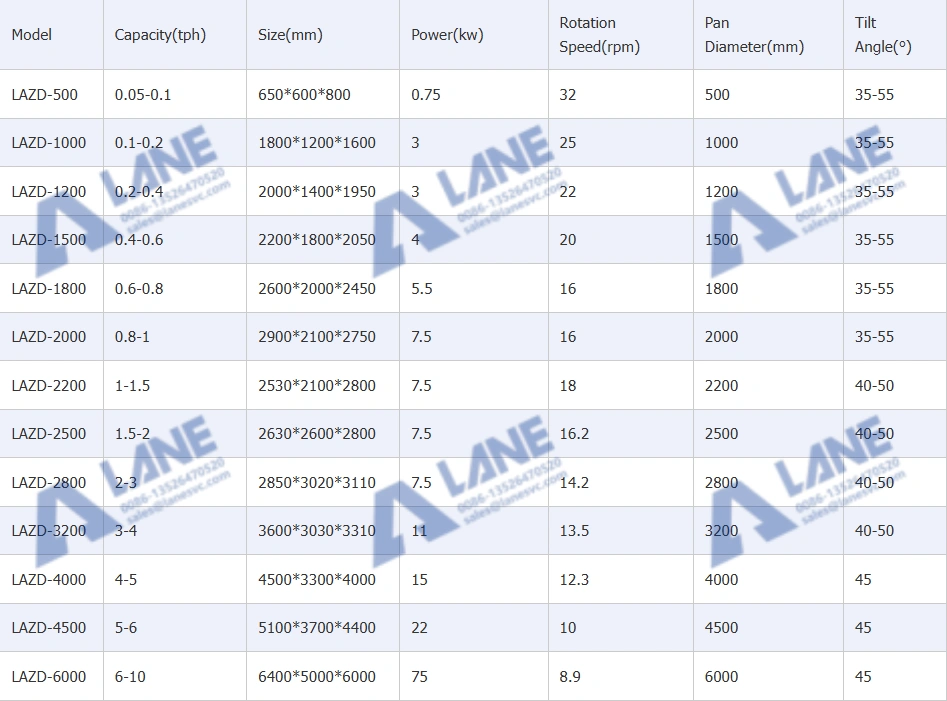
Capacity based on NPK compound fertilizer (15-15-15) with 8–12% feed moisture. Organic fertilizer throughput is typically 15–25% lower due to lower bulk density.
Best with:
Less suited for:
Pick the disc granulator when: your capacity is 1–5 TPH, your raw material particle size is consistent, you run 3–8 formulas, capital budget is a primary constraint, and your team values visual process visibility.
Pick the rotary drum when: capacity is 5 TPH+, you need to swing between 15+ NPK grades, your raw material comes from multiple suppliers with different particle size distributions, or you need steam injection for granulation efficiency above 15 TPH.
Q: How is granule size controlled on a disc granulator?
A: Three adjustable variables: pan inclination angle (steeper = smaller discharge granules), rotation speed (faster = finer granules), and binder spray rate (more liquid = larger, faster-forming granules). Changing granule size from 2–3 mm to 4–5 mm typically requires adjusting pan angle by 3–5° and reducing RPM by 2–3 — about a 15-minute adjustment with the machine running.
Q: Can a disc granulator handle organic and NPK materials on the same pan?
A: Yes, but not simultaneously — you’d need a thorough cleanout between batches. Organic materials leave residue that affects NPK granulation chemistry. If your plant produces both, plan for separate granulation lines or at minimum a full cleanout between material types.
Need a disc granulator sized for your specific material and throughput? Contact our engineering team with your feedstock details and target capacity. We’ll provide equipment specifications, layout drawings, and a detailed quotation.


Everything you need to know when looking at different types of organic fertilizer equipment, all in one place.
Copyright © 2026. LANE All rights reserved.