Industrial rotary drum granulator for NPK compound fertilizer. 1–30 TPH capacity with steam injection. Spherical granules, high hardness (15–25 N), wide formula flexibility. Complete drum granulation solutions with dryer-cooler integration.
Rotary drum granulation accounts for roughly 70% of global NPK compound fertilizer production. The reason isn’t one breakthrough feature — it’s the method’s ability to handle the widest range of raw material chemistries, formula densities, and production volumes without breaking stride.
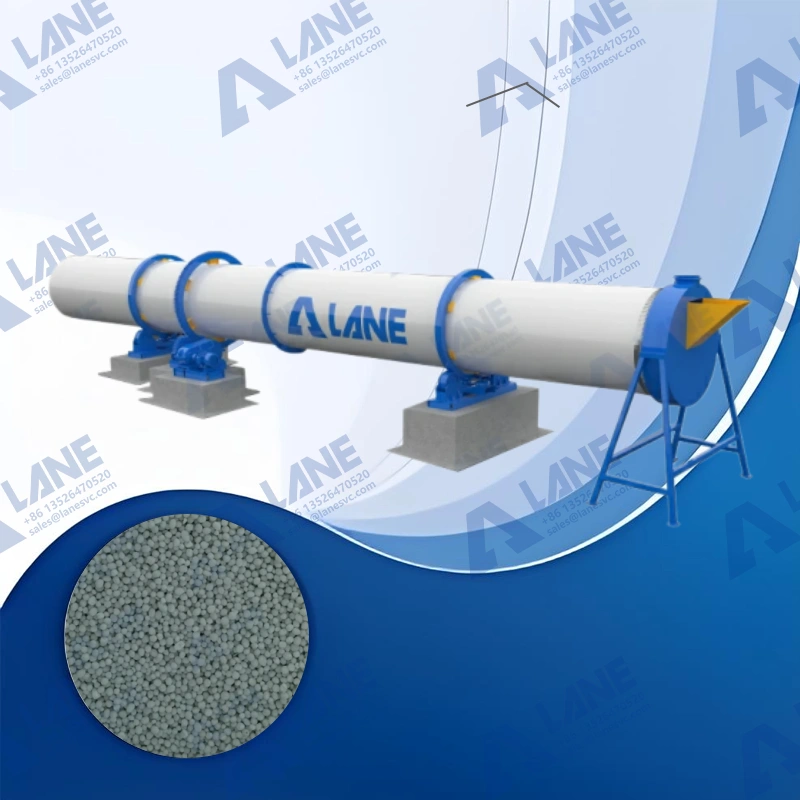
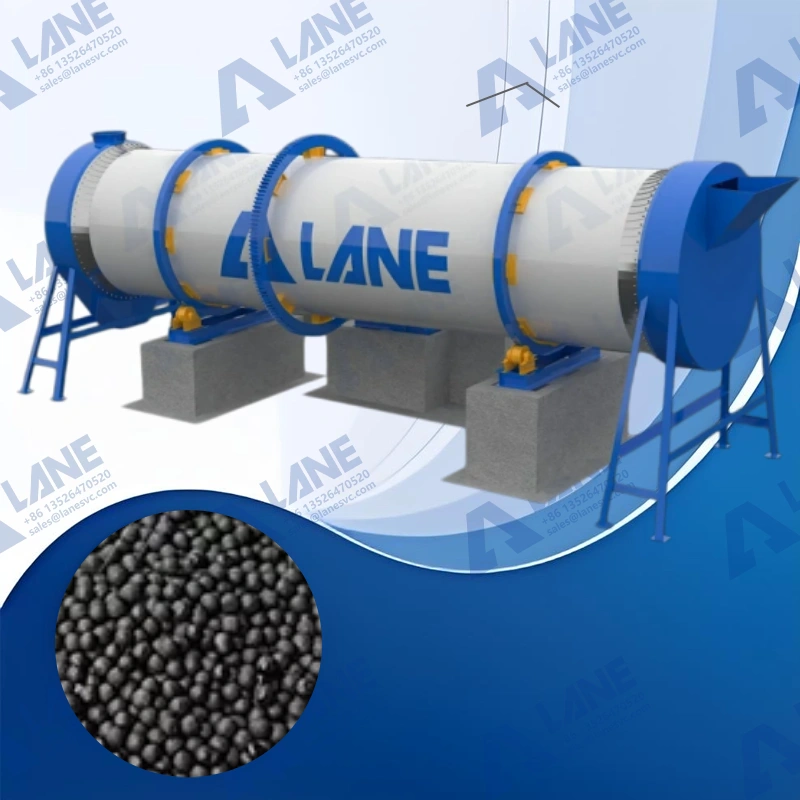
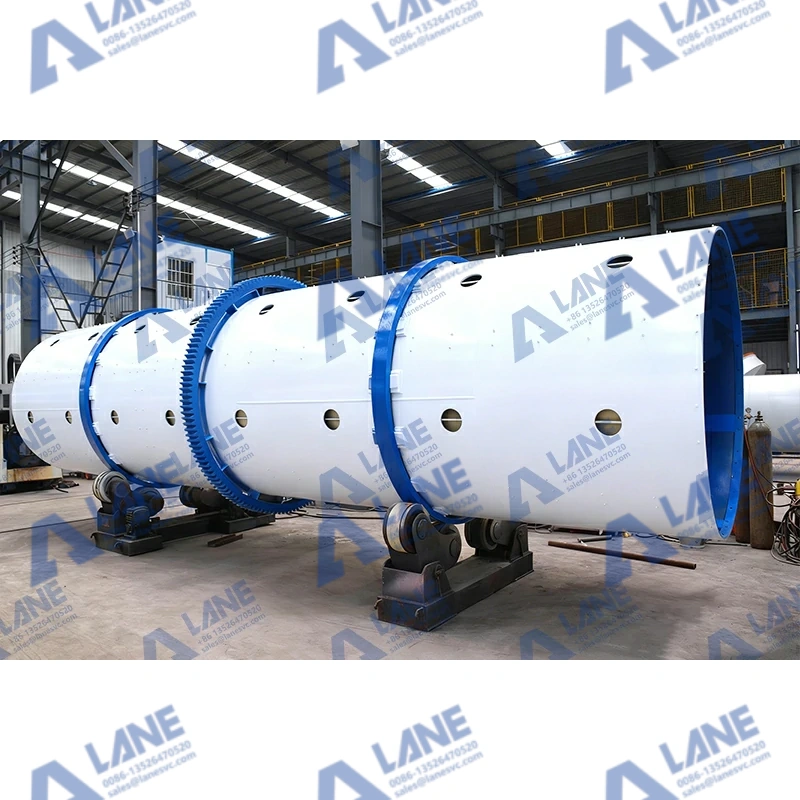
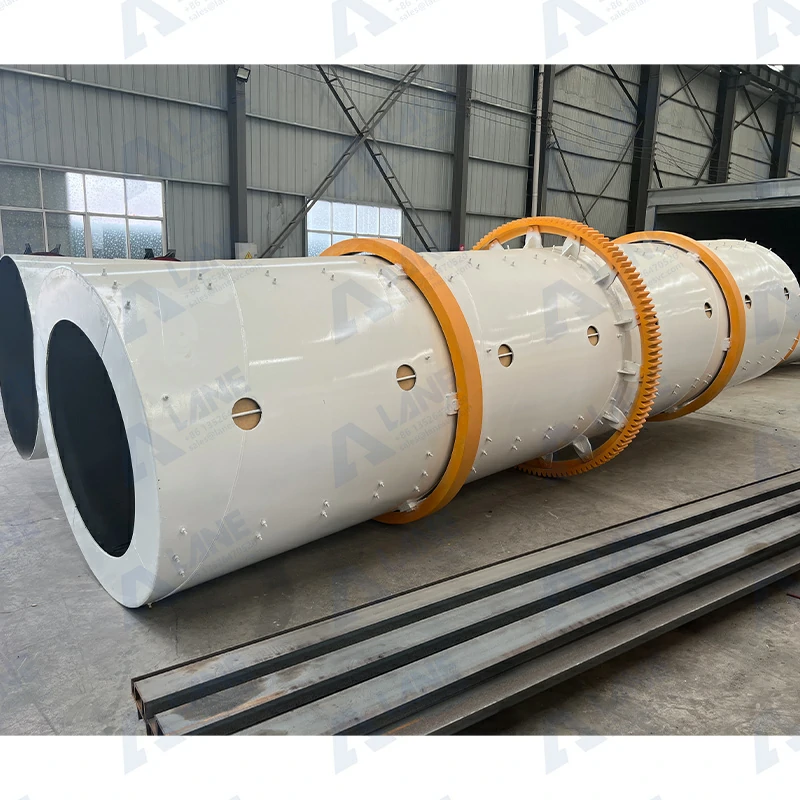
A rotary drum granulator is a large, slightly inclined steel cylinder that rotates slowly (6–15 RPM) while wet powder feeds in at one end, binder sprays onto the rolling material bed through steam or liquid injection pipes, and spherical granules discharge from the other. Inside the drum, a carefully spaced array of lifter flights and scrapers keeps the material bed tumbling rather than sliding — that tumbling motion, combined with the capillary and chemical bonding from the binder, is what builds granules layer by layer.
It’s not the cheapest granulator to buy. It’s not the simplest to operate. But for a plant running 10–30 different NPK formulas across swing production — answering to raw material price shifts, seasonal demand changes, and distributor requests for custom grades — a properly spec’d drum granulator is the machine you stop noticing. It just runs.
Material enters the drum at the feed end, which sits 3–5° higher than the discharge end. As the cylinder rotates, internal lifter flights (angled steel plates welded to the drum wall in a helical pattern) scoop up the material bed, carry it partway up the drum circumference, then let it cascade back down as the flights pass beyond the material’s angle of repose. This cascade creates a continuous rolling curtain of material through the full drum length.
Simultaneously, a steam injection pipe runs through the drum interior, spraying saturated steam (110–130°C) and/or a liquid binder solution into the tumbling material curtain. The steam does two things at once: it raises the material temperature to 60–80°C, which makes the granulation chemistry more reactive, and it condenses on the particle surfaces, providing the liquid bridges that bind fine particles into agglomerates.
Granules grow through a combination of layering (fine particles stick to the surface of existing granules) and coalescence (two smaller granules collide and merge). The lifter flight design and drum RPM control which mechanism dominates — higher RPM and steeper flights promote layering (smoother, rounder granules), while lower RPM and gentler flights favor coalescence (faster growth, slightly less uniform shape).
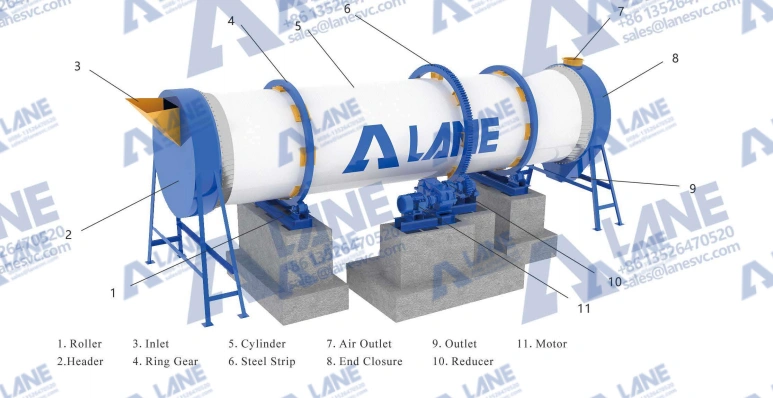
Granules exit at 12–18% moisture, 60–80°C temperature, and 2–5 mm diameter. They then pass directly into a rotary dryer to reduce moisture to 2–3%.
Widest formula flexibility of any granulation method. A rotary drum granulator handles NPK ratios from 10-10-10 to 25-5-5, urea-based and ammonium-based chemistries, fillers from dolomite to bentonite, and micronutrient additions up to 5% of total mass. If you can powder it and it binds in the presence of heat and moisture, the drum can granulate it.
Steam injection boosts granulation efficiency by 15–25%. The heat and moisture delivered by saturated steam activates the chemical bonding potential of soluble fertilizer salts — particularly urea and ammonium sulfate. The result: higher granulation rate in the drum, lower recycle ratio (0.5:1 to 1:1), and harder finished granules. The steam system adds about $15,000–$25,000 in capital cost. On a 10 TPH line running 6,000 hours/year, that capital recovers within 18 months through reduced energy, crusher wear, and dryer fuel costs.
High granule hardness (15–25 N). The combination of heat, moisture, chemical reaction, and long residence time (8–15 minutes inside the drum) produces granules that survive bulk handling, bag stacking, and distributor re-bagging without excessive breakage. Hardness is consistently higher than disc pan granules for the same NPK formulation.
Scales linearly from 1 to 30 TPH. A 5 TPH drum is roughly 1.8 m diameter × 8 m long. A 20 TPH drum is roughly 2.8 m × 14 m. The engineering scales — same lifter flight geometry, same steam injection layout, same drive configuration — which means commissioning and operating experience transfers across capacity upgrades.
Large-diameter design resists material sticking. The drum’s internal scraper bar runs the full length of the cylinder, continuously cleaning the inner wall. Combined with a rubber or SS lining depending on material chemistry, this prevents the progressive material buildup that eventually stalls smaller-diameter, unlined granulators.

Capacity based on NPK compound fertilizer at 10% inlet moisture. Actual throughput varies with formula density, binder type, and target granule size. Multiply capacity by 0.7–0.8 for organic-based NPK formulations.
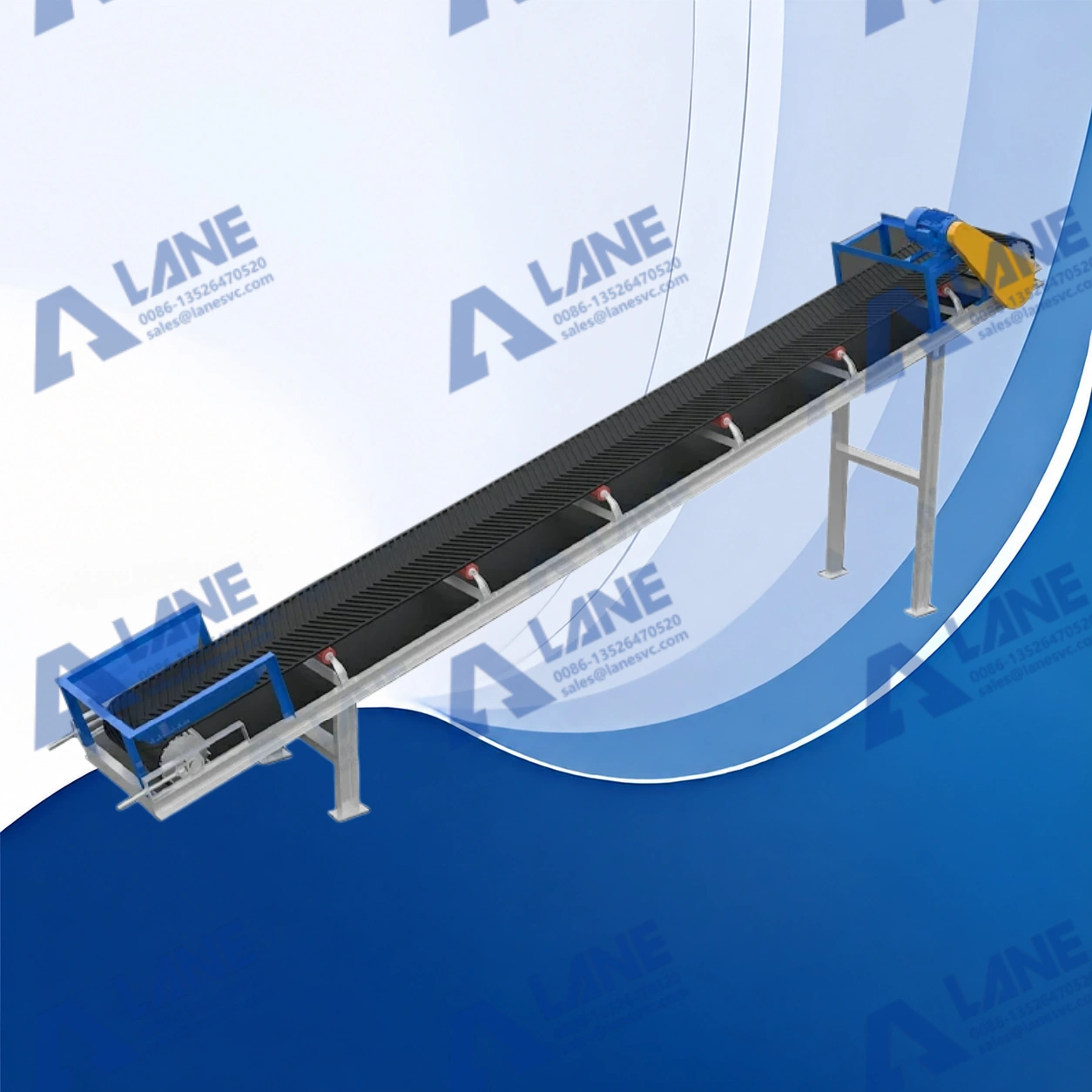
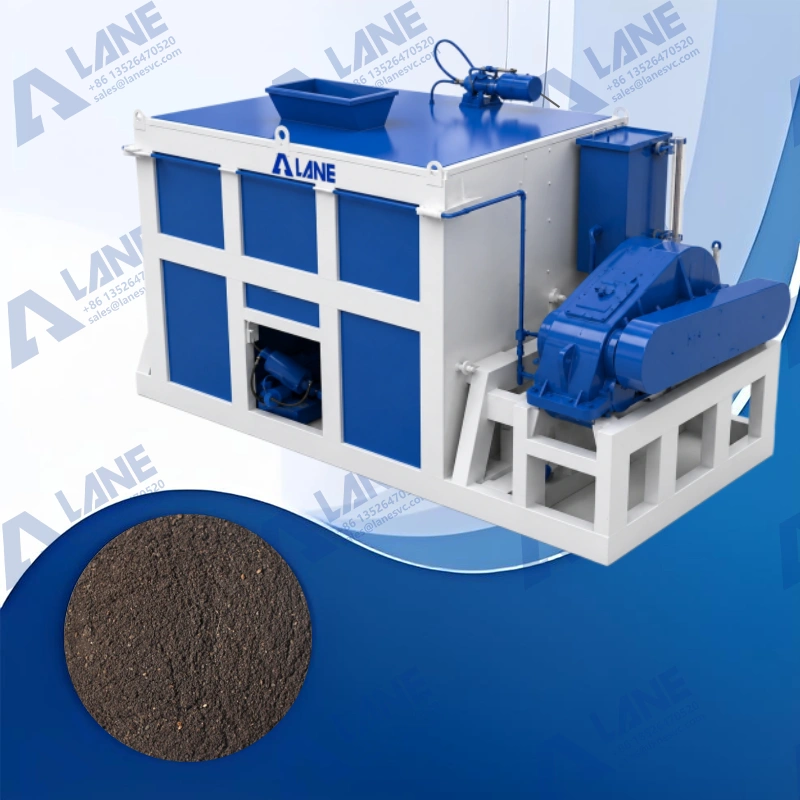
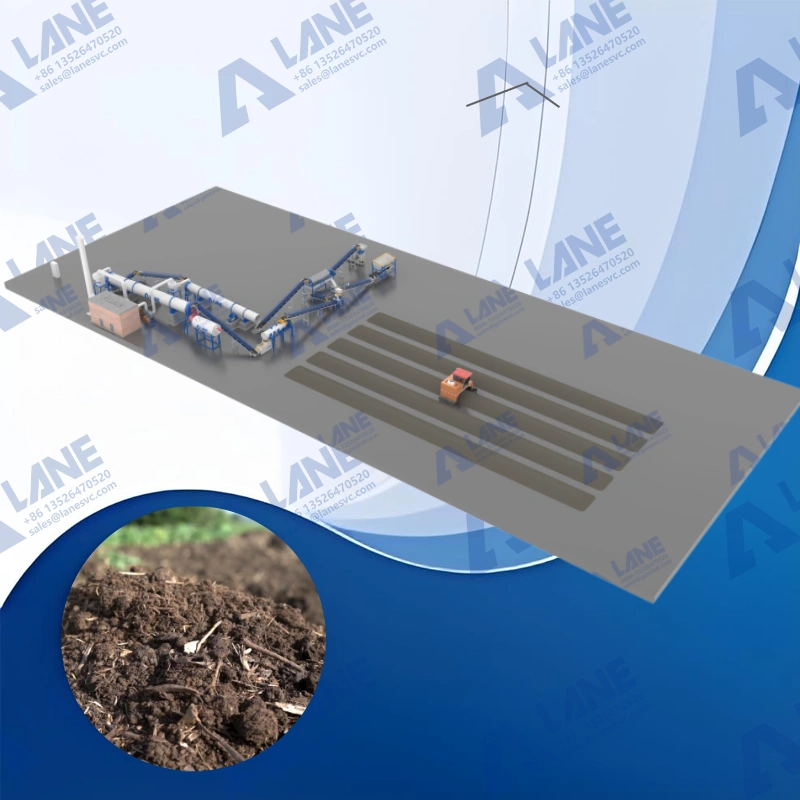
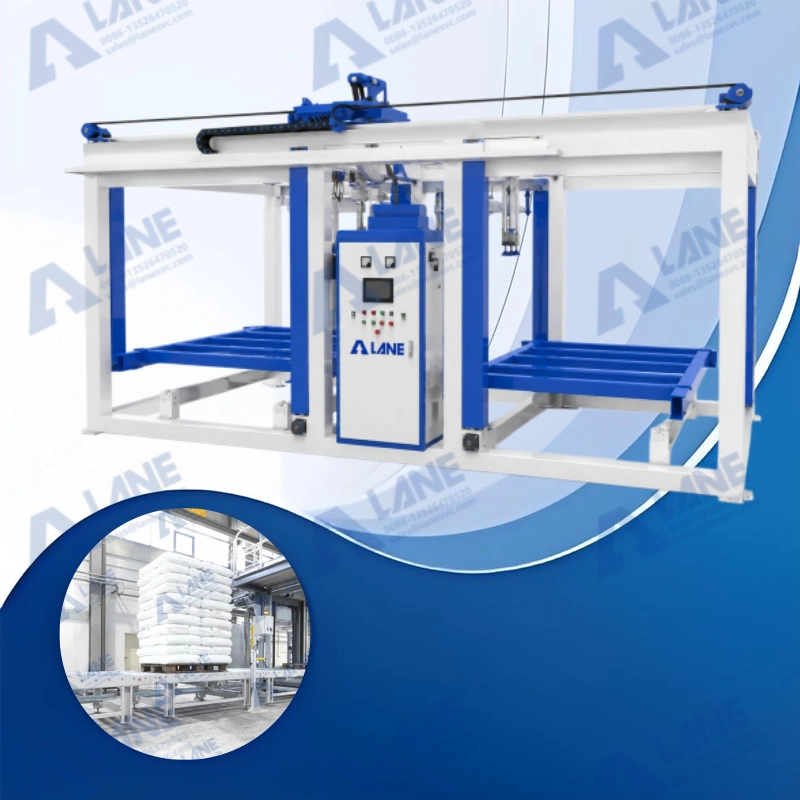
A rotary drum granulator is never bought alone. The full station includes:
Budget roughly $25,000–$45,000 for the ancillary equipment around a 5 TPH drum. The drum itself is the largest single component, but the steam system and dust extraction are where procurement managers most often under-estimate.
Q: Why does drum granulation need a dryer and cooler?
A: Granules exit the drum at 12–18% moisture. At that level, they’ll cake solid in storage within 72 hours. The rotary dryer brings moisture to ≤3%. The cooler brings temperature to near-ambient, preventing thermal damage to screen meshes and bagging materials downstream. Yes, it’s extra capital. Skip it and your product returns will eat the saving within six months.
Q: Can a rotary drum granulator handle pure organic fertilizer?
A: It can, but it’s not the best tool for the job. Organic materials (manure, compost) have lower bulk density and higher moisture variability than NPK powders. The drum’s residence time and lifter geometry are optimized for dense, free-flowing chemical powders. For pure organic fertilizer, a new type organic granulator or ring die granulator typically delivers higher granulation rates at lower energy cost.
Configuring an NPK drum granulation line? Tell us your target formulas, capacity, and site conditions. We’ll deliver a complete equipment spec, plant layout, and capital cost breakdown.


Everything you need to know when looking at different types of organic fertilizer equipment, all in one place.
Copyright © 2026. LANE All rights reserved.