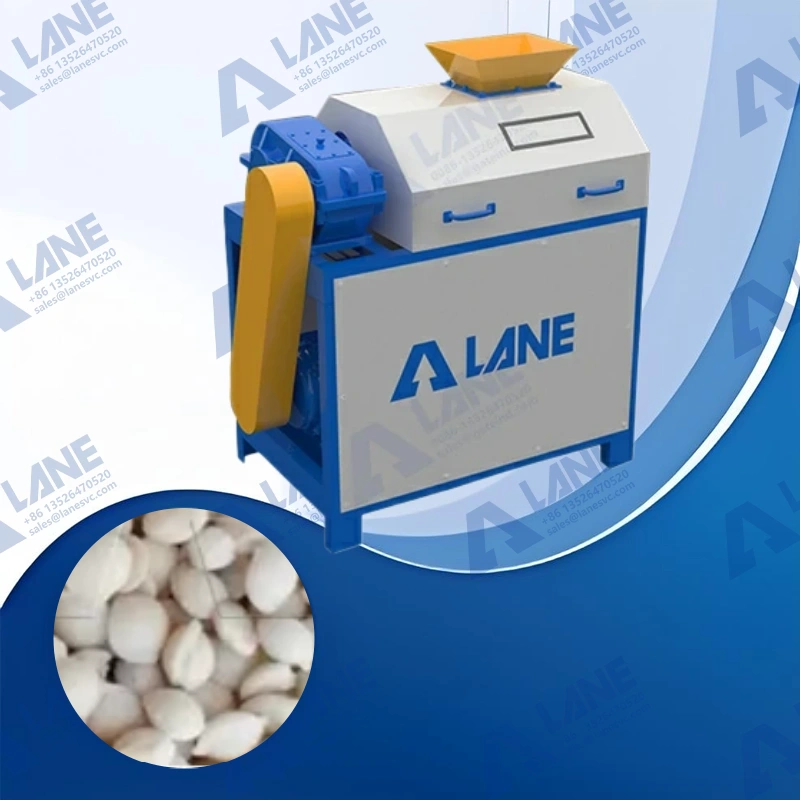
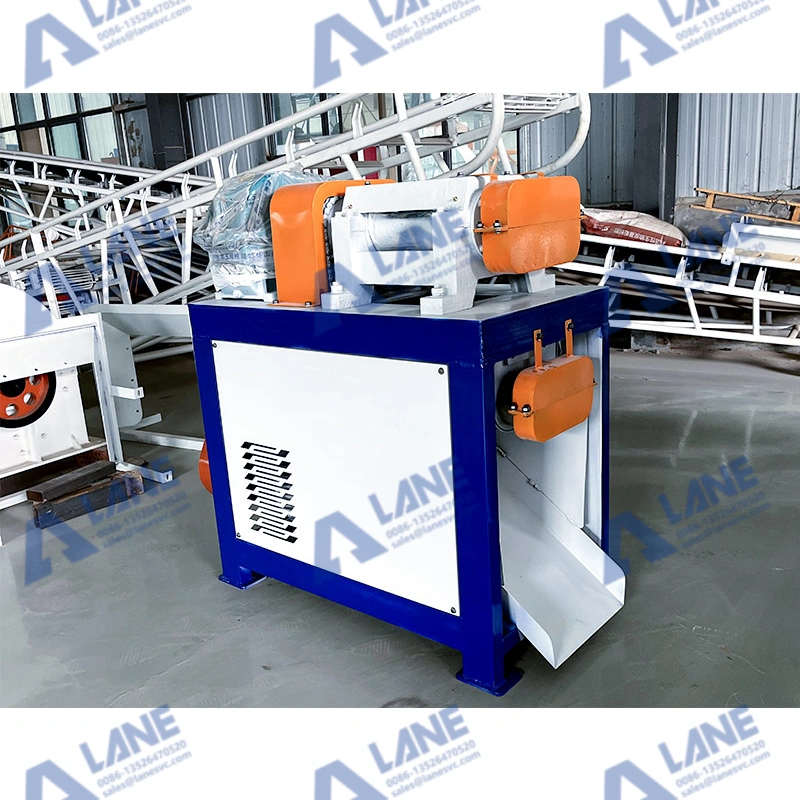
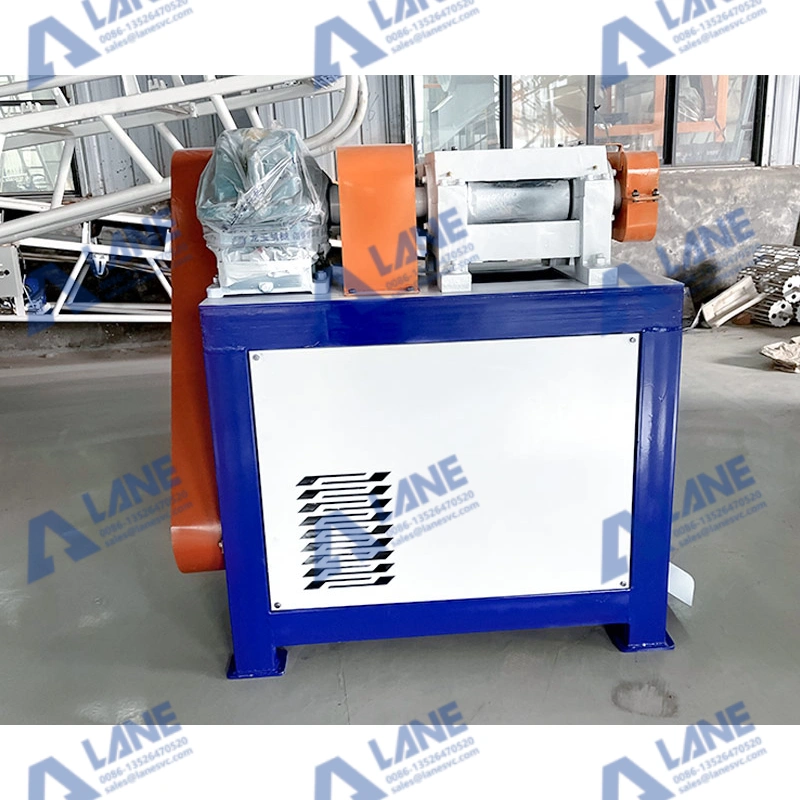
Double roller extrusion granulator for NPK, urea, ammonium sulfate, and compound fertilizer. Dry granulation process — no dryer, no steam, no binder. 1–10 TPH capacity. Compact footprint, 40% lower energy than drum granulation.
Most granulation methods add liquid, then spend a lot of energy removing it. The double roller extrusion granulator skips the wet step entirely. Dry powder feeds between two counter-rotating rollers under 8–15 MPa of compaction pressure. The powder compresses into a dense sheet. That sheet gets crushed, screened, and you’re done. No dryer. No cooler. No steam boiler. No binder.
The product is an angular granule — not as round as drum or disc output, but functionally equivalent for most soil application. The capital cost is 30–40% lower than an equivalent drum granulation line because the entire dryer-cooler train disappears from the equipment list. Energy use: 25–35 kWh per ton, versus 45–65 kWh for drum granulation. For plants in dry regions, plants without natural gas infrastructure, and plants on a tight budget with a 1–5 TPH target, double roller extrusion is often the most rational choice.
It’s the granulation equivalent of an inline-4 engine: simple, reliable, efficient, and you give up some smoothness for that efficiency. If your market accepts angular granules at a slight cost discount to spherical product, this machine will print money relative to the capital invested.
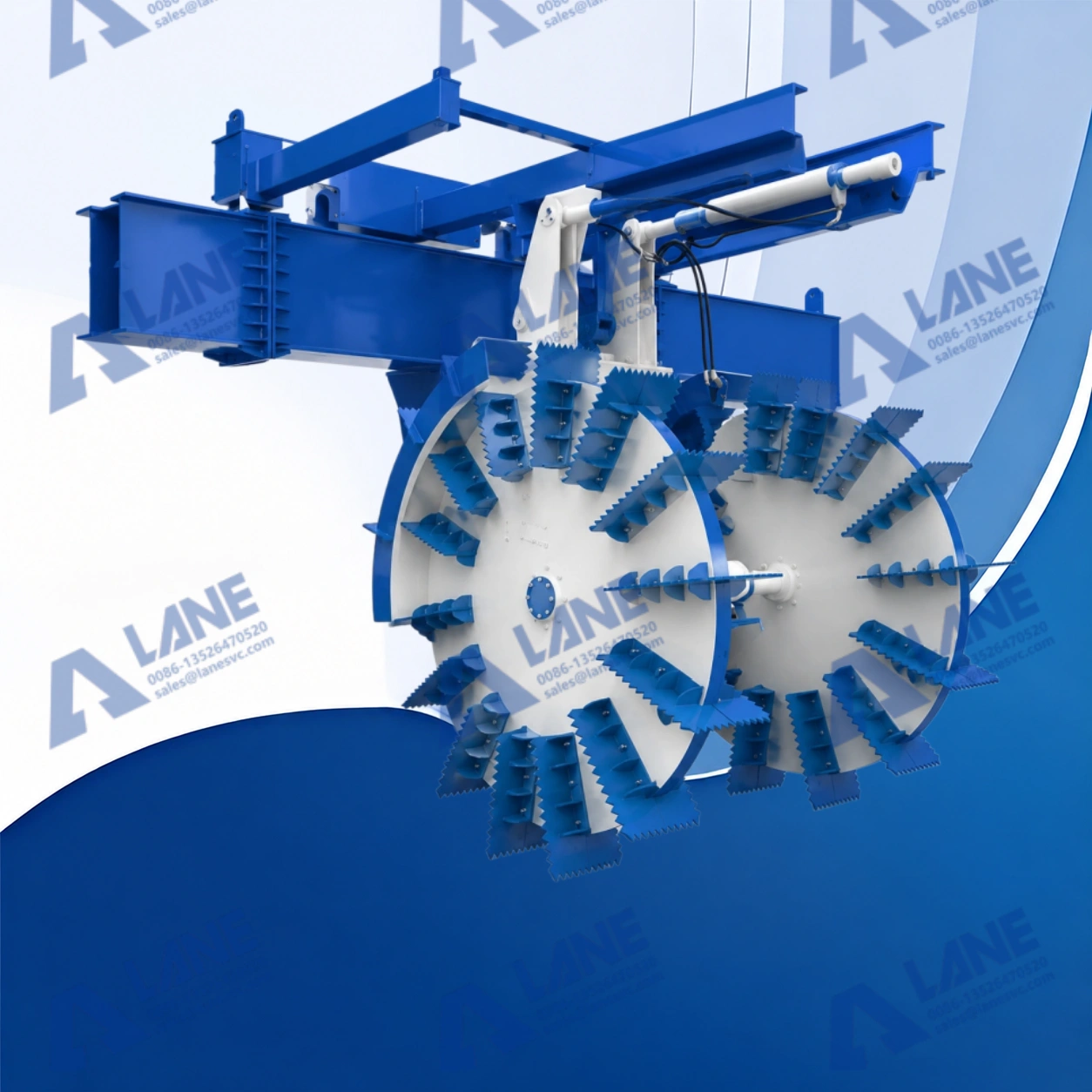
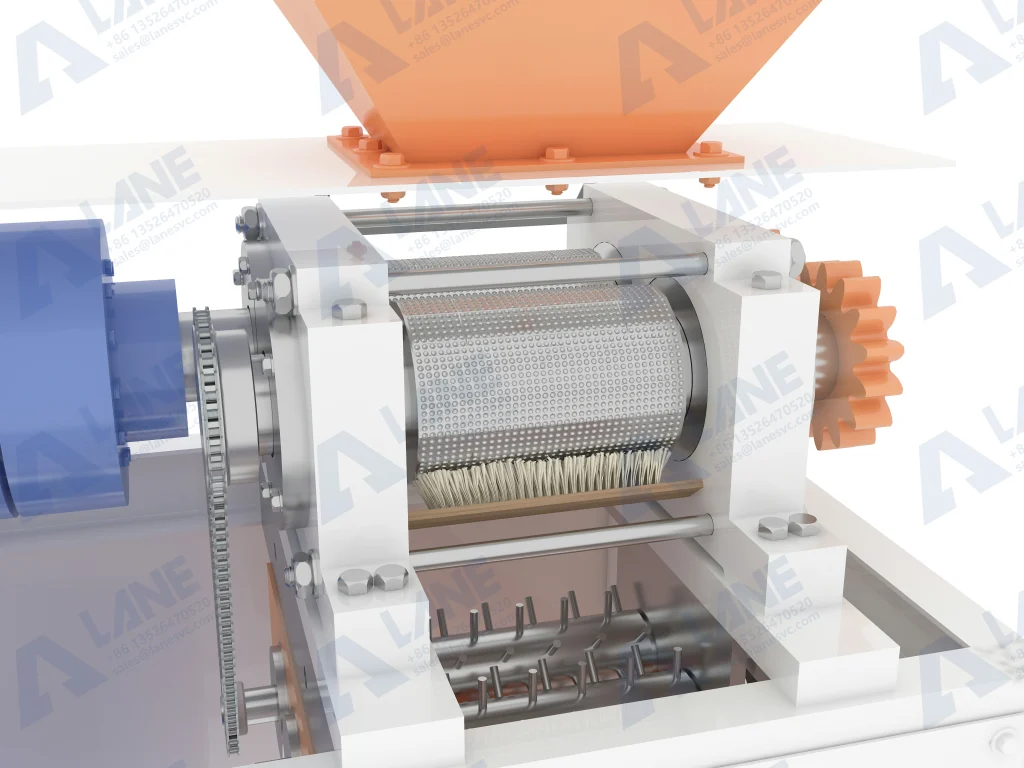
The machine has three functional sections: the feed hopper (gravity-fed, sometimes with a pre-compression screw for low-density powders), the roller assembly (two counter-rotating rolls with matching pocket cavities on their surface), and the crushing/screening section mounted below the rollers.
Dry powder (≤3% moisture) enters the hopper and falls into the nip zone between the two rollers. The rollers rotate inward toward each other at matched speed (typically 10–25 RPM), pulling the powder into the gap. As the roller gap narrows toward the centerline, the powder experiences rapidly increasing compaction pressure — from near-zero at the edges of the nip zone to 8–15 MPa at the roll gap center.
The compression drives out interstitial air and forces particles into mechanical interlock. If the powder contains soluble salts (urea, ammonium sulfate, MOP), the high contact pressure triggers localized dissolution and re-crystallization at particle contact points — a “cold welding” effect that gives the compacted sheet its green strength.
The compacted sheet exits the rollers as a continuous strip 8–15 mm thick. It falls directly into a toothed crusher that breaks the sheet into granules. From there, a double-deck screener separates the granulated material into final product (2–4 mm) and undersize fines, which return directly to the feed hopper for re-compaction.
No drying step — 30–40% lower total line cost. This is the headline. A 5 TPH double roller extrusion line (granulator + crusher + screener + conveyors) costs $110,000–$180,000. A comparable 5 TPH drum granulation line with dryer, cooler, steam system, and dust collection runs $180,000–$280,000. The gap widens when you factor in gas supply infrastructure, exhaust treatment, and higher civil costs for dryer foundations.
Energy use: 25–35 kWh/ton. Compared to 45–65 kWh/ton for drum granulation and 35–50 kWh/ton for disc pan. Over a 12,000-ton production year, that gap is 120,000–360,000 kWh saved — significant in regions where industrial electricity runs $0.10–$0.18/kWh.
Compact footprint. No dryer and cooler means the equipment line is 40–50% shorter. A 5 TPH extrusion line fits in roughly 300–400 m² of floor space versus 500–700 m² for a drum line. Retrofit-friendly for existing warehouses and processing buildings.
Instant start/stop. No preheating a dryer, no steam generation ramp-up, no cooling water circulation. Push the green button, material starts flowing. Push red, everything stops. This makes extrusion lines ideal for operations that run variable shift schedules or produce to order rather than continuous campaigns.
Good for heat-sensitive formulations. Some micronutrient additives (chelated zinc, certain biological inoculants) degrade at dryer temperatures. Dry extrusion never exposes the material above 40–50°C (frictional heating only), preserving heat-sensitive components.
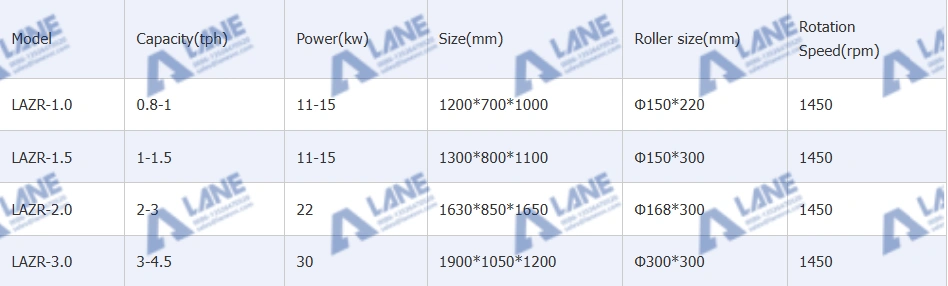
Works well with:
Doesn’t work well with:
The shape of the cavities machined into the roller surface determines the granule shape. Three common profiles:
Rollers are a wear item. Life expectancy: 4,000–6,000 hours for standard alloy steel rollers processing NPK at 10–12 MPa. Abrasive formulations (high filler content, bentonite, sand-contaminated raw materials) cut this to 2,000–3,500 hours. Budget a spare roller set on day one — the unplanned downtime from a worn roller costs more than the spare set.
Q: How do the granules compare to drum granulation in the field?
A: Same nutrient release rate — the chemistry is identical. The main difference is physical: extrusion granules are angular with sharp edges, while drum granules are round. This matters mainly for: (a) broadcast spreaders, which throw round granules slightly more uniformly; (b) visual product differentiation — round granules typically command a $3–$8/ton premium in some markets. If your customers apply by hand, by drill, or don’t care about granule shape, extrusion granules perform identically.
Q: Do I really need no binder at all?
A: For standard NPK formulations with urea, DAP, and MOP — correct, no binder needed. The soluble salts in these materials recrystallize under compaction pressure and provide sufficient binding. For formulations with high filler content (above 30%) or low-solubility materials (dolomite, rock phosphate), a small amount of dry binder (bentonite at 1–3%, or lignosulfonate powder) improves granule hardness. We test your specific formula in our lab before confirming the configuration.
Want to see how your NPK formula performs in dry extrusion? Send us a 5 kg sample of your raw material blend. We’ll run it through our test line and send you the granules, a granule hardness report, and a throughput estimate — no cost, no commitment.


Everything you need to know when looking at different types of organic fertilizer equipment, all in one place.
Copyright © 2026. LANE All rights reserved.