
Choosing a chicken manure granulator machine? Compare machine types, feedstock fit, costs, and supplier qualifications — then test your material free with LANE.
If you are evaluating a chicken manure granulator machine for a new fertilizer plant, a line expansion, or a poultry-farm waste project, resist the urge to start with price lists. The machine that works well for one producer can be a costly mistake for another, because chicken manure varies with housing, bedding, feed, collection method, and compost stage. Start with your material and your sales plan, then choose the technology that fits. This guide follows the sequence a plant owner, engineer, or purchasing manager should use: feedstock, process, machine comparison, total cost, operation, and supplier qualification.
Chicken manure is not one consistent raw material. Fresh layer manure can leave a house with moisture above 70 percent, while broiler litter mixed with wood shavings or rice husks is drier and more fibrous. After composting or partial drying, moisture usually drops into a range granulation equipment can handle, but fiber content and nutrient profile still vary from farm to farm.
That variability matters more than brochure specifications. A granulator built for fine, dry powder will struggle with sticky, fibrous compost, while a wet-granulation unit can be the wrong tool if your market needs a dense extruded pellet. So define three things before comparing models: the moisture range you can supply consistently, the granule size and hardness your customers expect, and the daily volume you must move. In practice, a chicken manure granulator machine should be selected only after these parameters are fixed.
Industry sources reinforce the point. The FAO’s Gateway to Poultry Production and Products treats manure handling as a core sustainability issue for poultry value chains, and USDA’s Agricultural Waste Management Field Handbook approaches manure as a nutrient resource that must be planned from collection through treatment and use. Granulation is one step in a system that starts on the farm — an equipment decision, not an isolated machine purchase.
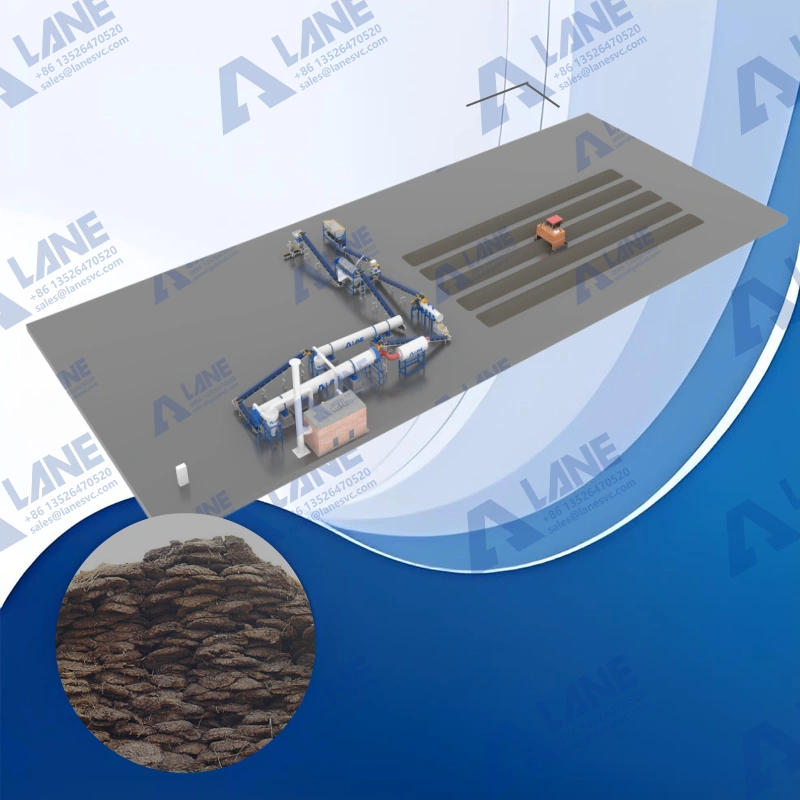
For most commercial projects, the chicken manure fertilizer production line follows a predictable sequence: manure collection and conditioning, aerobic composting, crushing and screening, granulation, drying and cooling, final screening, and packaging.
Raw manure conditioning. Fresh manure often needs mechanical dewatering or a carbon source such as straw to lower moisture and balance the carbon-to-nitrogen ratio before composting.
Aerobic composting. Composting stabilizes the material, controls odor, and, at the right temperatures, reduces pathogens and weed seeds. Compost turners and fermentation tanks dominate this stage.
Crushing and screening. A crusher reduces compost to a consistent particle size and a screen removes oversize material; feed consistency decides much of granulator performance.
Granulation, drying, cooling, and packaging. The granulator forms the product, drying brings it to a safe storage moisture, cooling prevents caking, and final screening returns fines to the process.
The process context matters because the granulator does not carry the project alone. In many chicken manure fertilizer production lines, drying and material handling consume as much energy and floor space as granulation itself. LANE’s article on the poultry manure organic fertilizer production process explains each stage in more detail.
Most suppliers sell one of four technology families. Understanding them matters more than memorizing model numbers, because each family is designed around a different material condition.
| Technology | Typical Feedstock Fit | Scale | Granule Character | Main Trade-off |
|---|---|---|---|---|
| Stirring pin (new-type organic) granulator | Composted chicken manure at roughly 20–40% moisture; direct wet granulation, binder usually not required | Small to large, from under 1 t/h to 10+ t/h | Round, porous granules; good for organic products | Needs disciplined feed moisture control and regular cleaning |
| Disc (pan) granulator | Fine, drier powder around 20–30% moisture | Low to medium, roughly 0.5–8 t/h | Smooth, dense, round granules | Granule size depends heavily on operator skill and steady feed |
| Rotary drum granulator | Conditioned powder, often 15–30% moisture with steam or binder | Large continuous lines, 5–30+ t/h | Uniform rounded granules | Higher capital cost; needs steam/binder and automation |
| Ring die or flat die pellet machine | Dried, powdered manure, typically 15% moisture or lower | Medium to high, 1–12+ t/h | Hard, dense cylindrical pellets | Requires drying before extrusion; high wear on dies and rollers |
The first three rows are true granulators: they agglomerate moist particles through rotation, stirring, or rolling. The fourth row is the machine family buyers usually mean by a chicken manure pellet machine, which extrudes dry powder through a die into dense pellets.
If your input is fermented compost with meaningful moisture, a stirring pin granulator is usually the practical choice because it avoids a pre-granulation drying step and preserves the porous structure organic buyers expect. A disc granulator is a lower-cost fit for drier powder at modest capacity. A rotary drum granulator earns its place in a large, automated chicken manure fertilizer production line. A ring die or flat die chicken manure pellet machine suits producers who already dry and powder the manure and want hard, high-density pellets.
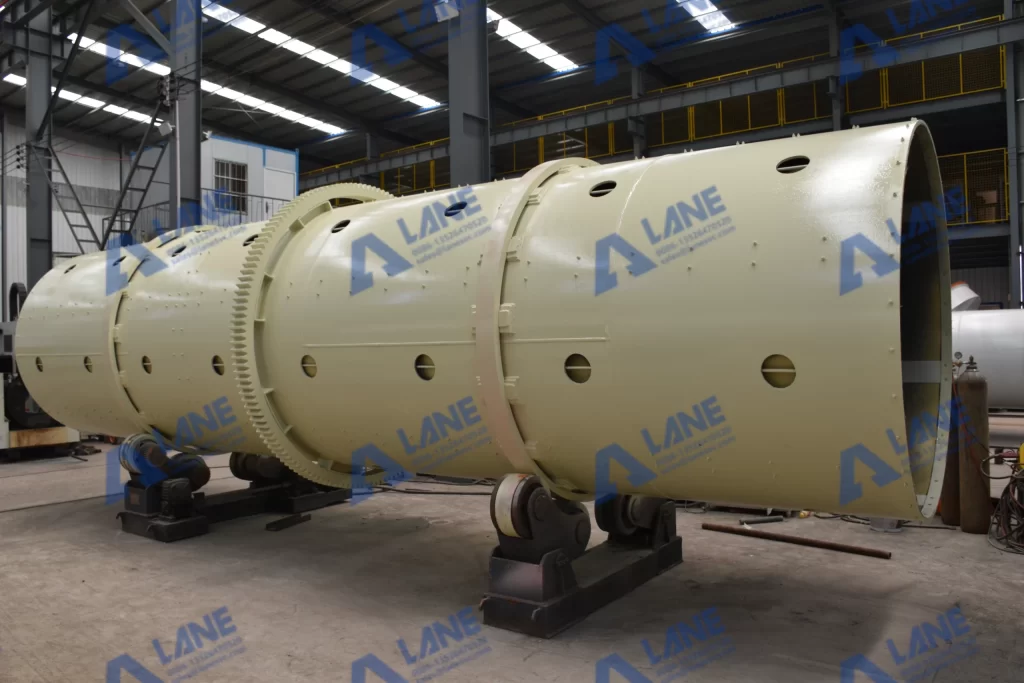
LANE offers several of these technologies, including the stirring pin granulator, disc granulator, and rotary drum granulator. The more useful takeaway is the selection logic: match moisture, fiber, scale, and finished-product requirements before comparing brands.
Equipment price is only one line in the investment calculation. For a complete project, the chicken manure granulator machine cost is usually a modest share of the total once you add composting, drying, screening, conveyors, building works, installation, and commissioning — which is why the purchase belongs inside a complete chicken manure fertilizer production line plan rather than a standalone quote.
Daily input. Size from the manure you can realistically collect and condition, not from a nameplate. Seasonal farms need storage or a buffer.
Moisture already removed. If wet granulation suits your compost, you may eliminate a dryer entirely — often a bigger economic decision than the machine price.
Customer requirements. Organic-certified buyers may need documented composting; conventional buyers may care more about granule hardness, size distribution, and consistent labeling.
Running cost. Compare rated power, typical energy per ton, wear-part life, and cleaning time. With a chicken manure pellet machine, plan die and roller replacement; with a wet granulator, plan more cleaning labor.
Full line scope. A supplier that engineers the complete chicken manure fertilizer production line reduces the risk of mismatched conveyors, undersized screens, and startup bottlenecks. For plant-level guidance, see LANE’s fertilizer granulation plant design.
Most granulation problems — clogging, excessive fines, soft granules, and variable size — trace back to feed control rather than the machine itself. Test moisture regularly and keep it inside the working window: a handful of conditioned material should hold together without releasing free water.
Keep the upstream crusher and screen working so oversize clumps do not reach the granulator, and return screen oversize through the correct loop. Follow the manufacturer’s cleaning schedule for stirring pins, scrapers, and die surfaces, and inspect wear parts on a calendar schedule rather than after output drops. If you run a chicken manure pellet machine, die and roller wear will drive most of the maintenance budget. If the line has a dryer and cooler, granules leaving too hot or too moist will cake no matter how well the granulator performs.
B2B buyers in this industry are not protected by consumer return policies, so supplier qualification is part of the purchase. Ask for evidence rather than promises.
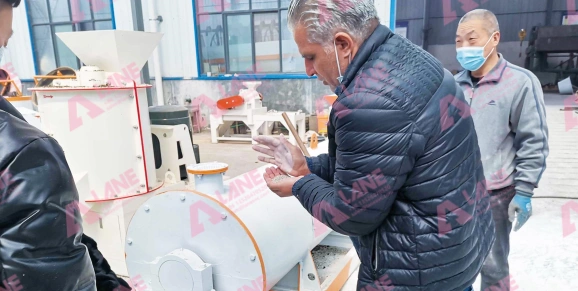
Require a granulation trial on your own material and inspect the granule size, shape, and yield. LANE, for example, runs free granulation experiments on customer material before quotation. Ask for reference installations that process chicken manure or similar poultry litter — not only general fertilizer lines — and confirm their feedstock, capacity, and operating history.
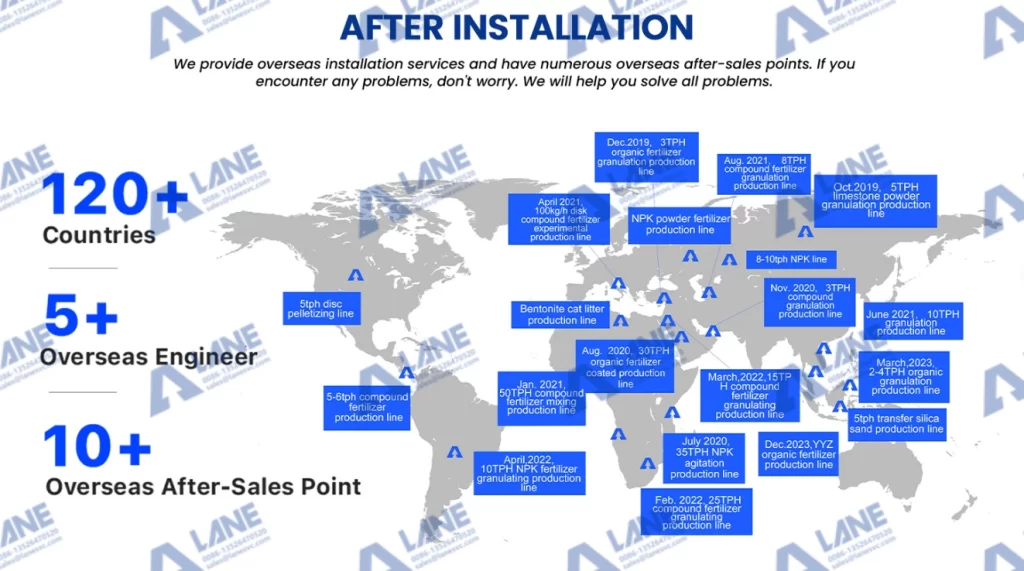
Review the itemized scope, motor and material specifications, delivery and installation terms, commissioning support, spare-parts availability, warranty, and recognized quality-system certification. Evaluate after-sales capability realistically: how quickly can wear parts ship, can an engineer visit your site, and what operator training is included?
Finally, compare total project proposals, not machine prices. The lowest granulator quote often arrives with the highest drying cost, the weakest engineering support, or the longest downtime risk.
What is a chicken manure granulator machine?
A chicken manure granulator machine converts composted, conditioned, or powdered chicken manure into uniform granules or pellets. It can work through wet agglomeration, such as stirring-pin, disc, or drum granulation, or through dry extrusion in a pellet machine.
What type of granulator is best for chicken manure?
It depends on your material. A stirring pin granulator suits fermented compost with roughly 20–40% moisture. A disc granulator fits drier powder at smaller capacity. A rotary drum granulator works for large continuous lines. A ring die or flat die pellet machine fits dried powder when you need hard pellets.
Do I need to compost chicken manure before granulation?
For most organic fertilizer products, yes. Composting stabilizes the material, reduces odor and pathogens, and improves granulation behavior. Some operations extrude dried manure without full composting, but product safety and market certification requirements must be checked first.
What moisture content is needed for chicken manure granulation?
Different machines need different ranges. Wet granulation processes typically work with compost around 20–40% moisture. Extrusion pellet machines generally need drier powder, often 15% moisture or lower. Test your actual material with the supplier rather than relying on general ranges.
What is the difference between a chicken manure granulator and a chicken manure pellet machine?
A granulator builds granules by rolling or stirring moist particles together, producing round, often porous granules. A pellet machine extrudes drier powder through a die under pressure, producing dense cylindrical pellets. The right choice depends on your feedstock and target market.
What size chicken manure granulator machine do I need?
Size from your realistic daily input and planned operating hours, not from an optimistic sales target. Include composting and drying capacity in the calculation, because the granulator cannot run faster than the process feeding it.
Why does my granulator clog or produce too many fines?
Common causes are moisture outside the working range, inconsistent feed particle size, overfeeding, worn internal parts, or an incomplete recycle loop. Correct the upstream conditioning and screening first; machine adjustments rarely fix a feed problem.
Do I need a full chicken manure fertilizer production line to run a granulator?
No, but you need the stages around it: consistent feed, screening, and a way to dry or cool the product if it is wet. A complete chicken manure fertilizer production line makes those stages reliable; buying the granulator alone shifts that responsibility to your team.
What should I check before choosing a supplier?
Run a granulation trial on your own material, review the itemized scope and warranty, confirm spare parts and after-sales support, and compare total project cost rather than unit price.
A chicken manure granulator machine is a process decision wrapped in a machine purchase. Define your feedstock and market first, place granulation inside a realistic chicken manure fertilizer production line design, compare technologies on moisture and scale fit, and qualify the supplier with material tests and reference evidence. Done well, the machine pays back in product quality and uptime; done poorly, the cheapest quote becomes the most expensive line on your site.
If you are planning a project and want to verify equipment fit before you commit, send LANE your material details and target capacity. We will run a granulation test and give you an honest equipment recommendation — contact our team.

Everything you need to know when looking at different types of organic fertilizer equipment, all in one place.
Copyright © 2026. LANE All rights reserved.
Send A Message