
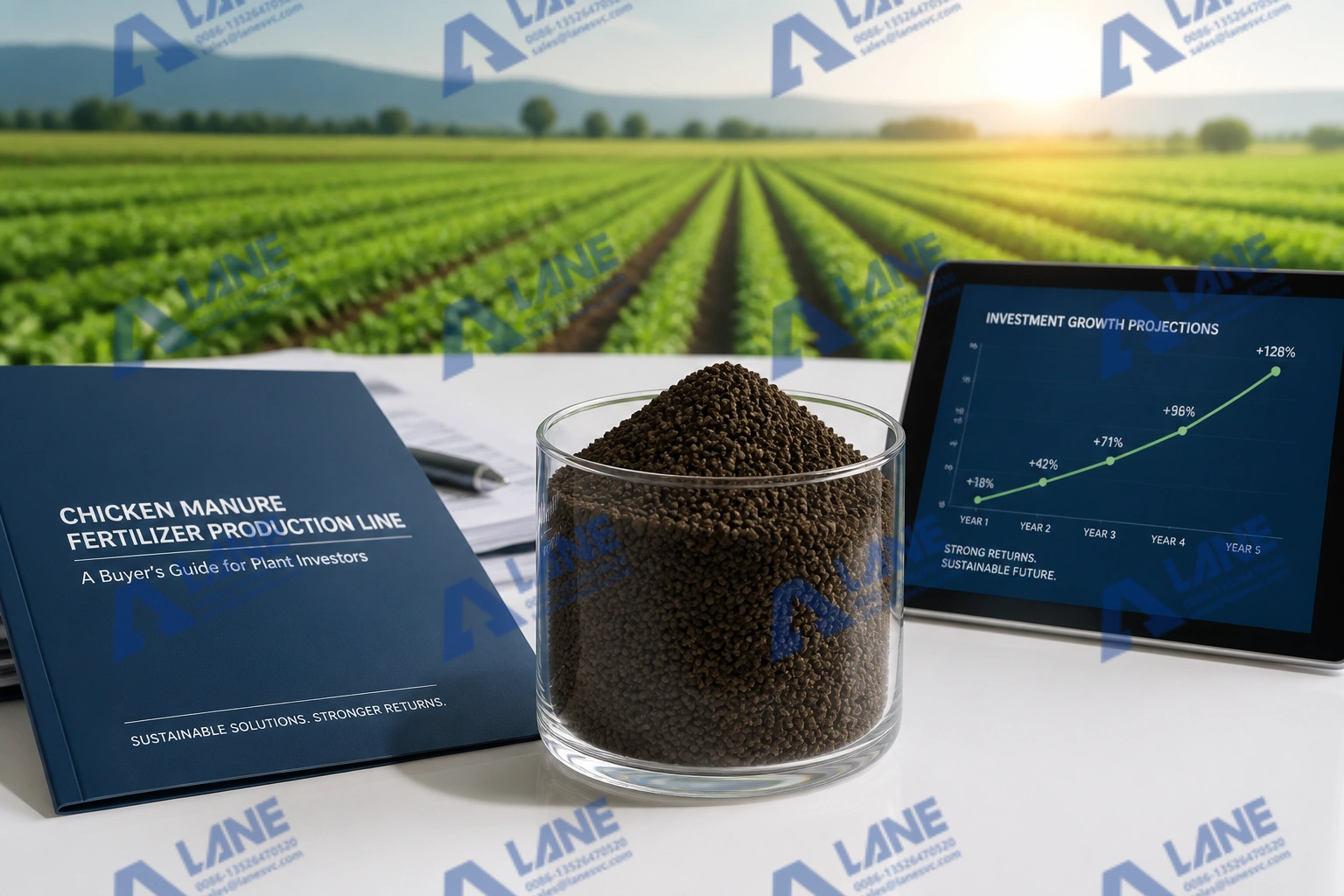
Compare chicken manure fertilizer production line options by capacity, process, and budget. Learn what drives cost and how to choose the right line.
Chicken manure has one of the best nutrient profiles of any common livestock waste, but it is also one of the hardest to handle. Fresh litter can carry 65 to 80 percent moisture, release ammonia, and contain pathogens that make raw field application risky. That is why a chicken manure fertilizer production line is usually planned as a complete treatment system rather than a single machine. The line has to solve moisture, biological stabilization, granulation, drying, and packaging before a bag can leave the plant.
This guide is written for fertilizer manufacturers, plant investors, engineers, procurement managers, and project contractors. It follows the purchase decision from feedstock analysis to line configuration, budget, and supplier evaluation. The numbers here are planning ranges, not a feasibility study.
The business case for processing chicken manure has changed. Large poultry operations produce more manure than local farmland can absorb, and the organic fertilizer market now pays a premium for consistent granulated product instead of raw or composted manure.
Regulatory standards reinforce the same trend. Processed manure can qualify as a component material under CMC 10 of Regulation (EU) 2019/1009, subject to the animal by-product rules in Regulation (EC) No 1069/2009. USDA NRCS publishes composting guidance in the National Engineering Handbook, and China’s NY/T 525-2021 defines the testing and quality requirements for organic fertilizer. These rules do not force every farm to build a granulation plant. They do require documented process control and a product that can be tested against a standard.
For a buyer, the plant is a manufacturing system that has to prove its product is safe, stable, and consistent in the target market.
Poultry production continues to grow in most markets, which means the manure supply problem is not temporary. A chicken manure fertilizer production line gives a poultry operation a controlled outlet for the material instead of relying on nearby fields that may already be saturated. Buyers who size the line for peak production, seasonal field application, and future flock expansion avoid the most common reason a manure project stalls.
The market side has changed too. Growers who need organic matter compare products by nutrient value, particle size, moisture, and certification, not just by price. That makes process control part of the sales story. A plant that can document fermentation temperature, moisture, and granule quality has a stronger position than one that sells variable compost.
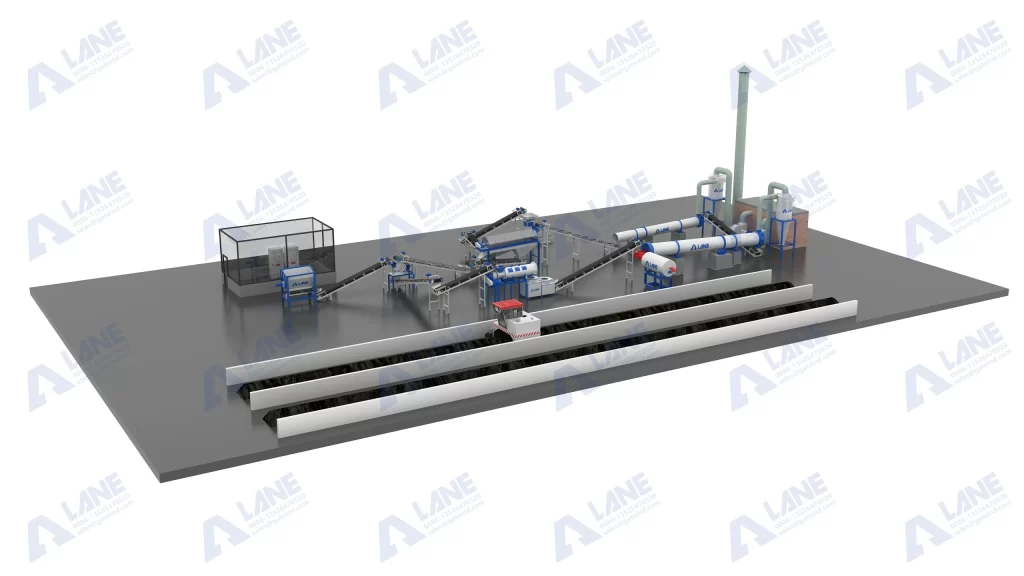
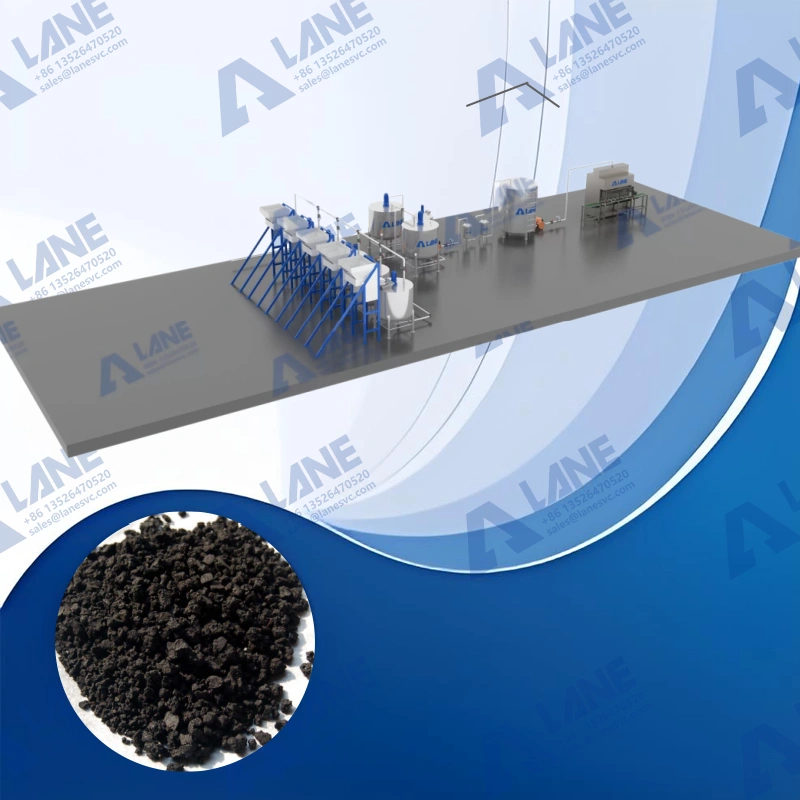
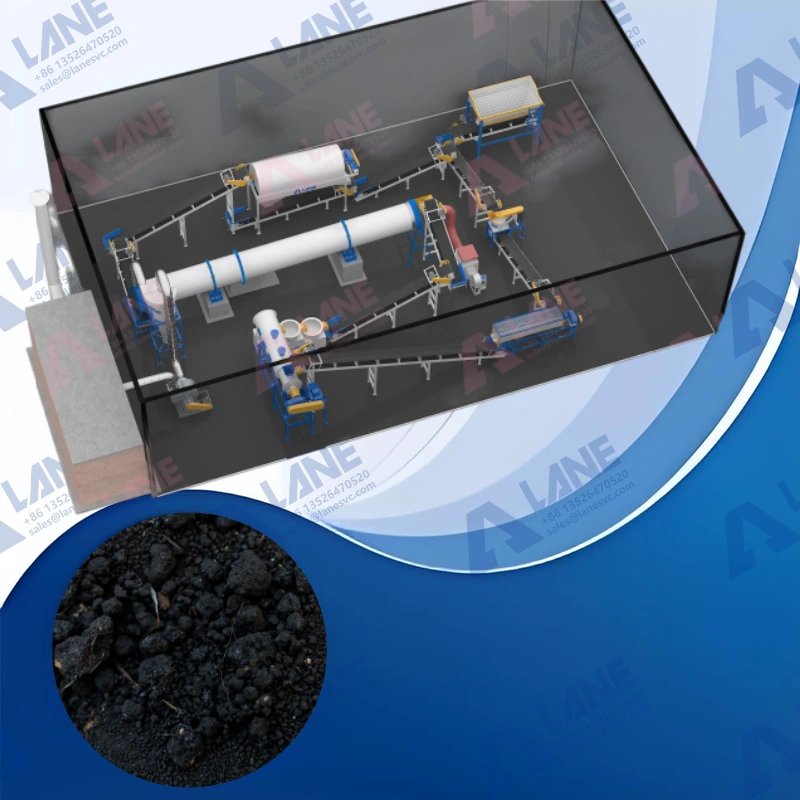
A complete chicken manure fertilizer production line is an equipment sequence, not a shopping list. Each machine changes the material for the next stage, so the configuration has to start with the feedstock and the finished product, not with a favorite granulator.
The core stages are:
LANE’s existing poultry manure process and system guides cover the same stages in more detail.
Raw poultry manure from laying hens, broilers, or ducks is not a consistent input. Moisture depends on housing, feed, litter, and collection interval, so high-moisture slurry should pass through a solid-liquid separator before composting. The front end of a chicken manure fertilizer production line also needs bulking agents such as rice husks, straw, sawdust, or finished compost to adjust moisture and the carbon-to-nitrogen ratio. The target before fermentation is usually 50 to 65 percent moisture and a C/N ratio that supports aerobic activity.
Aerobic fermentation determines whether the finished fertilizer is safe to sell. With regular turning and enough oxygen, pile temperature should stay in the 55 to 70 C range long enough to reduce pathogens and weed seeds. Most commercial systems plan for 15 to 25 days of active fermentation, followed by curing. Buyers selling into certified organic markets should confirm the temperature, duration, and record-keeping rules for their target certification before finalizing the fermentation design.
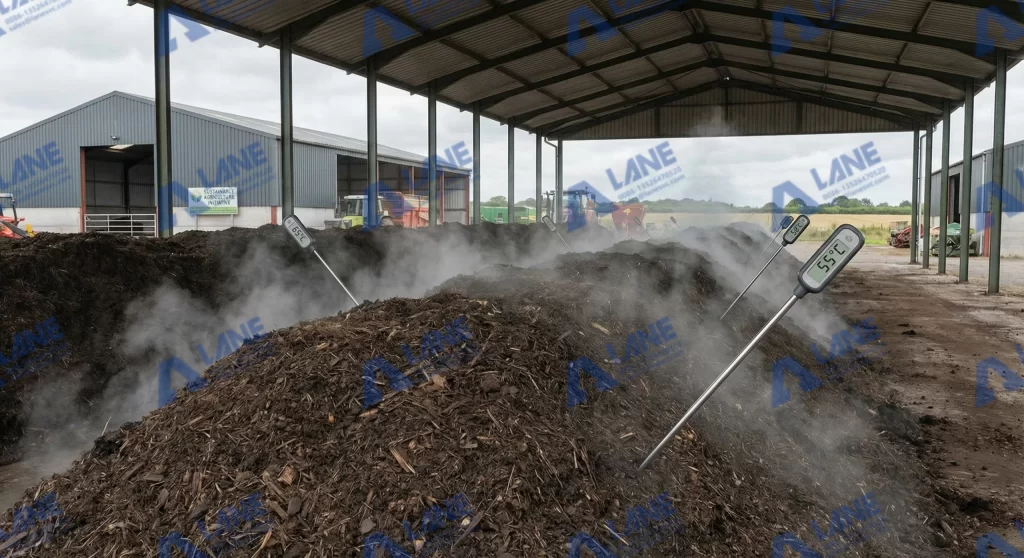
Fermented compost comes out uneven, with clumps, litter fragments, and oversize particles that would plug a granulator. A chain crusher or semi-wet crusher breaks the material down, and a rotary screen removes debris before the next stage.
After crushing, the compost is blended with water, binders, microbial inoculants, or mineral additives to reach the moisture and nutrient target for granulation. The mixer has to do more than combine ingredients. It has to create a uniform feed so every granule carries the same formulation.
Granulation converts the conditioned powder into uniform particles that store, transport, and spread better than loose compost. The right machine depends on the moisture level of the feed and the product shape the market expects:
Choose the machine that matches your moisture profile and product specification rather than the cheapest quote.
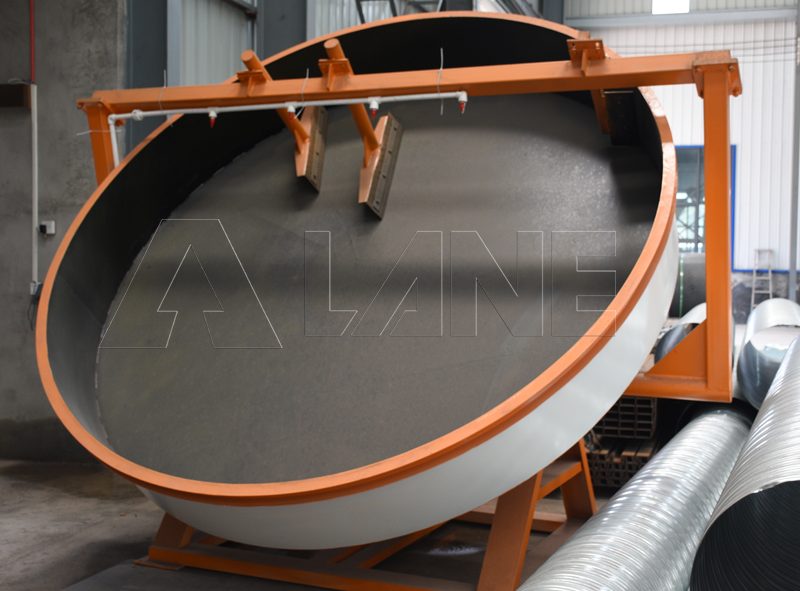
Granules coming off a wet granulator carry roughly 20 to 30 percent moisture. A rotary drum dryer brings the product down to the 10 to 14 percent range, and a cooler then drops the temperature before packaging. Hot granules packed too early will sweat, cake, and fail storage tests.
The final screen returns oversize material to the crusher and fines to the granulator. A coating machine reduces dust and improves appearance, and the automatic packaging machine records bag weight and keeps the line moving.
At the equipment level, a complete chicken manure fertilizer production line can be organized by stage. The list below shows the core machine at each transfer point:
| Stage | Core equipment | Main job |
|---|---|---|
| Raw material | Solid-liquid separator, conveyors | Reduce moisture and protect downstream equipment |
| Fermentation | Compost turner, aeration, odor control | Stabilize the biology and reduce pathogens |
| Preparation | Crusher, rotary screen, mixer | Create a uniform powder feed |
| Granulation | Drum, disc, pin, or pellet machine | Shape the product for storage and spreading |
| Finishing | Dryer, cooler, final screen, coater | Stabilize and sort the granules |
| Packaging | Automatic bagging and palletizing | Prepare the product for sale |
The equipment list is not a menu; it is a material balance. A small chicken manure pellet production line can start with a single pellet mill and bagging station, but it still needs consistent feed preparation before the mill. LANE recommends confirming the moisture and particle-size spec at every transfer point before comparing machine prices.
The easiest way to understand a chicken manure fertilizer production line is to treat it as a moisture and particle-size pipeline. The front end removes water and adjusts carbon and nitrogen, the middle section stabilizes the biology and builds a uniform powder, and the back end shapes, dries, and sorts the product.
Three variables control most of the operating result: moisture at each transfer point, temperature and oxygen during fermentation, and recycle rate around the granulator. When these are designed together, the line runs predictably. When equipment is bought piece by piece, they become daily emergencies.
Not every investor needs a pellet plant. A powder line is simpler, cheaper, and fine for local bulk sales. A chicken manure pellet production line adds granulation, drying, cooling, screening, and packaging, which raises both capital cost and product value. The decision should come from the sales channel: who will buy the product, in what packaging, and at what price per ton.
Published guidance reflects the range. RICHI Machinery describes a 20,000 ton per year chicken manure pellet production line at about USD 120,000 to 300,000, while LANE’s published poultry manure system guidance puts entry-level configurations at USD 50,000 to 80,000 and industrial systems above USD 500,000. For a buyer, the question is whether the extra margin from pellets pays for the extra equipment, energy, and operating complexity.
Once the product form is chosen, the next decision is the granulation or pelleting technology. The comparison starts with feed moisture:
A chicken manure pellet production line using a ring die depends on conditioning the feed to a consistent moisture window. If the feed is too wet, the die blocks. If it is too dry, the pellet is brittle. The wrong granulator forces a chicken manure pellet production line into high recycle rates and makes the dryer the bottleneck.
For buyers, the test is simple: run the actual fermented compost through the proposed machine and measure pass rate, moisture, and product strength. A machine that works in a brochure may fail on the first ton of your own raw material.
Chicken manure fertilizer plant cost has to be split into capital and operating budgets. The full chicken manure fertilizer plant cost estimate includes process scope, capacity, automation, site work, environmental controls, installation, training, raw material logistics, energy, labor, and working capital. A complete chicken manure fertilizer production line should be quoted as a system, with the supplier naming the scope of supply, installation responsibilities, and spare parts.
Capital is usually the largest share of chicken manure fertilizer plant cost, but operating cost decides long-term margin. The main capital drivers are process scope, capacity, automation, site and civil work, dust and odor control, and commissioning. The main operating drivers are feedstock logistics, electricity and fuel, labor, packaging, and testing. For a realistic chicken manure fertilizer plant cost model, add 20 to 50 percent above equipment price for site, permits, installation, and working capital.
Site planning changes chicken manure fertilizer plant cost more than most buyers expect. The line needs covered receiving, fermentation space, a process hall, a warehouse, and separate access for raw material and finished product. Power and water loads have to be confirmed before equipment selection, because a granulation line with drying can draw significant electricity and fuel. Road access affects how raw litter arrives and how finished bags leave.
Environmental controls belong in the same budget. Odor control, dust collection, leachate collection, and a buffer from neighbors are not optional items on a chicken manure fertilizer production line. A biofilter or wet scrubber can make the difference between an operating plant and one that is limited by complaints. In many jurisdictions, the environmental permit, waste handling rules, and final product testing schedule should be reviewed before the equipment contract is signed, because those approvals can add months to the project and another layer to chicken manure fertilizer plant cost.
Granular chicken manure fertilizer sells into several distinct markets. Certified organic growers use it when the process meets their certification rules. Vegetable, fruit, tea, and field crop producers use it for soil organic matter and slow-release nutrients. Landscaping and soil remediation projects buy it in bulk because granules spread with standard equipment. Some plants also blend the organic base with mineral nutrients, so the line should include enough mixing and dosing flexibility for those formulations.
A chicken manure fertilizer production line can be configured for powder, pellet, or organo-mineral output. That flexibility matters when the first sales channel changes after commissioning.
Maintenance on a chicken manure fertilizer line is continuous rather than difficult. Watch the screen, crusher hammers, granulator lining, dryer flights, and conveyor belts. Keep a daily checklist for material build-up, belt tracking, bearing temperature, and screen condition.
Fermentation management deserves the same attention. Record moisture, temperature, turning frequency, and odor. If the pile does not heat, check moisture and oxygen. If ammonia is strong, check the C/N ratio. If granules come out soft, check granulation moisture and drying temperature. Dust filters, wet scrubbers, and biofilters need a monthly inspection schedule because they lose efficiency slowly.
Supplier selection should start with process questions, not price. Ask for a process flow diagram, a material balance, and a plant layout before requesting a final quote. Ask for a granulation test using your own raw material; LANE publishes a free granulation test service for organic fertilizer projects. For a chicken manure pellet production line, ask for a pellet test and a written moisture window for the feed.
Also confirm material certificates, installation support, remote technical guidance, spare parts, and comparable project references. Ask each supplier to show how the quote maps to the full chicken manure fertilizer plant cost, including site work and commissioning. Public case material shows chicken manure pellet lines operating from 1 to 20 tons per hour, including a published 5 tons per hour line in Vietnam. A supplier should be able to name similar projects, even if customer confidentiality limits direct reference calls.
Construction time for a chicken manure fertilizer production line depends on the process route and local site work. A powder line can be commissioned in weeks once the site is ready. A granulation line with drying, cooling, screening, and packaging needs more time for civil works, utility connections, and trial runs. The commissioning plan should include a raw material test, line balancing, and operator training before the first commercial batch.
Payback should be tested against the full chicken manure fertilizer plant cost, not the equipment invoice. The model needs raw material logistics, energy, labor, packaging, testing, and utilization. Published plant examples consistently show that utilization is the difference between a profitable line and an idle one. Buyers should ask the supplier for a production schedule that includes startup, ramp-up, and seasonal demand.
How much does a chicken manure fertilizer production line cost?
The range depends on capacity and process scope. Published supplier guidance places entry-level systems processing about 5 tons of raw manure per day at USD 50,000 to 80,000 and larger industrial systems above USD 500,000. A 20,000 ton per year pellet line is commonly quoted in the USD 120,000 to 300,000 range before site work, permits, and working capital.
What is the difference between a powder line and a chicken manure pellet production line?
A powder line ends after fermentation, crushing, mixing, and packaging. A chicken manure pellet production line adds granulation, drying, cooling, final screening, and usually coating. Pellets carry higher capital and energy cost but sell at a premium in retail and export markets.
How long does it take to process chicken manure into fertilizer?
Active fermentation normally runs 15 to 25 days, followed by curing. With drying and granulation added, the full cycle from raw manure to packaged product typically runs 25 to 40 days. Thermal drying routes shorten that time but do not produce the same biologically active compost.
What moisture content does raw chicken manure have?
Fresh poultry manure can carry 65 to 80 percent moisture depending on housing, litter, and collection method. It should be dewatered and blended with bulking agents to reach roughly 50 to 65 percent moisture before fermentation.
What equipment is needed for a complete chicken manure fertilizer production line?
The core set includes a solid-liquid separator, compost turner, crusher, rotary screen, mixer, granulator, dryer, cooler, final screen, and automatic packaging machine. Dust collection and odor control equipment should be included in the same scope.
Can chicken manure fertilizer be sold as certified organic?
Yes, when the production process meets the requirements of the certification scheme for the target market. Buyers exporting to the EU should also review the processed manure rules under Regulation (EU) 2019/1009 and Regulation (EC) No 1069/2009, because those rules define safe feedstock and processing conditions.
What is the typical NPK content of processed chicken manure fertilizer?
Poultry manure is nitrogen-rich compared with other livestock wastes. LANE’s published process guidance lists typical finished values of 2 to 4 percent nitrogen, 2 to 5 percent P2O5, and 1 to 2 percent K2O, with variation by feed, litter, and processing method.
How do I choose between a rotary drum granulator and a ring die pellet mill?
Use a rotary drum granulator when the feed is moist and the target is spherical granules at large capacity. Use a ring die pellet mill when the feed has been dried and the market expects cylindrical pellets. The correct choice depends on your moisture profile and product specification, not on which machine is cheaper.
How long does it take to build a chicken manure fertilizer production line?
A powder line can be commissioned in weeks once site work is ready. A full granulation line with drying, cooling, and packaging needs several months for civil works, utility connections, and trial runs. The schedule depends on equipment lead times, local approvals, and the supplier’s installation team.
What is the return on investment for a chicken manure fertilizer plant?
Payback depends on the full chicken manure fertilizer plant cost, selling price, utilization, and operating cost. Most published project examples show that high utilization and consistent product quality matter more than the initial equipment price. Model the first two years at partial utilization before committing capital.

Everything you need to know when looking at different types of organic fertilizer equipment, all in one place.
Copyright © 2026. LANE All rights reserved.
Send A Message