
Plan a small scale organic fertilizer production line with this buyer’s guide covering process routes, equipment, layout, operating cost and supplier selection.
The term “small scale organic fertilizer production line” covers a wide range of projects, from a farm workshop that bags 500 kg of powder per hour to a regional plant producing 20,000 tons of granular fertilizer a year. Buyers use the same words, but the equipment, process, and budget behind those projects are different. The first job of a project team is to define which version of “small scale” applies to their raw material, market, and production plan.
This guide is written for fertilizer manufacturers, plant investors, engineers, procurement managers, and project contractors. It explains how to choose a process route, what equipment belongs in a small line, what drives cost, and how to compare suppliers before placing an order.
In equipment catalogs, a small scale organic fertilizer production line usually means one of three capacity classes:
Capacity alone does not define the project. Process scope matters just as much. A plant that sells powder can stop after fermentation, crushing, mixing, and packaging. A plant that sells granules adds granulation, drying, cooling, final screening, and usually coating. The same hourly capacity can carry very different capital cost and labor requirements depending on which route is chosen.
The most common mistake is to search for a “small scale organic fertilizer production line” without first deciding the product form. A 1 ton/hour powder line and a 1 ton/hour granular line are not the same machine package, and the granular line usually costs two to three times more.
Several market forces push buyers toward smaller, decentralized organic fertilizer plants. Farms and municipalities need to manage livestock manure, crop residue, food waste, and digestate without paying high disposal costs. Regional producers see a market for compost and organic fertilizer from local agriculture, landscaping, nurseries, and specialty crop growers. Rising fertilizer prices make local nutrient recycling more attractive.
Regulation adds another driver. In many countries, organic waste must be treated rather than dumped, and fertilizer products sold across borders must meet labeling and contaminant requirements. The European Union regulates fertilising products under Regulation (EU) 2019/1009. USDA NRCS publishes composting guidance in the National Engineering Handbook, and FAO provides detailed process guidance for composting at different scales. These frameworks make documented process control more valuable, even on a small line.
Small plants fit this situation well because they can be located close to the feedstock, sized to the local market, and expanded later. A mini organic fertilizer production line is often the first step for a farm or a young company that wants to prove the product before committing to a larger facility.
The same logic applies to a small scale organic fertilizer production line. A compact, expandable plant lets a producer control feedstock quality and sales growth before scaling up.
The small scale organic fertilizer production line should be designed around the material that will actually arrive at the gate. Common feedstocks include poultry manure, cow manure, pig manure, crop straw, food processing waste, digestate, and composted municipal organic waste. Each one has a different moisture content, carbon-to-nitrogen ratio, particle size, and contamination risk.
Before line design, test the feedstock for:
High-moisture slurry needs dewatering before composting. A screw press solid-liquid separator or an inclined dewatering machine can reduce the moisture load, lower handling cost, and make the composting stage easier to control. The same machine is a common addition to a small scale organic fertilizer production line because it protects every downstream stage from excess water.
Even a mini organic fertilizer production line needs this analysis, because the dewatering and composting equipment are sized from the same feedstock data.
The finished product decision should come from the sales channel. Bulk soil improvement programs may accept powder. Retail bags, export programs, and precision application usually need granules. If the market is not clear, keep the line simple and add granulation only when a buyer can justify the extra capital and energy.
The process route is the single biggest cost and design decision in a small project. Compare the three standard routes before asking for equipment quotes.

A mini organic fertilizer production line is normally a powder route or a compact granular route built on a single workshop floor. It works well for 1 to 5 tons per hour and can be expanded when the market grows.
Granulation technology also affects the route. A disc granulator is common for small granular lines because it is simple, visible, and easy to adjust. A stirring pin granulator suits organic feedstocks with moderate moisture. A flat die or ring die pellet mill handles drier material and produces cylindrical pellets. The choice depends on the target granule shape, moisture profile, and budget.
Do not choose a granulator before the feedstock test. A granulator only works well when the feed moisture, particle size, and binder are in the right window. If the compost is unstable or too wet, the granulator will produce soft, irregular granules no matter how well it is built.
The equipment list follows the process. A complete small scale organic fertilizer production line includes every stage from receiving to bagging, even when some units are simplified for the lower capacity. A mini organic fertilizer production line can still include every one of these stages; the difference is machine size, not process logic.
Receiving, dewatering, and size reduction
Receiving equipment includes feed hoppers, conveyors, and a platform for dumping raw material. High-moisture manure passes through a screw press or inclined dewatering machine. Large material passes through a crusher or shredder so it can mix evenly with the bulking agent.
Composting and fermentation
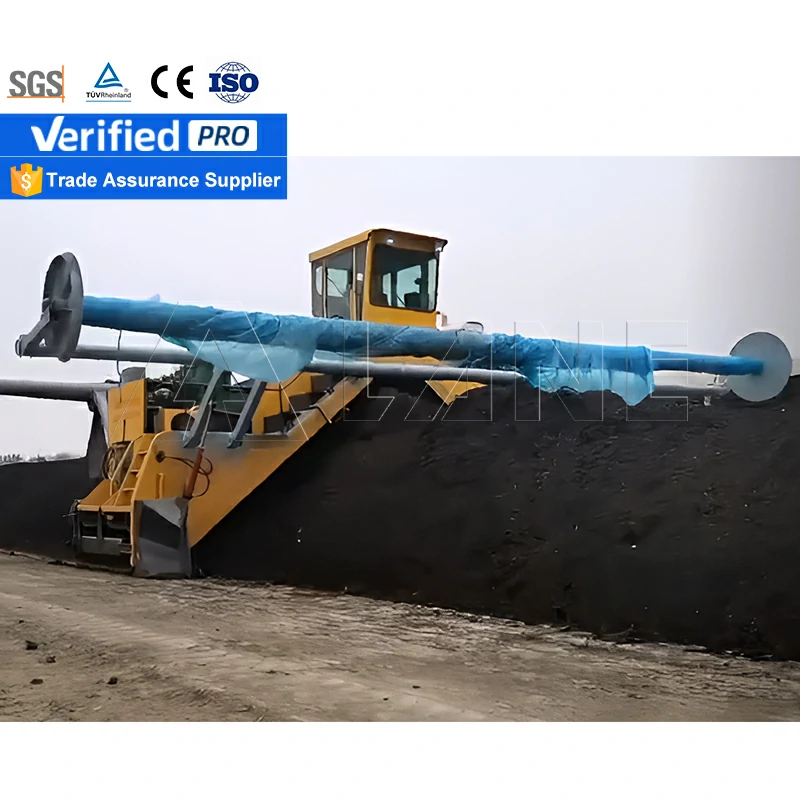
Composting can be done in windrows with a turner, in troughs with a rail-mounted turner, or in vertical fermentation tanks. A small plant often starts with a simple turning system and adds enclosed fermentation when odor control or processing speed becomes important.
Aerobic conditions are the core of this stage. The pile needs oxygen, moisture around 50 to 60 percent, and a starting C/N ratio near 25:1 to 30:1, based on FAO guidance. Temperature should rise into the 50 to 70 C range and stay there long enough to reduce pathogens. Active composting normally runs 15 to 25 days, followed by curing.
Crushing and screening
Fermented compost is uneven. A chain crusher or semi-wet crusher breaks up clumps, and a rotary screen removes debris and oversize particles before the material enters the mixer. Particle size consistency at this point improves mixing and granulation later.
Mixing and batching
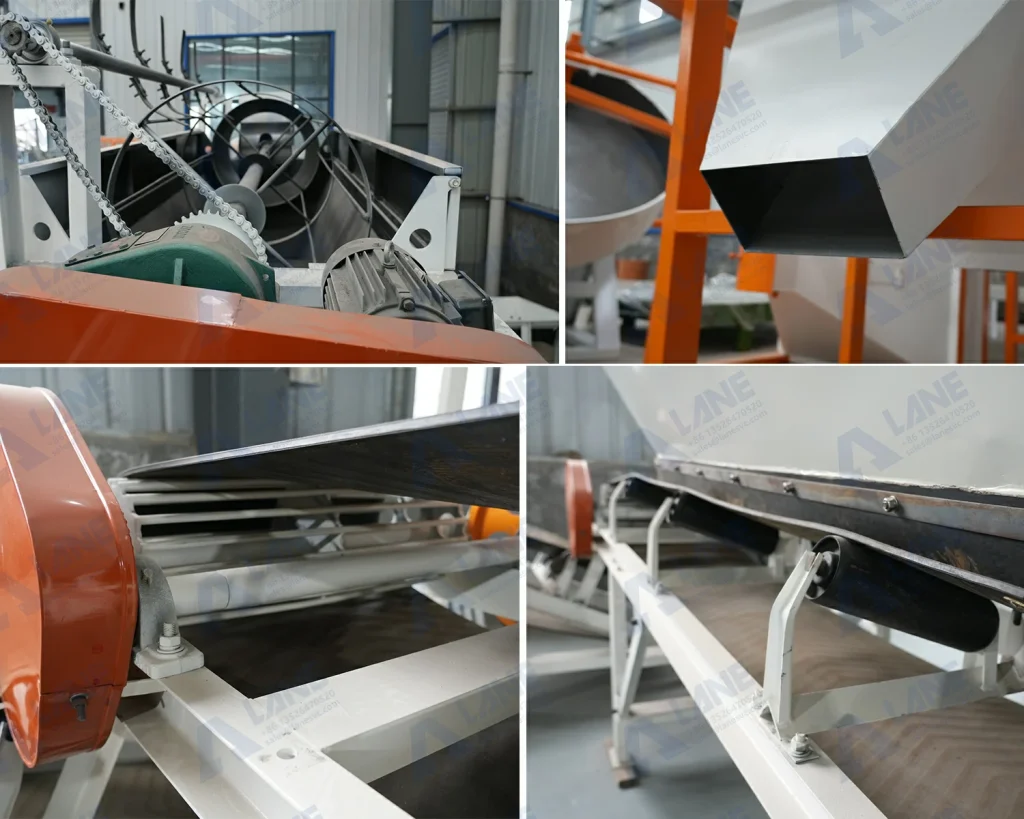
A horizontal or double shaft mixer blends compost, water, binders, and optional mineral or microbial additives. For nutrient consistency, add belt scales or automatic batching so the formulation can be repeated when the raw material changes.
Granulation, drying, and cooling
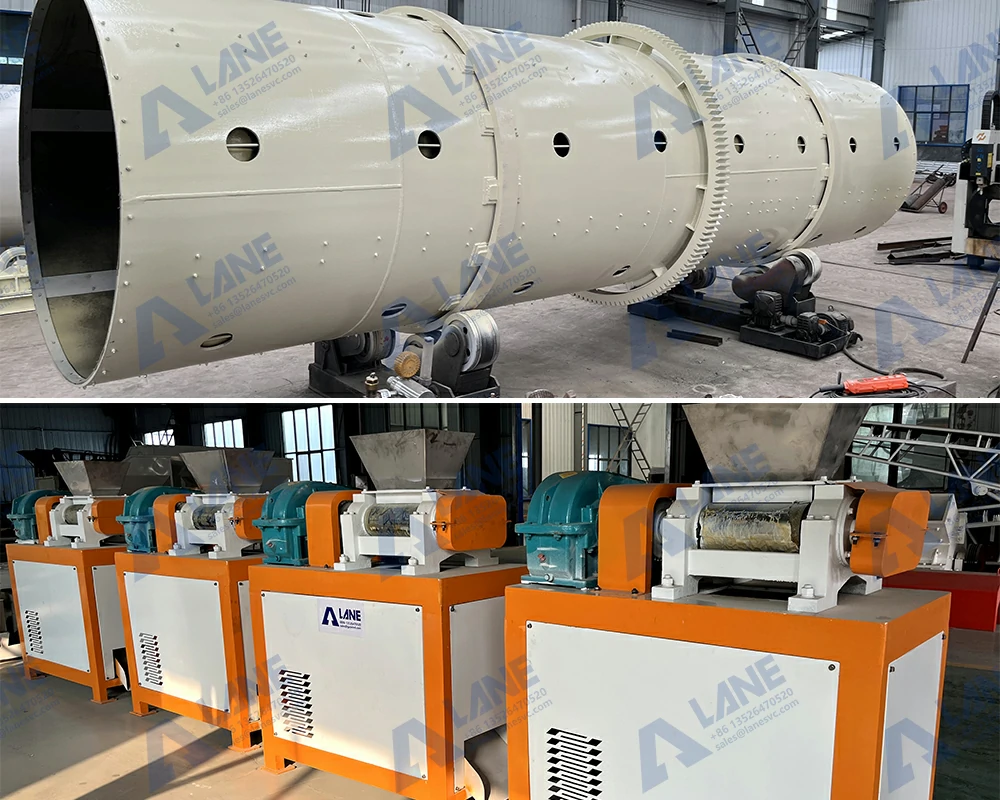
The granulator forms the conditioned powder into granules. A disc granulator, stirring pin granulator, or pellet mill can be selected for the product shape and moisture level. Wet granules carry roughly 20 to 30 percent moisture and pass through a rotary dryer to reach about 10 to 14 percent, then a cooler drops the temperature before screening.
Final screening, coating, and packaging
The final screen separates on-size granules from oversize and fines. Oversize material returns to the crusher, and fines return to the granulator. A coating machine is optional, and an automatic packaging machine weighs and bags the finished product.
Conveying and controls
Conveyors connect the stages and reduce manual handling. A small line can use belt, screw, and bucket elevators selected for the material. Simple PLC and sensor controls improve consistency without adding full automation.
The working principle of the small scale organic fertilizer production line is a sequence of biological and mechanical transformations:
Receiving -> Dewatering -> Composting -> Curing -> Crushing -> Screening -> Mixing -> Granulation -> Drying -> Cooling -> Final screening -> Coating -> Packaging
Each stage prepares the material for the next one. Dewatering removes free water so composting can reach the right moisture. Composting stabilizes the organic matter and reduces pathogens. Crushing and screening make the material uniform. Mixing sets the formulation. Granulation gives the product its size and density. Drying and cooling make it stable in storage. Packaging makes it sellable.
When the line is designed as one system, the control variables are simple to track:
These three variables explain most operating problems. If the compost does not heat, check moisture and oxygen. If granules come out soft, check granulation moisture and drying temperature. If bags are inconsistent, check the screen and the recycle loop.
Published supplier layouts put a small powder line in roughly 500 to 800 square meters of covered space, and a granular line with drying in a larger building. The exact area depends on composting method, storage, and expansion plans.
Plan the small scale organic fertilizer production line with an expansion path. A mini organic fertilizer production line built on one floor can be extended if the receiving, composting, and storage areas are sized for growth.
Plan the site around material flow, not just equipment footprints:
The site needs adequate power, water, drainage, and access for maintenance. A mini organic fertilizer production line can often run on single-phase or three-phase supply depending on motor size, but the final electrical design should be confirmed before installation.
Labor depends on automation. A simple powder line can run with 2 to 4 people per shift. A granular line with drying and packaging typically needs more. Build the staffing plan from the actual process steps, not from the hourly capacity claim.
Small organic fertilizer plant cost is determined by process scope, capacity, automation, and site conditions. Equipment price is the visible part, but it is not the whole budget.
The reference planning capacity ranges provided by suppliers indicate that small-scale granulation production lines typically have a capacity of 1–5 tons per hour, with equipment prices ranging from approximately USD 100,000 to USD 150,000. Simple powder fertilizer production lines generally start at around USD 10,000–35,000. Small production lines may start from approximately USD 50,000, while high-capacity configurations can reach up to around USD 1.5 million.
The above figures are provided for market reference only and do not represent official quotations. The actual price needs to be further verified and confirmed based on the detailed project scope, required capacity, equipment configuration, raw materials, and technical requirements.
The equipment number must be separated from the full project cost. Buyers should budget for:
Practical project guidance commonly adds 20 to 50 percent above equipment price for site, civil works, permits, installation, and working capital. A small organic fertilizer plant cost estimate that only includes machines will understate the cash required to start production.
Granulation is the biggest single cost driver after the building. A powder route can start with a lower investment and generate revenue while the market develops. A granular route raises the capital requirement but also raises product value, especially in retail and export channels.
Build the small organic fertilizer plant cost model from the full scope: equipment, civil works, installation, commissioning, and the first operating cycles.
Operating cost on a small line comes from labor, energy, wear parts, and raw material handling. The highest-wear points are the crusher hammers, granulator lining, screen, dryer flights, and conveyor belts. Keep spare parts for these items in stock before the first season.
On a small scale organic fertilizer production line, labor is often the largest controllable cost, so conveyor design and bagging speed matter more than on a large automated plant.
Maintenance on an organic fertilizer line is continuous rather than difficult. Daily checks should cover material build-up, belt tracking, bearing temperature, and screen condition. Weekly checks should cover conveyor tension, gearboxes, and lubrication points. Monthly checks should include dust filters, odor control, and electrical connections.
Moisture management has the largest effect on operating cost. Every extra ton of water increases composting effort, handling cost, and drying energy. A dewatering step at the start of the line usually pays for itself in energy savings.
Composting is the stage where process cost and product quality meet. Record pile temperature, moisture, turning frequency, and odor. If the pile does not heat, adjust moisture and oxygen. If ammonia is strong, check the C/N ratio. If curing is skipped, the finished product can fail plant response tests even when it looks and smells like compost.
Supplier selection for a small scale organic fertilizer production line should start with process questions, not price. Ask every candidate for the same information:
Ask the supplier to explain how the line will handle your feedstock moisture, seasonal variation, and target certification. A supplier who asks for feedstock samples and a product specification is usually more useful than one who quotes from capacity alone.
When comparing suppliers for a small scale organic fertilizer production line, ask for a written commissioning plan and a named contact for after-sales support.
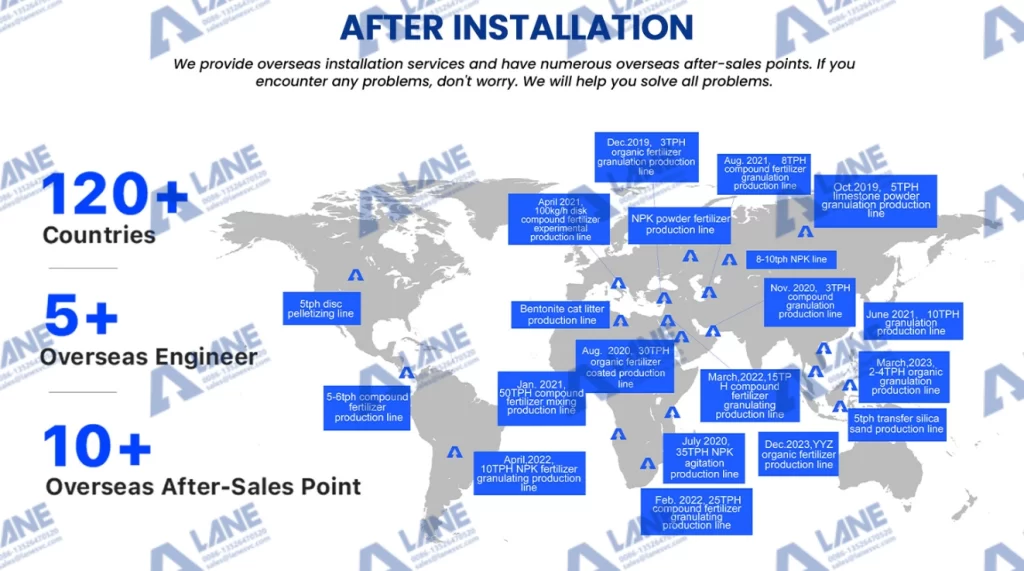
LANE Machinery supplies complete organic fertilizer production lines from dewatering through packaging, including screw press solid-liquid separators, inclined dewatering machines, compost turners, crushers, mixers, granulators, dryers, coolers, screening machines, and packaging machines. LANE has delivered equipment to clients in more than 50 countries and supplied machines for a 100,000 tons per year national fertilizer project in Africa.
For buyers, project execution matters as much as machine quality. Confirm how installation, commissioning, operator training, remote video guidance, and after-sales support are handled before signing. A small plant cannot afford a long shutdown waiting for a spare part or a technician.
Most failed small projects follow the same patterns:
Understating the small organic fertilizer plant cost during the feasibility study is one of the most common causes of project failure.
These mistakes are avoidable when the project is treated as a process design, not a shopping list. The small scale organic fertilizer production line should be scoped backward from the finished product and the market, then matched to the feedstock and site.
How much does a small scale organic fertilizer production line cost?
Published supplier ranges start around USD 10,000 to 35,000 for simplified powder lines and run from USD 100,000 to 150,000 for complete granular lines at 1 to 5 tons per hour. The full small organic fertilizer plant cost also includes buildings, permits, installation, working capital, and site work.
The complete small organic fertilizer plant cost estimate should include site preparation, permits, installation, and working capital as separate line items.
What is the difference between a small and a mini organic fertilizer production line?
The two terms overlap. A mini organic fertilizer production line usually refers to a compact powder or low-capacity granular line for a farm or workshop, often 500 to 1,000 kg/h. A small scale organic fertilizer production line can include the same compact configuration or a larger 1 to 3 tons/hour plant.
How many tons per hour should a small line produce?
Most small lines are designed for 1 to 3 tons per hour of finished product. Some powder lines run at 500 kg to 1,000 kg per hour. The right capacity depends on raw material availability, market demand, and operating schedule, not on the maximum capacity a machine can claim.
What equipment is needed for a small organic fertilizer line?
A complete line includes receiving equipment, a dewatering machine if the feedstock is wet, composting or fermentation equipment, a crusher, a screen, a mixer, a granulator for granular products, drying and cooling equipment, a final screen, and a packaging machine, plus conveyors and controls.
How long does the process take from raw material to finished product?
Active composting normally runs 15 to 25 days, followed by curing. With drying and granulation added, the full cycle from raw material to packaged product typically takes 25 to 40 days, depending on feedstock, climate, and equipment.
Should I start with powder or granules?
Start with the sales channel. Powder is cheaper to produce and works for bulk soil programs. Granules cost more but store, transport, and apply better for retail and export. Many plants start with a powder line and add granulation when the market justifies the investment.
On a small scale organic fertilizer production line, the answer usually comes down to packaging, storage, and application method rather than equipment preference.
How much space does a small line need?
A powder line can fit in roughly 500 to 800 square meters of covered space, and a granular line with drying usually needs a larger building. The final layout depends on the composting method, storage area, and expansion plan.
How do I choose a supplier for a small organic fertilizer line?
Compare process engineering, raw material testing, line integration, installation support, spare parts, and references. Ask for a process flow diagram, equipment list with power, scope separation, and a commissioning plan. A lower price usually means a smaller scope, so read the quotation against the equipment list.

Everything you need to know when looking at different types of organic fertilizer equipment, all in one place.
Copyright © 2026. LANE All rights reserved.
Send A Message