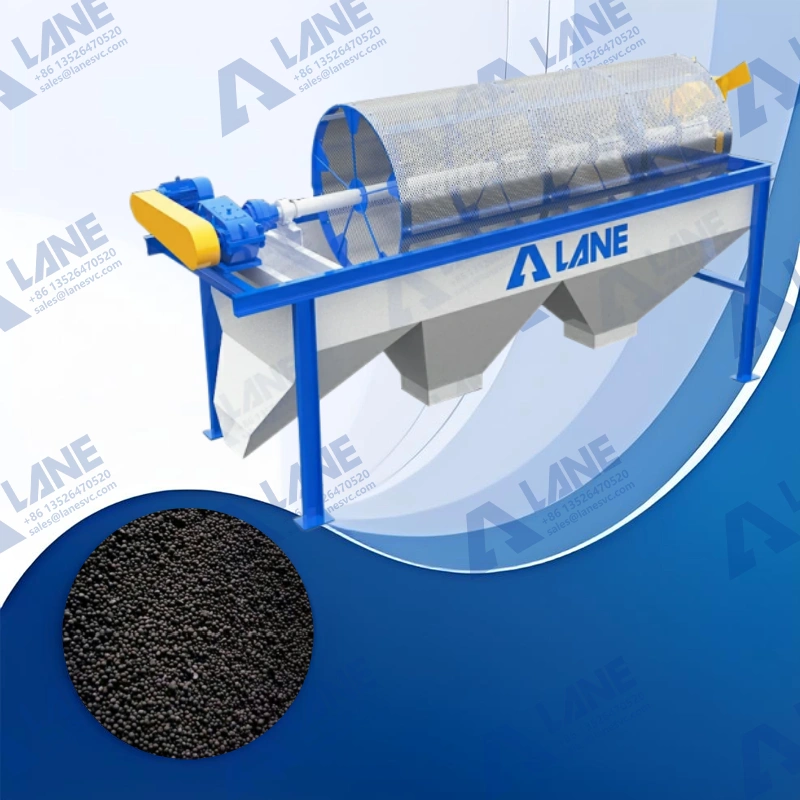
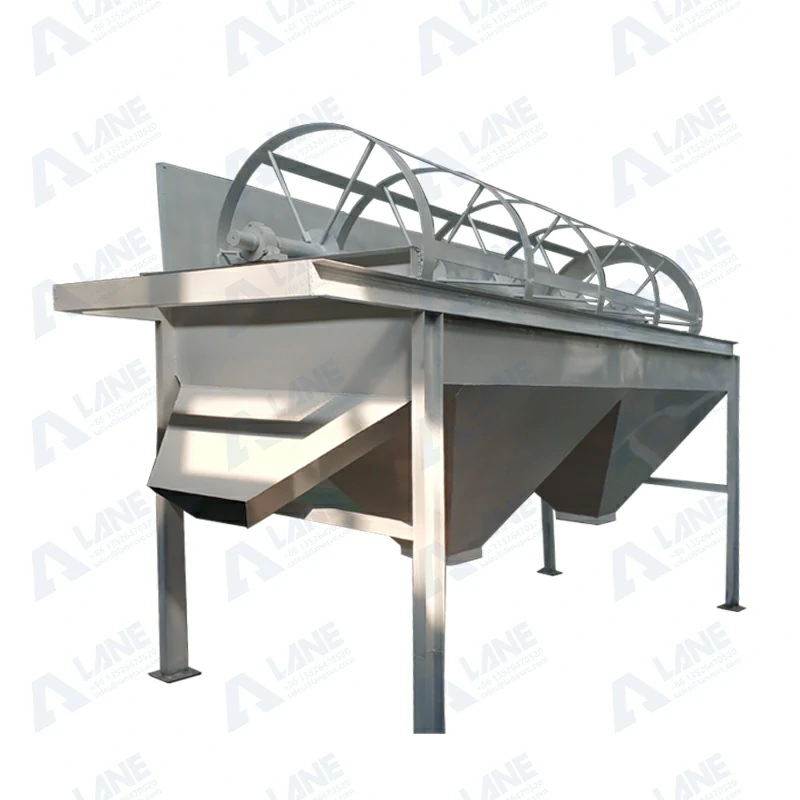
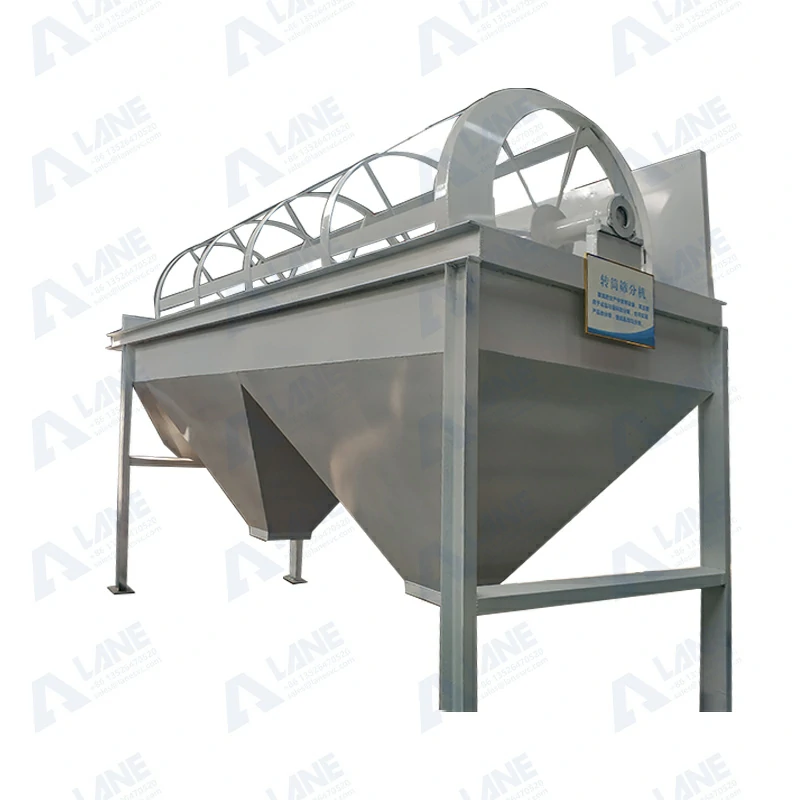
LANE Machinery’s rotary drum screener delivers high-capacity, precise particle separation for organic fertilizer, NPK compound fertilizer, and compost production lines. Low maintenance, anti-clogging design. Get a quote today.
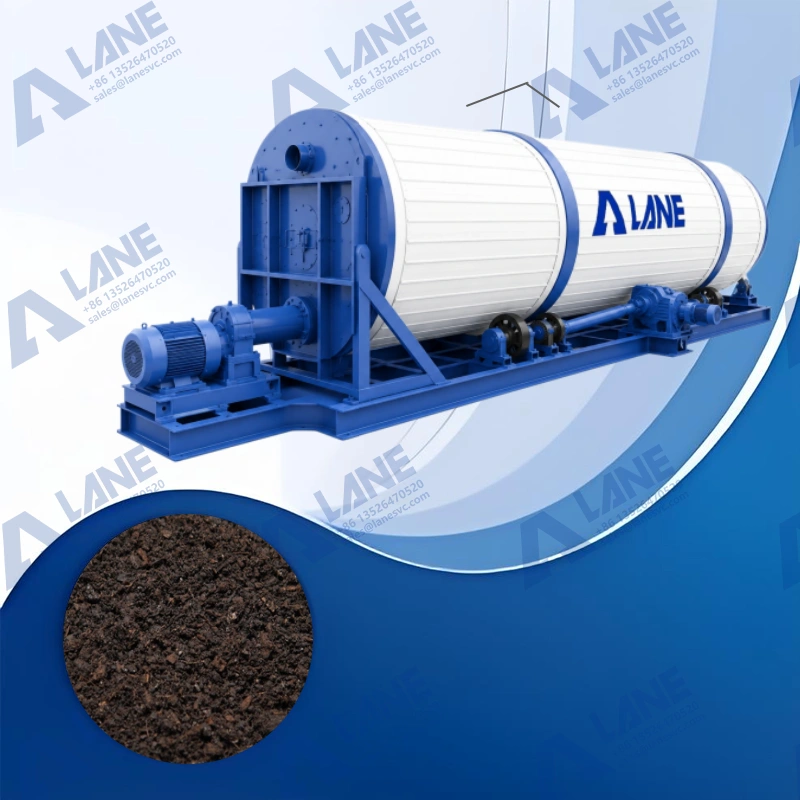
The rotary drum screener (also known as a rotary screen separator or drum sieving machine) is a core piece of equipment in any modern fertilizer production line. Designed and manufactured by LANE Machinery, this machine provides reliable, high-throughput particle size classification for a wide range of materials — from raw organic compost to finished NPK compound fertilizer granules.
Unlike flat vibrating screens, the rotary drum screener uses a gently rotating cylindrical screen drum to separate materials by particle size. This tumbling action is inherently gentle on granules, reducing breakage and dust generation while delivering superior screening precision. It is the go-to solution for fertilizer manufacturers who need consistent, high-volume output with minimal downtime.
Primary function: Separate fertilizer granules, powder, or bulk material into two or more uniform size fractions by passing them through a rotating cylindrical mesh drum.
The large-diameter drum design, combined with adjustable rotation speed (typically 10–25 RPM), ensures a processing capacity of 1–30 tons per hour depending on the model. Multiple screen mesh sections can be configured to produce 2–4 different particle grades in a single pass.
Equipped with a self-cleaning brush mechanism or rubber ball knocking system that continuously clears mesh apertures during operation. This prevents wet or sticky materials — common in organic fertilizer and compost production — from blinding the screen.
The rotating drum design gently lifts and cascades material across the screen surface. This minimizes impact and abrasion on fertilizer granules, preserving product quality and reducing fines generation compared to vibrating screening methods.
Standard models come with a sealed housing and dust extraction ports, ensuring a clean working environment and compliance with occupational health standards. The enclosed design also prevents contamination of the screened product.
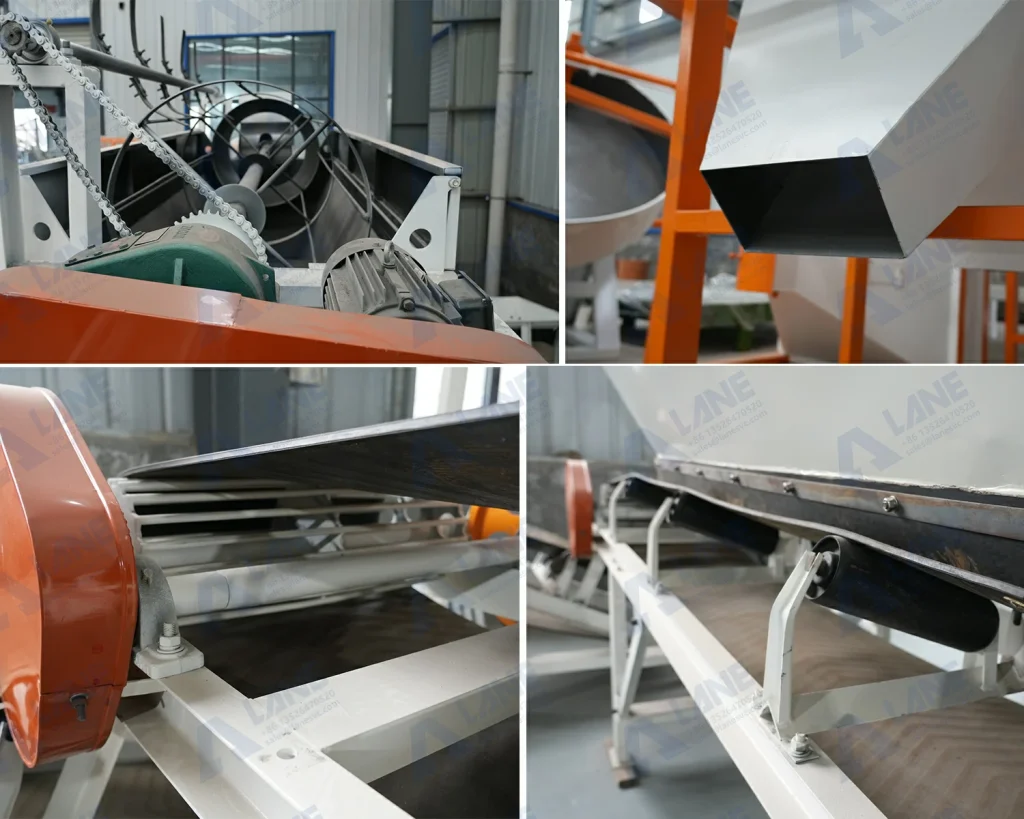
The rotary drum screener operates on a simple yet effective mechanical principle:
Feeding: Material enters the rotating drum through a feed hopper at the inlet end. An internal spiral flight or guide vane distributes material evenly across the drum width.
Tumbling & Separation: As the drum rotates (driven by a geared motor and chain/sprocket or friction drive system), the material is lifted by internal flights and cascaded back onto the screen surface. Particles smaller than the mesh aperture pass through the screen openings and fall into the collection hopper below. Oversized particles continue traveling along the length of the drum.
Staged Classification: In multi-deck or multi-section drum designs, material passes through progressively finer (or coarser) mesh sections. Each section discharges its retained fraction through a dedicated chute.
Discharge: Screened fractions exit through separate outlets — typically “undersize” (fine), “on-size” (product), and “oversize” (returns for re-crushing or re-granulation).
Self-Cleaning: A brush roller or bouncing ball assembly mounted along the top of the drum continuously dislodges particles stuck in the mesh, maintaining consistent screening efficiency throughout the production run.
The entire process is continuous — material is fed, screened, and discharged simultaneously without batch cycling.
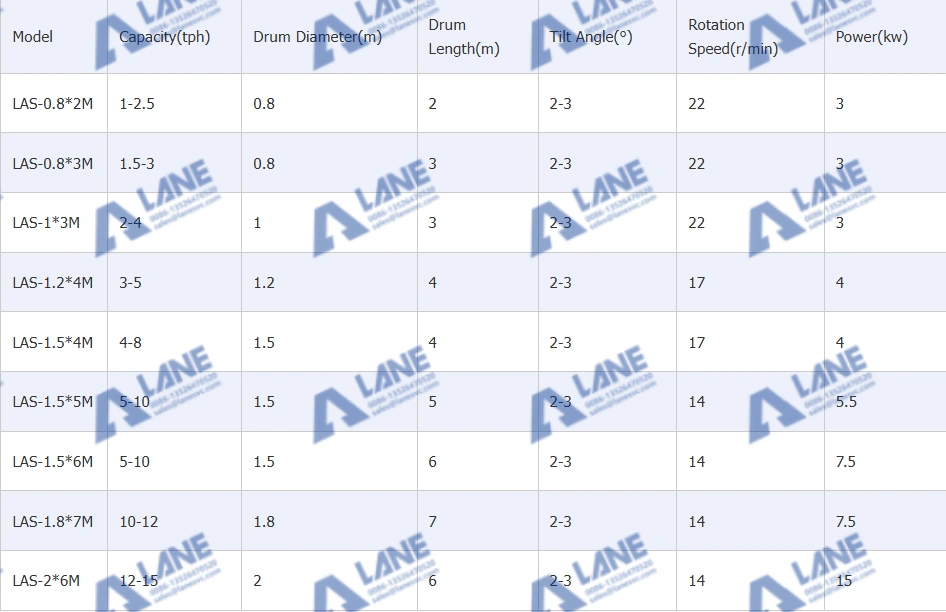
Note: Specifications above are for standard carbon steel models processing NPK compound fertilizer granules (1–5 mm target size). Actual capacity varies with material bulk density, moisture content, and mesh aperture. Custom sizes and configurations are available upon request. Stainless steel (304/316L) models available for corrosive or food-grade applications.
The rotary drum screener is an indispensable piece of equipment across the entire fertilizer manufacturing spectrum:
LANE Machinery specializes exclusively in fertilizer production equipment. Every rotary drum screener we build is engineered with deep understanding of fertilizer material characteristics — bulk density, moisture range, abrasiveness, and flow behavior. This is not a generic screening machine adapted for fertilizer; it is purpose-built for fertilizer from the ground up.
Our rotary drum screeners are designed to integrate seamlessly into complete fertilizer production lines. We handle the interface engineering — feed conveyors, discharge chutes, dust collection ducting, and control system integration — so you don’t have to.
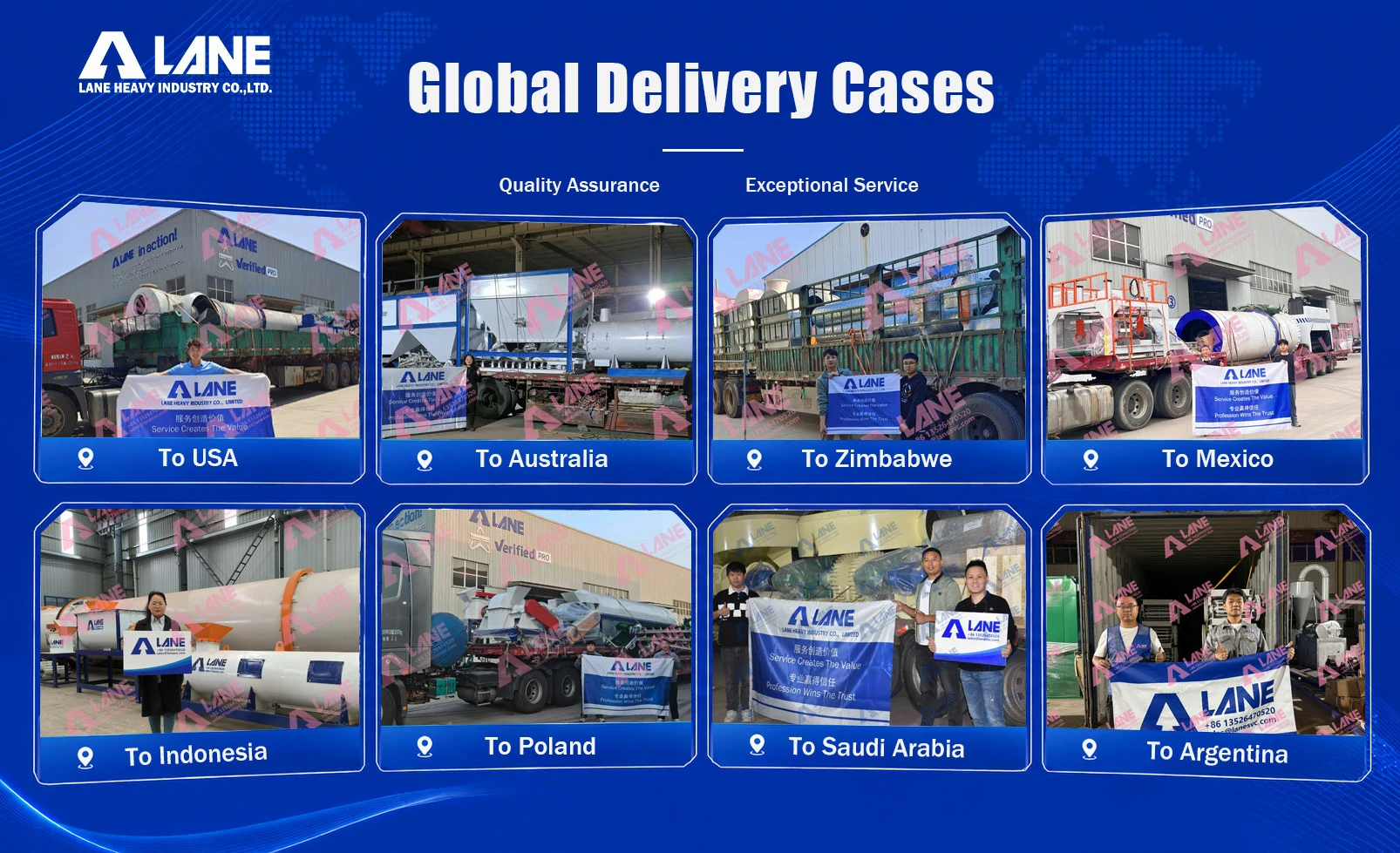
LANE Machinery has exported fertilizer equipment to customers across Asia, Africa, the Middle East, South America, and Eastern Europe. We provide:
We build each rotary drum screener to your specifications:
A rotary drum screener uses a rotating cylindrical drum to tumble and screen material — ideal for high-capacity, gentle handling of granules. A vibrating screener uses high-frequency vibration to stratify and separate particles on a flat screen deck — better suited for fine powders and precise cuts. For most fertilizer granule applications, the rotary drum screener offers higher throughput with less product breakage. See our Vibrating Screener for fine powder applications.
This depends on your target product specification. For standard NPK compound fertilizer (2–5 mm granules), we typically recommend:
Our engineering team will help you select the optimal mesh configuration based on your specific product requirements.
LANE’s rotary drum screeners feature a dual anti-clogging system: (1) a rotating brush roller or rubber ball knocking mechanism mounted above the drum that continuously clears mesh apertures, and (2) the natural tumbling action of the drum itself, which helps dislodge sticky particles. For materials with moisture content above 15%, we recommend the optional heated screen deck to prevent caking.
Yes. The quick-release screen panel design allows mesh changes in under 30 minutes. Many customers use the same machine for different products by swapping screen sections. We maintain a stock of replacement screens for all standard aperture sizes.
With proper operation and routine maintenance, a LANE rotary drum screener has a service life of 8–12 years. Key maintenance items include:
We provide a detailed maintenance schedule and spare parts catalog with every machine.
Yes. We configure organic fertilizer screening lines with wider mesh apertures and enhanced anti-clogging systems specifically for higher moisture materials (up to 25–30%). The gentle tumbling action is also ideal for organic materials that would disintegrate under aggressive vibration.
Standard motors are 380V/50Hz 3-phase (IEC). We can also supply:
Ready to add a LANE rotary drum screener to your fertilizer production line? Our engineering team will provide a tailored proposal including:
Let us help you build a more efficient, more profitable fertilizer production line.


Everything you need to know when looking at different types of organic fertilizer equipment, all in one place.
Copyright © 2026. LANE All rights reserved.