
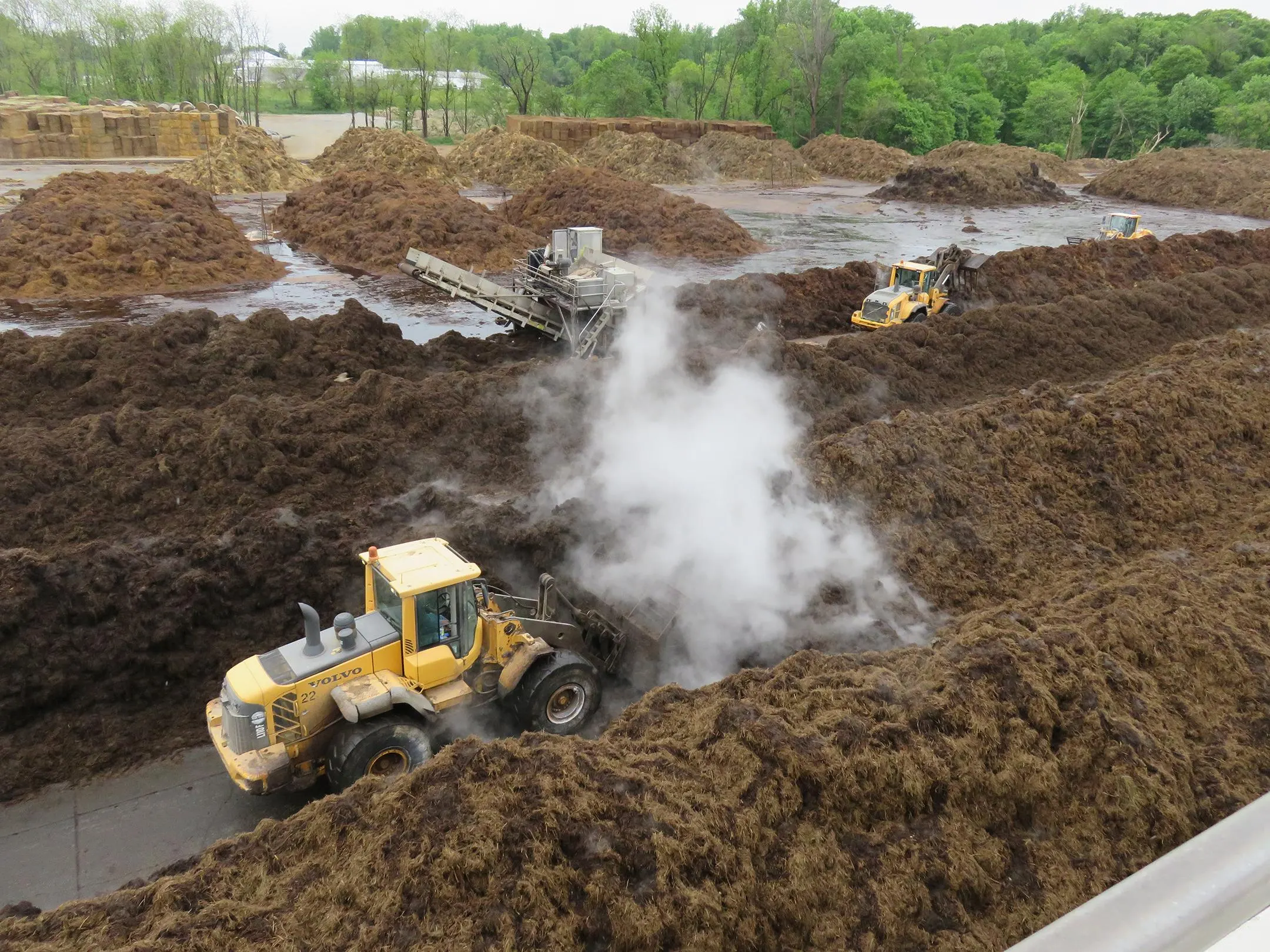
Mushroom residue composting equipment helps turn spent substrate into organic compost. Explore the process, machinery, and key selection tips.
Mushroom residue composting gives commercial mushroom farms and fertilizer manufacturers a practical way to turn spent growing substrate into a reusable organic material. Instead of paying to remove large volumes of post-harvest substrate, operators can stabilize it through controlled composting and prepare it for use as an organic soil amendment or as an ingredient in a fertilizer blend.
However, mushroom residue is not a uniform raw material. Its moisture, fiber content, nutrient balance, particle structure, and degree of decomposition depend on the original cultivation formula and production conditions. A composting line that works well for poultry manure may not deliver the same results with spent mushroom substrate.
For plant owners, production managers, and equipment buyers, the key decision is not simply which composting machine to purchase. It is how to match the feedstock, composting method, handling capacity, and downstream fertilizer process. This guide explains the practical considerations and the equipment options worth evaluating before investing.
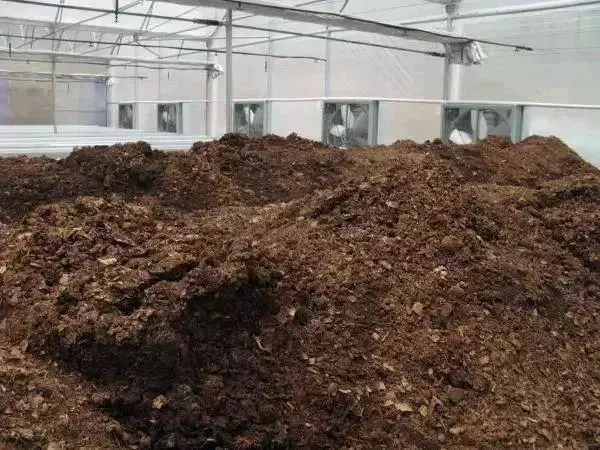
Mushroom residue usually refers to spent mushroom substrate (SMS), the material left after a mushroom crop has completed its productive cycle. Depending on the mushroom operation, the original substrate may contain straw, manure, sawdust, gypsum, and other agricultural ingredients.
Although mushroom production has removed part of the available nutrients, the remaining substrate can still contain organic matter and plant nutrients. Penn State Extension describes spent substrate as a material with potential value as a soil amendment and soil conditioner.
For commercial operators, its value depends on three factors:
The important point is that mushroom residue should not automatically be treated as finished compost. It may require further stabilization, moisture adjustment, and quality checks before agricultural use.
Yes, spent mushroom substrate can be composted, but direct processing is not always the best option.
Some SMS is already partially decomposed because it has passed through a composting and mushroom-growing cycle. Other material may be wet, compacted, or mixed with casing soil and other residues. These differences affect oxygen movement, microbial activity, and the amount of additional material required.
Before selecting equipment, take representative samples and check:
A common mistake is to assume that all mushroom residue needs the same composting time. Material that is already well decomposed may need a shorter stabilization stage, while dense or poorly aerated material may require additional mixing and active composting.
Buyer insight: Ask the supplier whether the proposed equipment can handle your actual SMS sample. A machine’s suitability should be judged by feedstock condition and required output, not by a general statement that it processes organic waste.
A practical mushroom residue composting line normally includes raw material inspection, preparation, moisture adjustment, composting, screening, and optional fertilizer processing.
Step 1: Inspect and Prepare the Residue
Remove plastic, packaging, stones, and other foreign materials before processing. If the residue contains large clumps or long fibrous pieces, size reduction may improve mixing and handling.
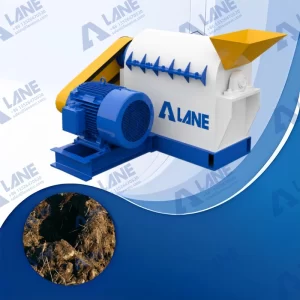
A straw crusher or suitable organic material shredder can be considered when the feedstock structure requires it. However, do not crush everything into very fine particles. Excessively small particles can reduce porosity and make it harder for air to move through the compost mass.
See LANE’s organic fertilizer crusher equipment for possible pre-processing options.
Step 2: Adjust Moisture and the C/N Ratio
Moisture and nutrient balance should be corrected before active composting.
For many conventional compost mixtures, an initial moisture range of approximately 50%–60% and a C/N ratio around 25:1–30:1 are useful starting references. These are general composting targets, not guaranteed specifications for every SMS formula.
If the residue is too wet, blend it with suitable dry bulking materials such as straw or other coarse agricultural residues. If it is too dry, add water gradually during mixing.
Nitrogen-rich materials may be added when laboratory analysis shows that the mixture needs more nitrogen. But adding manure or other nitrogen sources without calculating the existing nutrient balance can increase ammonia loss and create odor problems.
Step 3: Mix the Materials Uniformly
Uniform mixing helps distribute moisture, nutrients, and structural materials throughout the batch.
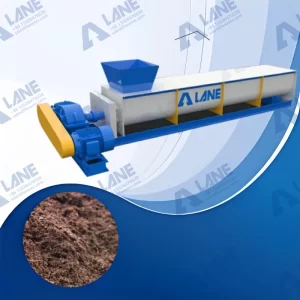
A suitable mixer can reduce wet and dry pockets before composting. For larger operations, the required mixer type should be selected according to the material’s moisture, bulk density, stickiness, and hourly throughput.
Explore LANE fertilizer mixing equipment when planning this stage.
Step 4: Carry Out Active Composting
The composting system must provide enough oxygen while maintaining suitable moisture and temperature conditions.
Two common approaches are:
A compost turner helps loosen and mix windrow material, while an enclosed fermentation system may be appropriate when the project requires more controlled processing.
Step 5: Cure, Screen, and Prepare the Final Product
Active composting is not the same as complete maturity. After the main heating stage, the material may need a curing period to stabilize further.
Screening removes oversized pieces and helps produce a more uniform product. Oversized material may be returned for additional processing if it is suitable for reuse.
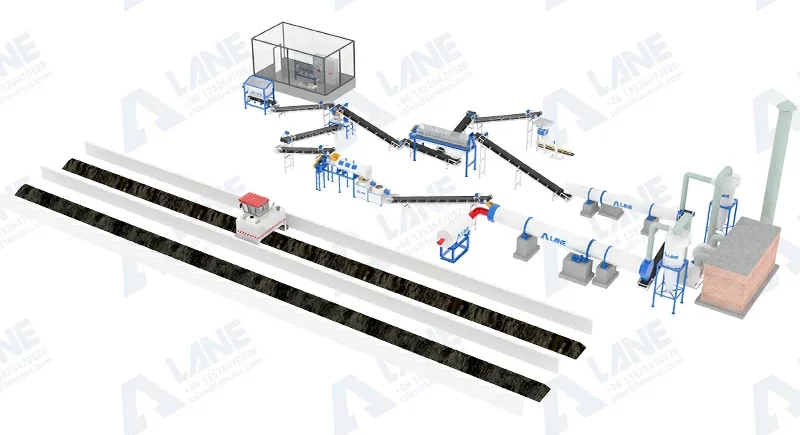
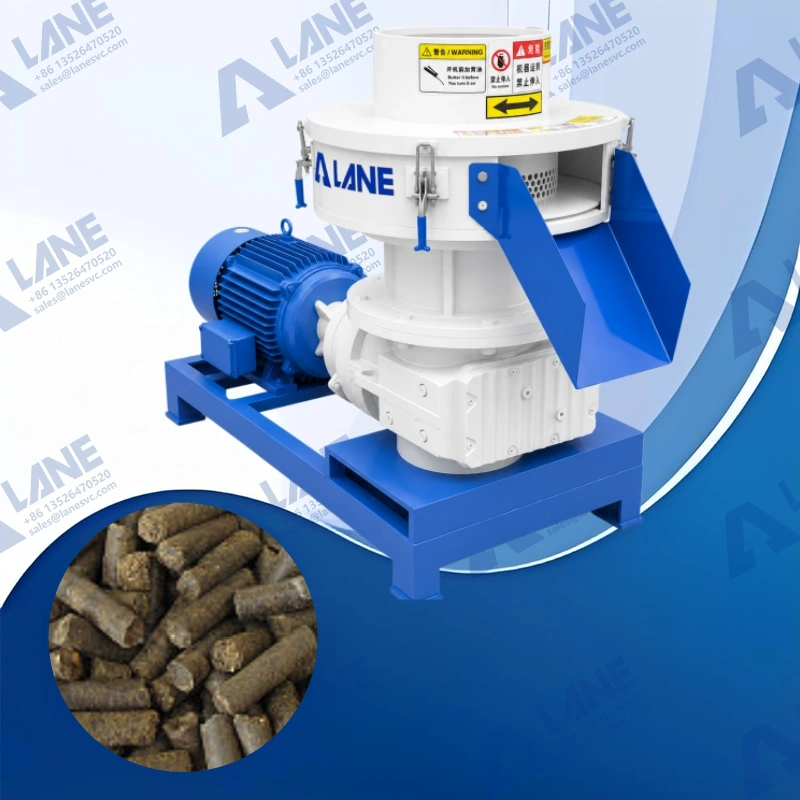
If the business intends to sell granulated organic fertilizer rather than loose compost, additional equipment such as a crusher, mixer, granulator, dryer, and screener may be required. The exact configuration depends on the final product specification.
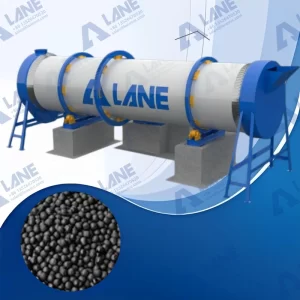
The equipment list should follow the material condition and the required finished product. Buying a complete fertilizer line before confirming these two points can result in unnecessary investment.
| Processing Stage | Possible Equipment | Main Function | Selection Consideration |
|---|---|---|---|
| Pre-processing | Straw Crusher or Organic Material Shredder | Reduces oversized material | Fiber length, moisture, and particle size |
| Mixing | Horizontal or Double-Shaft Mixer | Blends SMS with bulking materials | Material stickiness and mixing uniformity |
| Windrow Composting | Compost Turner | Turns and loosens compost piles | Site area, pile dimensions, and turning capacity |
| Enclosed Composting | Fermentation Tank or Rotary Drum Fermenter | Provides controlled composting conditions | Feedstock behavior, residence time, and discharge design |
| Screening | Rotary or Vibrating Screener | Separates oversized particles | Required final particle size |
| Fertilizer Production | Crusher, Mixer, Granulator, Dryer, and Screener | Converts compost into commercial fertilizer | Product form, moisture, and required output |
Windrow Turner or Fermentation Tank?
Neither option is automatically better. A windrow system may offer a lower equipment investment where land is available and outdoor operation is acceptable. An enclosed system may be more suitable when space, material containment, or process control is a priority.
LANE lists several compost turner options, including chain plate, autonomous, tow-behind, and crawler types. Its fermentation equipment range includes rotary drum, vertical, and horizontal systems. These are general organic waste processing options; the final choice for mushroom residue should be confirmed through feedstock evaluation and process design.
View LANE compost turner equipment and organic fertilizer fermentation tanks.
The following ranges are useful preliminary references for conventional aerobic composting. They should not be treated as a fixed operating recipe for every mushroom residue.
| Parameter | General Starting Reference | What Buyers Should Verify |
|---|---|---|
| Initial Moisture | About 50%–60% | Actual SMS moisture and water-holding capacity |
| Initial C/N Ratio | Around 25:1–30:1 | Laboratory analysis of the complete mixture |
| Active Composting Temperature | Commonly around 55–65°C | Temperature distribution and process records |
| Aeration | Sufficient oxygen throughout the material | Porosity, airflow, pile density, and turning |
| Particle Structure | Coarse and fine materials properly balanced | Whether the mixture compacts during operation |
| Compost Maturity | Stable material with no obvious reheating tendency | Temperature trend, odor, EC, and maturity testing |
These references are consistent with general composting guidance from the US Environmental Protection Agency and composting research and extension resources from Penn State Extension.
One point deserves special attention: temperature alone does not prove that compost is mature. Buyers should request a clear testing plan for the finished material, including moisture, pH, EC, and a suitable maturity or germination test where relevant.
There is no reliable universal price for a mushroom residue composting plant. The investment depends on the feedstock, daily throughput, processing method, site conditions, and final product.
The main cost drivers include:
A low equipment quotation may exclude conveyors, electrical controls, installation, or exhaust treatment. Compare complete supply scopes rather than looking at the main machine price alone.
A serious supplier should be able to discuss the material, process, and finished product—not simply recommend a machine based on the word “compost.”
Before requesting a quotation, prepare the following information:
Then ask the supplier:
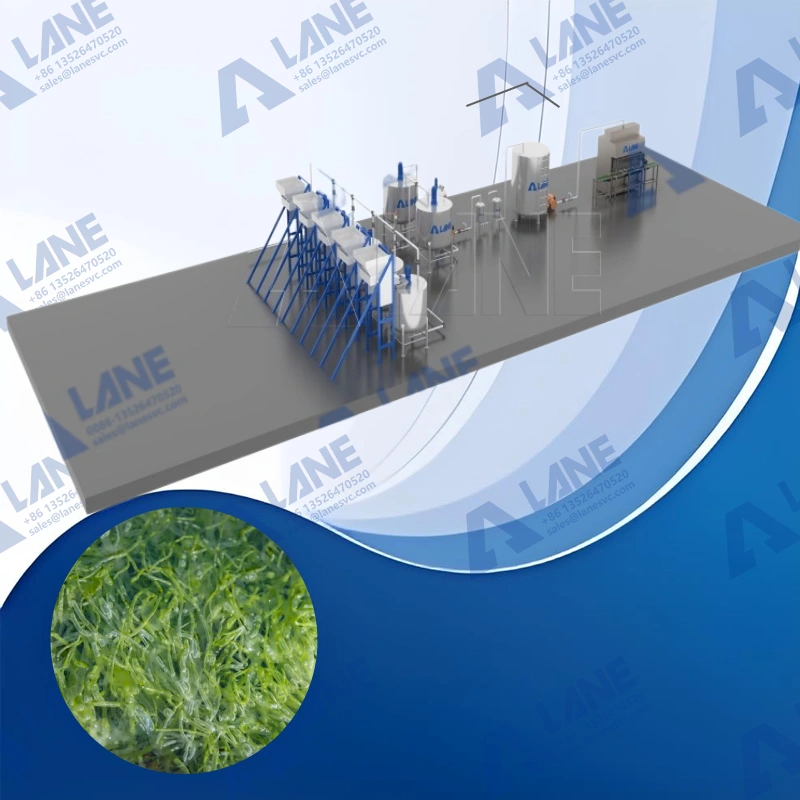
LANE’s organic fertilizer turnkey solutions cover equipment planning from composting and crushing to granulation, drying, screening, and packaging. The company also describes 3D engineering design and overseas installation support on its website. Buyers should request a project-specific equipment list and written technical scope before making a purchasing decision.
1. Can spent mushroom substrate be used as organic fertilizer?
Yes. Spent mushroom substrate can be used as an organic soil amendment or as an ingredient in fertilizer products, provided its quality and suitability are checked. Its nutrient content and maturity vary with the original substrate and cultivation process.
2. Does mushroom residue need to be mixed with manure?
Not always. Manure or another nitrogen-rich material may be useful if the measured C/N ratio is too high, but the decision should be based on feedstock analysis rather than a fixed recipe.
3. What is the ideal moisture content for mushroom residue composting?
Approximately 50%–60% is a useful starting reference for many compost mixtures. The actual target depends on the residue’s structure, water-holding capacity, and the composting system.
4. How long does mushroom residue composting take?
There is no single processing time for all SMS materials. The duration depends on the initial degree of decomposition, moisture, aeration, temperature, pile size, and required maturity. Active composting and curing should be evaluated separately.
5. Is a compost turner necessary?
A compost turner is useful for windrow systems because it mixes material and helps restore porosity. Enclosed systems may use different mechanical mixing and aeration arrangements.
6. Can mushroom residue be processed in a fermentation tank?
Potentially, yes. However, the tank must be matched to the material’s moisture, density, fiber content, and handling behavior. Buyers should confirm feeding, mixing, aeration, and discharge performance using representative material.
7. Can the finished compost be made into granulated fertilizer?
Yes, if the compost is sufficiently stable and its moisture and particle characteristics are suitable for further processing. A typical downstream line may include crushing, mixing, granulation, drying, cooling, screening, and packaging.
8. What information is needed to obtain an equipment quotation?
Prepare the daily feed quantity, moisture content, material composition, available site area, and desired final product. A representative raw material sample is especially useful for confirming equipment suitability.
Mushroom residue composting can turn a recurring waste-handling issue into a useful organic resource, but the result depends on how well the process matches the actual spent substrate. Buyers should prioritize feedstock testing, moisture and porosity control, suitable composting capacity, and a clear plan for final product quality.
For a small operation producing loose compost, a windrow-based configuration may be sufficient. A larger fertilizer manufacturer may need integrated preparation, composting, screening, and granulation equipment. The right investment is the one that handles the real feedstock reliably without adding unnecessary machinery.
If you are planning a mushroom residue composting project, visit LANE Organic Fertilizer Turnkey Solutions or LANE Fertilizer Industry Equipment to review available equipment. Share your daily residue volume, moisture level, and target product, and request a project-specific process and equipment proposal before finalizing the investment.

Everything you need to know when looking at different types of organic fertilizer equipment, all in one place.
Copyright © 2026. LANE All rights reserved.
Send A Message