
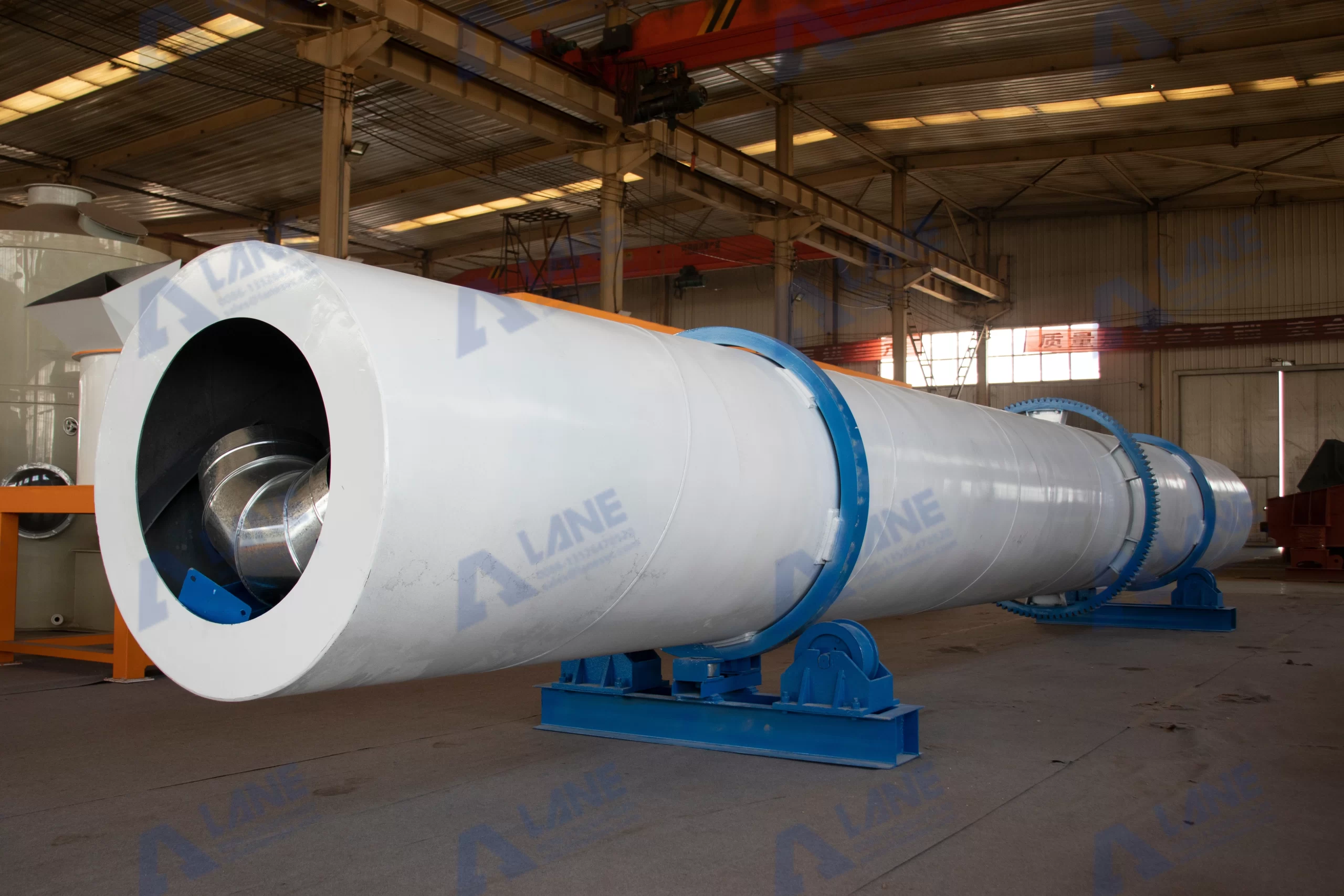
Learning how to dry organic fertilizer correctly is the difference between hard, free-flowing granules and sticky lumps that clog your equipment.
This guide shows you how to dry organic fertilizer at production scale using a high-efficiency rotary drum dryer from LANE Machinery.
By cutting moisture from 50-80% down to 15-20%, the dryer prevents caking, stabilizes product performance, extends storage life and protects the quality your customers pay for.
Moisture is the enemy of stored organic fertilizer: too high and granules soften, stick and lose strength; too low and you waste fuel and risk nutrient loss.
A well-controlled drying stage balances both, which is why the rotary drum dryer has become the industry standard for this job.
Start with the goal.
Knowing how to dry organic fertilizer begins with your moisture target, because overdrying wastes fuel while underdrying leaves granules that reabsorb moisture and clump. Most plants run a lab check on the raw material, then lock in a target range that suits their screening and bagging equipment.
High-efficiency drying:
the LANE rotary drum dryer reaches thermal efficiency above 85% and saves 10-15% fuel, so this is how to dry organic fertilizer without burning your energy budget. Because the lifting plates form a dense material curtain, heat and mass transfer are maximized, and the same energy dries more product in less time.
Reduced caking and better quality:
removing excess moisture keeps granules hard, round and easy to screen, coat and pack, so follow how to dry organic fertilizer properly and protect your end product. Stable moisture also extends shelf life during storage and transport, while dry, round granules flow smoothly and present a professional product to the buyer.
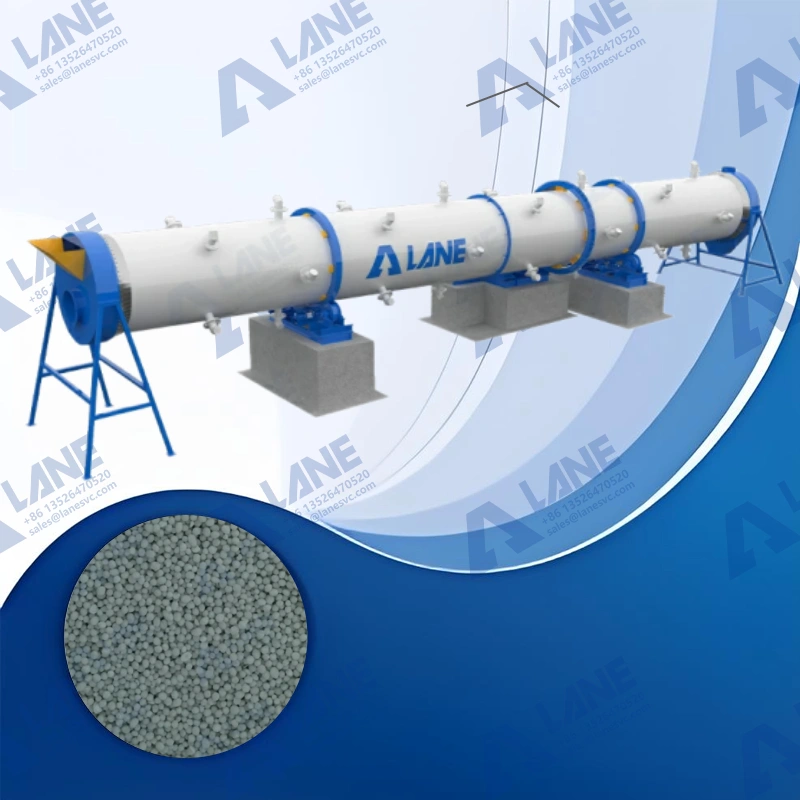
Step by step, here is how to dry organic fertilizer on a LANE line: measure the raw material moisture, typically 50-80%, set the target at 15-20%, and choose co-current low-temperature drying so the wettest granules meet the hottest air first while dry granules are never overheated.
The same sequence works for manure, compost and sludge, with small changes in temperature and residence time per feedstock.
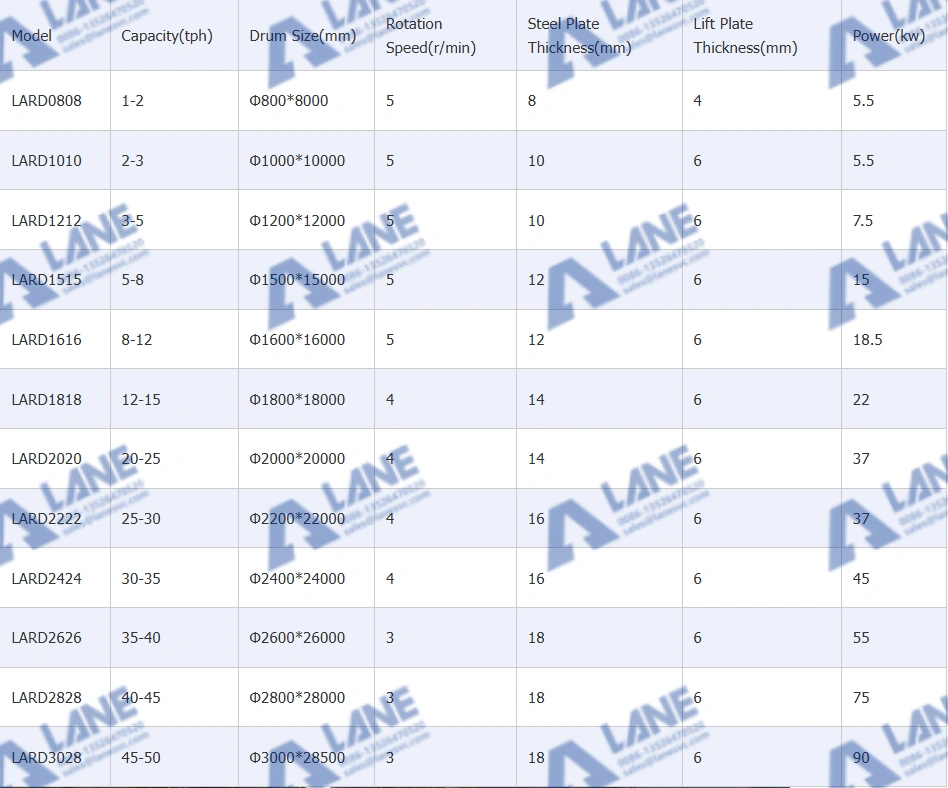
Key parameters: capacity from 1 to 50 tons per hour, drum speed 3-8 r/min, inclination 2-5 degrees, hot air from 120 to 800 degrees, a corrosion-resistant steel drum, and wear-resistant lifting plates.
Siemens or ABB motors, ZQ/ZSY reducers and PLC control are standard options, and the whole unit is sized with your granulator and cooler as one pair.
After drying, granules pass to a rotary cooler, because following how to dry organic fertilizer correctly also means stopping the granules from reabsorbing moisture before packaging. The cooler pulls product temperature down quickly, so bags stay stable and condensation never forms inside the packing area.
Animal manure, crop straw and municipal sludge: this is how to dry organic fertilizer for organic production lines, where low-temperature co-current drying keeps nutrients intact. These feedstocks often arrive at 60-80% moisture, so the dryer must handle sticky material without clogging.
Bio-organic and microbial fertilizer needs gentler drying to keep microorganisms alive, and the same dryer handles NPK compound granules when you need to know how to dry organic fertilizer for mixed lines with counter-current mode. A single machine can switch formulations between batches, cutting changeover time and letting one line serve several product types.
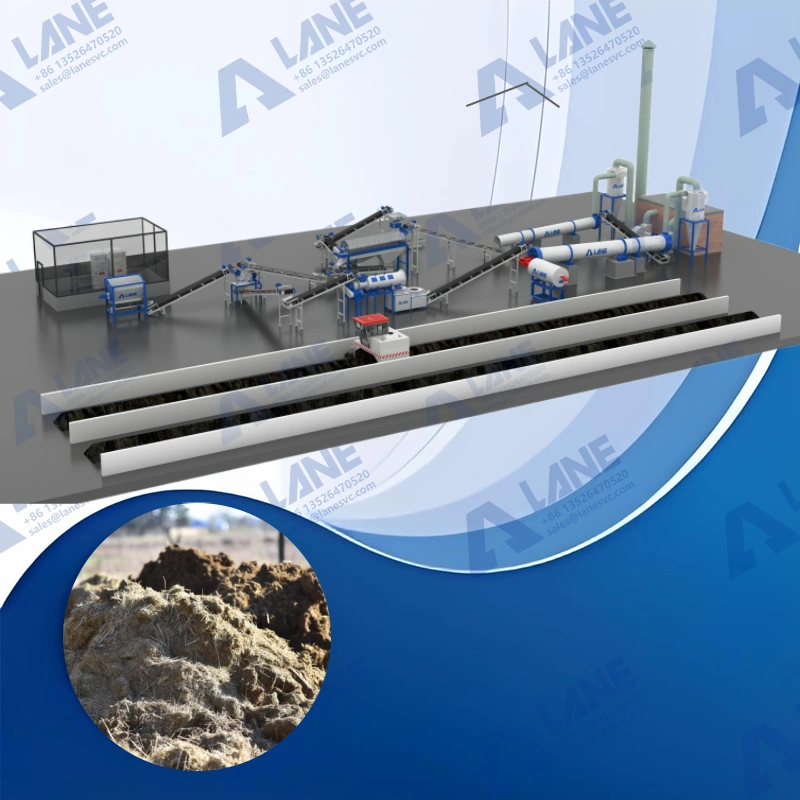
In a full organic fertilizer line, the drying and cooling stage sits between granulation and screening, so its capacity must match both neighbors to avoid bottlenecks and keep output steady around the clock.
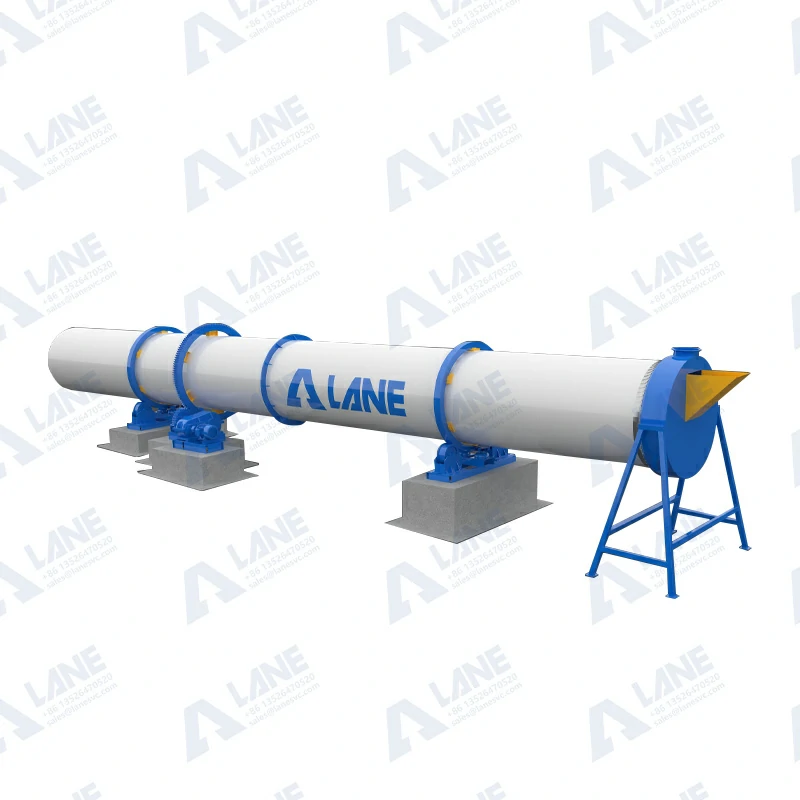
How to dry organic fertilizer at industrial scale?
Use a rotary drum dryer sized to your granulator throughput, and set the moisture target before commissioning. This is the fastest way to protect quality while keeping output steady through the whole shift.
What final moisture do you need?
As for how to dry organic fertilizer, most lines target 15-20%, depending on the raw material and local climate. Adjust the range if your climate is humid or you ship long distances, so the product arrives intact.
What materials can be dried?
Animal manure, compost, crop straw, municipal sludge and other organic feedstocks, plus NPK compound granules. The drum-based design tolerates varying particle size, so you avoid jamming and uneven treatment.
Co-current or counter-current?
Co-current low-temperature drying suits heat-sensitive organic fertilizer; counter-current improves efficiency for chemical granules. Ask LANE to recommend the pattern for your specific feedstock and moisture profile.
What heat sources work?
Coal, natural gas, diesel, biomass pellets or electric hot air furnaces, matched to your local fuel prices. Choosing a fuel you can source locally and afford keeps operating cost predictable.
Do you provide installation?
LANE offers turnkey design, installation and commissioning for complete drying and cooling lines. From layout drawings to operator training, the whole project is handled by one team.
Now that you know how to dry organic fertilizer, contact LANE for a factory price and a complete drying and cooling design for your line.
Send your fertilizer type, target capacity, moisture levels and available fuel, and our engineers will reply with a tailored proposal. This guide covers the essentials, and LANE can help you confirm the exact parameters for your raw material and plant layout.

Everything you need to know when looking at different types of organic fertilizer equipment, all in one place.
Copyright © 2026. LANE All rights reserved.
Send A Message