
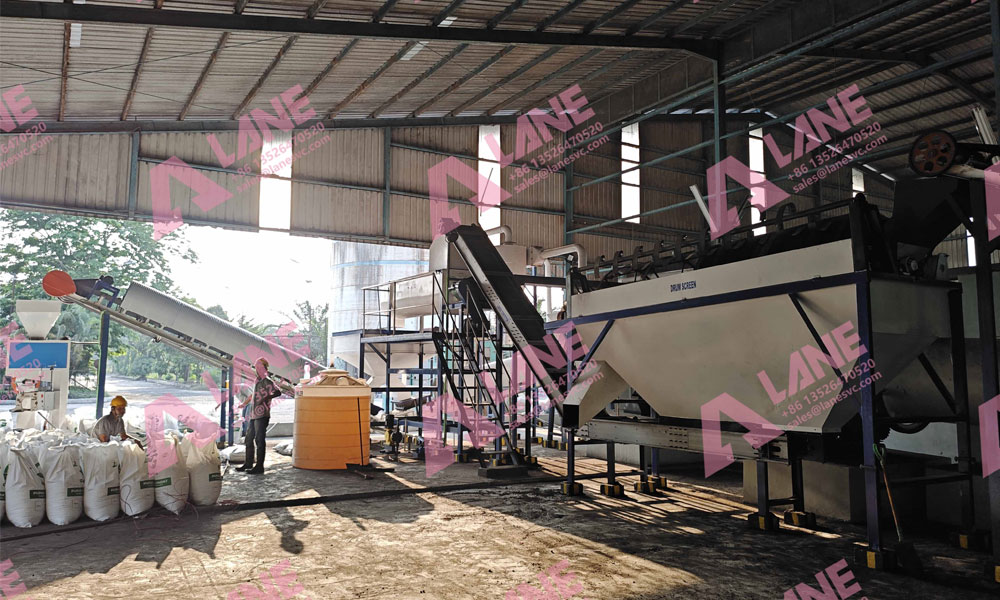
Municipal sludge to organic fertilizer: dewater, ferment and granulate sewage sludge into safe organic fertilizer with a turnkey plant from LANE.
Sewage sludge is one of the hardest organic waste streams to manage.It arrives with more than 80 percent moisture, carries pathogens and heavy metals, and faces tightening disposal rules that now run from the EU to North America.
Municipal sludge to organic fertilizer turns this liability into a stable, marketable soil amendment.
A turnkey plant dewaters the sludge, ferments it under controlled aerobic conditions, and granulates the stabilized material into easy-to-store organic fertilizer granules.
The result is a smaller waste volume, a compliant outlet for the utility, and a product that landscapers, turf managers and soil remediation teams will buy.
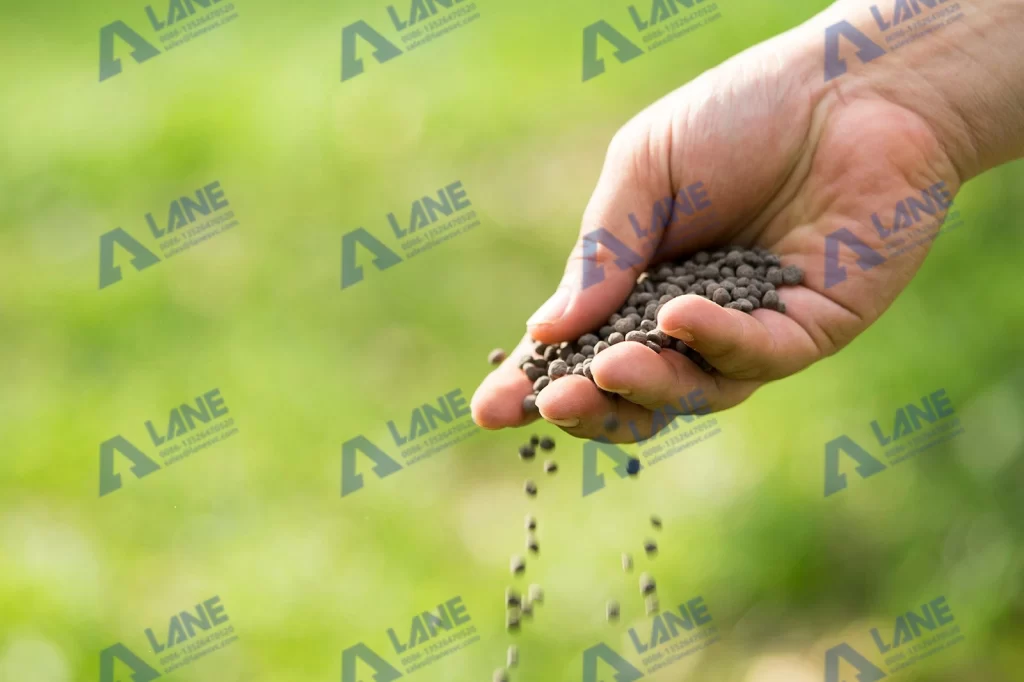
The biggest win is volume reduction. Dewatering and drying take the sludge from above 80 percent moisture down to a 10-14 percent finished product, which cuts tonnage and hauling cost dramatically. Less waste leaves the plant, and the material is stable enough to store and transport.
Aerobic fermentation is the safety gate. The pile heats to 55-70 C for a sustained period, which inactivates most pathogens and weed seeds. Combined with heavy-metal testing, a well-run municipal sludge to organic fertilizer plant produces granules that meet the safe-use requirements of your local market.
A municipal sludge to organic fertilizer line turns a disposal cost into revenue.Instead of paying for landfill or incineration, the utility sells granulated organic fertilizer for landscaping, turf, soil remediation and non-food crops.
Stricter rules make compliant disposal harder to guess.The EU Sewage Sludge Directive 86/278/EEC sets heavy-metal limits for sludge used in agriculture, while the US EPA 40 CFR Part 503 standard defines pathogen and vector-attraction reduction for land application.
A municipal sludge to organic fertilizer plant built around aerobic fermentation and metal testing is designed to clear these gates, turning a growing compliance burden into a predictable one.
The line also shortens the disposal chain.Instead of trucking wet sludge to landfill or an incinerator, you ship a dry, stable product to buyers who pay for it. Less volume on the road and less energy burned in disposal cut the environmental footprint of the whole operation, which matters more as buyers and regulators ask for documented sustainability.
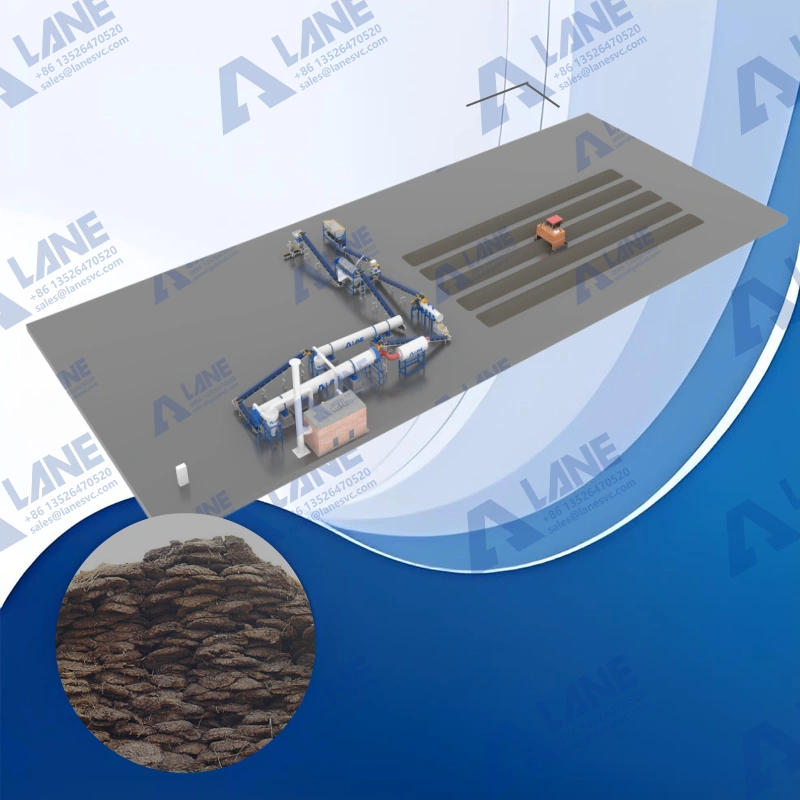
A turnkey solution removes integration risk. LANE designs dewatering, fermentation, crushing, mixing, granulation, drying, screening and packaging as one balanced line, sized to your sludge volume, so every stage works with the one before it.
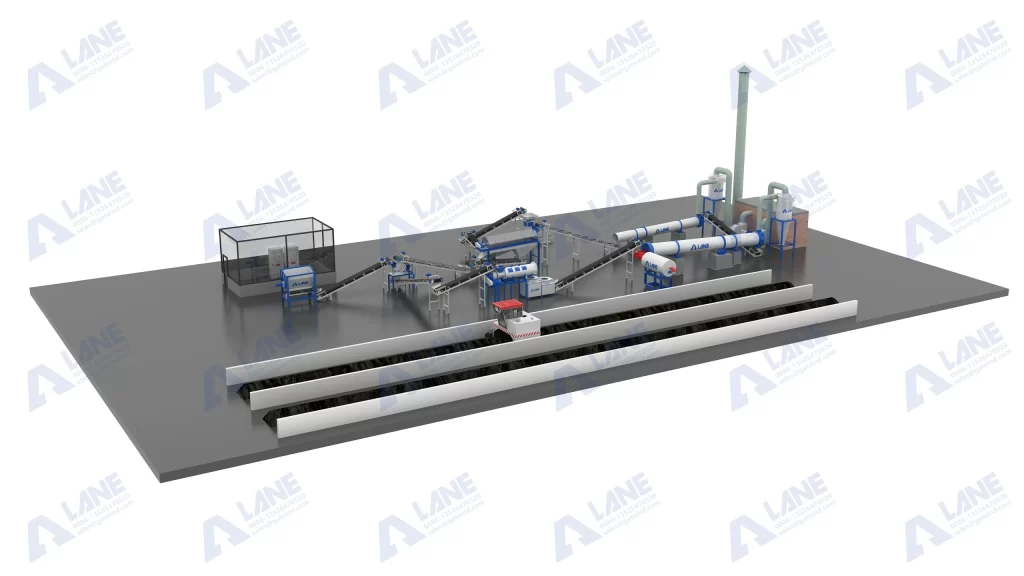
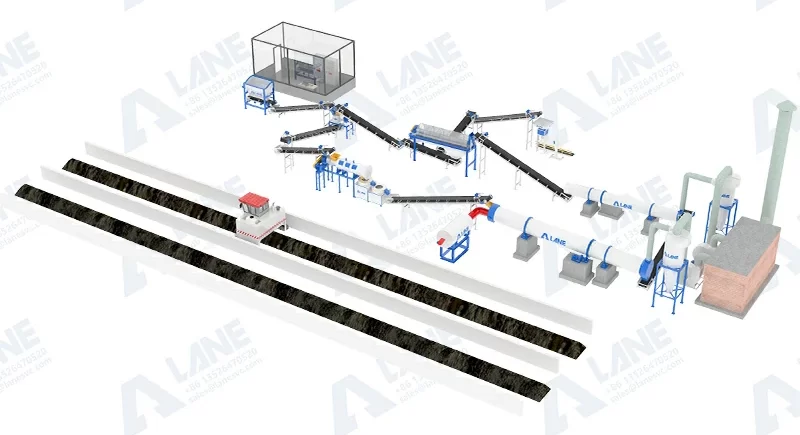
The process follows a fixed sequence, because each stage changes the sludge so the next stage can work. The main stages of a municipal sludge to organic fertilizer plant are dewatering, fermentation, crushing, screening, mixing, granulation, drying, cooling and packaging.
The first job is water.Sludge above 80 percent moisture cannot ferment aerobically, because the pile goes anaerobic, smells and stops heating. A solid-liquid separator or filter press takes the sludge to a moisture where oxygen reaches the pile, and the recovered filtrate returns to the wastewater plant.
Fermentation is where safety is built. A municipal sludge to organic fertilizer plant keeps the material aerobic with a compost turner or in-vessel tank, while straw, rice husk or sawdust adjust moisture and the carbon-to-nitrogen ratio into the working band.
The pile holds 55-70 C for a sustained period, which inactivates most pathogens and weed seeds, and turning keeps the pile from getting so hot it sterilizes itself.
The fermented material is crushed and screened before granulation, so clumps and debris that would otherwise jam dies and lower granule quality are removed. Screening also loops oversized and undersized material back, keeping throughput stable from front to back of the line.
Three numbers tell you whether the line is working: feed moisture, fermentation temperature and finished granule moisture. Hold the finished product at 10-14 percent moisture, keep the pile in the 55-70 C band for the required residence time, and test the output for heavy metals and pathogens before it ships.Log these each shift, because a drift in any one of them is the first sign of a problem downstream.
LANE standard line equipment covers every transfer point, with capacities matched so no stage starves or backs up:
| Equipment | Model | Capacity |
| Compost turner | LALG-2500 | 400-1500 m3/h |
| Vertical crusher | LAC-60V | 1-12 t/h |
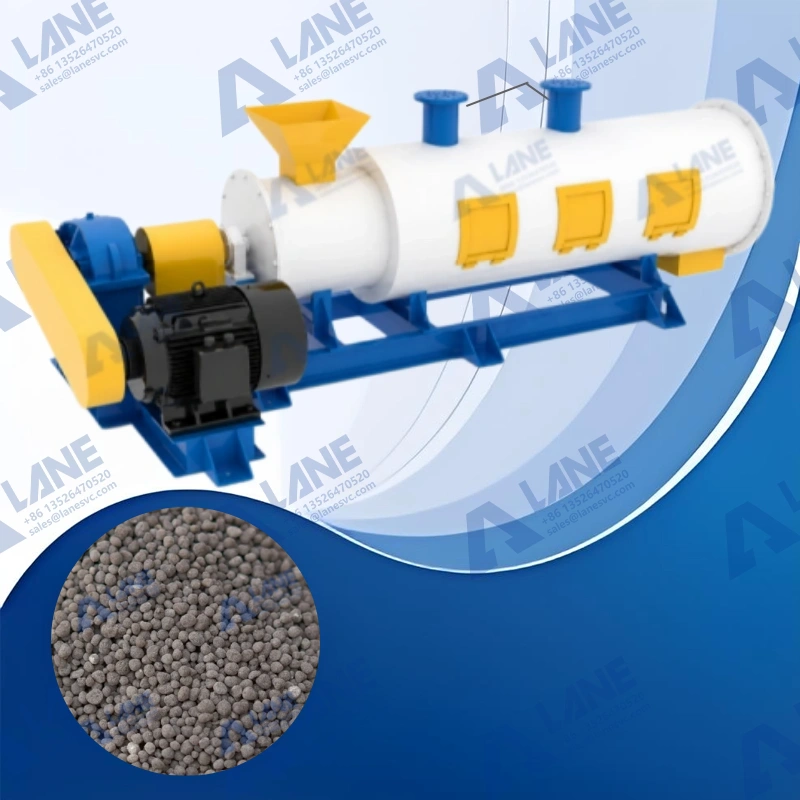
| Organic fertilizer granulator | LAZJ-1000 | 1-8 t/h |
| Rotary drum dryer | LARD | 1-25 t/h |
| Cooling machine | LARC | 1-20 t/h |
| Rotary screen | LAS-1240 | 1-23 t/h |
| Automatic packing machine | LAB-50K | 4-30 bags/min |
Capacity is fully customizable, from a small pilot unit of a few tons a day to a municipal-scale line. The engineering team sizes each machine to your daily sludge input, moisture and target granule output.
Maintenance follows the same logic. Grease bearings and check screens daily, measure turner and crusher wear weekly, and service the dryer, packing machine and instrumentation at the annual shutdown. Buy a first-year spares kit for the wear parts – cage bars, turner tines, granulator blades and pump seals – so an unplanned stop never costs you a week of output.
For a municipality, a municipal sludge to organic fertilizer line is a consistent, compliant sludge outlet, reducing what must be landfilled or incinerated.
Landscaping and soil remediation buy bulk granules that spread with standard equipment, replacing peat or topsoil in parks, golf courses and reclaimed sites.
Turf, tree nurseries and non-food crops accept stabilized sludge fertilizer where heavy-metal and pathogen limits are met. Because rules differ by market, many plants steer the product into landscaping, turf and non-food applications, while food-crop use depends on the stricter agricultural rules of that jurisdiction.
Co-composting with poultry manure or crop residue enriches the formulation and balances nutrients. Raw sludge carries a low carbon-to-nitrogen ratio, so a high-carbon bulking agent lifts it into the working band while adding plant-available organic matter, and the same plant can serve both sludge and farm waste.
Can sewage sludge be turned into organic fertilizer safely?
Yes, if it is dewatered, fermented at 55-70 C and tested for heavy metals and pathogens. Always confirm the finished product meets your local sludge-use and fertilizer regulations.
What moisture does sludge start at?
A municipal sludge to organic fertilizer plant typically starts above 80 percent. The sludge must be dewatered before fermentation and dried to 10-14 percent in the finished granule.
How long does the process take?
Active fermentation usually runs 15-25 days, followed by curing. Granulation and drying add time to the full cycle.
How big a plant do I need? A municipal sludge to organic fertilizer plant runs from a small pilot unit to a municipal-scale line. LANE sizes equipment to your daily sludge volume and budget.
What maintenance does the line need?
Daily greasing and screen checks, weekly wear checks on turner and crusher parts, and an annual shutdown service on the dryer, packing machine and instrumentation. A first-year spares kit covers the common wear parts.
Can the product be used on food crops?
That depends on local heavy-metal and pathogen limits. Many plants sell into landscaping, turf and non-food applications.
Municipal sludge to organic fertilizer turns an expensive disposal problem into a sustainable, saleable product.
A well-designed turnkey line cuts volume, stabilizes the material, meets tightening compliance requirements and delivers granules that landscapers and soil remediation teams will buy.
Tell LANE your sludge volume, moisture and target output, and the engineering team will propose a municipal sludge to organic fertilizer plant sized to your operation, free of charge. Request your quote today.

Everything you need to know when looking at different types of organic fertilizer equipment, all in one place.
Copyright © 2026. LANE All rights reserved.
Send A Message