
Compare compost fertilizer production line designs, equipment, and costs before you buy. Sizing math, granulation routes, and supplier checks for plant buyers. URL Slug
Quotes for a compost fertilizer production line look almost identical on paper. Every supplier lists fermentation equipment, a crusher, a mixer, a granulator, a dryer, screens, and a bagging machine. The real differences hide in the numbers behind those items: feedstock moisture, fermentation method, granulation route, and drying load. A line sized for poultry litter at 65% moisture will struggle on dry green waste, and a round-granule line cannot match an extrusion line’s output.
This guide is for the people who sign off on the project: plant investors, project engineers, and procurement managers evaluating an organic fertilizer production line for the first time.
Four numbers define what the plant must deliver, and your market’s rules set the limits: granule size (typically 2 to 4 mm for bagged organic fertilizer), final moisture (12 to 14% for stable storage), organic matter content, and total nutrients (N + P2O5 + K2O). Fix that spec first. Everything downstream, including compost fertilizer production line cost, follows from it.
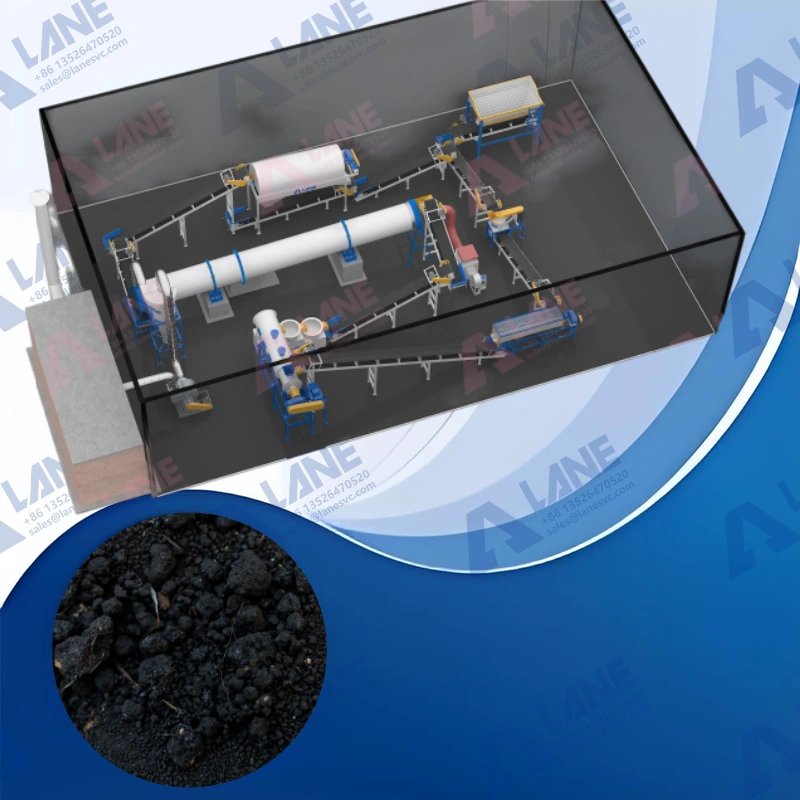
A compost fertilizer production line is three operations under one roof: a fermenting yard, a granulating plant, and a packaging hall. Size each stage for the same throughput, or the slowest machine sets real output.
Receiving and pretreatment
Manure arrives at 60 to 80% moisture depending on species and bedding. A screw press brings it into a workable range, and bulking agents such as straw, rice husk, or sawdust correct moisture and the carbon-to-nitrogen ratio. The reception area needs hardstanding, drainage, and buffer volume to keep fermentation fed through wet weeks.
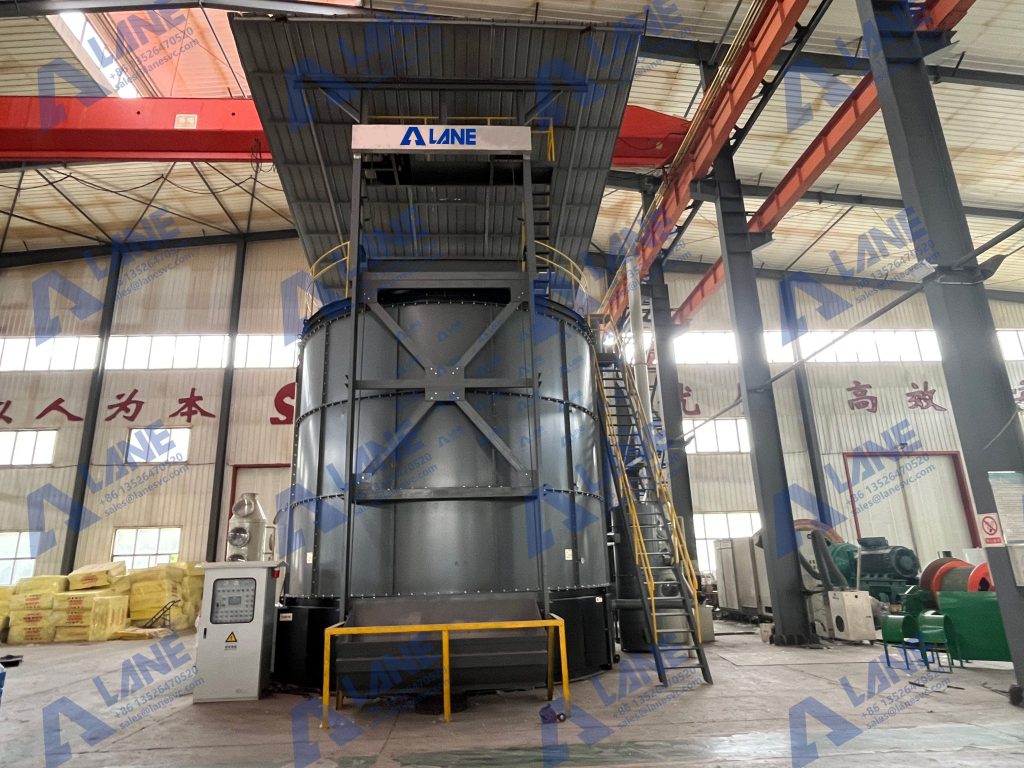
Windrow turning, aerated static pile, and in-vessel fermentation with an automated turner are the three practical options. Windrows cost least in capital and use the most land. In-vessel systems finish in days and keep odor and weather out, which matters near housing. In all three, microbes consume carbon and nitrogen, the pile heats to 55 to 65 °C, and the material stabilizes into humus. Most organic fertilizer production line projects succeed or fail here, because fermentation quality shows up later as granule strength, dust, and shelf life.
Crushing and mixing
Cured compost passes through a chain or hammer crusher to break clumps, then into a horizontal mixer where binders, humic acid, trace elements, and microbial inoculants are dosed. Mixing uniformity counts for more than most buyers expect. No granulator can repair an uneven batch.
Granulation
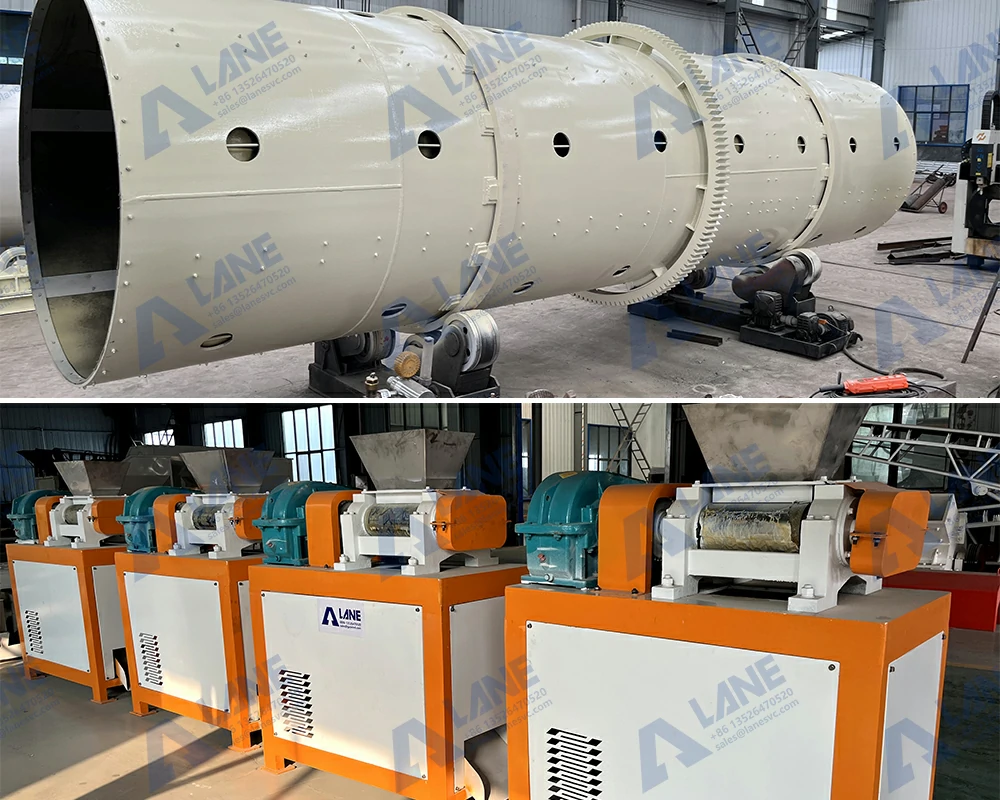
The granulator sets your product’s shape, density, and dust level. Disc and drum granulators build round granules from a wet mix; extrusion presses shape a denser pellet from drier feed.
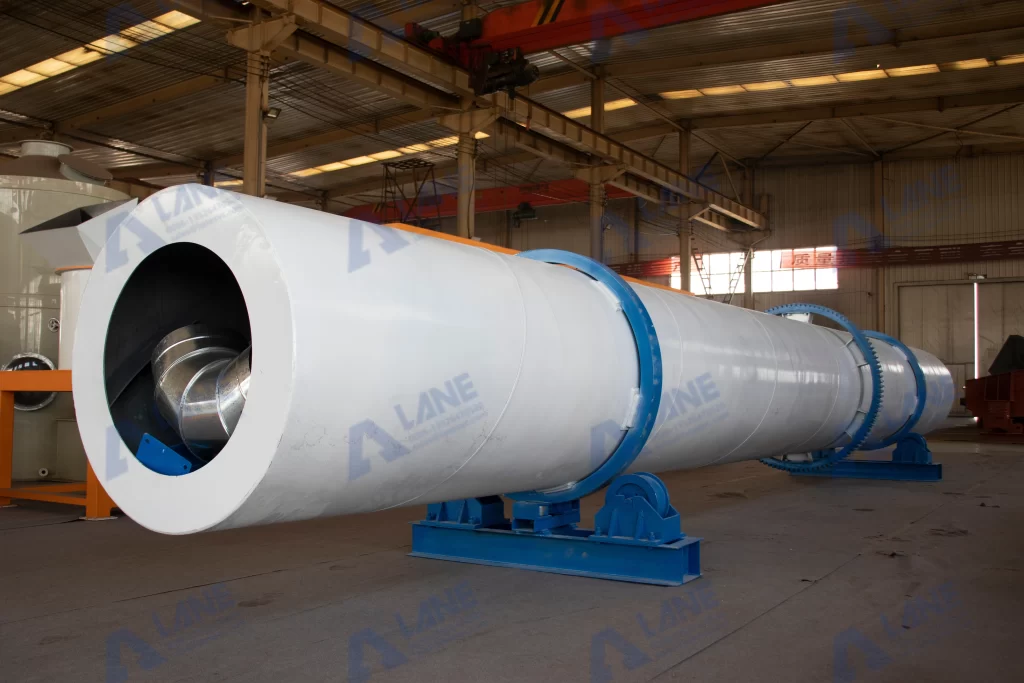
Wet granulation leaves roughly 20 to 30% moisture in fresh granules. A rotary dryer with internal lifting flights brings that down to storage-safe levels, and a rotary cooler returns granules to near ambient temperature before bagging. Warm granules condense moisture and cake in the bag. Drying is the largest energy consumer in most plants.
Screening, coating, and packaging
A trommel or vibrating screen splits granules into three streams: saleable product (usually 2 to 4 mm), oversize returning to the crusher, and fines returning to the granulator. An optional coating drum adds an anti-caking layer, and bagging fills 25 kg to 50 kg sacks before sealing. Belt conveyors, bucket elevators, dust collectors, and a biofilter for odor complete the line.
| Parameter | Working Range | Why It Matters |
|---|---|---|
| Carbon-to-Nitrogen Ratio | 25:1 to 30:1 | Too much carbon slows decomposition, while too much nitrogen can cause ammonia release. |
| Moisture | 50% to 60% | The material should feel like a wrung-out sponge. |
| Temperature | 55°C to 65°C | Helps reduce pathogens and weed seeds. Under applicable US EPA Part 503 requirements, aerated static piles must maintain at least 55°C for three consecutive days. |
| Oxygen | Above 5% in pore space | Insufficient oxygen can create anaerobic conditions, causing odors and potentially hydrogen sulfide formation. |
| pH | 6.5 to 8.0 | Monitor pH and adjust when necessary based on the raw materials and composting requirements. |
| Curing | 7 to 14 days | Allows further stabilization and helps reduce the risk of reheating or mold growth after bagging. |
Windrows usually run 15 to 25 days with regular turning, in-vessel systems 7 to 10 days, and both still need curing. Projects that cut curing short see it again as bagged product that molds or crumbles within weeks.
Disc granulator (wet route, round granules)
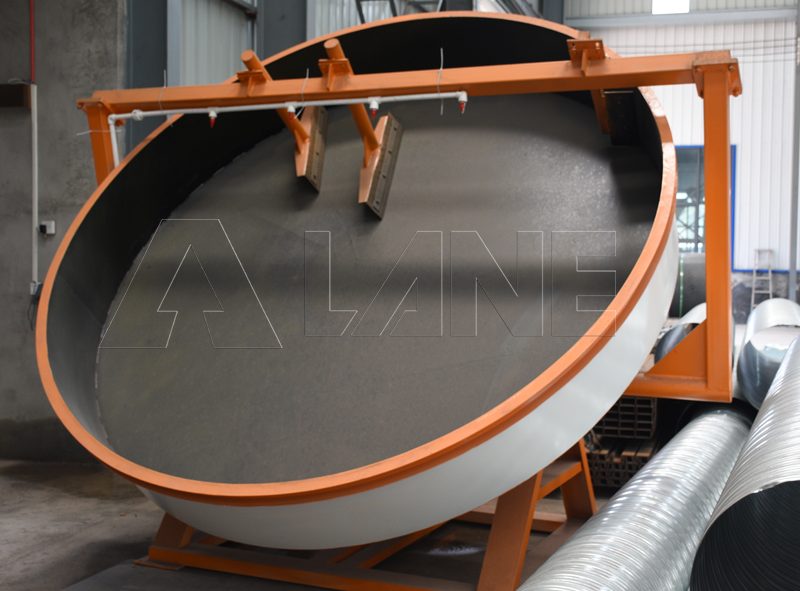
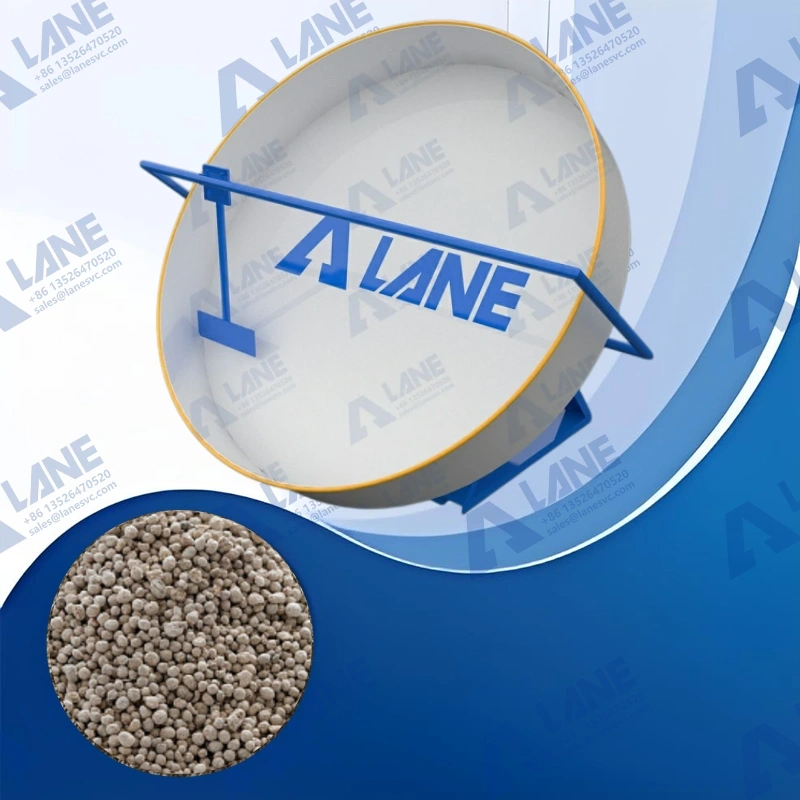
Material rolls in an inclined rotating pan with a fine water spray until granules reach size and drop out by gravity. A disc granulator is the common choice in a small or mid-size compost fertilizer production line, with low entry cost and good size control.
Rotary drum granulator (wet route, higher capacity)
Material and binder tumble inside a rotating drum. Drum granulators suit higher throughput and give strong, uniform granules, but they need the same drying train as the disc route.
Extrusion granulator (dry route, no dryer required)
A ring-die press forces material through a die, and a cutter slices it into short cylinders. Extrusion accepts drier feed, produces dense pellets, and lets a project skip the dryer and cooler. The trade-offs are granule shape and lower capacity per machine.
Suppliers quote a compost fertilizer production line in tons per hour; investors think in tons per year. Convert before requesting proposals:
Annual output ÷ operating days ÷ shift hours ÷ availability = required output per hour
| Annual Target | Operating Days | Shifts | Availability | Required Hourly Output |
|---|---|---|---|---|
| 5,000 t | 300 | 1 × 8 h | 85% | About 2.5 t/h |
| 10,000 t | 300 | 2 × 8 h | 85% | About 2.5 t/h |
| 20,000 t | 300 | 3 × 8 h | 85% | About 3.3 t/h |
Fermentation capacity has to match that throughput: an organic fertilizer production line at 10,000 tons per year holds 15 to 25 days of material, which occupies several times the volume of the finished product, so fermentation area usually sets the site footprint.
Capex covers equipment, steel structures, civil works, installation, and commissioning; operating cost covers feedstock logistics, energy, labor, maintenance, packaging, and overhead. Neither side has a standard price, and two suppliers can return compost fertilizer production line cost quotes for the same nominal capacity that differ by more than double. The main factors behind that gap:
Compare proposals section by section: reception, fermentation, granulation, drying, screening and packaging, and civil works. A short scope looks cheap until foundations, cables, or a biofilter arrive as change orders. Ask for a granulation rate and an output guarantee stated against your own measured moisture, then price the project against a per-ton model built on local electricity, fuel, and labor. Payback follows from the gap between that cost and what the product sells for.
Land area is driven by fermentation volume and retention time, so windrow designs need the largest footprint and in-vessel designs the smallest. Plan the electrical supply around the installed load of the crusher, granulator, dryer, and bagging line, since transformer capacity and cabling are often missing from early budgets. Confirm odor permits, waste licenses, zoning, and feedstock restrictions before design starts, since these decide whether an organic fertilizer production line can operate on the site at all. They also land in the compost fertilizer production line cost estimate as line items buyers rarely expect.
| Component | What Shortens Its Life | Watch For |
|---|---|---|
| Turner Flails and Teeth | Abrasive feedstock, stones | Loss of turning depth |
| Crusher Hammers and Screens | Hard clumps, tramp metal | Falling throughput |
| Granulator Disc Plate and Scraper | High throughput, wet feed | Lower granulation rate |
| Dryer Internal Flights | Excessive inlet temperature | Warping, hot spots |
| Screen Mesh | High fines load | Oversize reaching the bag |
| Belts and Bearings | Dust ingress, missed lubrication | Noise, heat, vibration |
Wear parts on a compost fertilizer production line are consumables, not spares. Daily rounds should cover lubrication, belt tension, granulator current draw, dryer temperatures, and feed moisture. Over-drying wastes fuel. Under-drying causes caking in storage. Both show up first in the dryer outlet temperature trend.
Ask for engineering documents first: line layout, mass balance, equipment list with motor ratings, utility requirements, foundation loads, and electrical drawings. Any company selling a compost fertilizer production line should produce these. A supplier that cannot is trading equipment, not designing a plant.
Require a material test before shipment. Send your own feedstock, then read the results for granulation rate, output at your measured moisture, granule strength, and final moisture. Ask about motor, gearbox, and electrical brands, drum shell thickness, and wear liners, since those are the items quietly downgraded to win a bid. Verify CE marking, ISO 9001, and ISO 45001 with the issuing body, and note that machinery CE marking moves to Regulation (EU) 2023/1230 in January 2027.
Talk to two or three references running comparable capacity and feedstock, and ask about training, commissioning, and spare parts speed. Tie payment milestones to a factory acceptance test and a commissioning test with the agreed output written into the contract.
At this scale, a commonly specified plant runs a screw press for dewatering; windrow turners on a covered slab, 15 to 20 days of fermentation plus 7 days of curing; a crusher; a mixer with binder and inoculant dosing; a disc granulator at 2.5 to 3 t/h; a biomass-fired dryer; a cooler; a trommel screen; and a 25 to 50 kg bagging line with dust collectors and a biofilter. This is a design configuration rather than a client record, and the same output can be reached with an organic fertilizer production line built around extrusion, skipping drying at lower capital cost.
Regulation keeps moving manure and food waste from land application toward processing, especially in regions with nutrient surplus rules. Fertilizer price volatility keeps integrators interested in recovering nutrients from their own waste streams, and biogas plants are adding digestate dewatering, which changes what an organic fertilizer production line must accept. Odor scrutiny pushes projects toward enclosed fermentation and biofilters.
How much does a compost fertilizer production line cost?
There is no standard price. Ask for a section-by-section quotation and compare scopes, since capacity, granulation route, dryer fuel, and automation move the number widely.
How long does composting take before the material can be granulated?
Windrow fermentation takes 15 to 25 days with turning, in-vessel systems finish in 7 to 10 days, and curing adds 7 to 14 days.
What is the difference between a compost fertilizer production line and a compound fertilizer production line?
A compost fertilizer production line ferments organic waste and granulates high-fiber material using dewatering and organic-specific equipment. A compound (NPK) line mixes chemical raw materials and depends on reaction and drying chemistry.
Do I need a dryer to granulate compost?
Not always. Disc and drum granulation need drying and cooling; extrusion presses form dense pellets from drier feed and skip the dryer.
What moisture should material have before granulation?
Wet granulation works best with feed at 25 to 35% moisture, and extrusion prefers drier material. Ask the supplier to confirm a moisture window and a granulation rate on your own feedstock.
How much land does an organic fertilizer plant need?
It scales with fermentation volume and retention time, not granulation capacity: multiply daily throughput by retention days, divide by legal stockpile height, then add the granulation hall and warehouse.
US EPA Part 503 (pathogen reduction, aerated static pile composting); USDA National Organic Program (7 CFR 205.203); EU Fertilising Products Regulation (EU) 2019/1009; EU Machinery Directive 2006/42/EC, moving to Regulation (EU) 2023/1230; ISO 9001; ISO 45001; OSHA 29 CFR 1910.212; NFPA 652.

Everything you need to know when looking at different types of organic fertilizer equipment, all in one place.
Copyright © 2026. LANE All rights reserved.
Send A Message