

Fruit Waste Organic Fertilizer Production Line: compare processing stages, equipment, capacity and costs before investing in a complete plant.
A Fruit Waste Organic Fertilizer Production Line converts discarded fruit peels, pulp, pomace, and other biodegradable processing residues into marketable organic fertilizer. For juice manufacturers, fruit processors, agricultural businesses, and fertilizer investors, the project offers a way to reduce waste disposal pressure while creating an additional product stream. However, fruit waste is usually wet, acidic, and inconsistent. The key purchasing decision is therefore not simply how many machines to buy, but how to build a line that can handle the actual raw material and produce a stable fertilizer product.
This guide examines the process, equipment configuration, capacity planning, investment factors, and supplier checks that matter before placing an order.
Fruit processing generates several types of organic residues, including citrus peels, apple pomace, grape marc, banana peels, pineapple residues, and mixed fruit pulp. If these materials are poorly stored or disposed of, they can create odor, leachate, and transportation costs.
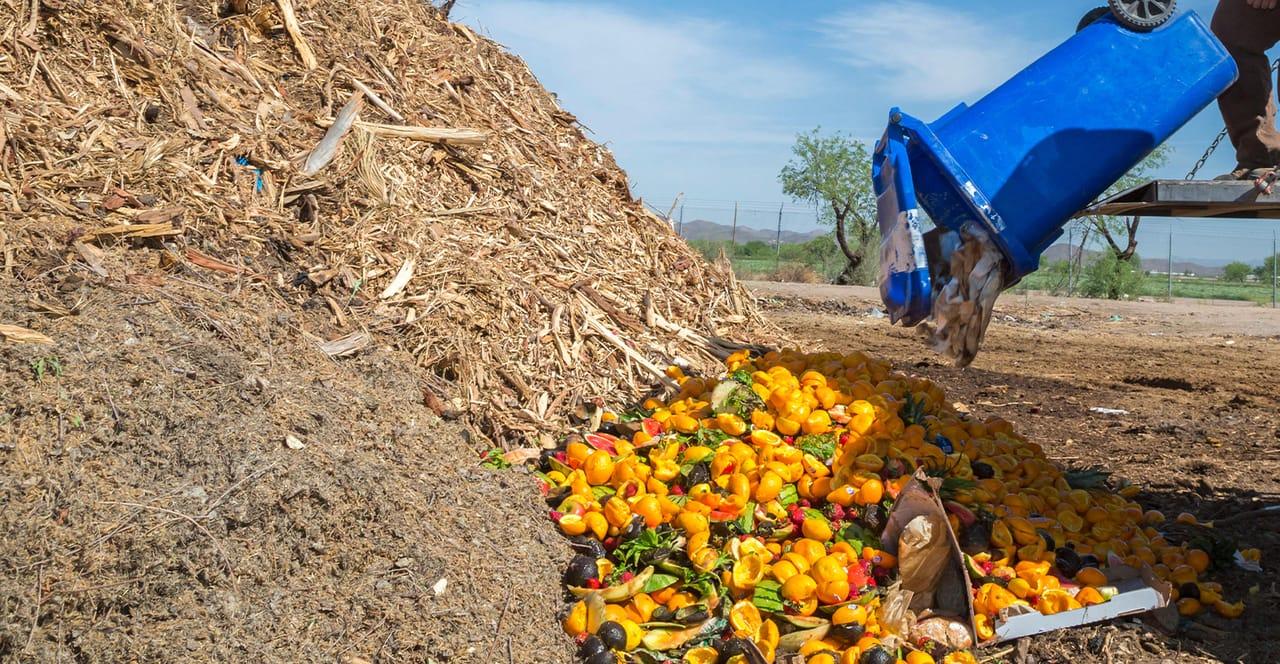
Converting them into organic fertilizer can offer three commercial advantages:
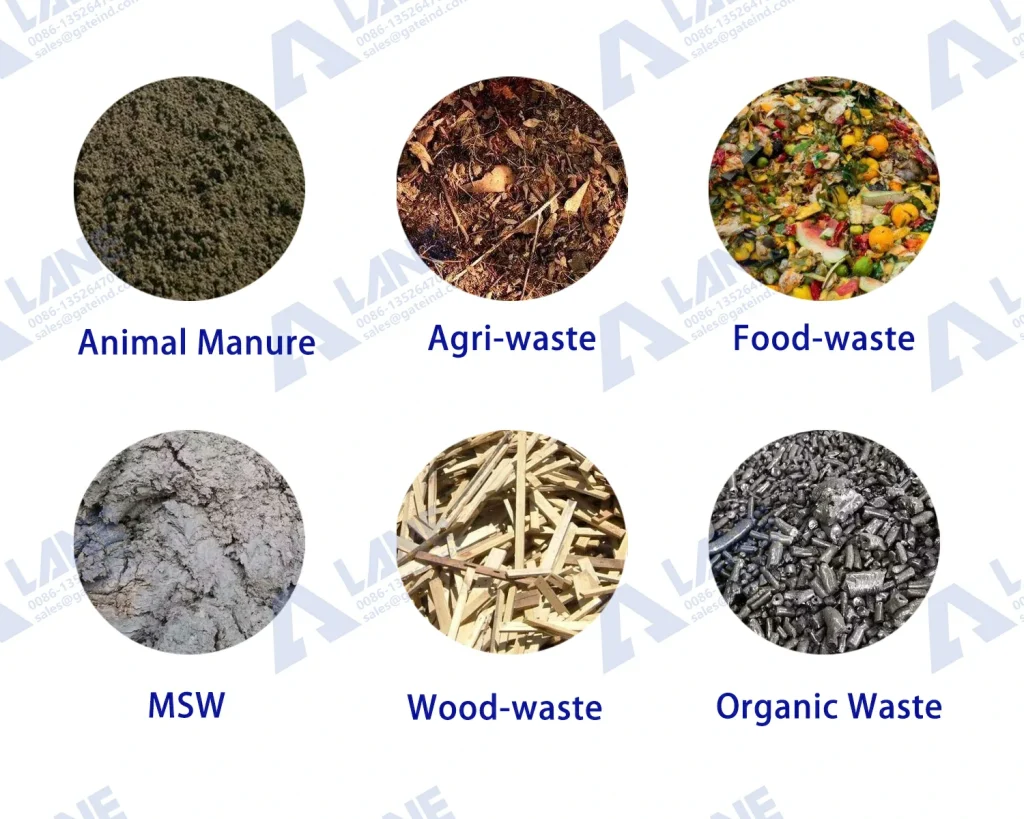
But there is an important qualification: not every fruit residue has the same processing value. Apple pomace, for example, can be very wet and compact easily, while citrus peel may bring acidity and fibrous material into the mixture. Buyers should evaluate feedstock characteristics before deciding on the production process.
A practical first step is to test moisture, pH, organic matter, and carbon-to-nitrogen ratio. These results are more useful for equipment selection than a general description such as “fruit waste.”
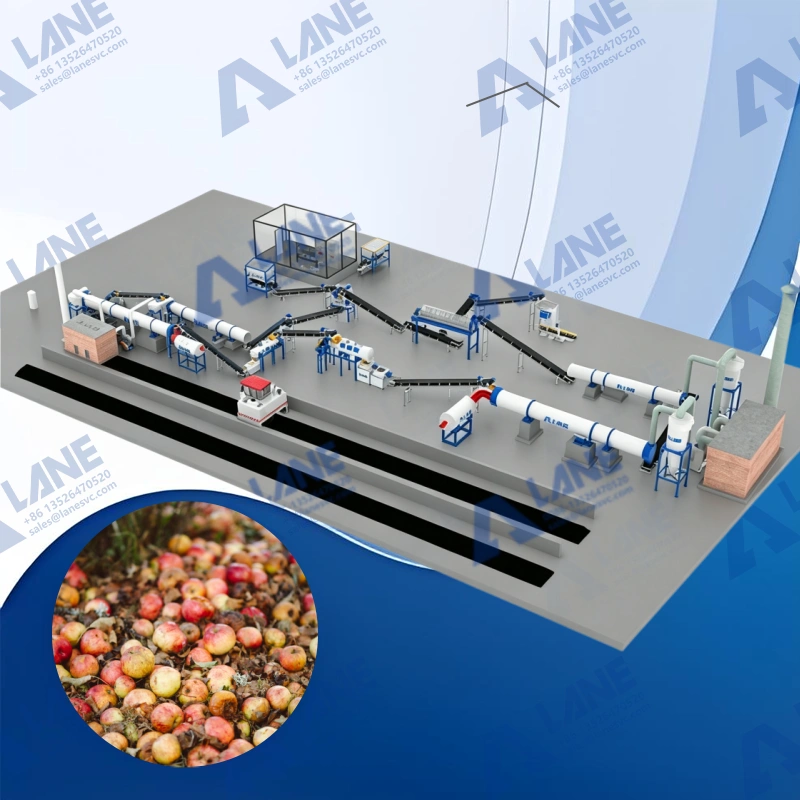
A commercial line generally has two connected sections: biological composting and fertilizer finishing. The first stabilizes the organic material; the second prepares it for sale in the required product form.
The typical process is:
Fruit waste receiving → Sorting and crushing → Moisture adjustment → Mixing → Aerobic composting → Curing → Screening → Crushing and formulation → Granulation → Drying and cooling → Packaging
Not every project needs every machine. A plant selling loose compost may stop after curing and screening. A business targeting bagged granular fertilizer will need additional processing and packaging equipment.
The distinction matters financially. Granulation equipment should not be included simply because it appears in a standard fertilizer plant layout. First confirm that local buyers want granules and that the finished compost can meet the required formulation and physical properties.
The equipment configuration depends on feedstock moisture, particle structure, contamination, target output, and available site area. The following table provides a practical starting configuration.
| Processing Stage | Main Equipment | Function | Buyer Consideration |
|---|---|---|---|
| Receiving | Hopper and conveyor | Feeds raw materials into the line | Match peak incoming volume and material handling conditions |
| Pretreatment | Sorting unit and crusher | Removes contaminants and reduces bulky residues | Avoid excessive fine grinding that may restrict airflow |
| Moisture adjustment | Screw press or liquid management system, if needed | Reduces excess free liquid | Consider wastewater collection and treatment |
| Mixing | Organic fertilizer mixer | Blends fruit waste with dry bulking materials | Check mixing uniformity with wet, sticky feedstock |
| Composting | Compost turner or fermentation tank | Supports aerobic decomposition | Match usable capacity, aeration, residence time, and odor control |
| Curing and screening | Curing area and screener | Stabilizes and classifies compost | Provide enough curing space and screening capacity |
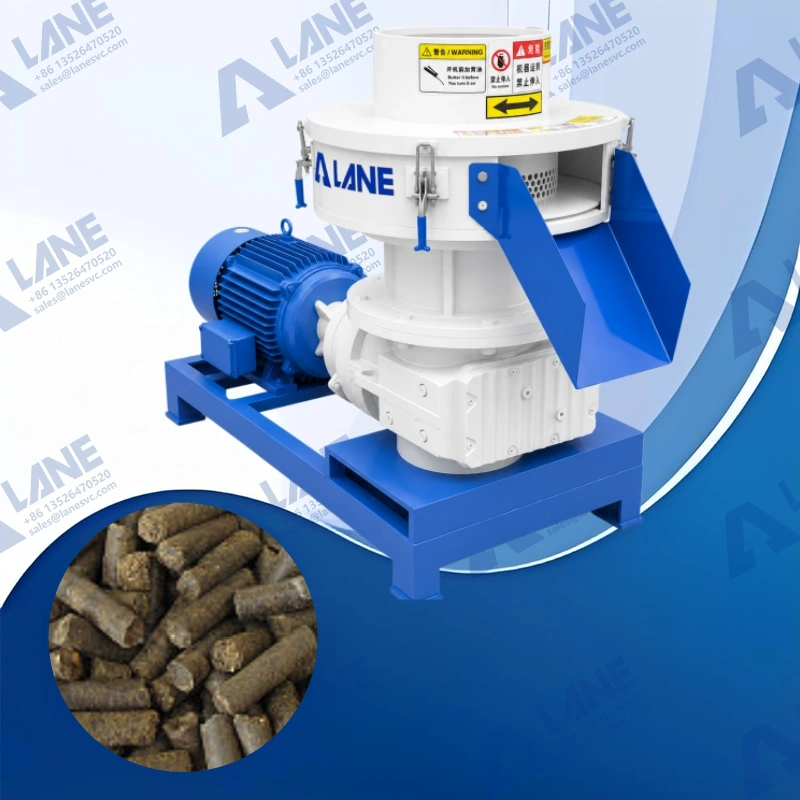
| Fertilizer finishing | Crusher, mixer, granulator | Prepares compost for the target product | Select according to formulation and granule requirements |
| Final treatment | Dryer, cooler, packing machine | Conditions and packages finished fertilizer | Confirm final moisture and packaging specifications |
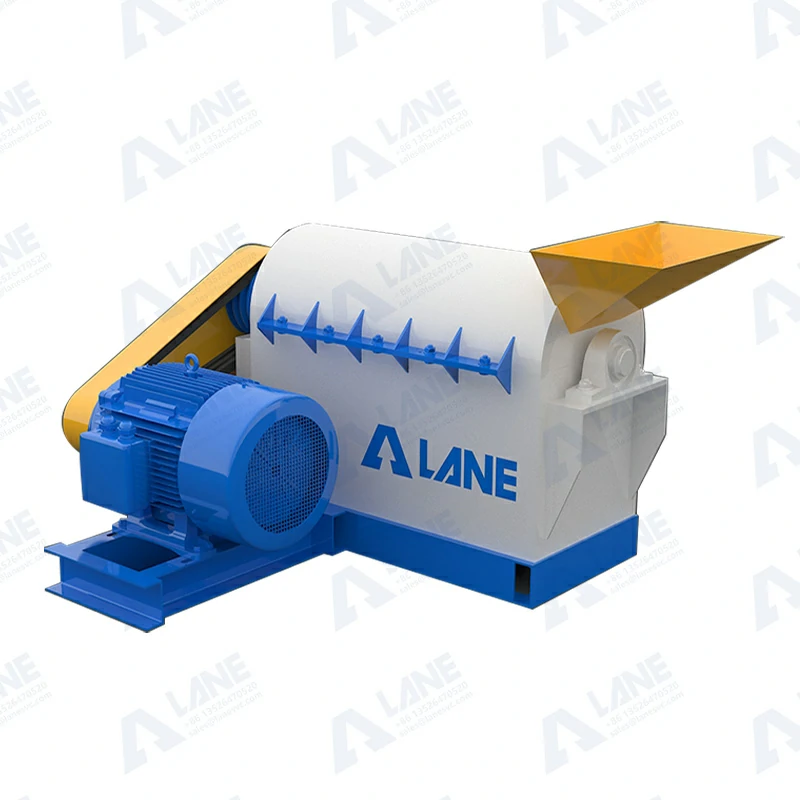
For specific machinery, buyers can review LANE’s organic fertilizer crusher, fertilizer mixer, compost turner, and fermentation tank. These are equipment options, not a fixed package: the final selection should follow material testing and process design.
Fruit waste often contains substantial moisture and readily degradable organic matter. If it is piled without enough structure, air movement becomes restricted and the material can turn anaerobic. The result may be odor, leachate, and uneven decomposition.
The following are useful initial references for designing an aerobic composting recipe. They are not universal machine settings or legal product specifications.
| Parameter | Practical Starting Reference | Why It Matters |
|---|---|---|
| Moisture content | About 50%–60% in the blended mixture | Supports microbial activity while retaining air spaces |
| Initial C:N ratio | Around 25:1–35:1 | Balances carbon and nitrogen for decomposition |
| Oxygen | Above 6%; higher levels may be preferred depending on the system | Helps maintain aerobic conditions |
| pH | Around 6.5–8.0 as a preferred reference | Helps maintain a suitable composting environment |
| Particle size | Determine through feedstock trials | Balances surface area with porosity |
| Temperature | Monitor the active composting phase and applicable sanitation requirements | Helps assess biological activity and process control |
These references are consistent with guidance from NC State Extension on large-scale organic materials composting. The US EPA also explains that composting requires balanced feedstocks, moisture, oxygen, and suitable pile structure in its guide to approaches to composting.
One point deserves emphasis: adding dry straw, sawdust, or wood chips is not merely a way to absorb water. These materials also improve structure and help create air spaces. The correct blending ratio should be established from feedstock analysis and trial batches, not copied from another plant.
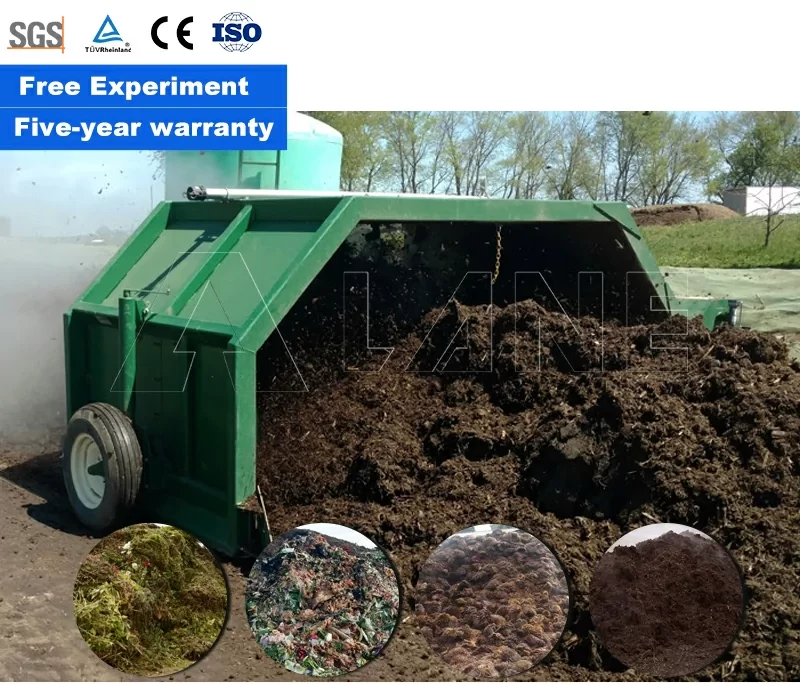
Both systems can be used, but they serve different site and operating conditions.
Windrow composting is worth considering when the project has sufficient land, suitable outdoor or covered working areas, and access for turning equipment. It can be a practical option for larger agricultural or rural sites. However, operators must manage rainfall, drainage, turning schedules, and odor.
Enclosed fermentation systems may suit sites where land is restricted or odor management is a major concern. Buyers should examine usable tank volume, aeration, exhaust treatment, loading and unloading arrangements, and the actual residence time for the proposed recipe.
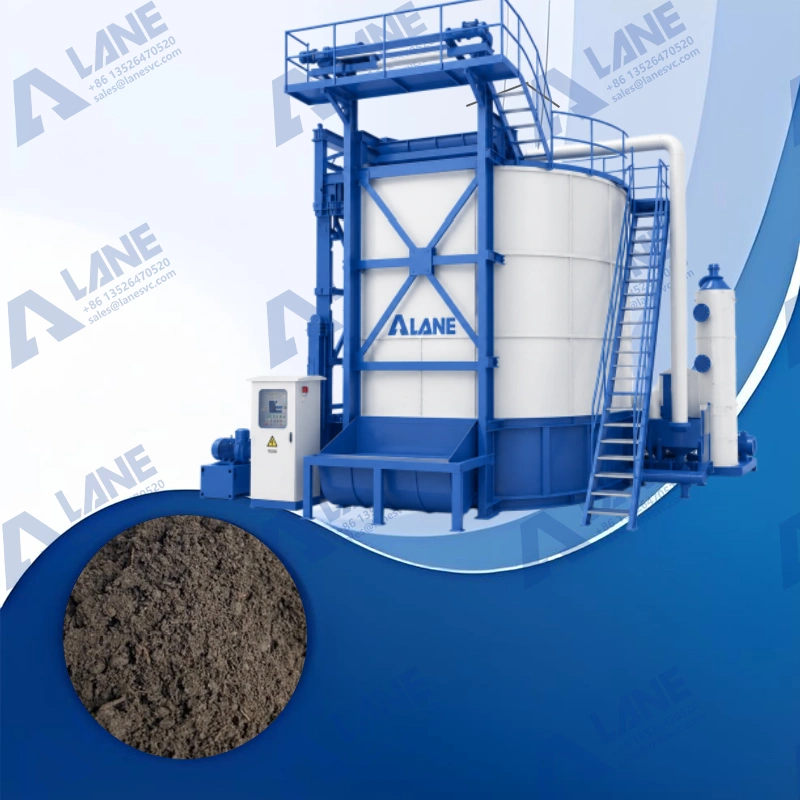
Do not assume that an enclosed tank eliminates the need for curing. Active fermentation and final compost stabilization are different stages. The plant layout must provide for both where the process requires them.
A reliable capacity calculation starts with the raw material supply, not the advertised output of an individual machine.
For example, a fruit processor may generate a relatively stable amount of waste for most of the year but experience a sharp increase during harvest season. If the line is sized around the annual average, it may become a bottleneck during peak production.
Before requesting a quotation, establish:
The investment should include more than the main processing machines. Civil works, drainage, covered storage, odor treatment, wastewater management, electrical installation, spare parts, and laboratory testing can all affect the final project cost.
A common mistake is to compare the incoming fruit waste tonnage directly with the rated capacity of a mixer or granulator. One machine may be rated in tonnes per hour and another by volume. The mixture also becomes heavier or bulkier after adding structural materials. Ask the supplier to show the capacity calculation for each process stage and identify the bottleneck.
A suitable supplier should be able to discuss feedstock behavior and process design, not just provide a machine catalogue.
Before approving the equipment list, ask for:
It is also useful to ask whether the supplier can conduct material or granulation trials. LANE’s organic fertilizer production solutions cover crushing, mixing, composting, screening, and downstream fertilizer processing. Its broader fertilizer equipment range can be used as a starting point for discussing a project-specific configuration.
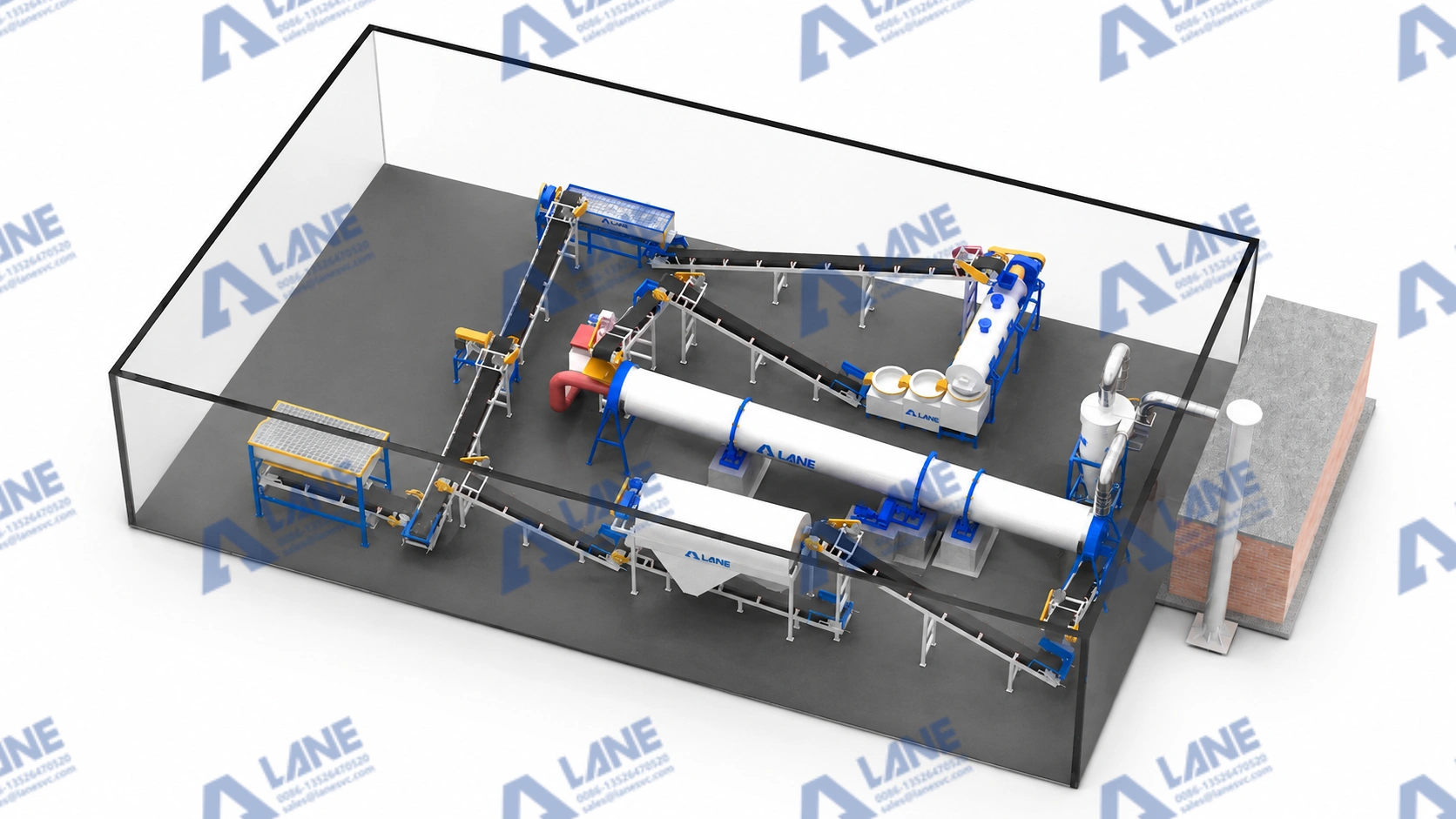
For a more detailed explanation of the pretreatment and composting stage, see the related guide to fruit waste composting equipment.
1. Can all types of fruit waste be used to produce organic fertilizer?
Most clean, biodegradable fruit-processing residues can be considered, but their moisture, acidity, fiber content, and contamination levels must be checked. Plastic packaging, labels, stones, and unsuitable foreign materials should be removed before processing.
2. Does fruit waste need to be dried before composting?
Not necessarily. Many projects adjust moisture by blending wet fruit residues with dry bulking materials such as straw, sawdust, or wood chips. Mechanical dewatering may be justified when there is excessive free liquid.
3. How long does it take to produce organic fertilizer from fruit waste?
The time depends on the feedstock, composting method, aeration, temperature, and curing conditions. Buyers should request a process estimate based on their actual recipe rather than relying on a universal fermentation period.
4. What is the suitable capacity for a fruit waste fertilizer plant?
Capacity should be based on peak daily waste generation, operating hours, mixture volume, and required finished-product output. The supplier should calculate the capacity of each section rather than quote only one headline figure.
5. Can the production line make granulated organic fertilizer?
Yes. After composting and curing, suitable material can be crushed, mixed, granulated, dried, cooled, screened, and packed. The exact configuration depends on the fertilizer formulation and required granule properties.
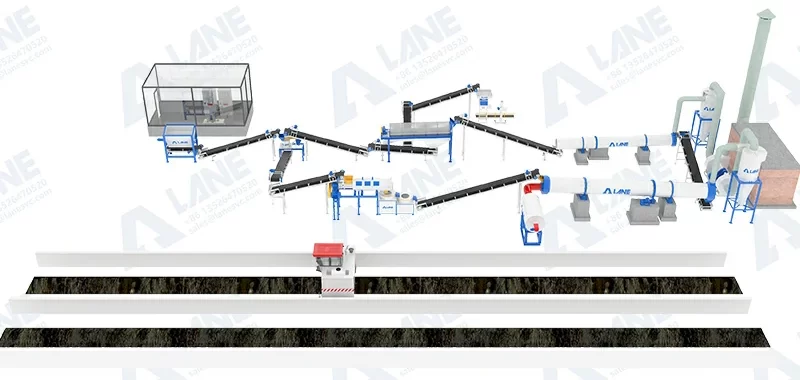
6. Is a compost turner enough for a complete production line?
No. A compost turner handles only the turning stage. A commercial project may also require receiving, crushing, mixing, curing, screening, and downstream fertilizer-processing equipment.
7. What information is needed to obtain an equipment quotation?
Provide fruit types, daily and peak waste volume, moisture content, pH, contamination conditions, available site area, power supply, and target fertilizer form. Representative material samples and laboratory results make the equipment proposal more reliable.
8. Can the equipment configuration be customized?
Yes. The line should be configured around the raw material, site conditions, processing capacity, and final product requirements. Ask the supplier to explain which machines are essential and which are optional for your project.
A successful Fruit Waste Organic Fertilizer Production Line is not defined by the number of machines installed. Its performance depends on whether the process can manage wet and acidic feedstock, maintain suitable aeration, provide enough curing time, and deliver a finished product that buyers are willing to purchase.
Before investing, prioritize feedstock testing, peak-season capacity calculations, moisture adjustment, odor and wastewater management, and a clear process flow diagram. These checks help prevent a common and expensive problem: buying equipment that looks suitable on paper but cannot handle the material consistently.
If you are planning a fruit waste fertilizer project, share your raw material details and target capacity with LANE to discuss a suitable equipment configuration and project quotation.
For more details, please feel free to contact us.
Henan Lane Heavy Industry Machinery Technology Co., Ltd.
Email: sales@lanesvc.com
Contact number: +86 13526470520
WhatsApp: +86 13526470520

Everything you need to know when looking at different types of organic fertilizer equipment, all in one place.
Copyright © 2026. LANE All rights reserved.
Send A Message