
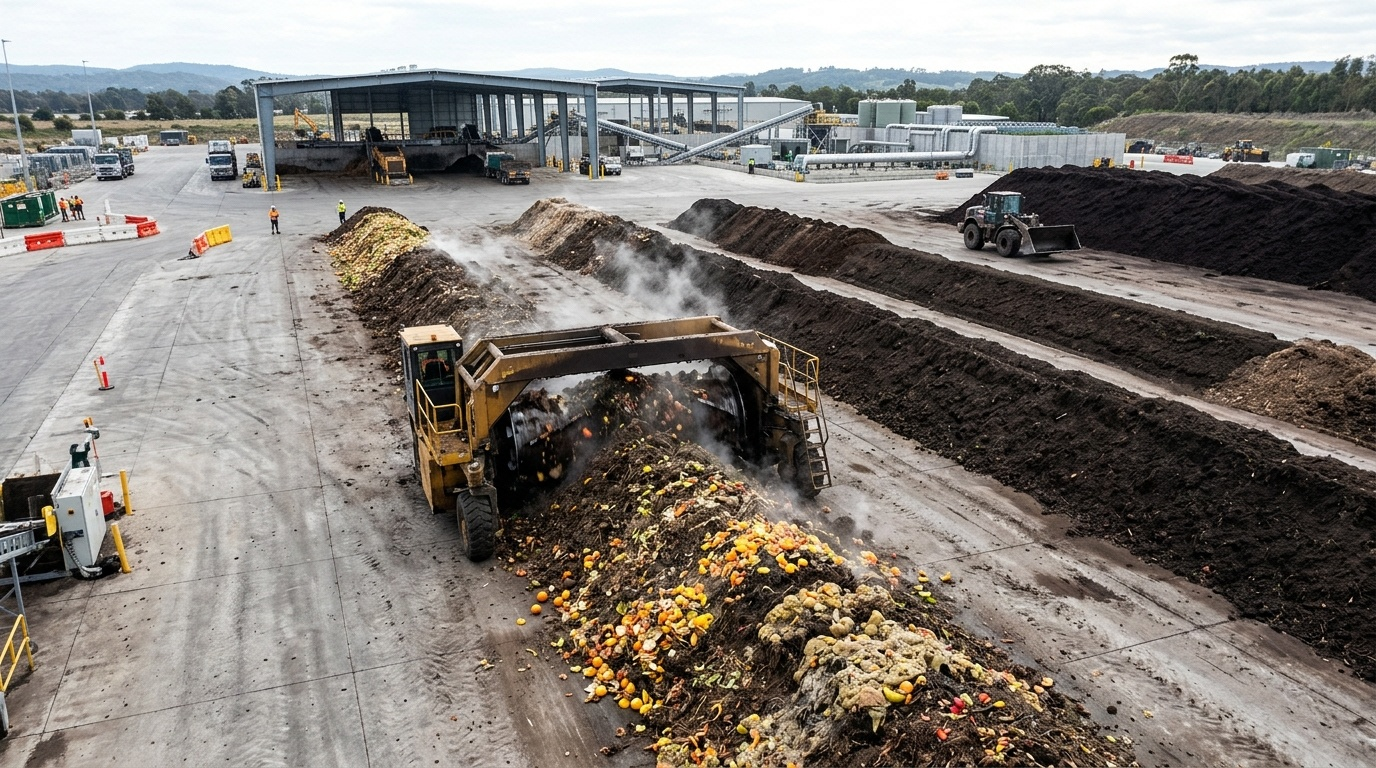
Fruit Waste Composting Equipment helps turn wet fruit residues into valuable compost. Compare machines, process steps, and buying factors.
Fruit Waste Composting Equipment helps fruit processors, juice factories, agricultural businesses, and fertilizer producers turn discarded peels, pulp, pomace, and other biodegradable residues into useful organic compost. The opportunity is attractive, but fruit waste is not an easy feedstock to handle. It often contains a large amount of water, has a low pH, and can quickly become sticky, compacted, and unpleasant to store.
For buyers, the real challenge is not simply finding a machine that can turn organic waste. It is building a process that can handle the actual condition of the incoming material every day. A line designed for dry straw or livestock manure may struggle with wet orange peel or apple pomace.
This guide explains the equipment, process conditions, capacity considerations, and purchasing checks that matter when planning a commercial fruit waste composting project.
Fruit waste is biodegradable, but its physical and chemical properties can make direct composting unreliable.
Fruit peels, pulp, and pomace commonly contain high moisture. One research study on fruit and vegetable food waste reported moisture levels of approximately 80%–90%, while fruit waste samples had an acidic pH of around 4.0–5.0. These figures are useful reference points, not specifications for every factory’s feedstock. Actual values vary with fruit type, processing method, storage time, and the amount of water used during production.
Three problems deserve particular attention:
There is also a practical issue that is often underestimated: fruit waste is seasonal. A juice plant may produce a large volume of citrus residue during a short processing period, while a mixed fruit processor may receive different materials throughout the year.
Buyer judgment: Do not size a composting line using annual waste generation alone. Collect daily and peak-season figures, and test representative feedstock samples before requesting a quotation.
Most clean, biodegradable fruit-processing residues can be considered for aerobic composting, provided the recipe and equipment are suitable.
| Fruit waste type | Typical handling issue | Equipment consideration |
|---|---|---|
| Citrus peel | Acidic, fibrous, aromatic | Shredding and careful blending |
| Apple pomace | Wet, fine, and easily compacted | Mixing with dry bulking material |
| Grape pomace | Moist, fibrous, may contain seeds | Crushing or size reduction where necessary |
| Banana peel | Wet and soft, can become sticky | Controlled feeding and mixing |
| Pineapple residue | Fibrous, wet, and acidic | Shredding and moisture adjustment |
| Mixed fruit pulp | Variable composition and moisture | Feedstock testing and recipe control |
The table is a starting point for equipment discussions, not a guarantee that every material can be processed in the same configuration. Seeds, stones, plastic packaging, labels, and other contaminants should be removed or handled separately where necessary.
Fruit residues can also be blended with dry leaves, straw, sawdust, wood chips, or suitable agricultural residues. These materials provide carbon and help create a more open structure.
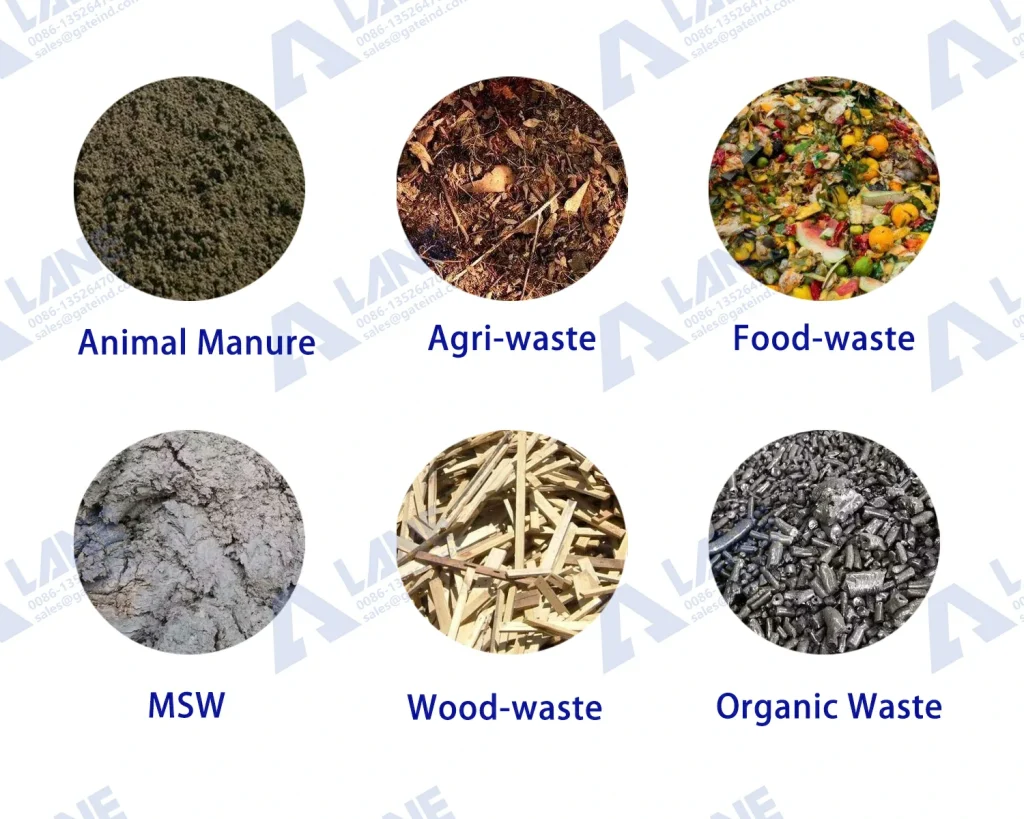
A useful starting point for aerobic composting is a carbon-to-nitrogen ratio around 25:1–35:1. However, the correct blending ratio must be calculated from the actual feedstock analysis rather than copied from another factory.
A commercial line normally combines several machines rather than relying on one composting unit. The exact configuration depends on incoming moisture, contamination, daily throughput, available land, and the intended final product.
3.1 Receiving and Pretreatment
A receiving hopper and conveyor provide a controlled feed to the next stage. If the waste contains packaging, stones, or other unwanted materials, sorting and separation equipment should be included before size reduction.
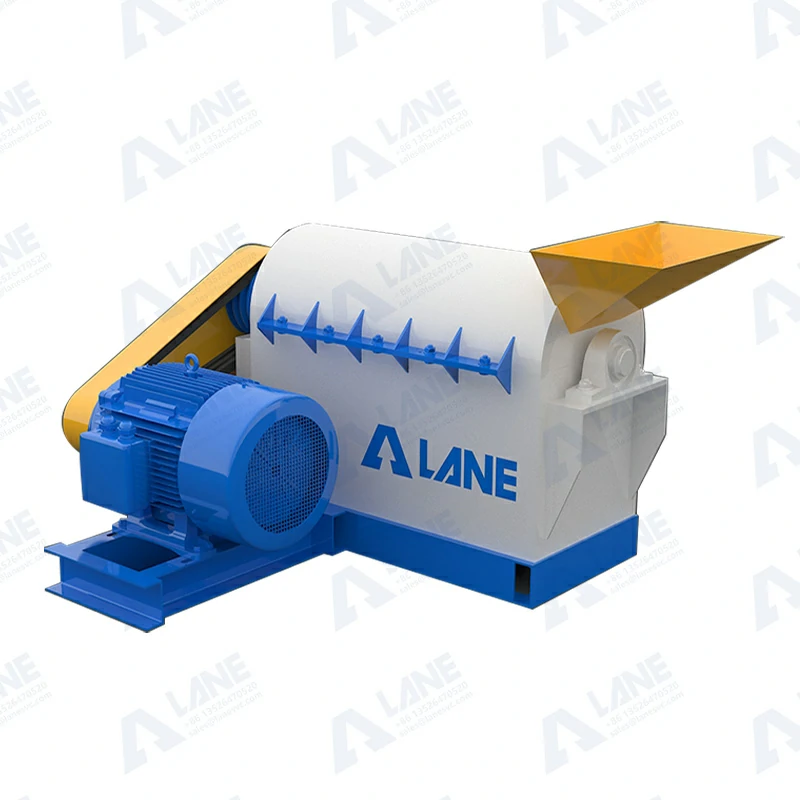
A shredder or crusher reduces bulky peels and fibrous residues into a more manageable size. The objective is not to grind everything into a fine paste. Excessively fine material can compact and restrict airflow. The target particle size should preserve enough structure for aeration while allowing effective mixing.
For suitable organic materials, LANE offers a range of crushing equipment, including shredding and semi-wet material crushing options. The correct model should be selected after testing the actual fruit residue.
3.2 Dewatering and Mixing
If the incoming material is excessively wet, mechanical dewatering may be worth considering. A screw press or another suitable dewatering unit can reduce the water load before composting. Whether this investment is justified depends on the volume of free liquid, wastewater handling requirements, and the cost of adding dry bulking materials.
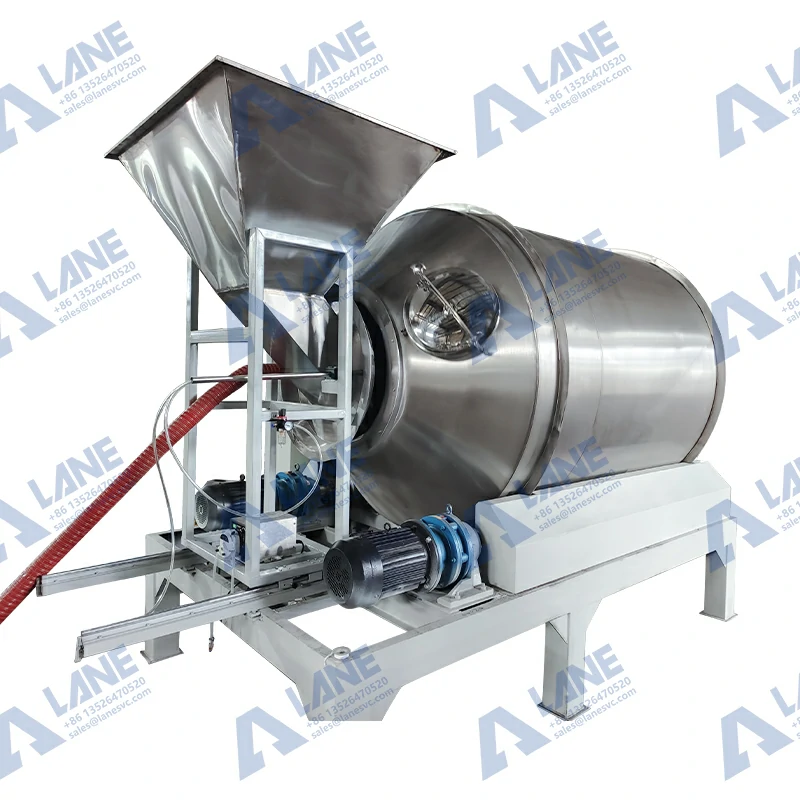
Next, a mixer combines fruit waste with dry carbon-rich materials and other approved ingredients. Uniform mixing matters because a wet pocket inside the compost pile can become anaerobic even when the average moisture level looks acceptable.
LANE provides fertilizer mixing equipment for organic and compound fertilizer processing. For fruit waste projects, ask the supplier to assess sticky-material behavior and cleaning requirements rather than choosing a mixer based on nominal capacity alone.
3.3 Aerobic Composting
This is the core biological stage. The mixture needs adequate oxygen, moisture, and a suitable carbon-to-nitrogen balance.
For open windrow systems, a compost turner turns and loosens the material, helping restore air spaces and distribute heat and moisture. The machine should match the windrow width, height, site layout, and daily volume.
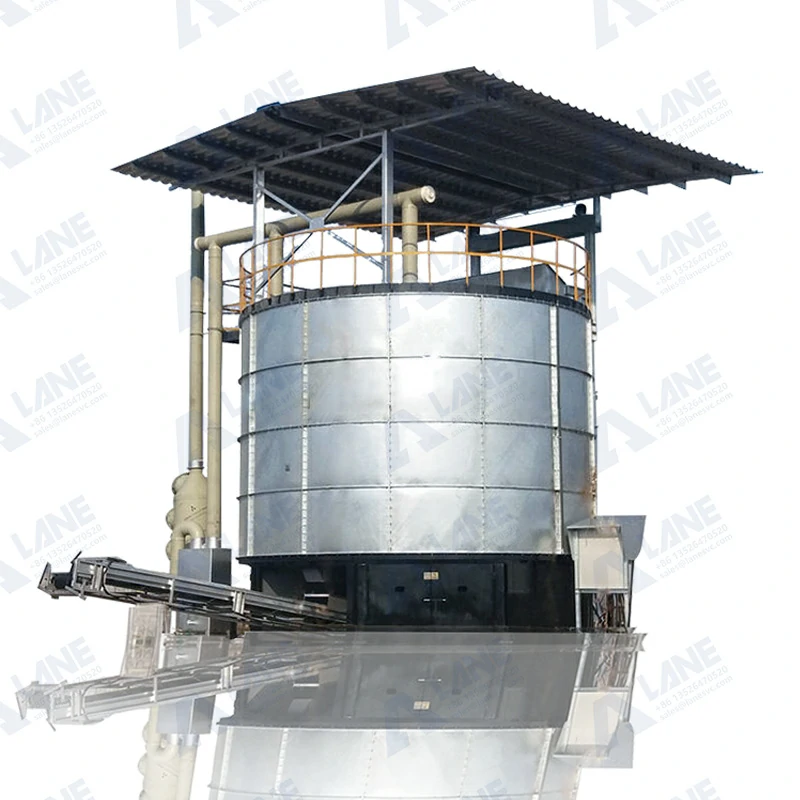
Where land is limited or odor management is a major concern, an enclosed fermentation system may be considered. LANE also supplies organic fertilizer fermentation tanks. Buyers should confirm the tank’s usable volume, aeration design, exhaust treatment, and actual residence time for their specific fruit-waste recipe.
3.4 Curing, Screening, and Further Processing
Active composting is not the same as finished compost production. After the high-temperature stage, the material generally needs a curing period to stabilize.
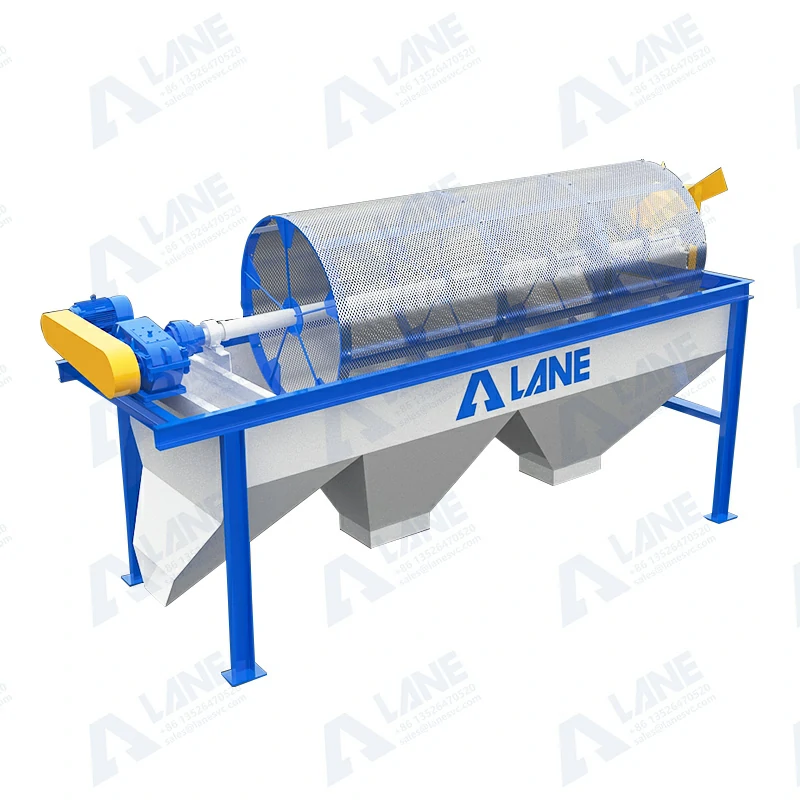
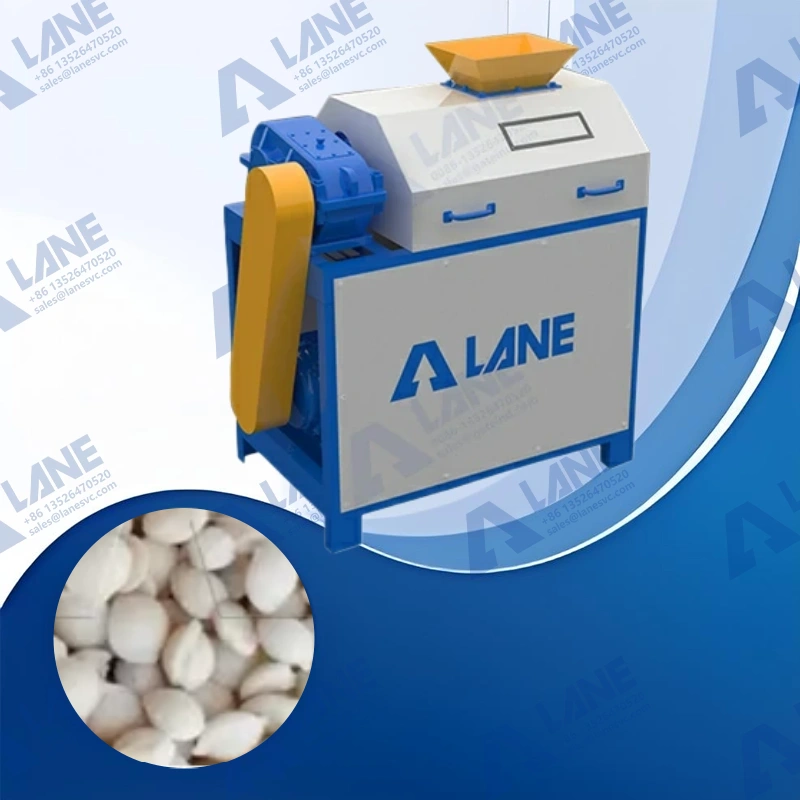
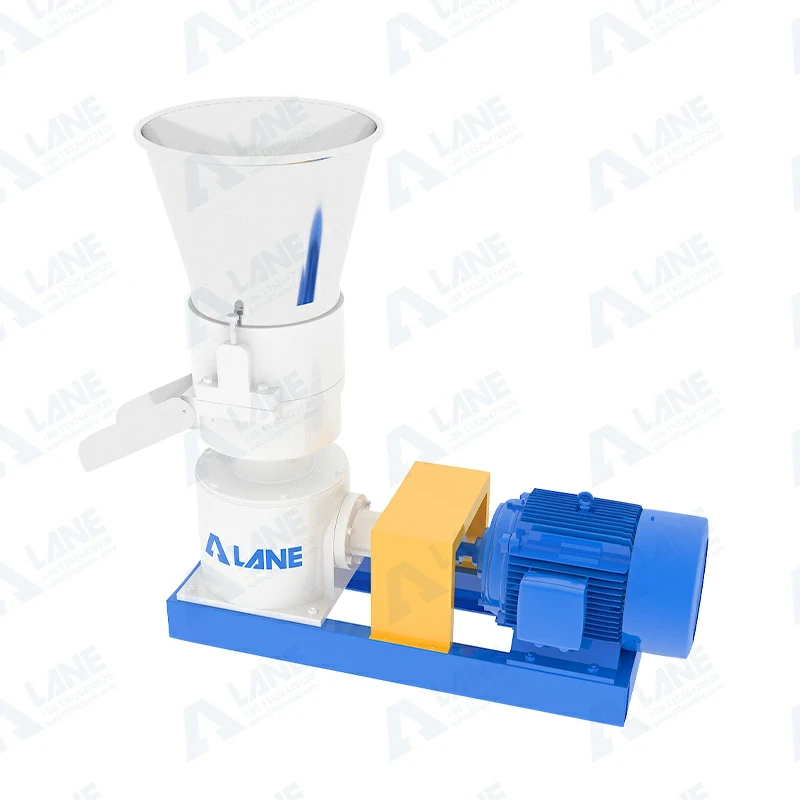
A screener can separate coarse residues and oversized particles from finished compost. If the business plans to sell bagged organic fertilizer, additional equipment may be required for crushing, mixing, granulation, drying, cooling, and packaging.
A rotary drum screener can be used for product classification. If granules are required, the downstream equipment should be designed around the compost’s moisture, particle size, and formulation.
The equipment cannot compensate for a poor compost recipe. Before finalizing the machinery, buyers should establish operating targets through feedstock analysis and pilot trials.
| Parameter | Practical starting target | Why it matters |
|---|---|---|
| Moisture content | 50%–60% | Supports microbial activity while retaining air spaces |
| Initial C:N ratio | 25:1–35:1 | Balances microbial carbon and nitrogen needs |
| Oxygen level | Above 6%; around 16%–18.5% is a preferred reference | Helps maintain aerobic decomposition |
| pH | Around 6.5–8.0 as a preferred reference | Supports a more balanced composting environment |
| Particle size | Set through trials; avoid excessive fines | Balances surface area and air permeability |
| Temperature | Monitor the active thermophilic phase and local sanitation requirements | Indicates biological activity and process control |
These are general process references, not universal legal limits or guaranteed machine settings. NC State Extension identifies preferred composting ranges of 25:1–35:1 for C, 50%–60% for moisture, and approximately 16%–18.5% for oxygen. Fruit waste may need substantial adjustment before reaching these conditions.
For example, a study of citrus waste composting used a mixture with a C ratio of 24:1, pH 6.3, and moisture content of 60%. The reported process took about three months to complete under that study’s conditions. This is a useful reminder that composting time depends on feedstock and process management, not just machine size.
Neither system is automatically the best choice. The right decision depends on land availability, odor sensitivity, investment budget, and the scale of operation.
For a large agricultural site with sufficient land, windrow composting may offer a practical investment route. For a food-processing facility near residential or commercial areas, an enclosed system may be easier to manage.
Do not compare the two options using the price of the main machine alone. Include the receiving area, drainage, odor treatment, curing space, and material handling equipment in the project estimate.
Capacity should be based on the quantity of waste that must be handled during the busiest operating period, not simply the average annual tonnage.
Before selecting a model, establish:
A common purchasing mistake is to compare incoming waste tonnage directly with the rated capacity of a compost turner or mixer. These machines may use different capacity units, such as tonnes per hour or cubic meters per hour. The volume of the blended mixture can also be significantly different from the incoming fruit waste volume.
Ask the supplier to provide a process flow diagram and a capacity calculation for every major section. The receiving, mixing, composting, screening, and packing stages must work together. A high-capacity crusher cannot solve a bottleneck in the curing area.
The equipment quotation is only one part of the investment. Several supporting costs can have a major effect on the total project budget:
The important point is that reducing the purchase price of the main machine does not necessarily reduce the cost per tonne of finished compost. A properly balanced process can be more economical over the long term than an undersized or poorly configured line.
A serious supplier should be able to discuss the material, process, and plant layout—not just send a machine catalogue.
Before requesting a quotation, prepare representative samples and provide:
Then ask the supplier to confirm the following:
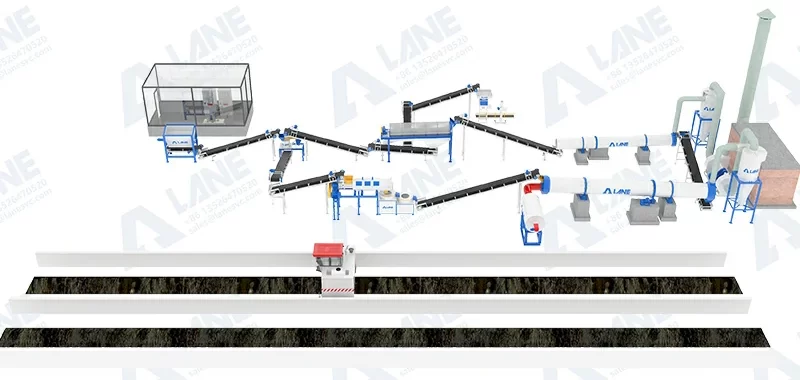
LANE’s organic fertilizer equipment range covers crushing, mixing, compost turning, fermentation, screening, and downstream processing. Its turnkey solutions can be used as a starting point for discussing a project-specific configuration. The final equipment list should still be confirmed against the customer’s material test results and production targets.
1. Can fresh fruit waste be composted directly?
Yes, but very wet fruit waste usually needs to be blended with dry structural materials first. Directly piling wet pulp can lead to compaction, poor aeration, and odor problems.
2. What is the best moisture content for fruit waste composting?
A practical starting target for the blended compost mixture is around 50%–60%. The incoming fruit waste may be much wetter, so dewatering or adding dry bulking agents may be necessary.
3. Do I need a fruit waste shredder?
Not every project needs a separate shredder, but size reduction is useful when the feed contains bulky peels, fibrous residues, or large pieces. The final particle size should not be so fine that it restricts airflow.
4. How long does fruit waste composting take?
It depends on the feedstock, mixture recipe, aeration, temperature, and curing conditions. A citrus-waste study reported completion in approximately three months, but commercial project timelines must be established through process trials.
5. Can citrus peel be used to make organic compost?
Yes. Citrus peel can be composted, but its acidity and moisture should be considered. Blending it with suitable carbon-rich materials and monitoring the composting process are important.
6. Is a compost turner enough for a complete fruit waste project?
No. A turner handles the turning stage, not the entire production process. Most commercial projects also need receiving, pretreatment, mixing, curing, screening, and possibly downstream fertilizer processing equipment.
7. Can fruit waste compost be made into granules?
Yes. Once the compost is sufficiently mature and conditioned, it can be crushed, mixed, granulated, dried, cooled, screened, and packed. The required equipment depends on the target granule size and product specification.
8. What information is needed to get a quotation?
Provide the fruit waste type, daily and peak processing volume, moisture content, pH, available site area, power supply, and intended final product. These details help the supplier recommend a realistic process and equipment configuration.
The most important decision in a fruit waste composting project is not which machine has the highest advertised capacity. It is whether the complete process can handle the actual moisture, acidity, fiber content, and seasonal variation of the raw material.
Buyers should prioritize feedstock testing, moisture adjustment, reliable mixing, effective aeration, curing capacity, and odor management. These factors determine whether the line can operate consistently and produce compost that meets the intended quality requirements.
If you are planning a fruit waste composting project, explore LANE’s organic fertilizer equipment and complete equipment range. Share your raw material details and target capacity to discuss a suitable process flow, equipment configuration, and project quotation.

Everything you need to know when looking at different types of organic fertilizer equipment, all in one place.
Copyright © 2026. LANE All rights reserved.
Send A Message