
Plan a cow manure fertilizer production machine line: process steps, equipment, capacity, cost drivers, and supplier checks for fertilizer plant buyers.
Dairy and beef operations produce manure every day of the year, while the land available for spreading it keeps shrinking under tighter nutrient rules. That gap is why a growing number of investors and plant operators now price out a cow manure fertilizer production machine instead of paying for disposal.
This guide is written for the people who sign the purchase order: fertilizer manufacturers adding organic capacity, investors sizing a plant, EPC contractors preparing a scope of supply, and procurement managers comparing quotes that look nothing alike.
Manure disposal is no longer free. The EU Nitrates Directive (91/676/EEC) restricts when and where livestock manure may be applied, and several US states regulate application by phosphorus index rather than nitrogen alone.
Demand is rising on the other side. Soils in the Middle East, Southeast Asia, and parts of Africa have lost organic carbon after decades of straight NPK use, and buyers there pay real money for organic amendments. FAO guidance on integrated plant nutrient management and the USDA NRCS nutrient management standard (Code 590) point the same way. Raw manure is a handling liability. A dried, granulated, bagged product has a price per ton and a label.
Layouts differ with feedstock, capacity, and product specification, but the sequence below holds for nearly every cow manure fertilizer production machine line. Skipping a stage reappears later as a blocked dryer or granules that crumble in the bag.
Step 1 – Dewatering and Moisture Control
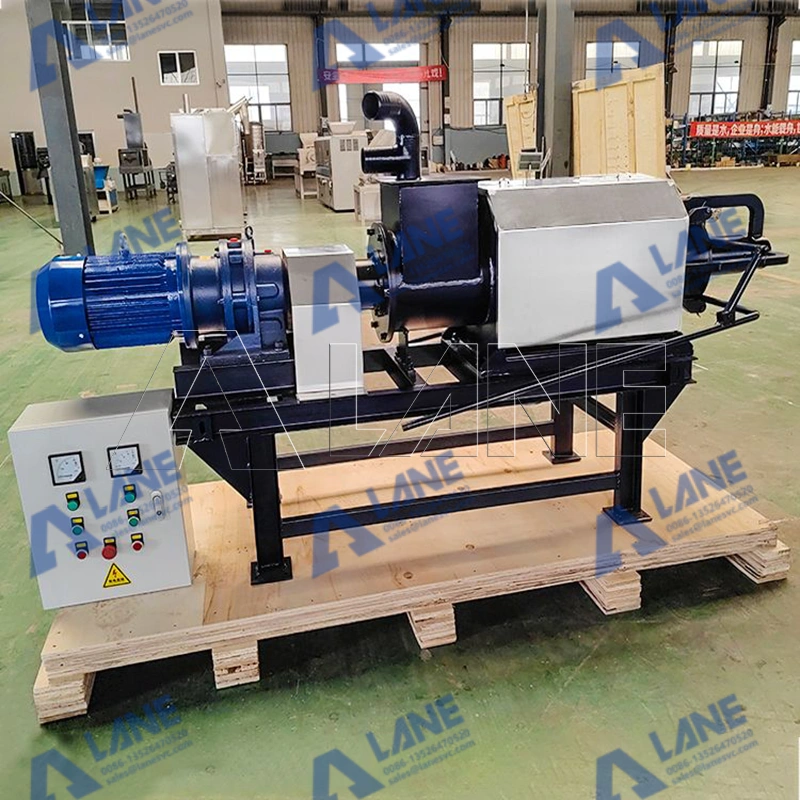
Fresh dairy manure typically arrives at 80 to 90 percent moisture, too wet to ferment or granulate. A solid-liquid separator brings the solids down to roughly 60 percent, and the liquid fraction goes to irrigation or further treatment. Size the separator on peak daily delivery, not monthly average. Manure arrives in batches, and the separator is the first bottleneck most plants hit.
Step 2 – Composting and Stabilization
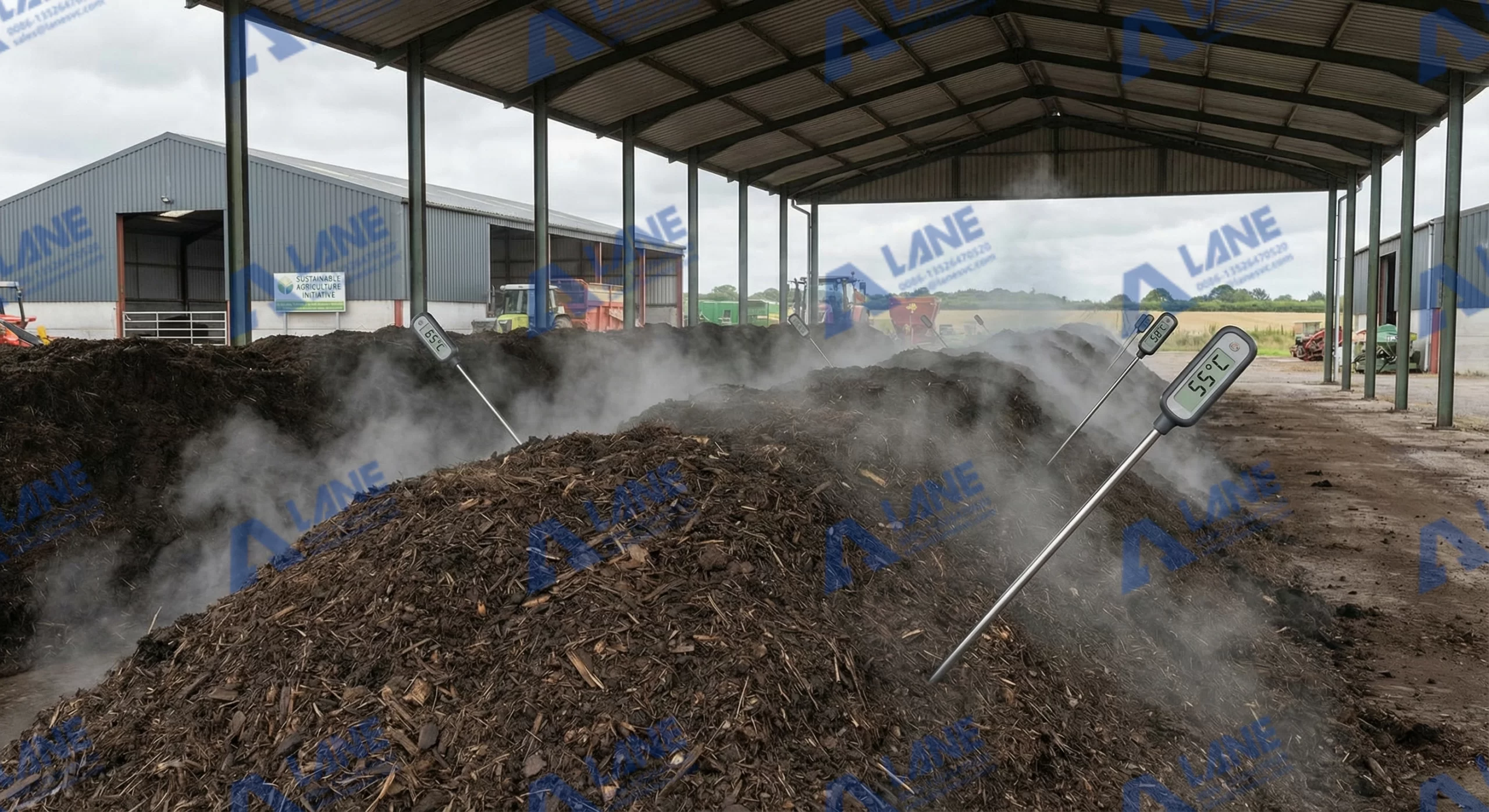
Raw manure must be fermented before it can be sold as a stable organic fertilizer. A working windrow system holds the pile in the thermophilic range, commonly 55 to 65 °C for several consecutive days, which cuts pathogen load and destroys most weed seeds. Operators turn the pile two or three times a week with a compost turner machine until the material cools and stabilizes. Under-fermented compost is the usual cause of odor complaints, moldy bags, and product that heats up in the customer’s warehouse.
Step 3 – Crushing, Blending, and Granulation
Once fermented and dried to about 25 to 35 percent moisture, material passes through a crusher and a horizontal mixer. This is where product differentiation happens: bentonite or clay as a binder, humic acid, zeolite, dolomite for pH correction, microbial inoculants, or a measured share of NPK to build an organic-inorganic blend. The blended powder then feeds an organic fertilizer granulator, which sets granule size, granule strength, and how efficiently the rest of the line runs.
Step 4 – Drying, Cooling, Screening, and Bagging
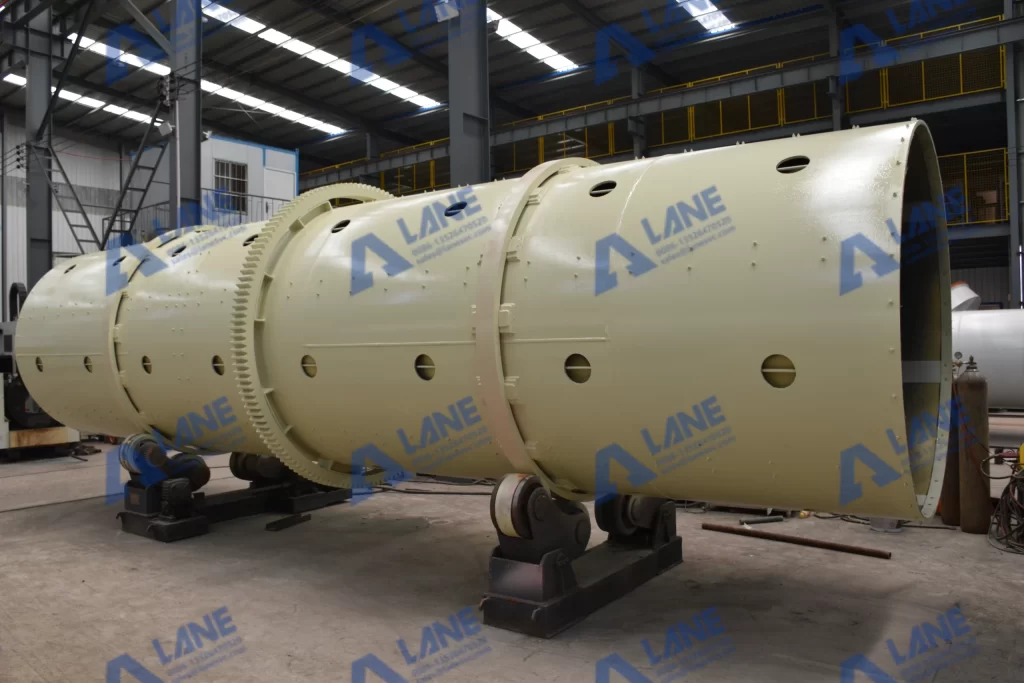
Wet granules enter a rotary dryer where inlet air temperature is controlled tightly enough to protect heat-sensitive additives. A counter-flow cooler brings them to ambient temperature and firms their structure. A trommel screen returns oversize and undersize material to the mixer, a coating drum applies an anti-caking agent, and an automatic packaging machine fills 25 kg or 50 kg bags, or jumbo bags for bulk shipment.
Treat the line as a chain of material-handling steps rather than a list of machines. Output is set by the narrowest unit, so throughput figures in a quotation should reconcile from separator to packing scale. A supplier who quotes 5 t/h at the granulator and 3 t/h at the dryer is selling a 3 t/h plant.
| Stage | Core equipment | Function | What to check in the quote |
|---|---|---|---|
| Feedstock preparation | Solid-liquid separator, crusher | Reduce moisture, cut particle size | Peak versus average capacity, screen-plate material |
| Fermentation | Compost turner machine, aerator, controls | Stabilize material, control temperature | Turning width, windrow capacity, level of automation |
| Blending | Horizontal mixer, batching scale | Add binders, minerals, nutrients | Mixing uniformity, weighing accuracy |
| Granulation | Organic fertilizer granulator | Form granules at target size | Granule strength, wear-part design, moisture tolerance |
| Finishing | Rotary dryer, cooler, trommel screen, coating drum | Dry, cure, size, surface-treat | Heat source, dust control, screening efficiency |
| Packing | Automatic bagging machine | Weigh, seal, palletize | Weighing tolerance, bag types, dust extraction |
The choice of organic fertilizer granulator determines how much drying capacity the plant needs, and drying is the largest energy cost in the line.
| Granulator type | Feed moisture | Typical fit | Trade-off |
|---|---|---|---|
| Disc pan granulator | 25-35% | Organic fertilizer, medium capacity | Low capital cost, round granules; sensitive to moisture swings |
| Rotary drum granulator | 25-40% | Larger organic and organic-inorganic lines | High output, robust build; wider granule size distribution |
| Flat-die extrusion granulator | 12-20% | Dry granulation without a dryer | Requires pre-drying, but removes dryer fuel cost |
| Roller press (dry granulation) | Below 10% | High-nutrient blends | Minimal drying; depends heavily on binder selection |
Most lines between 1 and 10 t/h use a disc pan or rotary drum organic fertilizer granulator, because fermented cow manure already sits at 25 to 35 percent moisture and a dryer is installed for final moisture control. Dry the compost first and extrusion becomes viable, which cuts drying fuel use substantially.
Start from annual tonnage and convert to hourly output using your real shift pattern. A 5 t/h line running 8 hours a day for 300 days produces about 12,000 tons per year before downtime and startup losses, so add 15 to 20 percent headroom for seasonal peaks.
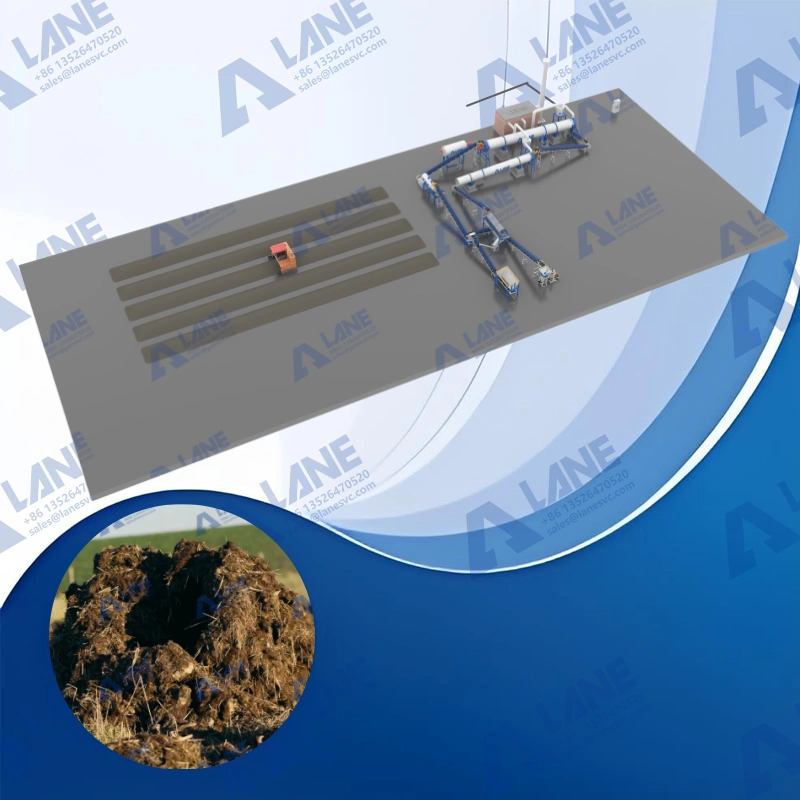
Then check the three constraints that sink under-planned projects: land, power, and storage. As a planning rule of thumb, allow 1,500 to 4,000 m² for a 1 to 5 t/h cow manure fertilizer production machine line including fermentation and curing, then confirm the figure against the supplier’s layout drawing. Machinery power typically falls between 150 and 500 kW, with the dryer and cooler as the largest loads. Size the fermentation bay around the working width of the compost turner machine, and budget curing space and finished-goods storage, which are routinely left out of the first proposal.
Two quotations for the same nominal capacity can differ by a factor of two, and the difference is rarely the organic fertilizer granulator. It hides in steel thickness and grade, automation level (PLC control, batching accuracy, automatic packing), dryer heat source (coal, biomass, gas, oil, or steam), dust and odor abatement, civil works, electrical installation, freight, and duty.
Ask for an itemized bill of materials with equipment weights and component brands, plus separate line items for installation supervision, commissioning, training, and first-year spare parts. A supplier who cannot itemize is usually reselling an unspecified package. Compare total installed cost, not equipment price, when you compare quotes for a cow manure fertilizer production machine.
Wear parts drive the maintenance budget: crusher hammers and screens, mixer paddles, granulator discs or dies, dryer flights and seals, screen meshes, and bagging machine belts. A compost turner machine adds its own wear list through the flails, drum, and drive chain. Ask for a recommended first-year spare parts list and keep a six-month consumable stock on site.
One habit protects uptime more than any upgrade: monitor feed moisture at the granulator instead of reacting to blockages. Most production losses in organic fertilizer plants trace back to inconsistent feed moisture, not equipment failure.
This short list separates a supplier who will deliver a working cow manure fertilizer production machine line from one who ships a container of parts and disappears.
Granulated manure fertilizer sells into orchards, vineyards, tea and tobacco plantations, vegetable production, turf, and landscaping. Blended with mineral nutrients it becomes an organic-inorganic compound fertilizer for higher-analysis markets. Nutrient content varies with animal diet, bedding, storage, and fermentation losses, so batch testing for N-P-K, organic matter, moisture, and pH should be a fixed QC step before any label is printed.
Check the registration pathway before you design the bag. In the EU, fertilising products placed on the market must satisfy Regulation (EU) 2019/1009. In the United States, state fertilizer registration and labeling rules apply.
This is a planning reference for scoping discussions, not a quoted project. A 5 t/h line built around cow manure typically includes a solid-liquid separator, a fermentation area with a turner, crusher, mixer with batching, organic fertilizer granulator, dryer, cooler, screener, coater, dust collection, and automatic packing. Manufacturing usually takes 60 to 90 days, sea freight adds 25 to 45 days, and on-site installation and training take 20 to 40 days once civil works and power are ready.
How much does a cow manure fertilizer production machine cost?
Price follows capacity, automation, and materials, not any single component. A 1 t/h line with a biomass dryer sits at the low end, while a 5 to 10 t/h line with PLC control and dust collection costs several times more. Ask for an itemized bill of materials, then budget civil works, installation, and freight separately.
How much manure does it take to make one ton of fertilizer?
Work on dry matter. Fresh manure at roughly 20 percent dry solids needs about four to five tons to yield one ton of finished fertilizer, because most of the weight is water. Added binders or nutrients change that ratio.
Do I have to compost cow manure before granulating it?
For a sellable organic fertilizer, yes. Unfermented manure stays unstable and tends to odor, mold, or heat up in storage, and fermentation reduces pathogen load and weed seeds. The pile also needs regular turning to stay aerobic, which is what a compost turner machine is built for.
What moisture content does the material need before granulation?
It depends on the machine. Disc pan and rotary drum organic fertilizer granulators run best with feed at 25 to 35 percent moisture, while extrusion and roller press machines need feed below 15 percent. On most cow manure fertilizer production machine lines, consistency matters more than the exact figure.
Can cow manure be mixed with NPK or other additives?
Yes, and many profitable lines do exactly that. Common additions include urea, monoammonium phosphate, potassium sulfate, bentonite as a binder, humic acid, zeolite, and microbial agents. Dose additives by weight, not volume, or the nutrient analysis will not match the label.
What certifications should the equipment carry?
Look for ISO 9001 from the manufacturer, CE marking for EU delivery, and machinery safety designed to the ISO 4254 series. Confirm electrical components meet your local code, and ask for a signed factory acceptance report before the containers are sealed.
Give any supplier five data points and the conversation shifts from a catalog exchange to an engineering discussion: feedstock type and moisture, daily tonnage, finished granule specification, dryer fuel available on site, and whether the output is for sale or internal use. Those answers set the capacity of a cow manure fertilizer production machine line, its layout, and its equipment list.

Everything you need to know when looking at different types of organic fertilizer equipment, all in one place.
Copyright © 2026. LANE All rights reserved.
Send A Message