
Compare organic fertilizer plant cost by capacity, process, and equipment scope, and learn how to budget for composting, granulation, permits, and operating expenses.
The first question most investors ask about an organic fertilizer project is simple: what does an organic fertilizer plant cost? The useful answer is not a single number. It is a framework that separates the equipment budget from the site, the permits, the raw materials, the energy, and the working capital a plant needs before it produces its first bag.
This guide is written for fertilizer manufacturers, plant investors, engineers, procurement managers, and project contractors. It covers cost drivers at every stage, the powder versus granular gap, hidden costs after commissioning, and supplier questions that protect a project from an optimistic quote.
Organic fertilizer production is attractive for a practical reason: raw materials are often close to the market. Livestock manure, crop residues, food waste, sludge, and municipal organic waste can be converted into a stable product instead of being treated as disposal. The FAO has published guidance on manufacturing organic fertilizer from agricultural and household waste, and the EU has harmonized rules for compost used in fertilizing products.
Those factors have pushed more investors to compare organic fertilizer production line cost against chemical fertilizer plant cost. The comparison is rarely direct. A chemical plant is dominated by reaction vessels and acid handling. An organic fertilizer plant is dominated by biological processing, moisture management, and physical upgrading.
Buyers who start with equipment prices often underbudget. Site preparation, buildings, permits, raw material inventory, installation, training, and working capital can add 20 to 50 percent to the total. Suppliers who publish transparent planning ranges usually say this in the same paragraph as the equipment number.
This is why comparing only equipment misses a large part of organic fertilizer plant cost.
A complete organic fertilizer plant cost estimate has more components than a machinery list.
Land and site preparation
The plant needs space for raw material receiving, composting or fermentation, curing, processing, product storage, and vehicle movement. Land purchase or lease, grading, drainage, concrete aprons, and rain shelters are part of the capital cost. In many projects, site work costs more than expected because the composting area cannot be a dirt field if the product has to meet a quality standard.
For most projects, land is the first organic fertilizer plant cost that must be confirmed before equipment selection.
Buildings and civil works
Buildings are a second organic fertilizer plant cost component that suppliers often leave out of the equipment quote. Equipment suppliers commonly estimate buildings at 15 to 20 percent of the equipment cost. A closed fermentation building controls odor and weather, and a processing hall protects the crusher, granulator, dryer, and packaging line from rain and dust.
Equipment
Equipment is the visible part of organic fertilizer plant cost, but the process scope determines it. A powder line needs composting, crushing, mixing, screening, and packaging. A granular line adds granulation, drying, cooling, and recycle handling.
Permits, compliance, and environmental controls
The compliance layer is an organic fertilizer plant cost that suppliers do not include in a machinery quote. Odor control, dust collection, wastewater handling, and product contaminant limits are not optional add-ons. Under Regulation (EU) 2019/1009, compost used in an EU fertilizing product must meet defined input material and process requirements. A buyer planning exports needs to budget for the testing, documentation, and process controls that support that compliance.
Raw material inventory and working capital
Raw materials are usually the largest operating cost, and a plant needs inventory before it starts. Suppliers typically recommend budgeting for three to four weeks of production capacity in raw material plus enough working capital for payroll, utilities, packaging, and maintenance. Working capital is the organic fertilizer plant cost that banks and investors usually examine first. This is also the part of organic fertilizer plant setup cost that is easiest to ignore.
Installation, training, and commissioning
Installation and operator training commonly add 5 to 10 percent to the equipment cost. Installation and training are an organic fertilizer plant setup cost that belongs in the contract, not in a surprise change order. A line that arrives without commissioning support can lose weeks of production during startup.
The process route decides how much of the budget goes to biology and how much goes to mechanical equipment. The process route also changes organic fertilizer production line cost more than capacity alone in many projects.
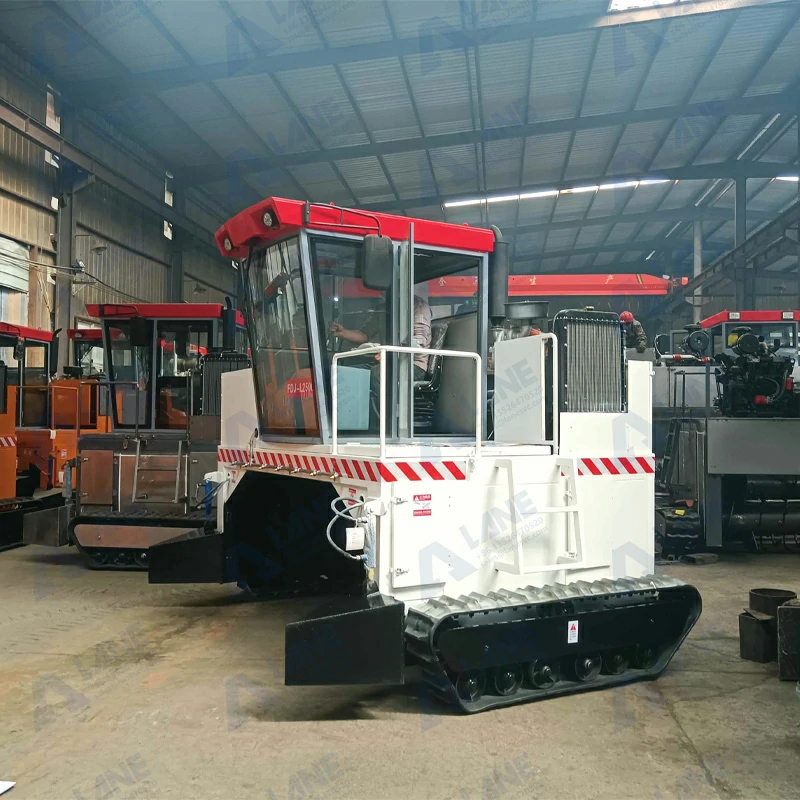
The biological stage converts raw organic waste into stable compost and controls pathogens, weed seeds, and odor. The main options are windrow composting with a compost turner and tank fermentation in a closed building. Windrow composting is usually lower capital. Tank fermentation costs more but gives better process control and odor containment.
Composting quality is a cost driver even when the equipment is simple. Temperature, moisture, carbon-to-nitrogen ratio, and turning frequency decide whether the material matures in weeks or months. A failed batch is lost capacity and a possible contamination risk.
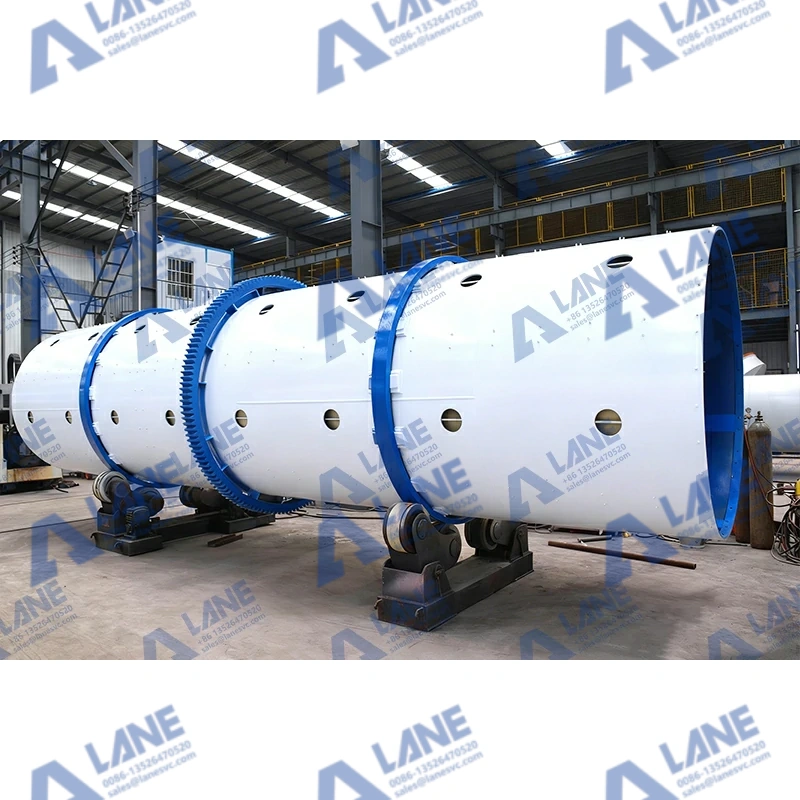
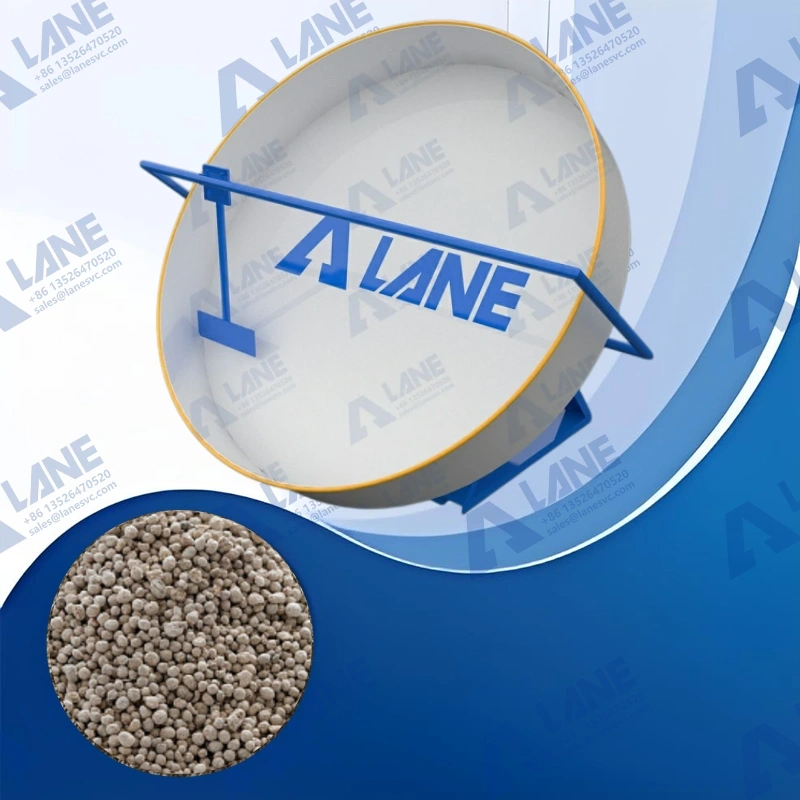
Granular product sells at a premium to powder in most markets, but it changes the capital picture. Granulation is where the biggest organic fertilizer plant cost difference between powder and granular appears. The granulator itself is usually a large share of the line investment.
The granulation route also decides whether the line needs a dryer and cooler. Wet granulation produces moist granules that require drying. Dry extrusion can skip drying for suitable materials, which lowers energy cost and footprint, at the cost of a different granule shape and roller wear.
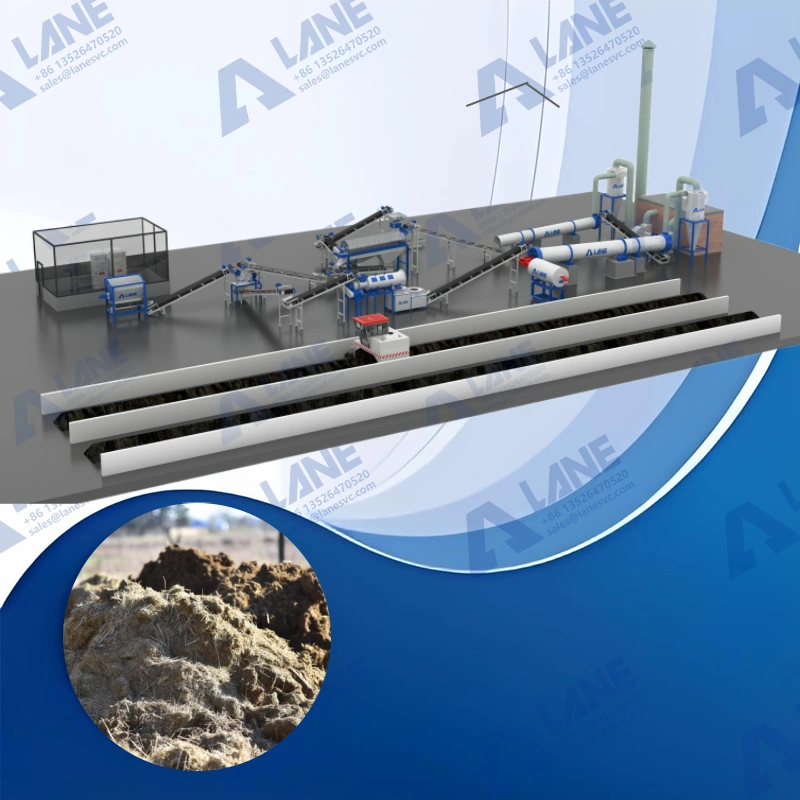
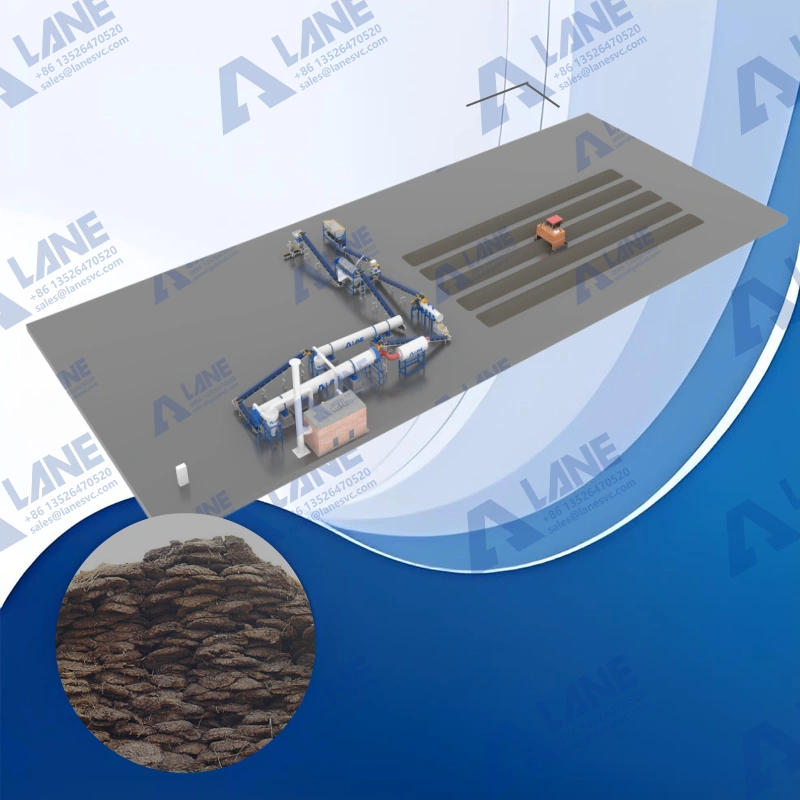
Equipment selection is the largest single driver of organic fertilizer production line cost. The equipment list for a complete organic fertilizer production line typically includes:
LANE Machinery publishes a turnkey organic fertilizer production line with capacity from 0.5 to 100 tons per hour on request, installed power of 120 to 350 kW, adjustable particle size of 1 to 5 mm, and a five-year warranty. Installed power matters for budgeting because electrical infrastructure and energy bills follow the equipment configuration.
The price drivers are capacity, material of construction, automation, and whether the line includes drying.
The cheapest way into organic fertilizer production is a powder line, which lowers organic fertilizer plant setup cost by removing the most expensive process stages. A powder line avoids granulation, drying, and cooling, which removes the most expensive equipment and the largest energy consumer. The gap between powder and granular is the largest organic fertilizer production line cost decision a buyer makes.
Granular lines cost more because they add value the market pays for. Granules handle better in spreaders, store with less dust, blend predictably, and usually sell at a higher price per ton. The payback question is whether the premium covers the extra capital and energy. For a pilot operation, starting with powder and adding granulation later is a lower-risk path.
Buyers should model both routes before deciding. The comparison is not powder cost versus granular cost. It is powder margin versus granular margin, including working capital, drying energy, and maintenance.
Site and compliance costs are where many organic fertilizer plant budgets fail.
Odor and emission control
Composting produces ammonia, moisture, and odor. Facility decisions add to organic fertilizer plant setup cost, but they protect the product and the permit. A closed fermentation building with negative pressure and a biofilter costs more than open windrows but reduces complaints and regulatory pressure. Dust collectors protect workers and keep product quality consistent.
Product compliance
If the product is sold as an organic fertilizer, the buyer needs to know the contaminant and labeling rules for the destination market. Regulation (EU) 2019/1009 includes compost in its component material categories, so input materials and the aerobic composting process must meet defined conditions. In other markets, national rules apply. Testing for heavy metals, pathogens, and nutrient content belongs in the operating budget.
Environmental permits
Waste handling and fertilizer production usually require environmental permits before construction. Approval timelines vary by region, so start early and ask the supplier what documentation they can provide.
Operating cost for an organic fertilizer plant follows the process:
Published supplier guidance gives different payback expectations because market conditions differ. ABC Machinery estimates small plants at $50,000 to $100,000 with a two to three year payback, and larger plants at $150,000 to $500,000 with shorter payback in strong markets. These are planning ranges, not guarantees. Payback should be calculated against the full organic fertilizer plant setup cost, not the equipment invoice. The real payback depends on raw material cost, selling price, utilization, and the cost of capital.
The most dangerous assumption is utilization. A plant designed for 10 tons per hour that runs 5 will not recover capital on schedule. Match the first phase of capacity to confirmed demand, then add equipment as sales grow.
The process is biological and mechanical at the same time, which creates a maintenance profile different from a chemical plant. Maintenance is a recurring organic fertilizer plant cost that grows with throughput.
Operators need to understand why temperature, moisture, and carbon-to-nitrogen ratio matter. A trained operator catches a slow batch before it becomes a full production loss. LANE includes commissioning and operator training in its turnkey scope.
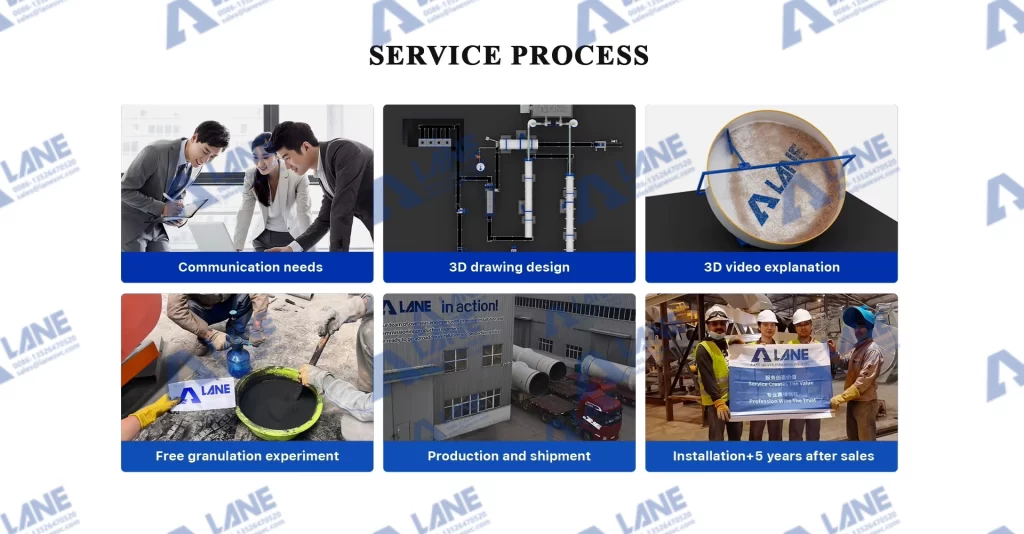
Organic fertilizer production line cost quotes are easy to compare on paper and hard to compare in reality, because the scope differs. A quote that omits commissioning and installation is not a complete organic fertilizer plant cost. Comparing organic fertilizer production line cost quotes requires identical scope from every supplier.
Ask for the same information from every supplier:
A low price usually means a smaller scope. Find the supplier who can explain what each component costs to operate, not just what it costs to buy.
LANE Machinery publishes project examples that show how capacity and raw material shape the line. A 3 tons per hour chicken manure line in the USA, a 5 tons per hour sludge line in Kazakhstan, and a 1.8 tons per hour black soldier fly line in Vietnam all run the same core process with different pretreatment and granulation choices.
What equipment is needed for a small organic fertilizer plant?
A small plant needs raw material storage, a compost turner or fermentation tank, a crusher, a mixer, a screening machine, and a packaging machine. A granular line adds a granulator plus a dryer and cooler for wet granulation.
The main hidden costs are site preparation, buildings, permits, environmental controls, raw material inventory, installation, training, and working capital. Huaxin advises budgeting 20 to 50 percent above the equipment number for the full organic fertilizer plant setup cost.
How much does it cost to produce organic fertilizer per ton?
Cost per ton varies with raw material price, moisture, energy, labor, and utilization. Drying energy is the biggest variable for granular product. Ask the supplier for an operating cost model based on your feedstock, not a generic estimate.
Can I use windrow composting instead of a fermentation tank to save money?
Yes, for many small and medium plants. Windrow composting with a turner has lower capital cost than tank fermentation. Tank fermentation costs more but improves process control and odor containment.
Do I need environmental permits to build an organic fertilizer plant?
Most markets require permits for organic waste handling and fertilizer production. Odor, dust, wastewater, and product contaminant limits are common concerns. Start early and confirm what documentation the supplier can provide.
How do I choose an organic fertilizer production line supplier?
Compare process design, written equipment scope, references, commissioning support, spare parts policy, and documentation. Ask for the same information from every supplier and compare total installed cost, not equipment price alone.
Organic fertilizer plant cost is not a number that can be copied from another project. It is a budget built from the raw material, the product form, the capacity, the site, and the market. Build the organic fertilizer plant setup cost model before you compare quotes. The suppliers who publish ranges are giving a starting point; the buyer who builds a proper cost model is the one who gets a plant that pays for itself.
Start with the feedstock and the sales plan. Choose the process route that matches both. Then compare suppliers on scope, not sticker price.
For more detailed information about this topic, please refer to our complete guide: [Organic Fertilizer Production Line: Complete Guide to Manufacturing, Equipment & Plant Cost]

Everything you need to know when looking at different types of organic fertilizer equipment, all in one place.
Copyright © 2026. LANE All rights reserved.
Send A Message