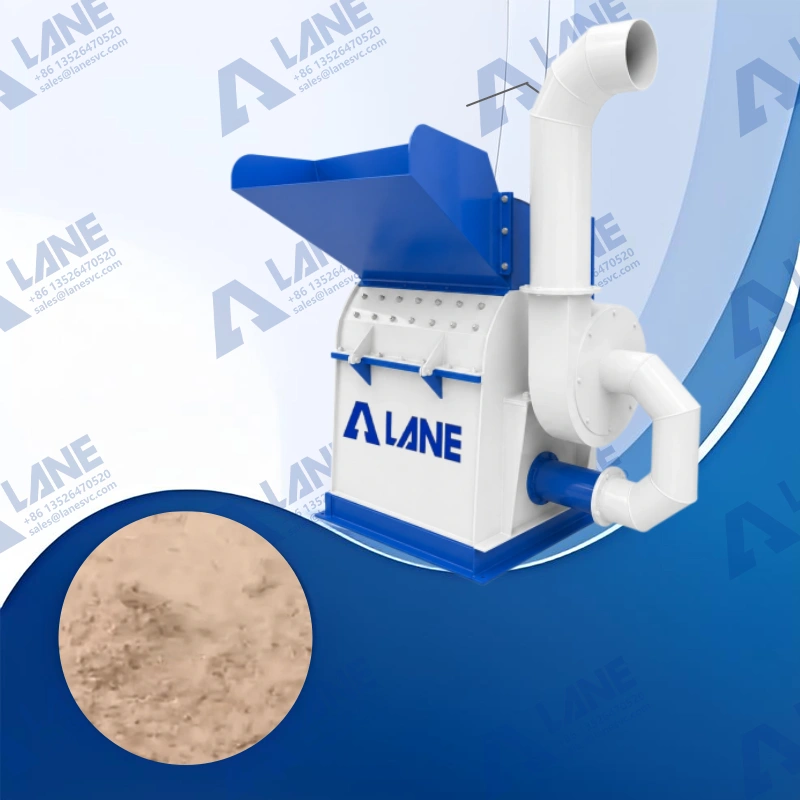
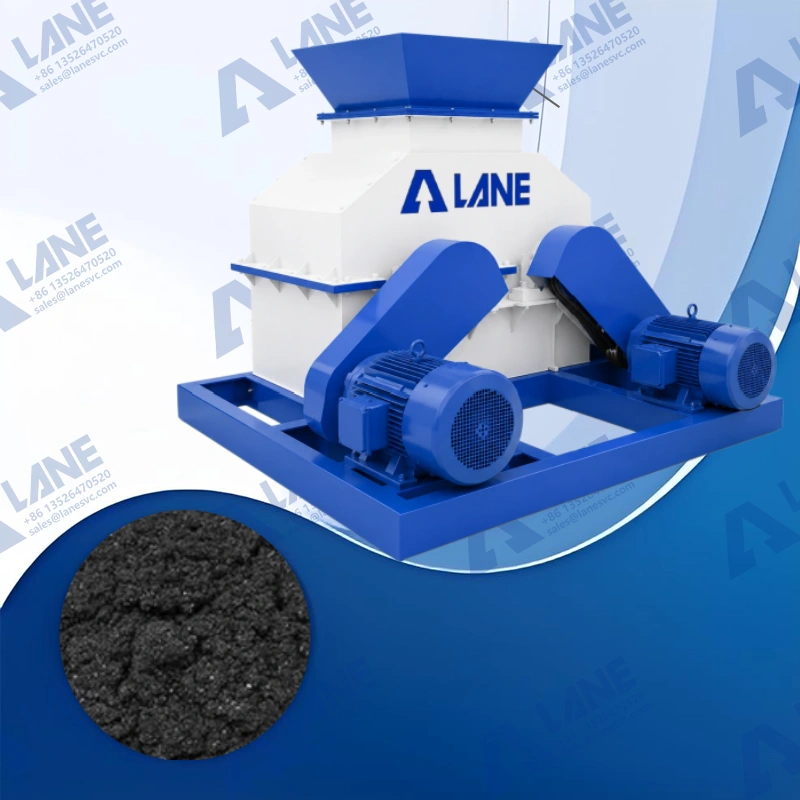
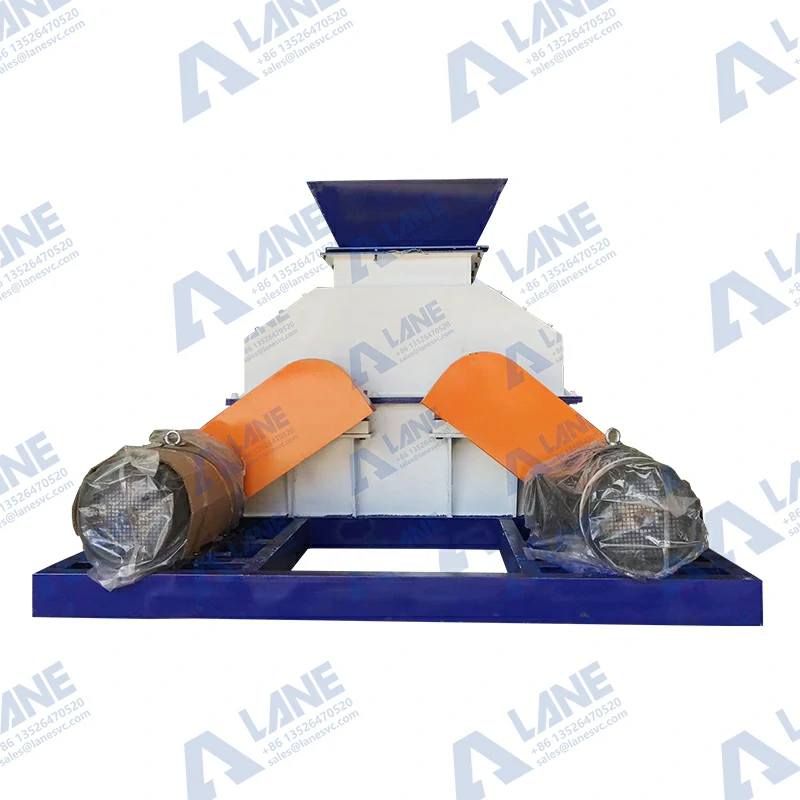
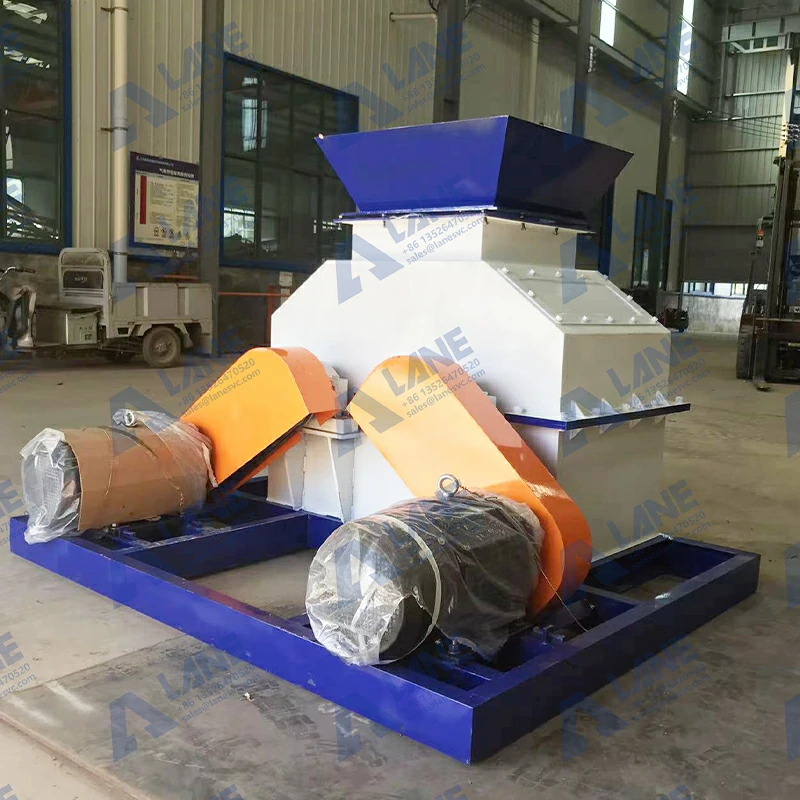
Chain Crusher for crushing fertilizer raw materials and bulk materials. Processes fertilizer lumps, phosphate rock, compost, and compound fertilizer into uniform particles. High-speed chain impact design ensures efficient crushing for fertilizer production and granulation.
Compound fertilizer cakes during storage — every plant knows it. Those hardened NPK lumps either get scrapped or jam your line. The LANE chain crusher breaks them back down to granulation-ready size using high-speed rotating chains, gently enough to avoid over-grinding, fast enough to keep up with your line.
Available in vertical single-rotor and horizontal twin-rotor configurations to match your capacity and layout.
Rigid hammers smash material into dust. Flexible chain links strike with controlled force, breaking lumps along their weak points. The result: more usable granules, less powder loss, less dust in your workshop.
Contact parts are made from corrosion-resistant, wear-resistant alloy suited to urea, ammonium salts, and blended NPK — materials that quickly eat through ordinary carbon steel.
The flexible chains sweep the chamber as they rotate, reducing material buildup on the walls — a common failure mode with damp, salty fertilizer materials.
Chains are standard consumable parts, replaceable without dismantling the machine body. Keep a spare set on the shelf and change-out takes minutes, not shifts.
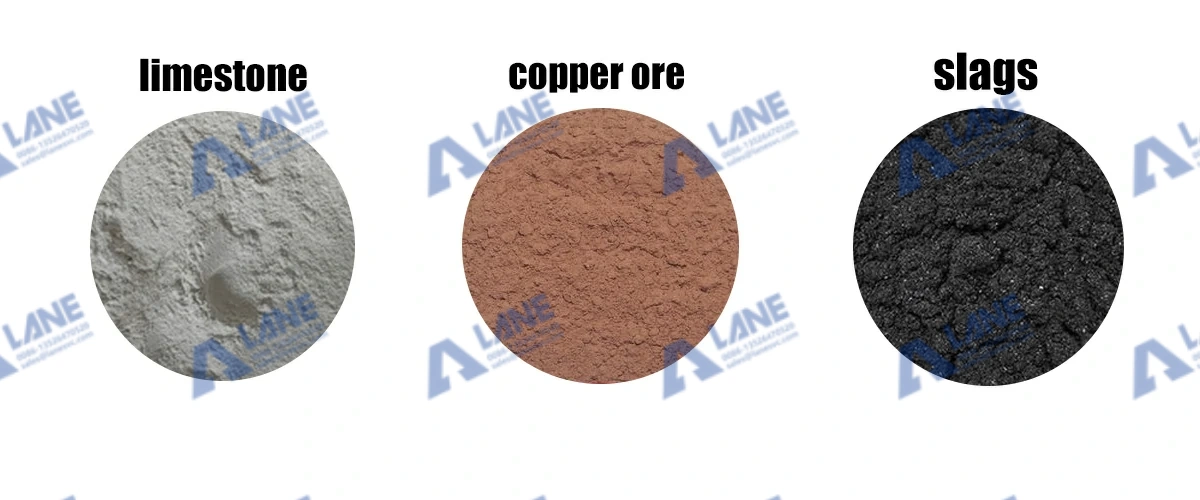
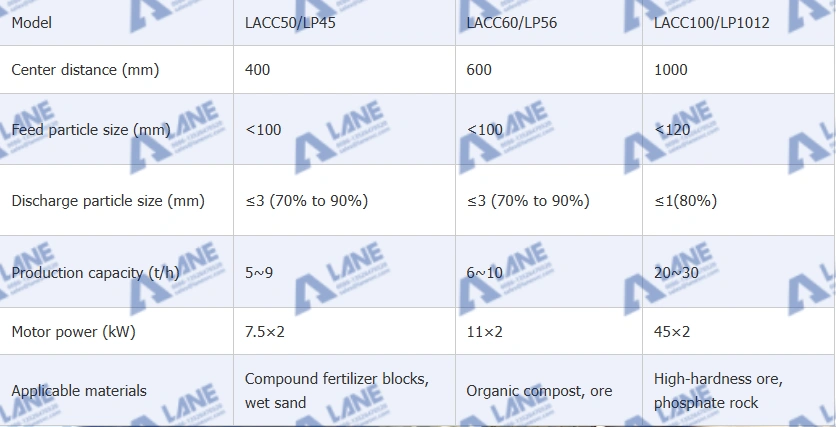
Recommended feed moisture ≤15%. For wetter materials see our Semi-Wet Material Crusher.
Q: Vertical or horizontal — which should I choose?
A: Choose by capacity and space. Under ~6 t/h with limited floor space, the vertical model is usually the answer. Above that, the horizontal twin-rotor gives finer output and higher throughput. Email us your numbers and we’ll confirm.
Q: Will it handle slightly damp material?
A: Yes, up to roughly 15% moisture. Beyond that, chains start to smear rather than shatter — for wet organic material, use our semi-wet material crusher instead.
Q: How long do the chains last?
A: Chains are wear items; life depends on material hardness and running hours. They’re inexpensive, standardized, and swappable in minutes — we include spare sets with each machine.
Q: Does it create a lot of dust?
A: Less than hammer-type crushers, because chain impact avoids over-grinding. For dust-sensitive workshops, the inlet and outlet can be connected to your dust collection system.
Email us (1) your material and lump size, (2) required capacity, (3) available floor space — we’ll recommend vertical or horizontal, with drawings and pricing.
Get Your Chain Crusher Solution


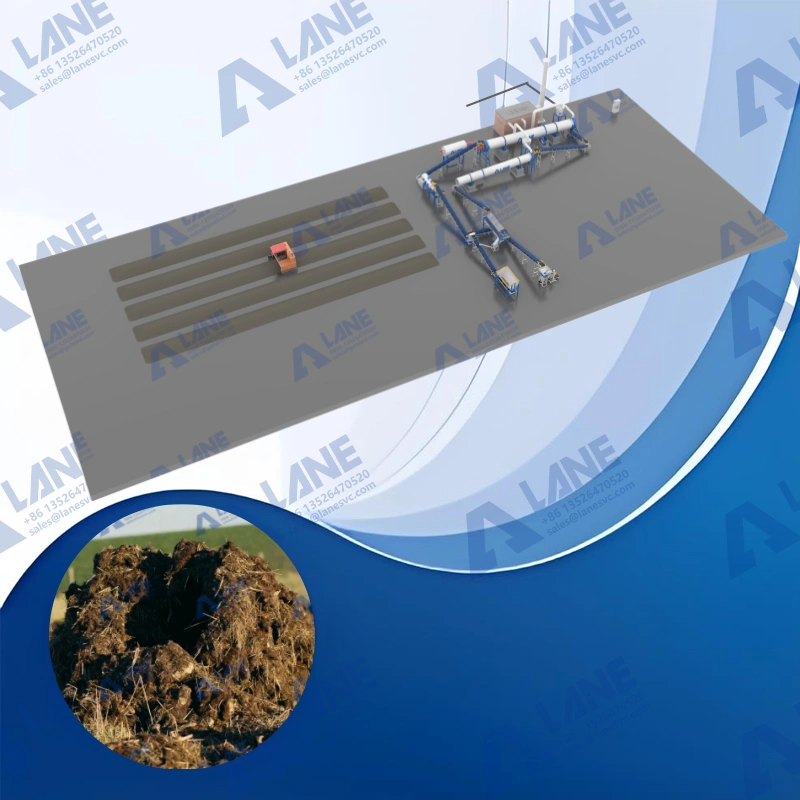
Everything you need to know when looking at different types of organic fertilizer equipment, all in one place.
Copyright © 2026. LANE All rights reserved.