CIJ and TIJ inkjet coding machines for fertilizer bags, bottles and drums, with IP-rated enclosures, multi-line batch printing, barcodes and QR codes, CE certified.
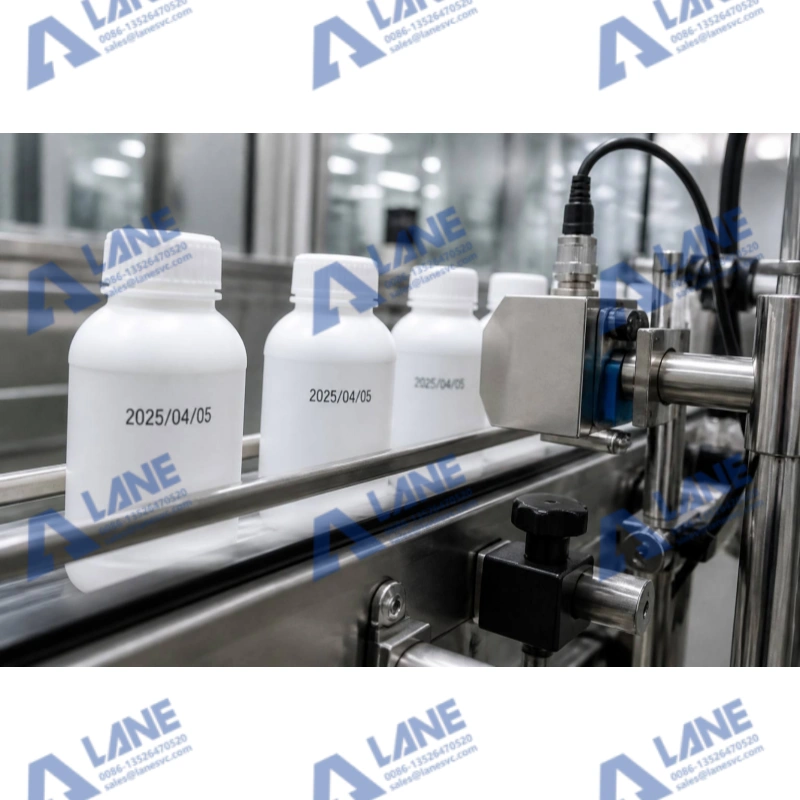
An inkjet coding machine prints the information that turns a filled fertilizer package into a traceable commercial product. Batch numbers, production dates, expiry dates, barcodes, QR codes, and brand logos are applied directly to bags, bottles, jerry cans, drums, cartons, and labels without slowing the packaging line.
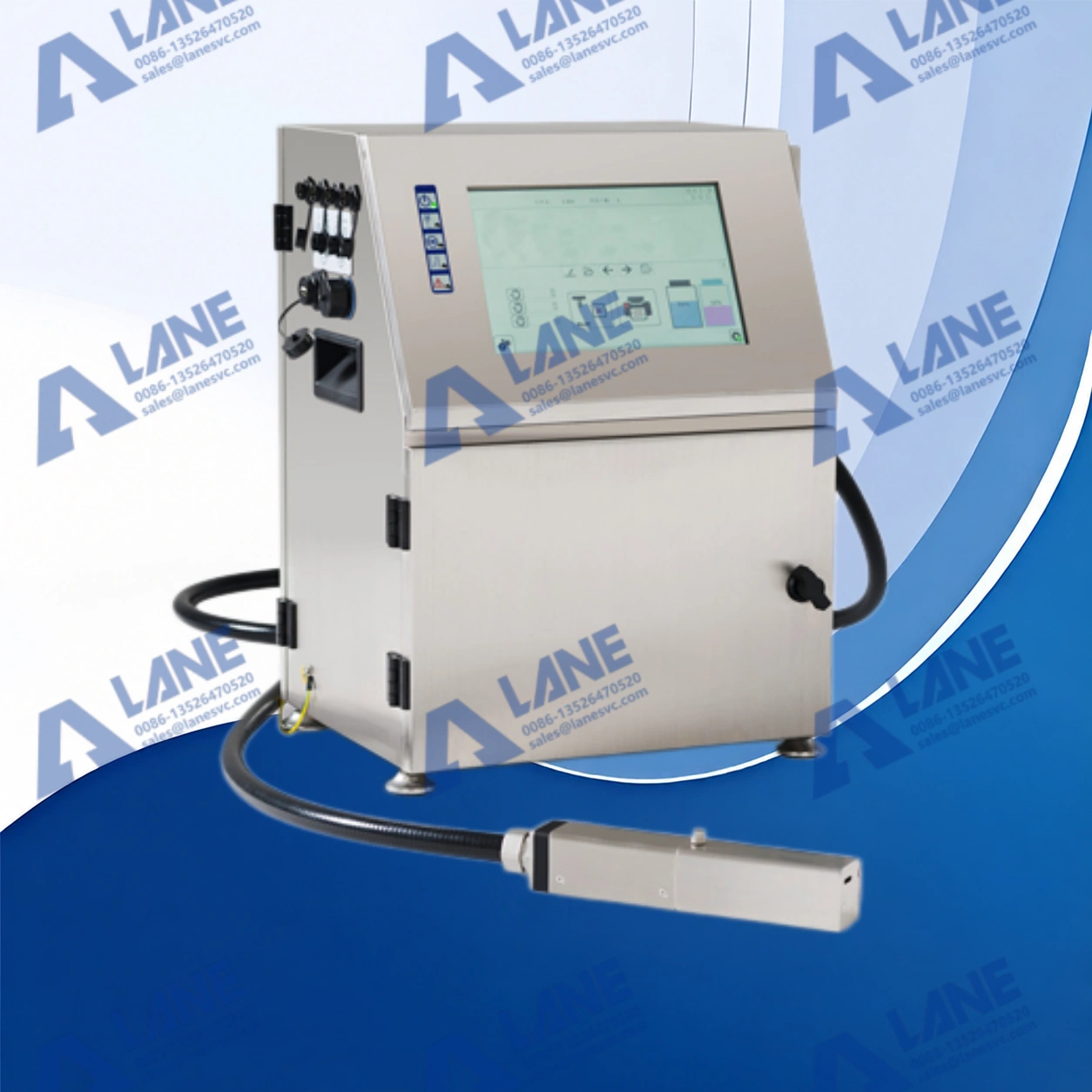
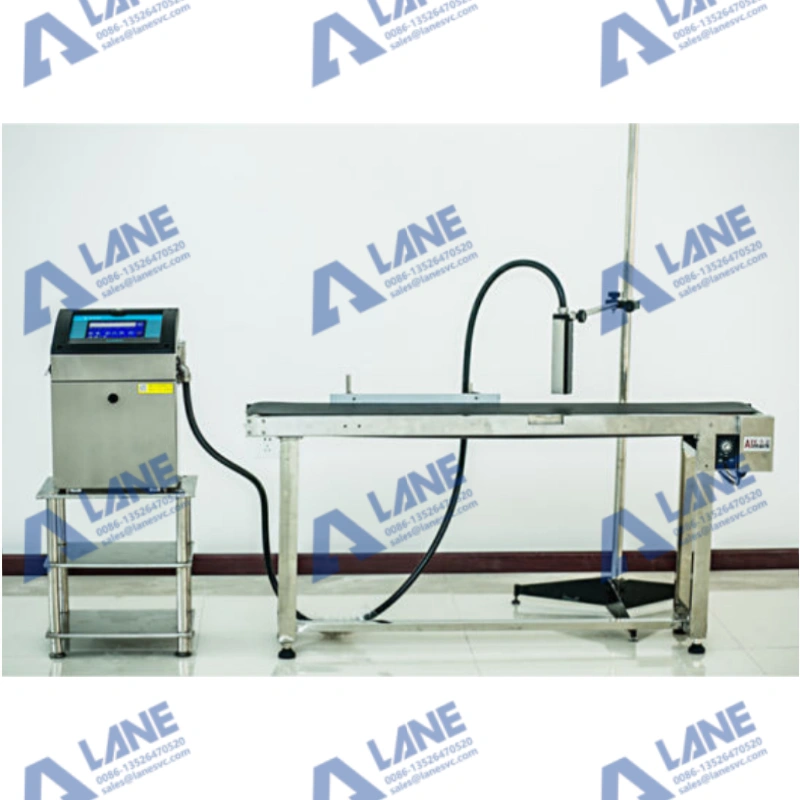
LANE Machinery supplies industrial inkjet coding machines for fertilizer packaging, including continuous inkjet (CIJ) and thermal inkjet (TIJ) models, with IP-rated stainless steel enclosures, multi-line printing, message storage, PLC integration, and optional print verification. The coding machine can be supplied as a standalone unit or integrated into a complete fertilizer filling and packaging line.
The LANE inkjet coding machine is a non-contact industrial printer designed for dusty, humid, and chemically challenging fertilizer production environments. It prints variable information directly onto packaging surfaces at production speed, eliminating the need for pre-printed labels for every batch.
Two technologies are available:
The machine enclosure is built with stainless steel and IP-rated protection so dust, powder, and cleaning spray do not damage the printhead or electronics.
The working principle depends on the print technology.
In a CIJ printer, ink is pumped under pressure through a small nozzle and broken into a continuous stream of droplets. Each droplet receives an electric charge, then passes through deflection plates that direct it to the correct position on the package. Characters are formed from rows of droplets while the package moves past the printhead. Unused ink is returned to the system and reused.
CIJ is non-contact and suited to high-speed bag and bottle lines, where the printhead can be positioned above or beside the conveyor.
In a TIJ printer, a thermal printhead ejects ink droplets on demand. This gives higher resolution for small text, barcodes, and QR codes, and is often used on flat or slightly curved surfaces at moderate speeds.
The coding machine receives a signal from a package sensor when a bag or bottle reaches the print position. An encoder tracks conveyor speed, and the PLC or print controller calculates the correct print timing. The result is a code placed at the same position on every package, even when line speed changes.
The inkjet coding machine is the traceability step at the end of the packaging line:
Filling machine -> Capping -> Labeling -> Inkjet coding machine -> Palletizing -> Warehousing
In this configuration:
LANE supplies the coding machine as a single unit or as part of a complete fertilizer filling and packaging line with buffer tanks, filling machines, capping machines, labeling machines, conveyors, and palletizing systems.
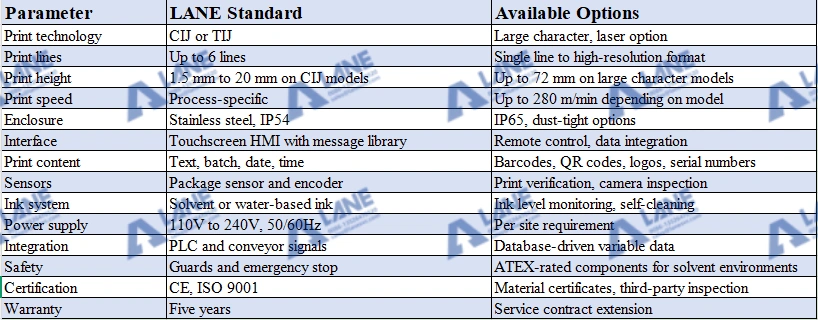
LANE supplies inkjet coding machines under an ISO 9001 quality management system and can provide CE-certified equipment. The machine is selected and configured for the packaging material, line speed, and plant environment, with inks and printheads matched to the substrate.
For fertilizer products exported to the European Union, the final product must meet Regulation (EU) 2019/1009 labeling requirements. The inkjet coding machine supports batch traceability, production dates, and variable data needed for compliance, and LANE confirms the coding configuration with the customer before delivery.
Henan Lane Heavy Industry Machinery Technology Co., Ltd. is a fertilizer equipment manufacturer with more than 20 years of engineering experience. LANE has delivered equipment and production lines to clients in more than 50 countries and supplied machines for a 100,000 tons per year national fertilizer project in Africa.
LANE provides one-stop service from packaging line layout and machine selection to overseas installation, commissioning, operator training, remote video guidance, and after-sales support. The same engineering team designs the filling line and the coding machine integration, which protects traceability and reduces changeover problems.
What is the difference between CIJ and TIJ coding machines?
CIJ prints by projecting charged ink droplets onto the package and is best for high-speed, non-contact coding on moving lines. TIJ uses a thermal printhead for higher-resolution text and 2D codes at moderate speeds. LANE recommends the technology based on your packaging and line speed.
Can the inkjet coding machine print on woven fertilizer bags?
Yes. CIJ models with suitable inks can print batch numbers, dates, and codes directly on woven polypropylene bags. Adhesion depends on the bag material and ink selection, and LANE confirms the configuration with your packaging sample.
What information can be printed?
The machine can print batch numbers, production dates, expiry dates, times, product codes, barcodes, QR codes, logos, and serial numbers. Variable data can be changed from the HMI or updated from the production database.
Can it work in a dusty fertilizer plant?
Yes. The machine uses an IP-rated stainless steel enclosure and corrosion-resistant components designed for dusty, humid, and chemically challenging environments.
How do I change the printed message?
Messages are stored in the HMI message library. An operator selects the product format, and the machine applies the correct text, barcode, or logo. On integrated lines, messages can be triggered automatically by the PLC.
Can the coding machine be integrated with my packaging line?
Yes. The machine connects to package sensors, an encoder, and PLC signals so printing stays synchronized with conveyor speed. Optional print verification checks that each code is present and readable.
What maintenance does an inkjet coding machine need?
Maintenance includes ink and filter checks, printhead cleaning, and nozzle maintenance. Models with self-cleaning and auto-maintenance systems reduce downtime, especially for seasonal fertilizer production.
What is the warranty and support?
LANE provides a five-year warranty under the equipment contract, spare parts support, operator training, and overseas installation and commissioning services.
Tell LANE your packaging type, line speed, printed content, and plant environment. Our engineering team will recommend the print technology, model, ink, and line integration, then provide a technical data sheet and quotation.

Everything you need to know when looking at different types of organic fertilizer equipment, all in one place.
Copyright © 2026. LANE All rights reserved.