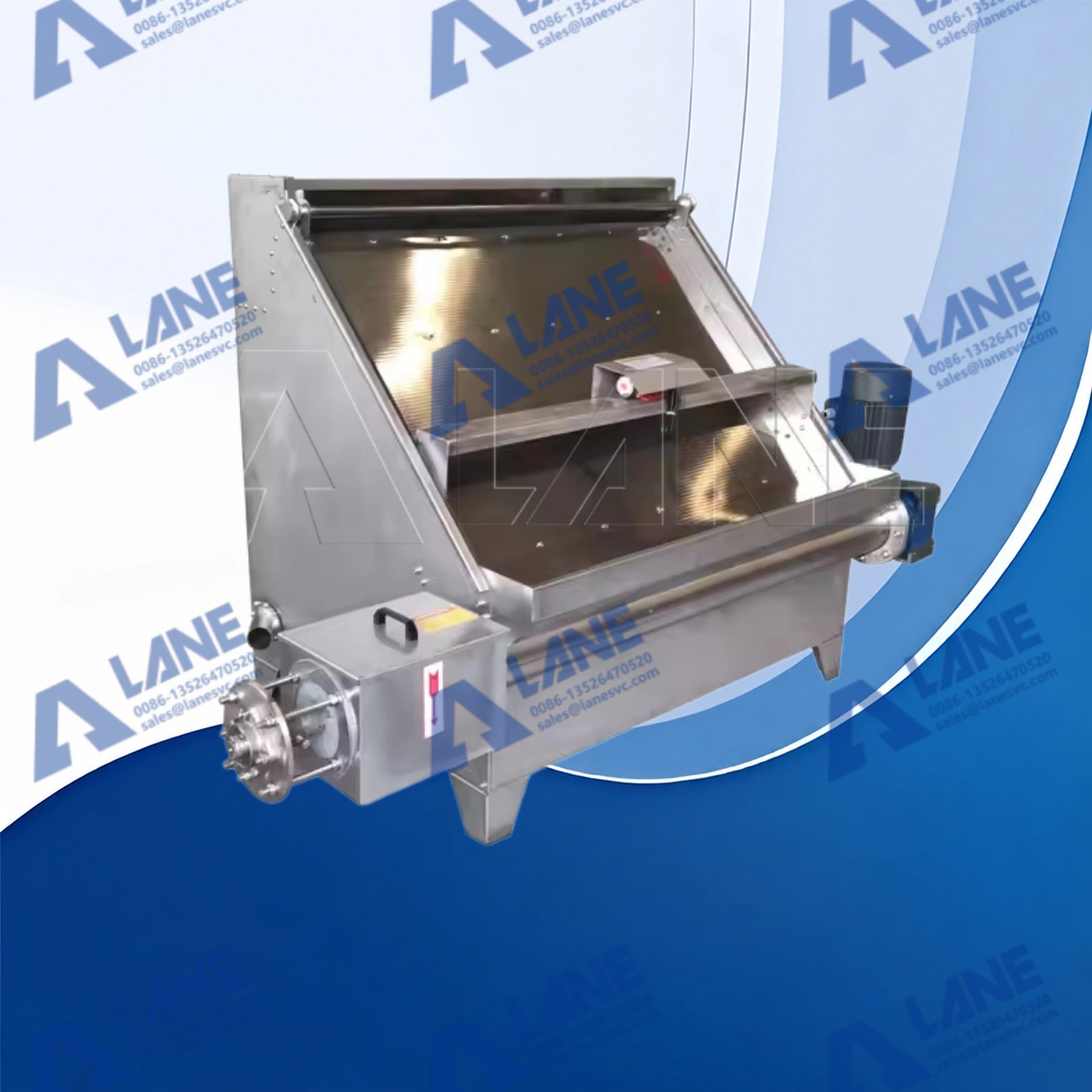
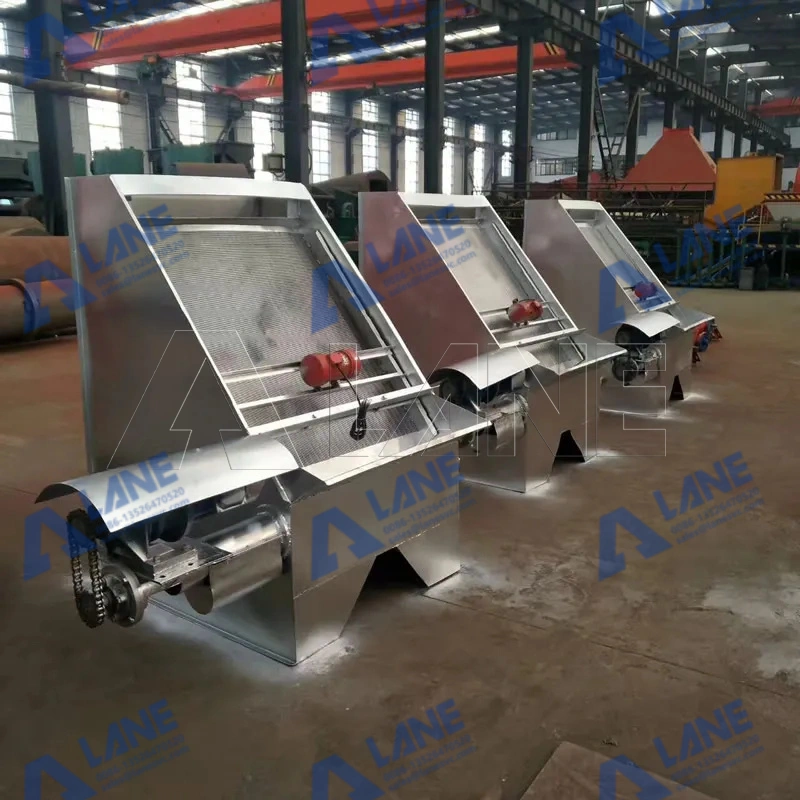
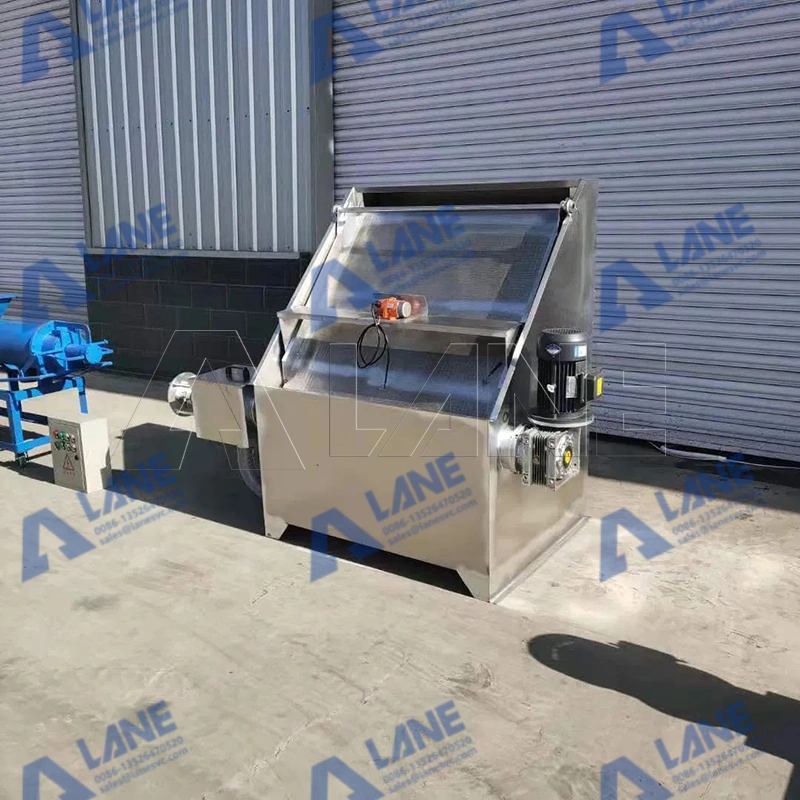
Inclined screen solid-liquid separator for manure, biogas slurry and organic waste, 15 to 50 m3/h, SS304 screen, adjustable moisture, CE and 5-year warranty.
An inclined dewatering machine is the first processing unit in many organic fertilizer and liquid fertilizer plants. It separates livestock manure, biogas slurry, food waste, and other high-moisture organic waste into a liquid fraction and a dewatered solid fraction, which can then be processed separately into liquid organic fertilizer and solid organic fertilizer.
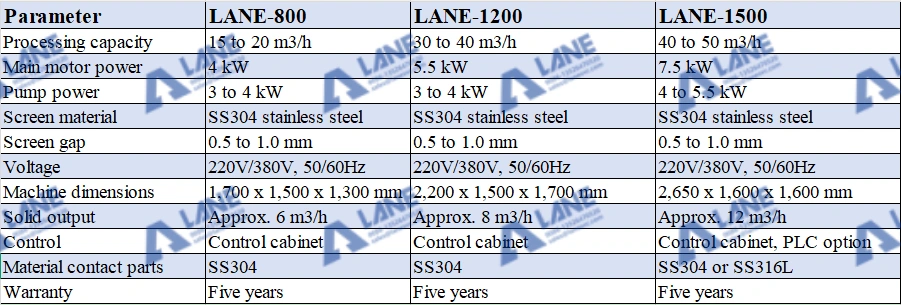
LANE Machinery supplies inclined screen solid-liquid separators with processing capacities from 15 to 50 m3/h, SS304 stainless steel screens, screw conveying and extrusion, vibration-assisted dewatering, and PLC-ready control. The machine can be supplied as a single unit or integrated into a complete organic fertilizer production line.
The LANE inclined dewatering machine is a gravity and pressure-based solid-liquid separator designed for wet organic materials with high water content. It combines an inclined screen, a screw conveyor, and a screw extruder to remove free water and reduce the moisture content of the solid fraction.
The machine is built for continuous operation in farms, biogas plants, food processing facilities, and organic fertilizer plants. The screen and all material-contact parts are made of corrosion-resistant stainless steel, which protects the equipment from manure acids and abrasive solids.
Typical processed materials include:
The working principle of the inclined dewatering machine combines gravity filtration and screw extrusion.
The separated liquid can be used as liquid organic fertilizer, biogas feed, or irrigation water after further treatment. The separated solids are suitable for composting, mixing with bulking agents, or direct use as solid organic fertilizer.
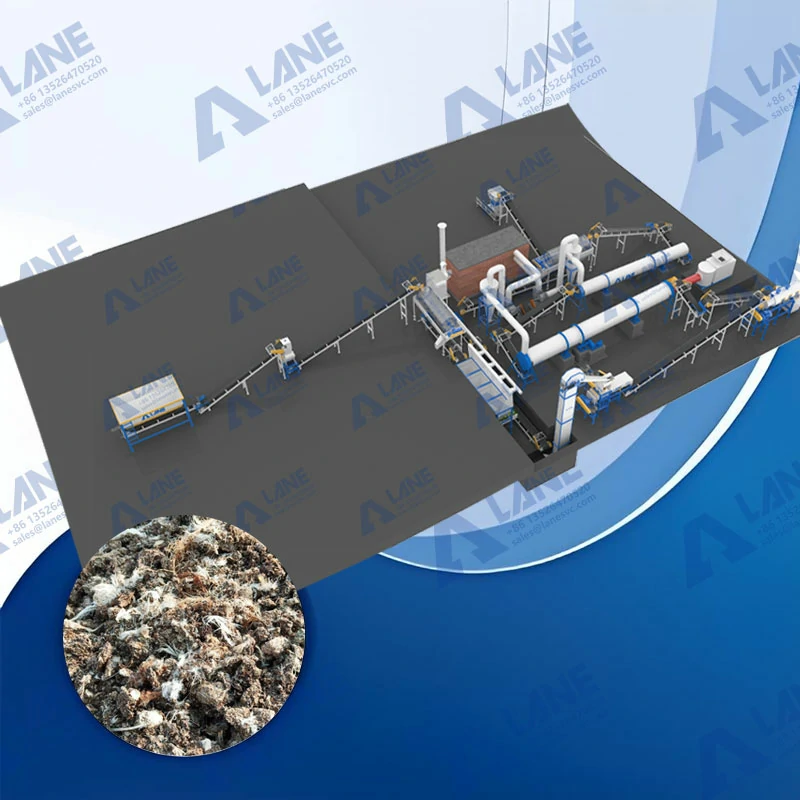
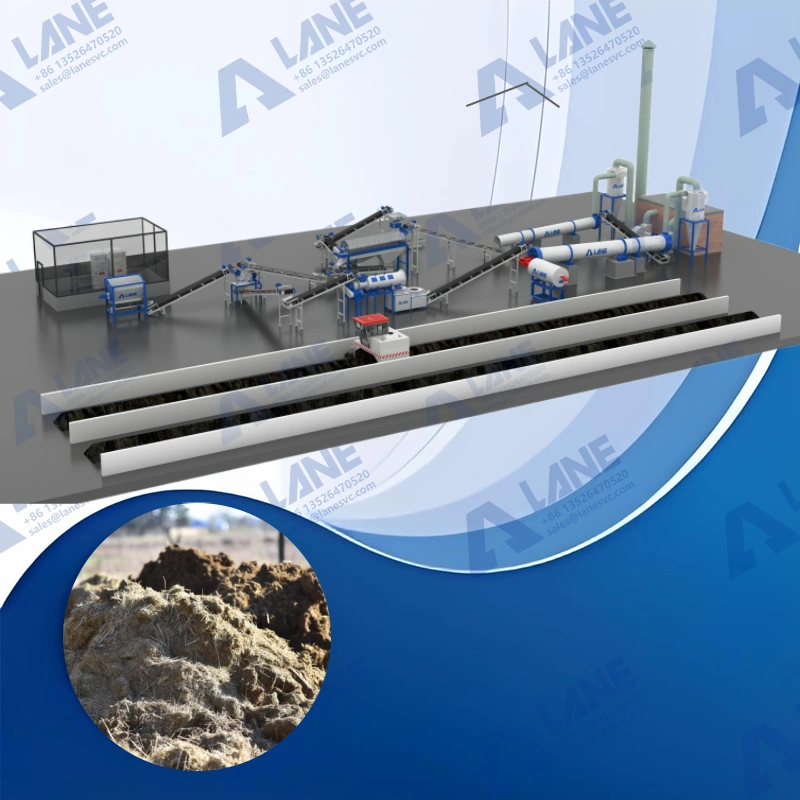
The inclined dewatering machine is the pretreatment unit of an organic fertilizer production line:
Raw material collection -> Inclined dewatering machine -> Liquid fraction -> Filtration and fermentation -> Liquid organic fertilizer
                                                          -> Solid fraction -> Crushing and mixing -> Composting -> Granulation -> Solid organic fertilizer
In this configuration:
LANE supplies the inclined dewatering machine as a single unit or as part of a complete organic fertilizer production line with crushing, mixing, composting, granulation, drying, screening, and packaging systems.
LANE manufactures inclined dewatering machines under an ISO 9001 quality management system and can supply CE-certified equipment with material certificates for stainless steel screens, screws, and housings.
The machine is designed for corrosive, abrasive organic materials, with material selection reviewed against the feedstock. For projects that process manure or organic waste for fertilizer production, the final fertilizer product must meet the destination market’s organic and fertilizer regulations, including contaminant limits and labeling. LANE’s machine and line design support clean changeover, batch traceability, and quality control, and we recommend independent certification of the final product by the relevant authority.
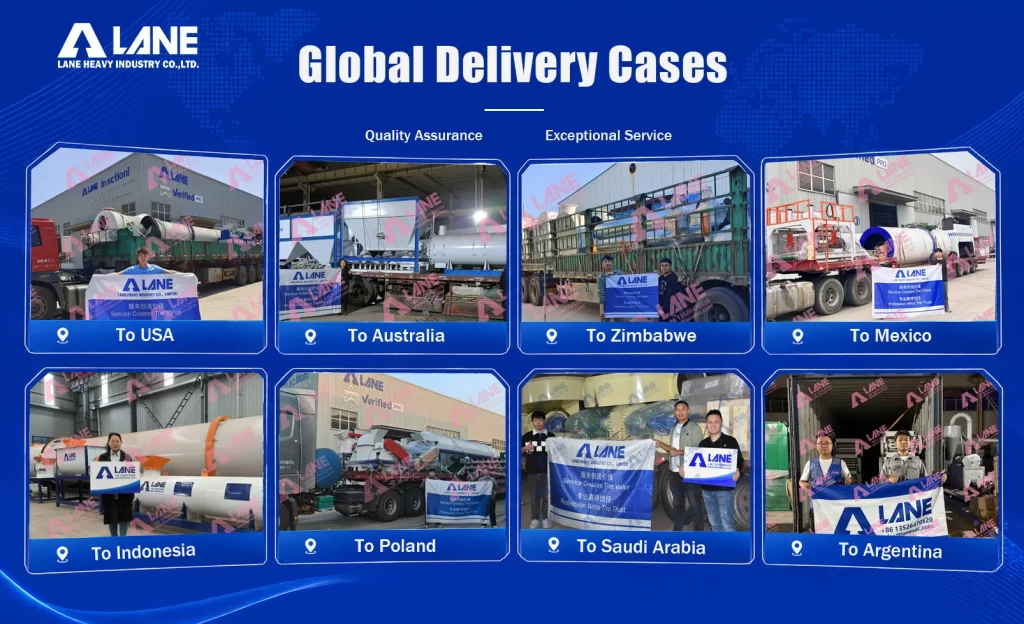
Henan Lane Heavy Industry Machinery Technology Co., Ltd. is a fertilizer equipment manufacturer with more than 20 years of engineering experience. LANE has delivered equipment and production lines to clients in more than 50 countries and supplied machines for a 100,000 tons per year national fertilizer project in Africa.
LANE provides one-stop service from machine selection and plant layout to overseas installation, commissioning, operator training, remote video guidance, and after-sales support. For organic fertilizer projects, our engineers review the feedstock, solids content, moisture, and target products, then recommend the correct dewatering machine model, screen gap, pump, and line configuration.
What materials can an inclined dewatering machine process?
The machine can process cow, pig, chicken, sheep, and duck manure, biogas slurry, food waste, slaughterhouse wastewater, organic sludge, and other high-moisture organic materials.
How does an inclined dewatering machine work?
Slurry is pumped onto an inclined screen. Liquid passes through the screen by gravity while solids remain on the surface. A screw conveyor moves the solids to an extruder, where pressure removes additional moisture.
What is the moisture content of the dewatered solids?
The moisture content depends on the feedstock, screen gap, and extrusion pressure. LANE configures the machine and allows operators to adjust pressure so the discharged solids match the downstream composting or fertilizer process.
What is the processing capacity?
Standard models process 15 to 20 m3/h, 30 to 40 m3/h, or 40 to 50 m3/h depending on model and material. LANE confirms capacity with the actual feedstock before delivery.
Can the machine process biogas slurry?
Yes. The inclined screen separator is commonly used for biogas slurry and biogas residue dewatering, with a non-clogging pump and screen design suited to fibrous material.
What is the difference between an inclined screen separator and a screw press?
An inclined screen separator handles large volumes of low-solids slurry quickly and is cost effective for manure and biogas slurry. A screw press is better for higher-solids material and finer dewatering. Some LANE machines combine both principles in one unit.
What maintenance does the machine need?
Routine maintenance includes checking the screen, screw, bearings, pump, and control cabinet, and removing accumulated solids. The SS304 construction reduces corrosion and wear, and spare parts are available.
What is the warranty?
LANE provides a five-year warranty, spare parts support, and overseas installation and commissioning services.
Tell LANE your feedstock, solids content, moisture, processing capacity, and downstream process. Our engineering team will recommend the correct model, screen gap, pump, and line integration, then provide a technical data sheet and quotation.

Everything you need to know when looking at different types of organic fertilizer equipment, all in one place.
Copyright © 2026. LANE All rights reserved.