
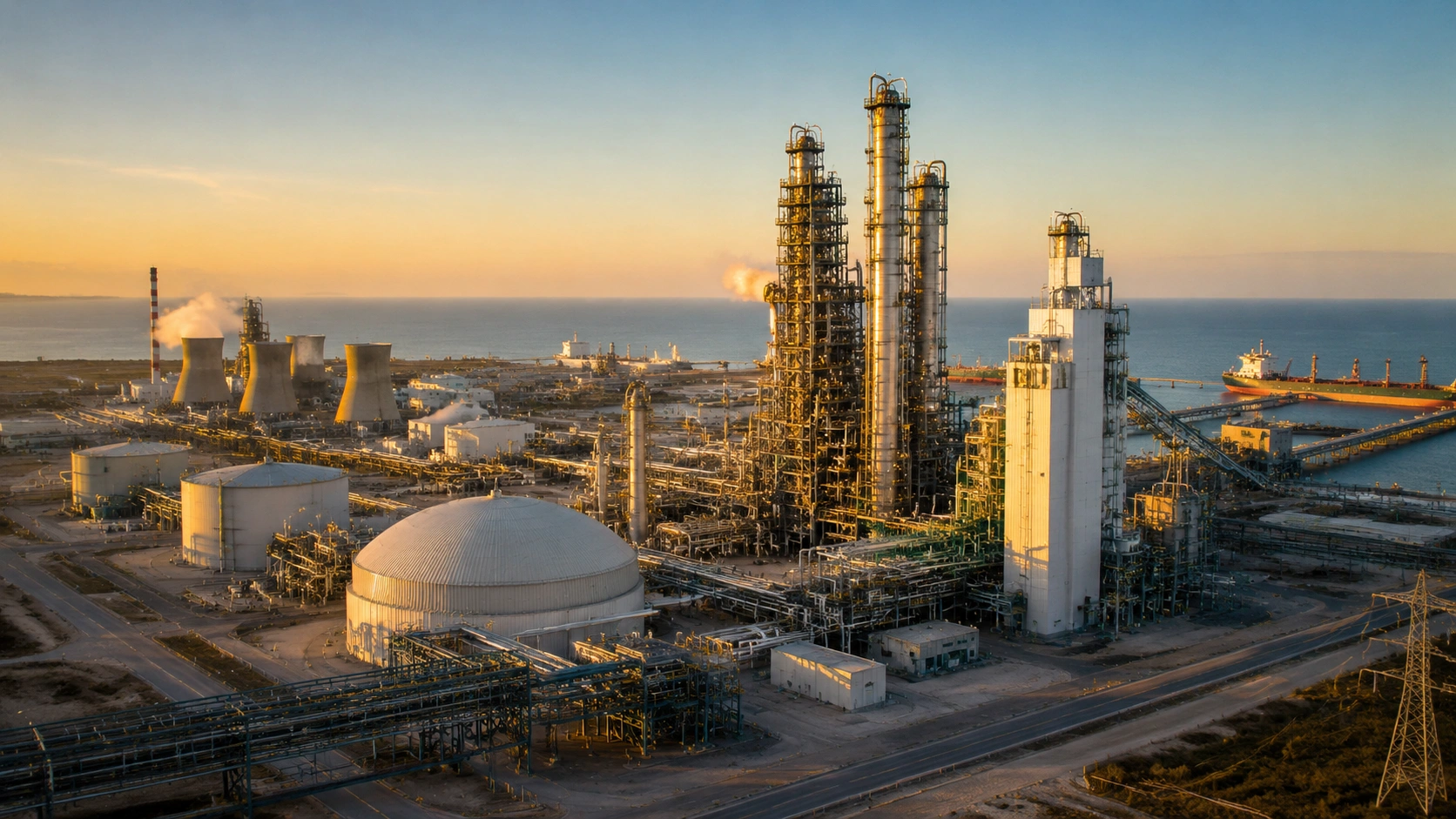
Compare Argentina urea plant turnkey project scope, EPC contractor selection, cost drivers, and supplier evaluation for fertilizer investors and EPC teams.
Most serious fertilizer projects start with a market question, not a machine question. In Argentina, that market question is getting easier to answer. Domestic demand is rising, imports still cover most consumption, and a large-scale project at Bahia Blanca has moved from proposal to execution. For an investor or a procurement team, the real work is defining the Argentina urea plant turnkey project in a way that survives contact with the site, the feedstock, and the contractor.
This guide is written for fertilizer manufacturers, plant investors, engineers, procurement managers, and project contractors. It covers the market case, technology, equipment scope, cost signals, and supplier questions.
Argentina has one large domestic urea producer today. Profertil operates a plant at Ingeniero White with an annual capacity of 1.32 million tons of granulated urea, and Adecoagro completed a roughly USD 1.1 billion transaction in December 2025 to take control of the company. That single asset has carried a large share of local production, which shapes Argentina fertilizer plant investment.
Demand is moving in the other direction. Fertilizar projected that Argentine fertilizer consumption would grow about 11 percent in 2025 to roughly 5.2 million metric tons, driven by planting intentions for wheat, barley, corn, and other crops. Import data from WITS and UN Comtrade put Argentine fertilizer imports at about USD 1.54 billion in 2024, and Fertilizar’s estimates indicate imports accounted for roughly 65 percent of fertilizer used that year.
That combination explains why Argentina fertilizer plant investment is now a board-level conversation rather than a niche engineering topic. A growing market, a large import bill, and a domestic gas resource create the conditions for new nitrogen capacity. The Bahia Blanca project is the clearest signal of how seriously the market is taking that opportunity.
The phrase “turnkey” gets used loosely in fertilizer marketing, so the scope definition matters more than the word. For most buyers, an Argentina urea plant turnkey project means one contractor carries engineering, procurement, construction, commissioning, start-up support, and handover under a single contract. The owner still carries permits, feedstock agreements, financing, and product offtake. Turnkey transfers execution risk; it does not transfer the business case.
A well-scoped Argentina urea plant turnkey project separates a few things clearly:
The same separation matters on a smaller project. A fertilizer line sold as a package still needs foundations, utilities, installation, commissioning, and spare parts.
The largest active Argentina urea plant turnkey project is the fertilizer complex being developed by Fertil Pampa S.A.U., a wholly owned subsidiary of Pampa Energia, inside the Bahia Blanca Industrial Complex in Buenos Aires Province. The urea plant EPC contractor is Tecnimont, a MAIRE subsidiary, which was awarded engineering, procurement, commissioning, and start-up activities for the complex at a total value of about EUR 1.3 billion. About EUR 140 million relates to Nextchem’s technology package.
The facility is designed around a large ammonia plant and two parallel ultra-low-energy urea trains, each with its own granulation unit. Combined capacity is 6,000 metric tons per day, or 2.1 million tons per year of granular urea, described as the largest urea plant in Latin America by production. The site covers 80 hectares next to Pampa Energia’s existing power generation assets, with direct access to gas pipelines, high-voltage transmission lines, water intake, and a deep-water export port.
The technology split is public. KBR will provide its Purifier ammonia technology, including licensing, a basic engineering design package, and proprietary equipment for a 3,430 tons per day ammonia plant expected to commence operations by the end of 2029. Nextchem is the technology provider for urea melt and granulation, using Stamicarbon’s licensing, Process Design Package, and proprietary equipment. KT Tech supplies the primary reformer for syngas production, and SACDE S.A. handles construction. Completion is expected in 41 months, and peak construction is expected to create more than 3,500 direct jobs.
What makes this project useful as a reference is not just its size. It shows how an Argentina fertilizer plant investment is assembled from separate pieces: a site with existing infrastructure, a gas supply position, technology licenses, a lead EPC contractor, and a local construction partner. Each piece changes the cost and the schedule.
Natural gas is the dominant input in a urea complex. It feeds the reformer, supplies the hydrogen, and provides most of the energy bill. For this reason, most Argentina fertilizer plant investment decisions start with gas, not with the granulator.
The Vaca Muerta shale formation sits behind much of the current optimism. Profertil’s location near Vaca Muerta has been cited as a cost advantage, and the Bahia Blanca project benefits from access to gas pipelines and existing power assets. Before committing to an Argentina fertilizer plant investment, a buyer should ask whether the project has a firm gas supply contract, what the price escalation terms look like, and whether the pipeline connection has enough capacity for both normal operation and startup.
Site selection follows the same logic. A brownfield site near a port, power, and water is worth real money because it removes months of permitting and civil work. A greenfield site with lower land cost can look cheaper on paper and become more expensive in practice. The Bahia Blanca location works because the infrastructure is already there.
Water and power can still stop projects. The owner’s team should confirm water rights, discharge permits, and grid connection terms before freezing the site decision.
A urea complex is really three plants connected by material flows. The ammonia plant makes ammonia from natural gas, the urea plant reacts ammonia with carbon dioxide, and the granulation unit turns urea melt into a marketable solid. The technology choice at each stage changes energy use, equipment count, and operating cost.
On the ammonia side, KBR’s Purifier technology is the public choice for Bahia Blanca. Purifier designs are known for a smaller equipment count and lower energy demand than older loops. The 3,430 tons per day capacity makes it a large single-train unit, and ammonia loop design determines how much of the gas bill becomes product.
On the urea side, Stamicarbon’s ultra-low-energy process is the selected route. The process is designed to reduce steam consumption, raise conversion, and cut process condensate and emissions. For a buyer, the meaningful comparison is not brand names; it is steam per ton, conversion efficiency, recycle ratio, and how much energy the design saves across a 20-year operating life.
Granulation is the point where product quality is made or lost. The Bahia Blanca project includes a granulation unit for each urea train, which gives the operator flexibility to run one train while maintaining the other. Buyers should compare granule size distribution, crushing strength, dust emissions, and the ability to produce coated or conditioned product for the target market.
The process flow for a complete urea complex follows a recognizable sequence:
Each step has defined equipment. The front end includes the reformer, shift converters, CO2 removal, and synthesis gas compressor. The ammonia section includes the synthesis loop, refrigeration, and purge gas recovery. The urea section includes high-pressure reactors, strippers, condensers, melt concentration, and process condensate treatment. The granulation section includes fluid bed or drum equipment, screens, coolers, coating systems, and dust collection, with steam, cooling water, instrument air, and control systems around it.
For an equipment buyer, the lesson is that a urea plant is not a single machine. The material handling and finishing equipment may be sourced separately from the process licensor, so the procurement plan should map every package to a schedule and a warranty holder.
The chemistry is well established. In the reformer, natural gas reacts with steam to produce hydrogen, carbon monoxide, and carbon dioxide. The shift and carbon dioxide removal steps adjust the gas composition, and the methanator removes residual carbon oxides. Inside the ammonia loop, nitrogen and hydrogen react over a catalyst under high pressure and temperature. Because the equilibrium is partial, unreacted gas is separated and recycled through the loop.
Urea synthesis then combines ammonia with carbon dioxide at high pressure to form ammonium carbamate, which dehydrates to urea. Because the reaction does not go to completion, the process uses stripping and recycling to recover unconverted material and return it to the reactor. The urea solution is concentrated to a melt, then distributed onto granulation equipment where droplets or layers solidify into uniform granules.
The technical advantage of the modern ultra-low-energy route is mostly in recovery. Heat that older designs released to cooling water is recovered for steam and process duty, and unconverted feed is recycled rather than treated as waste. That is why two plants with the same output can have very different gas consumption and utility bills.
The public design choices at Bahia Blanca point to the advantages a buyer should expect from current technology:
These advantages only show up if the design basis matches the actual site. A technology designed for cold, dry, high-altitude conditions will behave differently on the Buenos Aires coast, so the engineering team has to adapt the heat and mass balance.
Granular urea from an Argentine complex serves the same markets that currently buy imports: direct application, bulk blending, and export to neighboring countries. Demand drivers include wheat, corn, barley, and oilseed programs.
For an Argentina fertilizer plant investment, the market outlook depends on crop prices, gas prices, and import logistics. A project with a gas cost advantage and a deep-water port is structurally different from a plant that relies on imports for feedstock.
Public numbers for the Bahia Blanca Argentina urea plant turnkey project are the most concrete cost signal available. MAIRE has stated a total contract value of about EUR 1.3 billion for engineering, procurement, commissioning, and start-up, with roughly EUR 140 million attributed to the Nextchem technology package. Reported coverage has also translated the contract to about USD 1.5 billion. Those figures cover a specific scope on a specific site; they are not a universal price list.
What the numbers show is how an Argentina fertilizer plant investment budget is structured. The technology package is a small share of the total, but it drives process design and energy performance for decades. Engineering and procurement carry most of the value, and construction adds the largest workforce and longest physical schedule.
A realistic Argentina fertilizer plant investment model also includes items outside the EPC contract:
For an Argentina urea plant turnkey project, payback should be modeled on delivered urea prices, not on the day the first granule is made. A plant that starts late or runs below utilization changes the return more than a small difference in the equipment quote.
The urea plant EPC contractor holds the schedule together. Tecnimont’s role at Bahia Blanca covers engineering, procurement, commissioning, and start-up, while technology licensors and a local construction partner fill the other boxes. That split is a good template: the EPC contractor coordinates the licensors, orders long-lead equipment, manages the site, and owns the handover.
A qualified urea plant EPC contractor should be able to answer specific questions before contract signature:
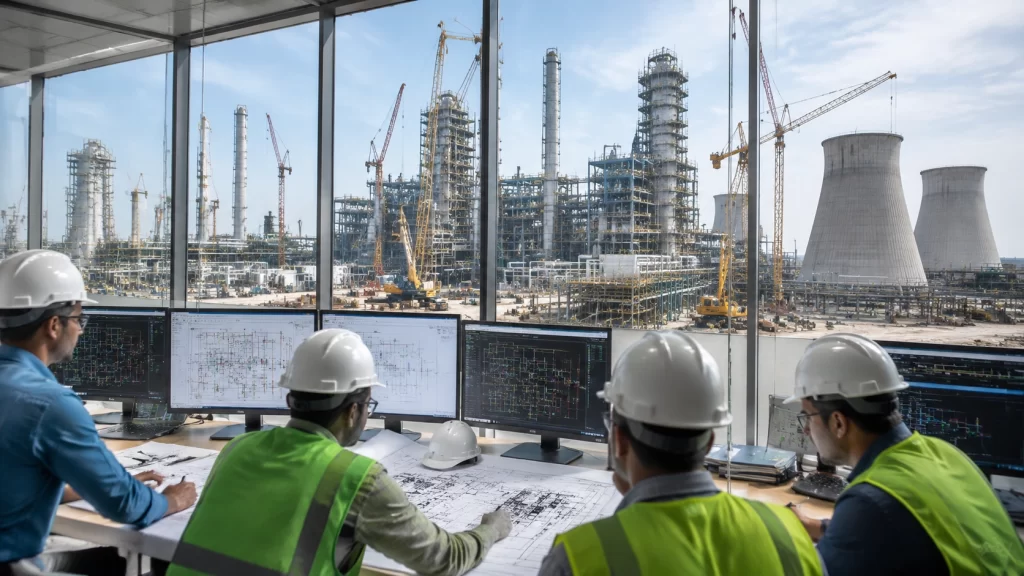
The reference project also shows the value of a local construction partner. A urea plant EPC contractor with a local partner can reduce the risk of a foreign team learning Argentine regulations during the critical path.
The Bahia Blanca schedule is about 41 months from award to completion, with the ammonia unit expected to start operations by the end of 2029. The urea plant EPC contractor has to manage schedule risk that concentrates in feedstock supply, long-lead equipment, permits, currency, and technology integration.
Gas supply is the first risk. If the feedstock contract is not firm, the plant can be built and still idle. The second risk is the reformer and ammonia synthesis equipment, which have long manufacturing cycles and limited suppliers. The third risk is currency and financing, because construction costs are partly local and partly dollar denominated.
The owner’s mitigation plan should include an independent schedule reviewer, monthly progress verification, and clear liquidated damages for late performance. The urea plant EPC contractor should define performance tests before any equipment is ordered, with agreed reference conditions for temperature, humidity, and feedstock composition.
Handover is where a turnkey contract is finally tested. The urea plant EPC contractor should deliver the process design basis, P&IDs, equipment data sheets, spare parts lists, operating procedures, and training records. The plant should demonstrate sustained production at guaranteed capacity, not a single short run.
Maintenance planning starts during procurement, not after startup. Ammonia and urea plants depend on high-pressure piping, heat exchangers, reformers, compressors, and granulation equipment. Each has a different failure mode:
The operating team also needs a spare parts strategy before the first shutdown. Ammonia plants cannot wait six months for a critical compressor seal or reformer tube. The supplier evaluation should include local warehousing, delivery lead times, and remote support.
Equipment price is the least reliable way to compare suppliers on a project of this type. The evaluation should start with process fit and reference scale. A supplier who has built equipment for similar ammonia, urea, or granulation plants can answer questions about materials, tolerances, and startup behavior. A supplier who only sells from a catalog cannot.
Ask each candidate for:
The right urea plant EPC contractor will treat the Argentina urea plant turnkey project as a site-specific problem, not a repeat of a previous brochure. They should ask about gas quality, water, climate, port logistics, and local labor before they quote. If the supplier only asks about capacity, the quote will not survive the first engineering review.
LANE Machinery designs and supplies fertilizer process equipment for granulation, mixing, drying, cooling, screening, and packaging, and can help buyers define the downstream equipment scope within a larger Argentina fertilizer plant investment. For a complete ammonia-urea complex, the owner still needs an EPC contractor, a technology licensor, and a local construction partner; the equipment supplier should be selected against that integrated scope.
What is an Argentina urea plant turnkey project?
An Argentina urea plant turnkey project is a fertilizer complex delivered under a single EPC-style contract covering engineering, procurement, construction, commissioning, start-up support, and handover. The technology licensors, feedstock, permits, and product offtake remain separate agreements.
How much does an Argentina urea plant turnkey project cost?
There is no universal price. The Bahia Blanca project has a public EPC contract value of about EUR 1.3 billion and a technology package of about EUR 140 million; reported coverage translates the total to roughly USD 1.5 billion. For a full Argentina fertilizer plant investment, the final budget depends on capacity, technology, site, gas terms, permits, and financing.
What should I look for in a urea plant EPC contractor?
Look for experience with ammonia-urea complexes, named licensors, a clear warranty chain, a long-lead equipment schedule, commissioning terms, and a local construction partner. The urea plant EPC contractor should own the schedule and name the people who will run the project.
How long does it take to build a urea plant in Argentina?
The Bahia Blanca complex is scheduled for completion in about 41 months, with the ammonia unit expected to commence operations by the end of 2029. Smaller projects move faster, but site conditions, permits, and long-lead equipment set the realistic duration.
Why build a urea plant in Argentina now?
Demand is growing, imports cover about 65 percent of fertilizer use, and Vaca Muerta gas gives domestic producers a feedstock advantage. A project with gas supply, port access, and modern technology can replace imports and serve export markets.
What are the main technology choices for a urea complex?
The main choices are the ammonia synthesis route, the urea synthesis and stripping route, and the granulation method. At Bahia Blanca, KBR’s Purifier technology, Stamicarbon’s ultra-low-energy urea process, and dedicated granulation units per train define the reference design.
What infrastructure does a urea project need in Argentina?
A urea complex needs natural gas pipelines, reliable power, process and cooling water, transport for product, and storage. The Bahia Blanca site is designed around existing gas pipelines, high-voltage transmission, water intake, and a deep-water export port.
What are the main risks in an Argentina fertilizer plant investment?
The main risks are gas price and supply, long-lead equipment, permitting, currency, construction productivity, and market timing. Each one should be quantified in the investment model, and performance guarantees should be tied to agreed site conditions.
Everything you need to know when looking at different types of organic fertilizer equipment, all in one place.
Copyright © 2026. LANE All rights reserved.
Send A Message