
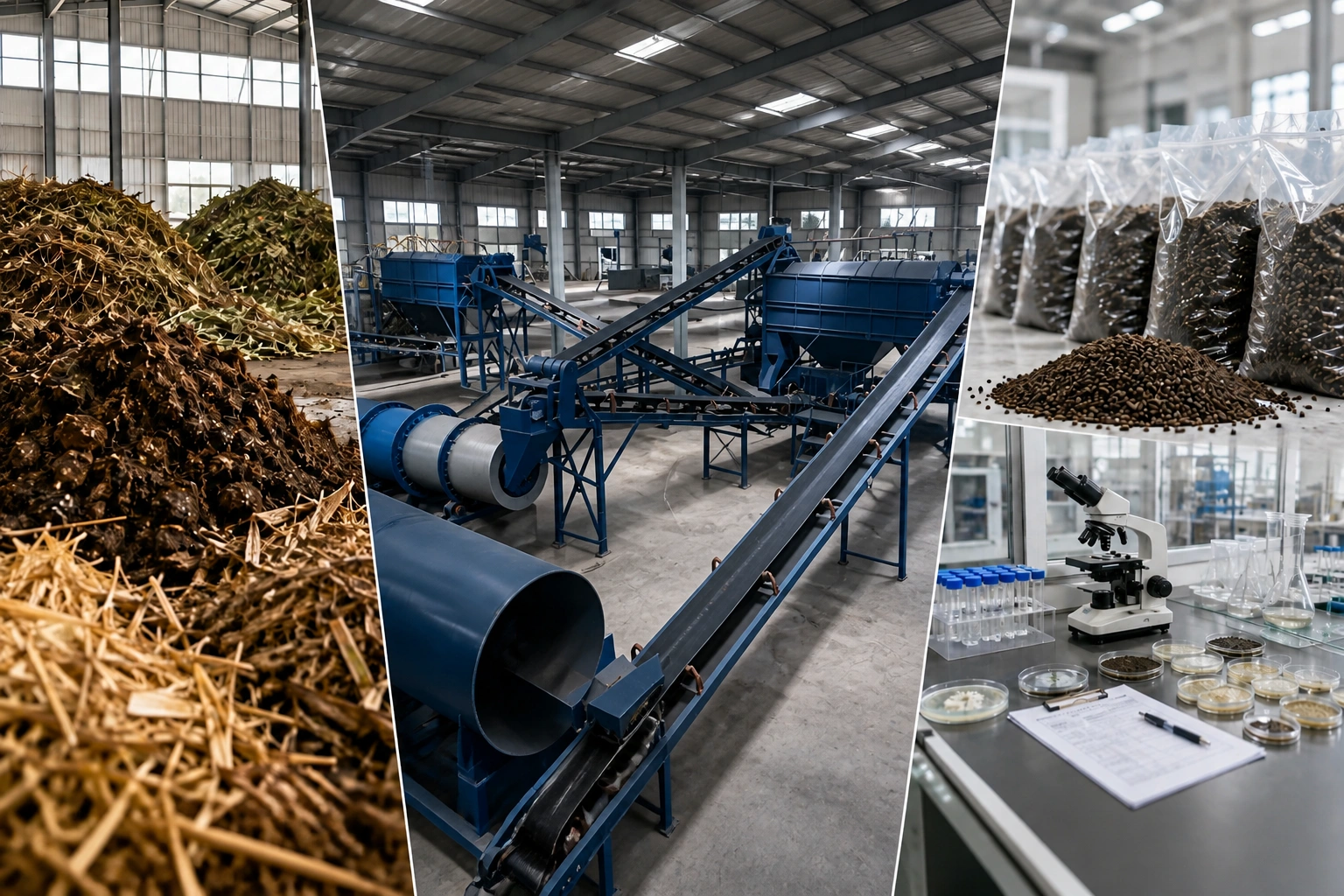
Compare bio organic fertilizer plant options by process, capacity, and budget. Learn what drives cost, microbial survival, and supplier selection.
A bio organic fertilizer plant is different from a standard organic fertilizer plant in one important way: the product has to keep living organisms alive. That changes the process design, the equipment, the drying temperature, the packaging, and the quality control system. A line that can make a good organic granule can still fail if the drying step kills the microbes the product is sold on.
This guide is written for fertilizer manufacturers, plant investors, engineers, procurement managers, and project contractors. It follows the decision from product definition to process, equipment, cost, operations, and supplier selection.
The market for bio organic fertilizer has grown because growers now want products that do more than supply nutrients. They want soil organic matter, microbial activity, and reduced dependence on chemical inputs. Bio organic fertilizer combines those benefits in one product: decomposed organic matter enriched with beneficial microorganisms.
The scientific and industry signal is clear. Research published in Scientific Reports has shown that bioorganic fertilizers made from agricultural waste can improve soil properties and support crop growth under saline conditions. IPL Biologicals opened a large-scale biological manufacturing facility in Vadodara, India, in 2026 with capacity for 70,000 liters per day of biofertilizers, biopesticides, and crop health products. Those are different product types, but they point in the same direction: biological inputs are being built at industrial scale.
For a buyer, the strategic question is whether a bio organic fertilizer plant can produce a consistent product with documented microbial content, organic matter, and nutrient values.
The terms are often used interchangeably, which creates expensive mistakes during plant design.
Organic fertilizer is decomposed organic matter that supplies organic material and plant nutrients. It does not require a specific viable microbial count.
Bio organic fertilizer is organic matter enriched with beneficial microorganisms. In China, the agricultural industry standard NY 884-2012 requires effective viable bacteria of at least 0.2 billion per gram and organic matter of at least 40 percent for bio organic fertilizer. The product must deliver both the organic fraction and the living microbes.
Biofertilizer is a microbial inoculant product. It contains bacteria, fungi, or algae that improve nutrient availability or plant growth, and it is often produced as a liquid or carrier-based product in a biofertilizer production plant.
The distinction changes the equipment. A bio organic fertilizer plant is built around composting, granulation, and controlled low-temperature processing. A biofertilizer production plant is built around fermentation vessels, microbial propagation, sterile handling, and liquid or powder filling.
A complete bio organic fertilizer plant should be scoped as a system, not as a collection of machines. The main work packages are:
When the scope is vague, the bio organic fertilizer plant becomes a list of machines. When it is written clearly, buyers can compare proposals against the same process and delivery basis.
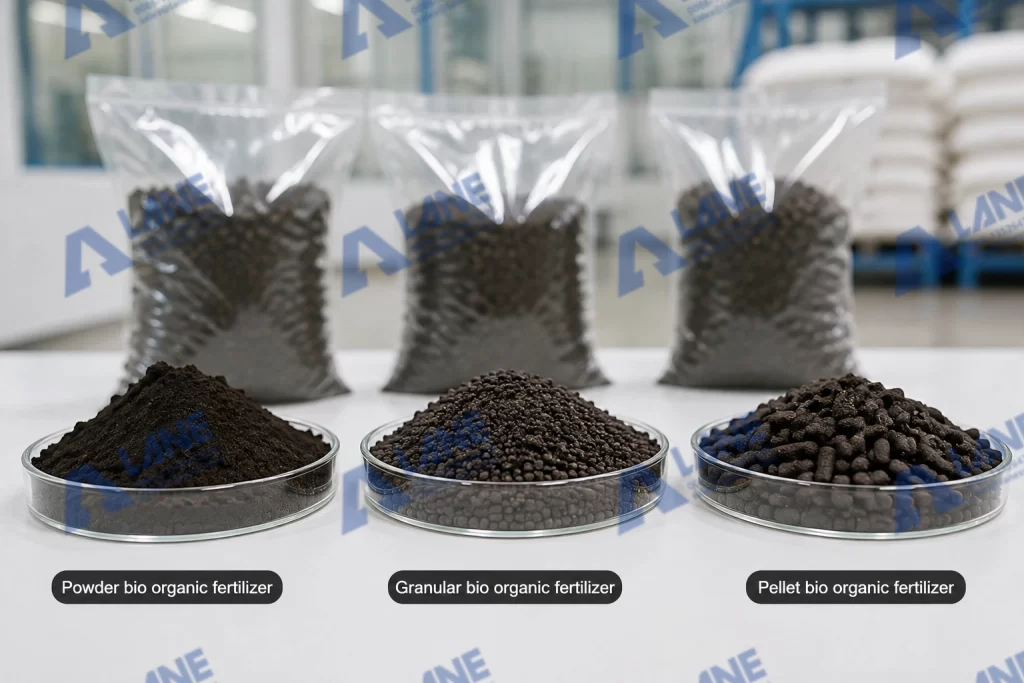
A bio organic fertilizer production line can be configured for powder, granules, or pellets, and the product form changes the equipment and the operating cost.
Powder bio organic fertilizer
A powder line ends after fermentation, curing, crushing, screening, microbial inoculation, and packaging. It is simpler, cheaper, and suitable for local bulk markets. The risk is dust, caking, and less predictable spreading, which limits retail and export appeal.
Granular bio organic fertilizer
A granular line adds granulation, drying, cooling, and final screening. Granules handle, store, blend, and spread more predictably. The extra equipment raises capital and energy cost, but it also opens retail, bulk blending, and export markets.
Pellet bio organic fertilizer
An extrusion or pellet route compresses drier material into cylindrical pellets. It can reduce drying requirements, but the process must still protect microbial viability, so low-temperature design is essential.
The right bio organic fertilizer production line should be selected from the sales channel, not from the machine price. A product sold to regional farms in bulk may not need granulation. A product sold to retail, cooperatives, or export programs usually does.
A biofertilizer production plant is a separate facility model. It produces concentrated microbial products through fermentation and formulation.
The process typically includes:
The IPL Biologicals plant in India is a useful reference. It was built with fully automated production lines, zero-liquid-discharge wastewater treatment, solar power, and certifications including ISO 9001, cGMP, and OMRI. That shows what buyers should expect from a serious biofertilizer production plant: controlled microbiology, clean filling, and traceable quality.
Some investors build both models on one site: a bio organic fertilizer plant for organic matter products and a biofertilizer production plant for inoculants. The facilities share quality control and raw material procurement, but they should not share the same process line.
The process in a bio organic fertilizer plant follows a sequence of biological, mechanical, and microbiological stages.
Step 1: Receive and prepare raw materials
Manure, crop residues, food waste, or industrial organic by-products arrive with variable moisture and contaminants. High-moisture material should pass through a solid-liquid separator. Bulking agents such as straw, rice husks, sawdust, or finished compost adjust moisture and the carbon-to-nitrogen ratio.
Step 2: Compost or ferment until stable
Aerobic fermentation reduces pathogens, weed seeds, and odors. With regular turning and enough oxygen, pile temperature should stay in the 55 to 70 C range for a sustained period, typically 10 to 25 days followed by curing.
Step 3: Cure and condition
Curing allows immature organic acids to stabilize. The material then moves to crushing and screening so the granulator receives a uniform powder.
Step 4: Mix and formulate
The compost is blended with binders, mineral supplements, or nutrient additives to reach the moisture and nutrient target for granulation. The mixer must create a uniform feed because every granule must carry the same formulation.
Rotary drum granulation handles high volume and moist feed. Disc granulation gives tighter size control at lower capacity. Extrusion compresses drier material into pellets. The choice depends on moisture, product shape, and the microbial inoculation strategy.
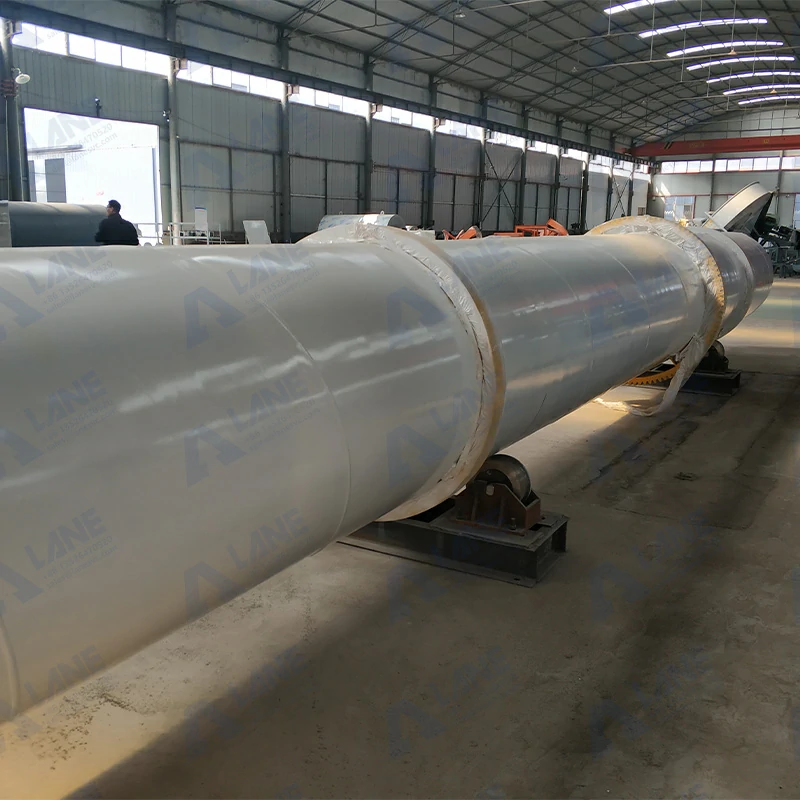
Step 6: Dry and cool at low temperature
Drying is the riskiest stage for a bio organic fertilizer product. Beneficial microbes can be killed by excessive heat, so the line needs low-temperature drying and controlled cooling. The moisture target must be reached without degrading the living fraction.
Step 7: Inoculate and coat
Microbial inoculant can be added before granulation or after cooling as a coating. The method depends on the strain, the carrier, and the survival target. Coating after cooling protects viability but requires a separate inoculation and coating system.
Step 8: Screen and package
The final screen removes oversize and fines, and the automatic packaging machine records bag weight. Packaging and storage should protect the product from heat, moisture, and direct sunlight because those factors reduce viable cell count over time.
The equipment list in a bio organic fertilizer plant is built around the biology and the physical process:
| Stage | Core equipment | Main job |
|---|---|---|
| Raw material | Solid-liquid separator, conveyor, shredder | Reduce moisture and remove debris |
| Fermentation | Compost turner, aeration system | Stabilize organic matter and reduce pathogens |
| Curing | Curing area or silo | Finish the biological process |
| Preparation | Crusher, rotary screen, mixer | Create a uniform powder feed |
| Granulation | Drum, disc, or extrusion granulator | Shape the product |
| Drying and cooling | Low-temperature dryer, cooler | Stabilize moisture without killing microbes |
| Inoculation | Liquid dosing, mixer, or coating system | Add the beneficial microbial fraction |
| Finishing | Screen, coater, packaging machine | Sort, condition, and package |
| Environmental | Dust collector, biofilter, leachate system | Control emissions and odor |
A bio organic fertilizer production line needs more careful temperature control than a standard organic line. The dryer design, the inoculation point, and the storage conditions are not optional details.
The working principle of a bio organic fertilizer plant is to stabilize organic matter biologically, then add and protect a beneficial microbial population.
The organic fraction comes from composting. During aerobic fermentation, microorganisms break down complex organic materials into stable humus-like compounds. Heat, oxygen, and moisture have to stay in the right range so the material becomes safe and stable.
The biological fraction comes from the inoculant. The microorganisms must survive processing, storage, and application. That is why low-temperature drying, careful inoculation, and protective packaging are central to the design.
The technical advantages of an integrated plant include:
Bio organic fertilizer products serve several markets:
The application scope affects granule size, packaging, and certification. A plant selling into certified organic markets should confirm the target certification requirements before finalizing the process design.
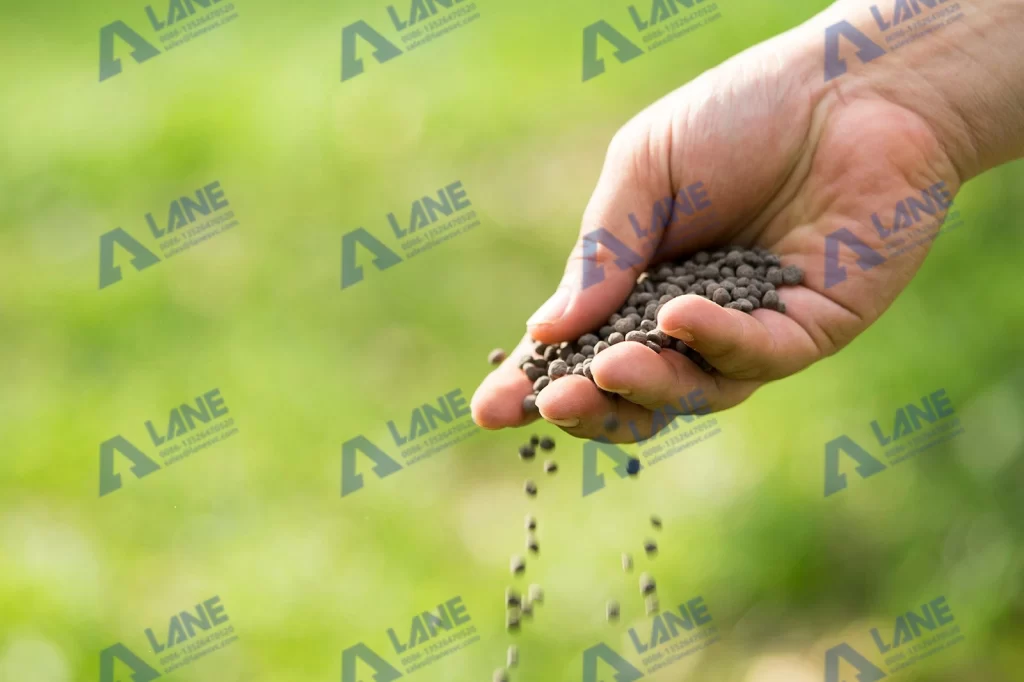
The cost of a bio organic fertilizer plant depends on capacity, product form, feedstock, automation, and environmental scope.
Complete configurations are commonly estimated between USD 20,000 and USD 1.5 million, depending on capacity and automation. A 1 to 2 tons per hour line is quoted at roughly USD 20,000 to 220,000. A 5 to 6 tons per hour line runs about USD 60,000 to 480,000. A 15 to 20 tons per hour line can reach USD 350,000 to 1.5 million.
A bio organic fertilizer production line usually costs more than a standard organic line of the same capacity because it adds low-temperature drying, inoculation, coating, and microbial quality control.
The full project budget includes:
Payback should be modeled on product price, utilization, and microbial survival rate. A product that cannot document its viable cell count cannot command the premium that justifies the extra process cost.
Maintenance on a bio organic fertilizer plant is continuous rather than difficult. The highest-wear points are the screen, crusher hammers, mixer paddles, granulator lining, dryer flights, and conveyor belts.
Daily checks should cover material build-up, belt tracking, bearing temperature, and screen condition. Fermentation records should include moisture, temperature, turning frequency, and odor. Drying records should include inlet temperature, outlet temperature, and moisture, because those values decide microbial survival.
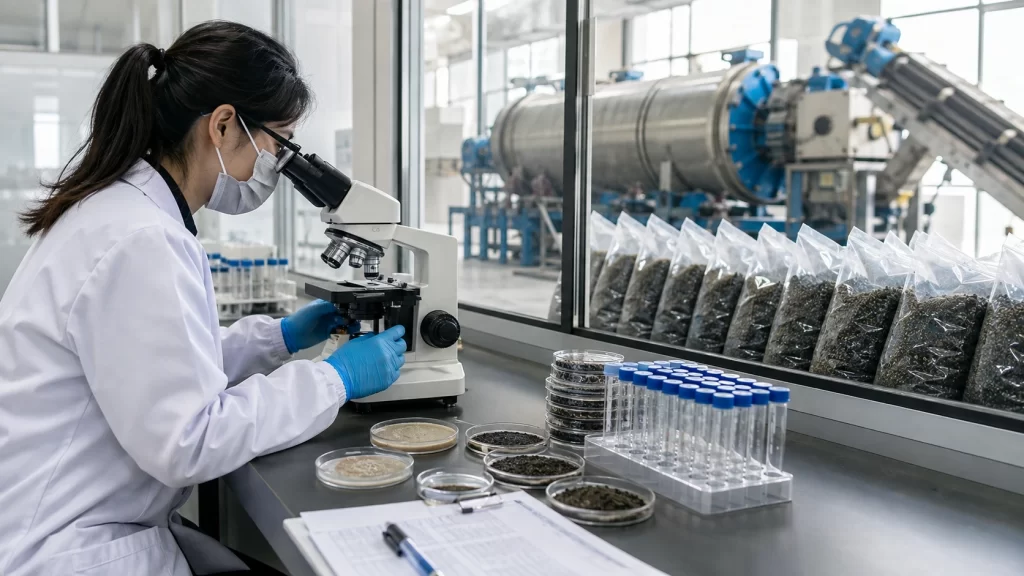
Quality control is the difference between a bio organic fertilizer plant and an ordinary compost operation. The lab should test:
The handover package should include operating procedures, training records, and a validation plan for the microbial inoculation step.
Supplier selection should start with process fit, not machine price. Ask each candidate for:
Ask whether the supplier has built a bio organic fertilizer production line or only a standard organic line. The difference is not the granulator. It is the drying temperature, the inoculation system, and the quality control process.
A qualified supplier will ask about the microbial strain, the target viable count, the raw material, and the storage conditions before quoting. If the supplier only asks about capacity, the project will struggle to deliver the biological value the product is sold on.
What is a bio organic fertilizer plant?
A bio organic fertilizer plant processes organic raw materials into a fertilizer product that contains stabilized organic matter and a documented population of beneficial microorganisms. The plant includes composting, crushing, mixing, granulation, low-temperature drying, inoculation, and packaging.
What is the difference between bio organic fertilizer and biofertilizer?
Bio organic fertilizer is organic matter enriched with beneficial microbes. Biofertilizer is a microbial inoculant product that may be liquid, powder, or carrier-based. They are produced with different equipment and should not be treated as the same project.
Can one line produce powder, granules, and pellets?
Yes, with the right configuration. Powder ends after crushing and packaging. Granular and pellet routes add granulation, drying, cooling, and screening. The line design should be matched to the product forms the market will buy.
How do you keep microbes alive during drying?
Use low-temperature drying, controlled cooling, and a defined inoculation point. Inoculation after cooling through a coating system protects viability, but the design must be validated for the specific strain and carrier.
What raw materials can be used?
Typical feedstocks include livestock manure, crop residues, food waste, and industrial organic by-products. Bulking agents adjust moisture and the carbon-to-nitrogen ratio, and mineral supplements can be added to meet nutrient targets.
What standards apply to bio organic fertilizer?
In China, NY 884-2012 sets requirements for bio organic fertilizer, including effective viable bacteria and organic matter content. For EU export, Regulation (EU) 2019/1009 defines the framework for fertilizing products and microbial plant biostimulants under Component Material Category 7.
How long does it take to build a bio organic fertilizer plant?
The schedule depends on capacity, civil works, equipment lead times, and commissioning. Small lines can be installed and commissioned in weeks or a few months, while larger industrial plants need longer for fermentation area, utilities, and trial production.
How do I choose a bio organic fertilizer plant supplier?
Compare process engineering, raw material testing, low-temperature drying, inoculation design, quality control, installation support, spare parts, and references. Ask for a process flow diagram, material balance, and plant layout, and confirm the supplier has built a bio organic fertilizer production line at similar scale.

Everything you need to know when looking at different types of organic fertilizer equipment, all in one place.
Copyright © 2026. LANE All rights reserved.
Send A Message