
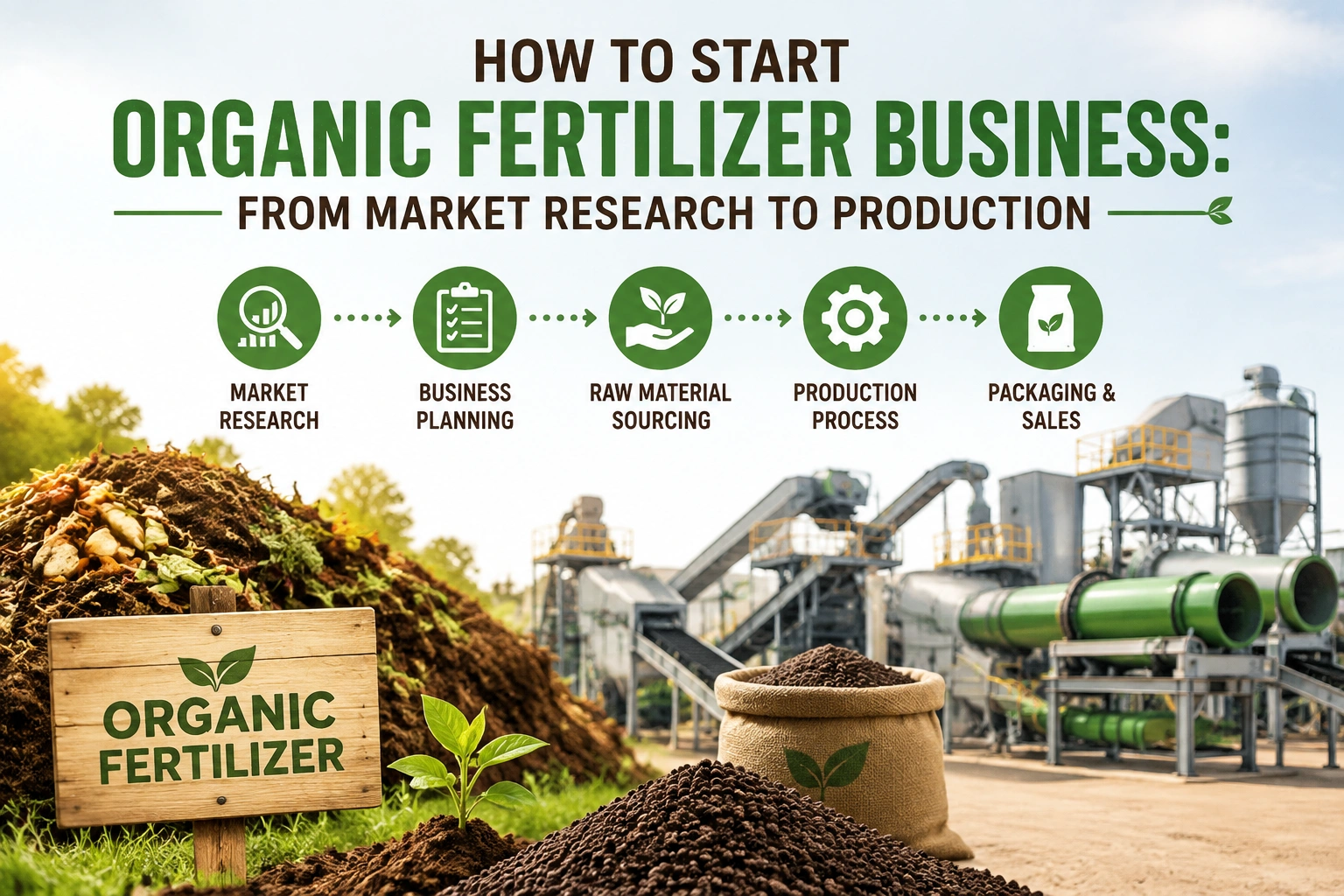
Learn how to start organic fertilizer business with market research, business plan, licensing, process, equipment, cost, and supplier selection.
Starting an organic fertilizer business is not the same as buying a compost turner and hoping for orders. It is a manufacturing business with a market, a feedstock supply, a process, a quality standard, and a distribution channel. The equipment is the visible part of the investment. The business model decides whether the plant runs.
This guide is written for entrepreneurs, fertilizer manufacturers, plant investors, engineers, procurement managers, and project contractors. It follows the decision from market and business plan to licensing, feedstock, process, equipment, cost, operations, and supplier selection.
For most investors, how to start organic fertilizer business comes down to a few decisions made in the right order: market, feedstock, process, equipment, and sales.
The market case is stronger than it was a decade ago. Research and Markets estimates the organic fertilizer market at about USD 11.98 billion in 2026, with a projected value of about USD 16.49 billion by 2032 and a compound annual growth rate near 8.3 percent.
The same research points to the main drivers: rising organic food demand, regenerative agriculture programs, and growing certified organic acreage. Manure-based products accounted for a large share of the market in 2025, which is relevant because manure is also the most accessible feedstock for a new producer. The first section of your organic fertilizer business plan should test whether that demand exists in your region.
For an investor, the opportunity is real, but the entry decision should be based on the local market, not on the global forecast. A successful business starts with a customer who will buy the product at a price that covers the production cost.
Before selecting equipment, answer three questions:
The market may be local farms, cooperatives, retailers, government programs, or export buyers. Each channel has different packaging, certification, and quality requirements.
The business model also matters. Some producers start with powder fertilizer and add granulation later. Some build a granule line from day one because their retail market demands it. Some run a contract processing model where farms deliver manure and buy back fertilizer.
The right model is the one that matches the feedstock, the capital, and the sales channel. How to start organic fertilizer business is not a single path. It is a sequence of decisions that fit the local situation, and the organic fertilizer business plan should be written around the model you choose.
An organic fertilizer business plan is the document that turns the idea into a project. Published business planning guidance from the industry suggests capital expenditure can range from about USD 150,000 for a lean semi-manual compost operation to USD 510,000 and above for a fully automated granulation line. Those numbers are planning ranges, not quotes.
The plan should include:
An organic fertilizer business plan should also include a conservative utilization assumption. A plant running at 60 percent utilization does not recover capital on schedule.
Regulatory requirements vary by country, and the license should be investigated before land is selected.
How to start organic fertilizer business includes a licensing stage that most equipment brochures ignore.
In India, commercial sale of organic fertilizer requires registration under the Fertiliser Control Order, FCO 1985, and the production unit has to follow documented process and quality controls. In California, manufacturers and distributors of fertilizing materials must obtain a license from the state before operating. In China, fertilizer production is a registered activity that requires a fertilizer registration certificate before production.
For export to the European Union, the product has to meet Regulation (EU) 2019/1009 and the relevant component material requirements. For organic certification, the process has to meet the standard of the certification body for the target market.
The licensing timeline is often longer than the equipment delivery time. A realistic organic fertilizer plant setup timeline should include the registration period in the project schedule, and the organic fertilizer business plan should name the licenses for each market.
Feedstock is the first operating decision. Livestock and poultry manure, crop residues, food waste, and industrial organic by-products are common inputs. The feedstock should be available in enough volume, at a predictable quality, and at a cost that leaves margin.
Before answering how to start organic fertilizer business, confirm the feedstock volume and seasonality, because those two numbers drive the plant size and the working capital.
Manure is the most common starting point, but it is also the hardest to handle. Fresh manure can carry 65 to 80 percent moisture and releases ammonia. The site needs space for dewatering, fermentation, curing, process buildings, storage, and environmental buffers.
Site selection should consider:
A cheap site with bad logistics can destroy the business case. A slightly more expensive site near feedstock and customers usually wins.
An organic fertilizer plant setup can be organized around a simple process sequence:
The equipment scope depends on the product form. A powder line ends after curing, crushing, screening, and packaging. A granular line adds granulation, drying, cooling, and final screening.
When you learn how to start organic fertilizer business, the most common mistake is buying a granulator before confirming the fermentation area, the dryer, and the sales channel. The granulator is the visible machine. The fermentation and drying systems decide whether it runs.
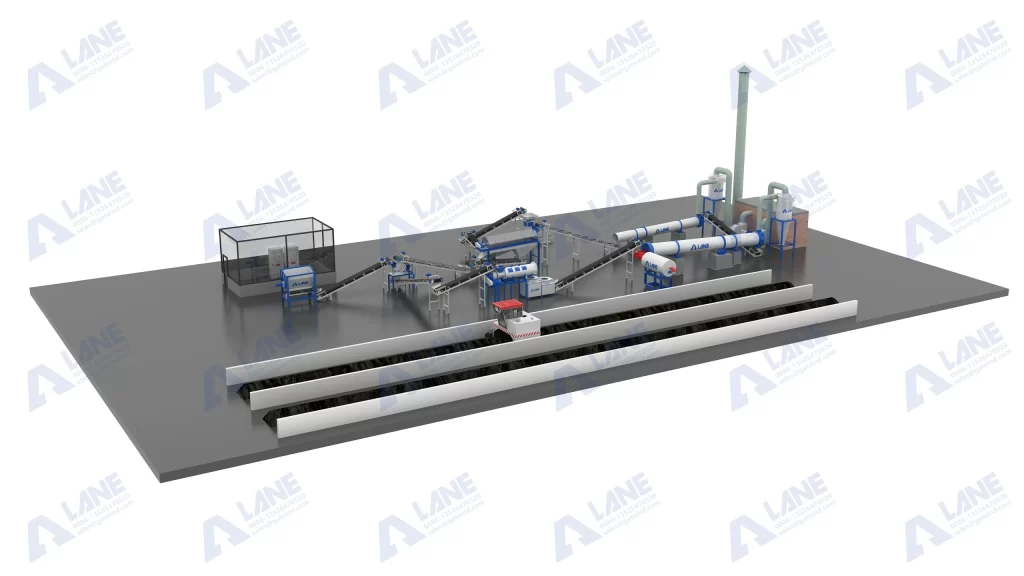
Step 1: Receive and dewater the raw material
High-moisture manure or digestate should pass through a solid-liquid separator. Bulking agents such as straw, rice husks, sawdust, or finished compost adjust moisture and the carbon-to-nitrogen ratio.
Step 2: Ferment until the material is stable
Aerobic fermentation reduces pathogens, weed seeds, and odors. Pile temperature should stay in the 50 to 70 C range for a sustained period, usually 15 to 25 days of active fermentation followed by curing.
Fermented compost is uneven. A crusher and rotary screen create a uniform powder feed for the granulator.
Step 4: Mix and formulate
The compost is blended with water, binders, microbial inoculants, or mineral additives to reach the moisture and nutrient target. Uniform mixing matters because every granule must carry the same formulation.
Rotary drum granulation handles high volume and moist feed. Disc granulation gives tighter size control at lower capacity. Extrusion compresses drier material into pellets. The choice depends on the moisture profile and the product specification.
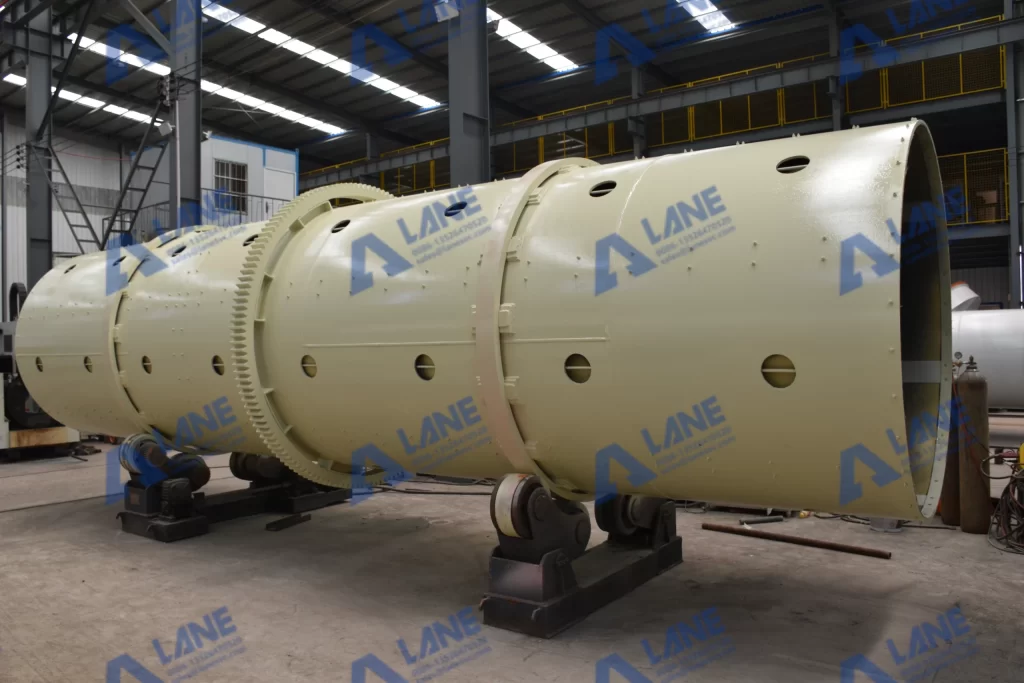
Wet granules carry roughly 20 to 30 percent moisture. Drying brings the product to a stable storage level, and cooling prevents caking.
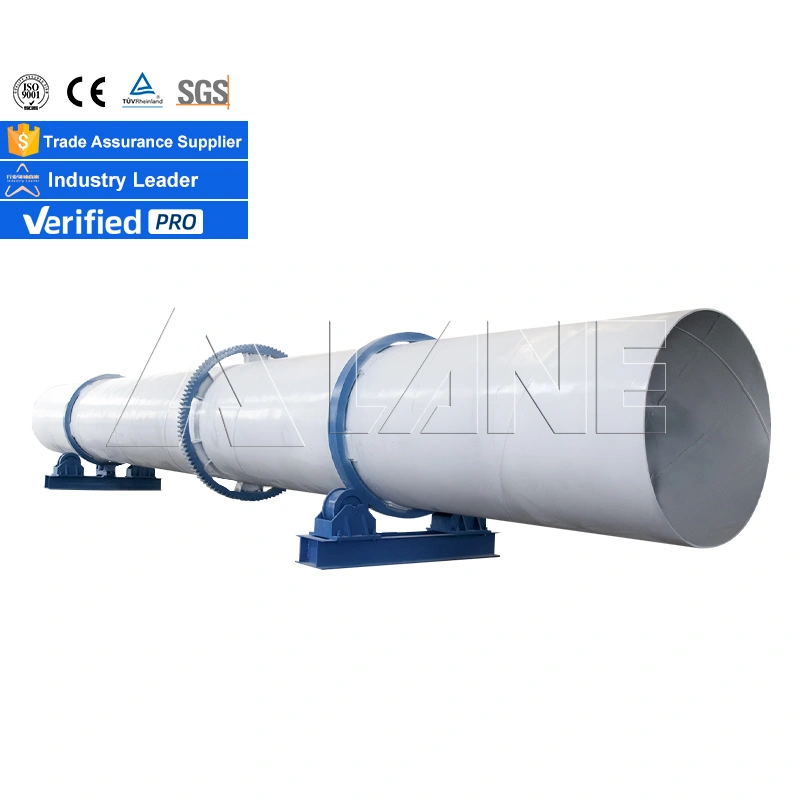
Step 7: Screen, coat, and package
The final screen returns oversize to the crusher and fines to the granulator. Coating reduces dust, and the packaging machine records bag weight.
The equipment list in an organic fertilizer plant setup is built around the process:
How to start organic fertilizer business depends on equipment that matches the product form, not on the largest machine in the catalog.
| Stage | Core equipment | Main job |
|---|---|---|
| Raw material | Solid-liquid separator, conveyor, shredder | Reduce moisture and remove debris |
| Fermentation | Compost turner, aeration, odor control | Stabilize the biology |
| Curing | Curing area or silo | Finish the biological process |
| Preparation | Crusher, rotary screen, mixer | Create a uniform powder feed |
| Granulation | Drum, disc, pin, or pellet machine | Shape the product |
| Drying and cooling | Rotary dryer, rotary cooler | Stabilize moisture and temperature |
| Finishing | Final screen, coater, packaging machine | Sort, condition, and package |
| Environmental | Dust collector, biofilter, leachate system | Control emissions and odor |
The list should also include conveyors, bucket elevators, control cabinets, and instrumentation. A supplier that only quotes the granulator and dryer has not designed the full line.
An organic fertilizer plant is a moisture, particle-size, and nutrient pipeline.
The front end removes water and adjusts carbon and nitrogen. The middle section stabilizes the biology and builds a uniform powder. The back end shapes, dries, and sorts the product.
Three variables control most of the operating result:
The technical advantages of a well-designed plant include consistent product quality, lower drying energy, flexible product forms, reduced odor and dust, and a documented process that supports certification.
Products from an organic fertilizer business serve several markets:
The sales channel determines packaging, certification, and granule specification. A plant selling to local farms in bulk may not need retail packaging. A plant selling online or through distributors needs consistent bags, labels, and product documentation.
The cost of an organic fertilizer plant setup depends on capacity, product form, automation, feedstock, and site conditions.
How to start organic fertilizer business requires a realistic budget that separates equipment from the full project, because the equipment invoice is only part of the capital.
Industry guidance places a small organic fertilizer plant at 1 to 5 tons per hour with complete equipment costs typically ranging from USD 100,000 to 150,000. Medium and large granular fertilizer lines are commonly quoted from USD 350,000 to 550,000 and higher. Small powdered fertilizer lines can start at roughly USD 10,000 to 35,000, showing how significantly the product form influences the overall investment budget.
Initial investment for a commercial organic fertilizer business can range from about USD 50,000 for a small line to more than USD 500,000 for a highly automated plant.
An organic fertilizer plant setup budget includes:
Industry cost guidance suggests gross profit margins of 35 to 45 percent and net margins of 15 to 20 percent for well-run small plants, with break-even commonly reached within 12 to 24 months for commercial 3 to 5 tons per hour lines. Those are scenario ranges, not guarantees.
The organic fertilizer business plan should be updated after commissioning with real utilization, energy, and labor data.
How to start organic fertilizer business does not end at commissioning. Maintenance on an organic fertilizer plant is continuous rather than difficult. The highest-wear points are the screen, crusher hammers, granulator lining, dryer flights, and conveyor belts.
Keep a daily checklist for material build-up, belt tracking, bearing temperature, and screen condition. Fermentation records should include moisture, temperature, turning frequency, and odor. Batching accuracy should be checked on a schedule because a dosing error changes the final formulation.
Quality control should test moisture, organic matter, nutrient content, pathogen indicators, granule size, and hardness. A business that cannot document its product quality cannot build a repeatable brand.
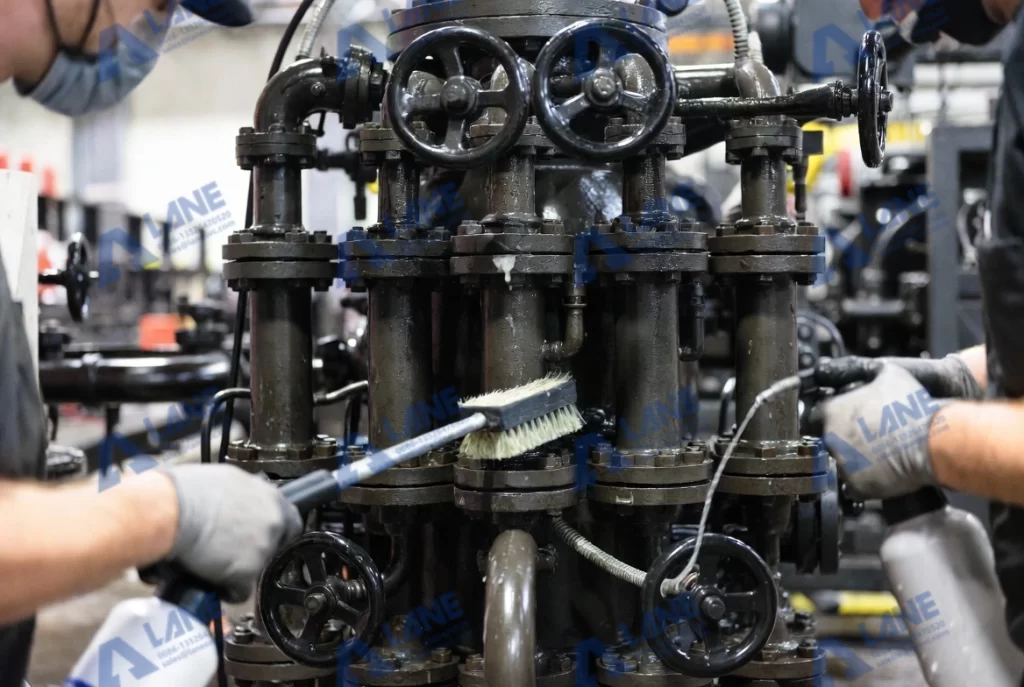
Supplier selection should start with process fit, not machine price. Ask each candidate for:
Ask whether the supplier has built an organic fertilizer plant setup at the same scale and product form. A supplier who only knows composting may not be able to design the granulation line. A supplier who only knows granulation may underestimate the fermentation and drying systems. The supplier should also be able to explain how to start organic fertilizer business with your specific feedstock, not with a generic capacity table.
A qualified supplier will ask about feedstock volume, moisture, bulking agent, climate, and sales channel before quoting.
The industry has enough examples to guide a new business.
Safi Organics in Kenya developed a community production model where local entrepreneurs can set up small organic fertilizer production units under a franchise structure. The model shows how feedstock, production, and local distribution can be combined at community scale.
A published Kenyan small fertilizer factory case shows a producer starting with manure, baked bones, and ash, then moving through mixing, granulation, drying, screening, and packaging. The product was sold locally at a lower price than imported fertilizer.
For a new investor, those cases show that the entry point does not have to be a large automated plant. The first plant can be small, local, and focused on one product form, as long as the process is stable and the product is tested. How to start organic fertilizer business at community scale is a valid first step.
How do I start organic fertilizer business?
Start with market research and a business plan, then move to licensing, feedstock, site, process, equipment, and sales. How to start organic fertilizer business is a sequence, and the equipment decision should come after the market and feedstock decisions, not before.
What should be inside an organic fertilizer business plan?
An organic fertilizer business plan should include market analysis, product form, feedstock supply, process, equipment scope, capital and operating cost, pricing, licensing, certification, and a timeline to first sale.
How much does an organic fertilizer plant setup cost?
Published guidance places small organic plants at 1 to 5 tons per hour at USD 100,000 to 150,000 for equipment, with medium and large granular lines from USD 350,000 to 550,000 and higher. Total investment depends on site, permits, and working capital.
What licenses do I need?
Licenses vary by country. Examples include FCO registration in India, state fertilizer licensing in California, fertilizer registration in China, and Regulation (EU) 2019/1009 compliance for EU export. Check the requirements before selecting land.
What equipment is needed to start?
The core set includes a solid-liquid separator, compost turner, crusher, rotary screen, mixer, granulator, dryer, cooler, final screen, coating machine, and automatic packaging system.
What is the best product form for a new business?
Powder is the lowest-cost entry point and suits local bulk markets. Granules cost more to produce but open retail, blending, and export markets. Start with the form the target customer will actually buy.
How long does it take to start an organic fertilizer plant?
The timeline depends on licensing, land, equipment lead times, and commissioning. Published industry guidance ranges from about 12 to 18 months for a complete manufacturing plant.
How do I choose an organic fertilizer supplier?
Compare process engineering, feedstock testing, fermentation design, drying balance, environmental controls, installation support, spare parts, and references. Ask for a process flow diagram, material balance, and plant layout.

Everything you need to know when looking at different types of organic fertilizer equipment, all in one place.
Copyright © 2026. LANE All rights reserved.
Send A Message