Automatic capping machines for liquid fertilizer bottles, jerry cans and drums, with torque control, cap orientation, PLC recipes and corrosion-resistant parts.
An automatic capping machine closes filled liquid fertilizer containers at production speed. It feeds caps, positions them on bottles, jerry cans, or drums, and tightens or presses them with repeatable force, so the finished package leaves the line sealed, leak-free, and ready for labeling and coding.
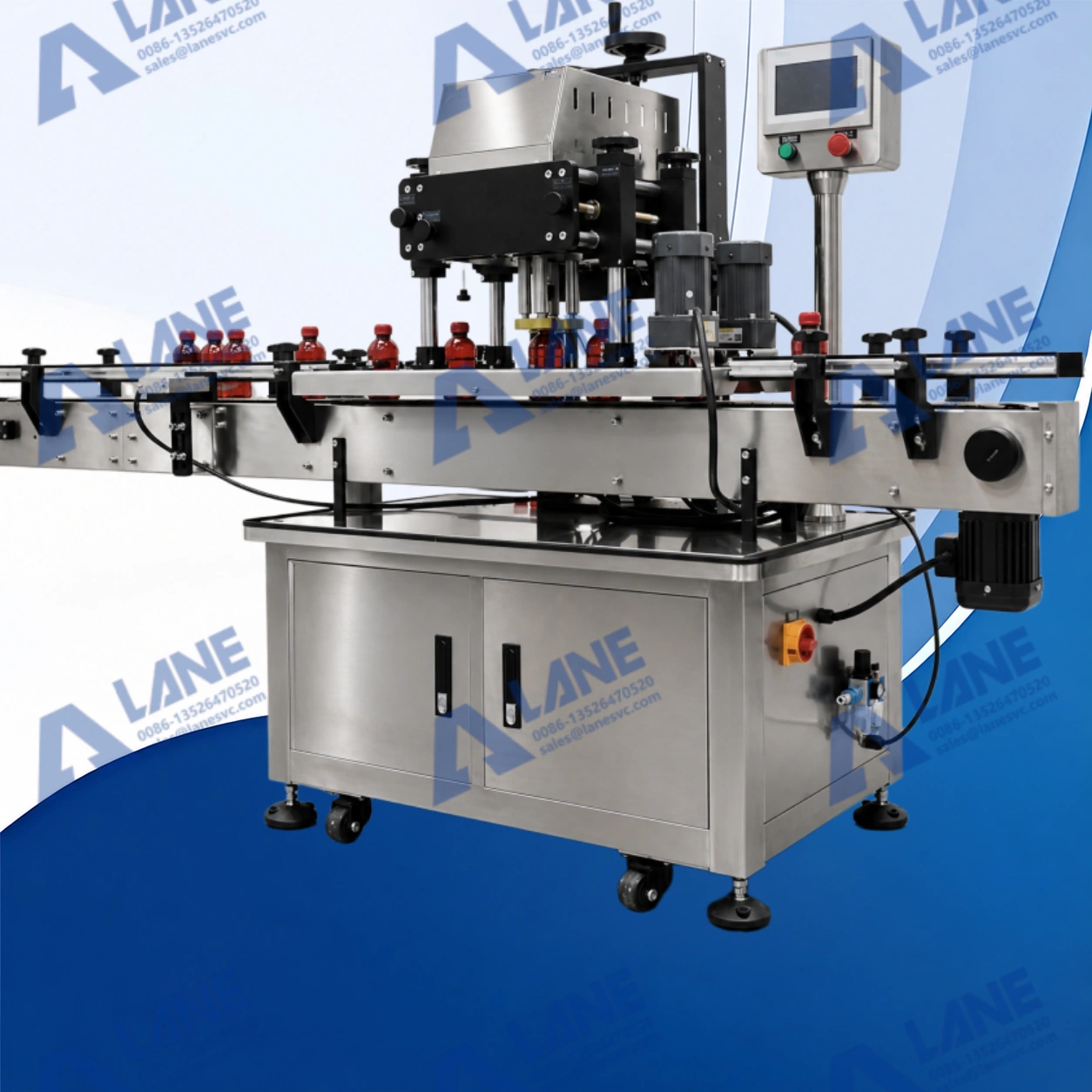
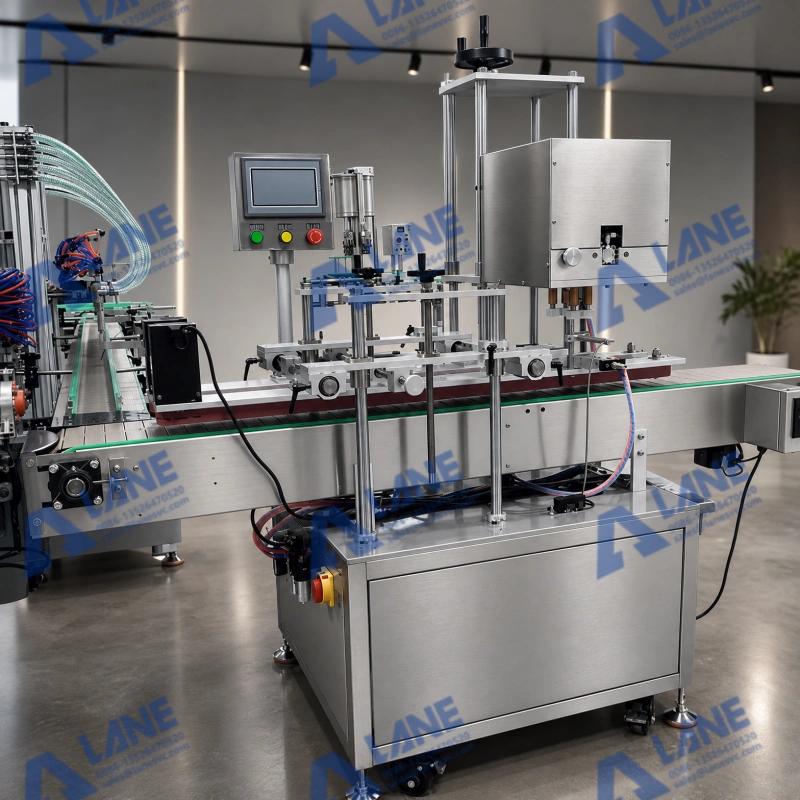
LANE Machinery supplies semi-automatic and fully automatic capping machines for 50 ml bottles through 25 L drums, with cap orientation, servo-controlled torque, quick-change tooling, PLC recipe management, and corrosion-resistant construction for fertilizer service. The machine can be supplied as a standalone unit or integrated with a filling machine, labeling machine, and coding machine.
The LANE automatic capping machine is a container closing system designed for the liquid fertilizer industry. It receives filled and sealed-inner containers from a filling machine or operator, picks a cap from the feeding system, places it on the container mouth, and completes the closure by screw tightening, snap-on, or press-on action.
The machine configuration depends on the container and production rate:
Contact parts and machine frames are selected for resistance to fertilizer liquids, rinsing water, and cleaning chemicals. The capping station can be designed to the same corrosion and cleanability standard as the rest of the liquid fertilizer line.
The automatic capping machine follows a continuous cycle:
For screw caps, the spindle lowers onto the cap, rotates to the target torque, and retracts. Servo motors give the machine a defined final torque value for every container. For snap-on or press caps, the head applies a controlled downward force until the cap seats.
The machine uses sensors to confirm that a container is present, a cap is present, and the closure is complete. If a condition is not met, the container is flagged or rejected instead of moving into the line as a finished package.
The capping machine is the sealing step between filling and final package marking:
Mixing tank -> Filtration -> Storage tank -> Filling machine -> Capping machine -> Labeling -> Inkjet coding -> Palletizing
In this configuration:
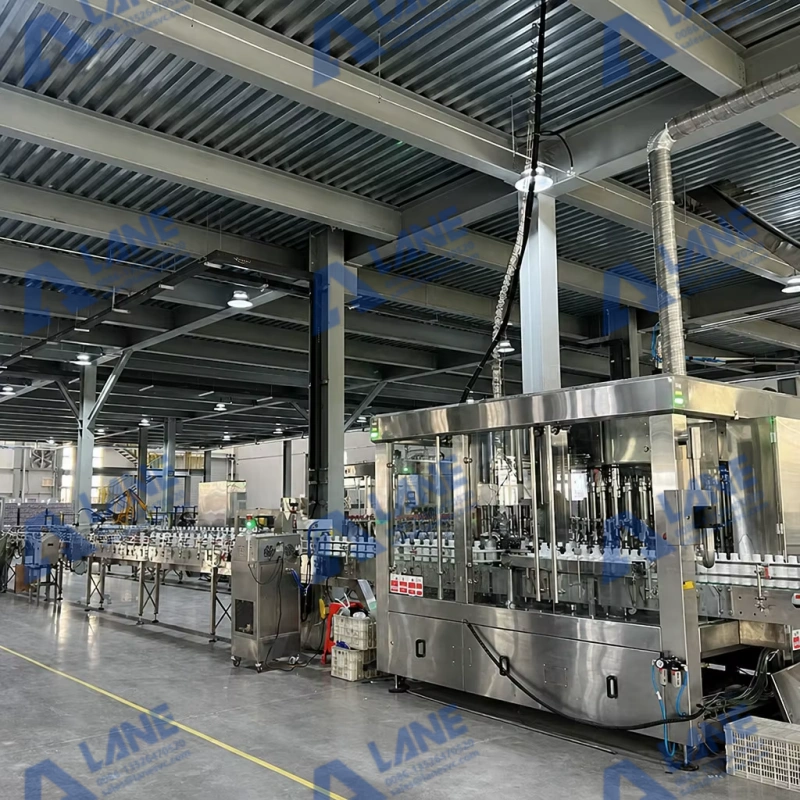
LANE supplies the capping machine as a single station or as part of a complete liquid fertilizer production line with mixing, reaction, fermentation, filtration, storage, filling, labeling, coding, and CIP systems.
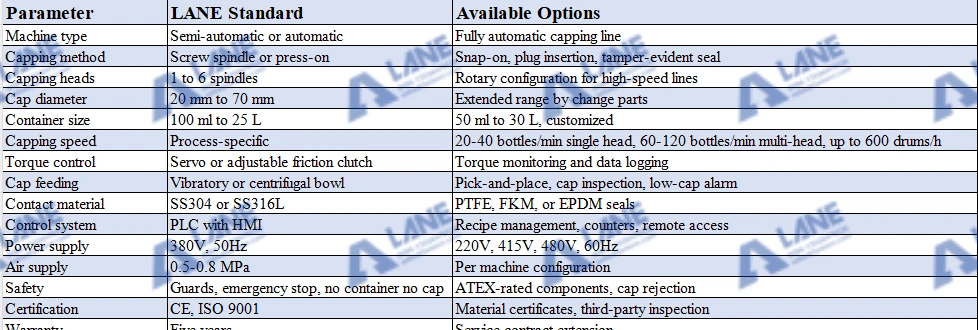
LANE manufactures automatic capping machines under an ISO 9001 quality management system and can supply CE-certified equipment. Machine design follows packaging machinery safety practice, including risk assessment, guards, interlocks, and electrical protection in line with the Machinery Directive 2006/42/EC and IEC 60204-1.
For liquid fertilizer products exported to the European Union, the final product must meet Regulation (EU) 2019/1009 labeling and packaging requirements. The capping machine supports clean closure, consistent cap position, and leak-free containers, and we recommend independent verification of the finished product by the relevant authority.
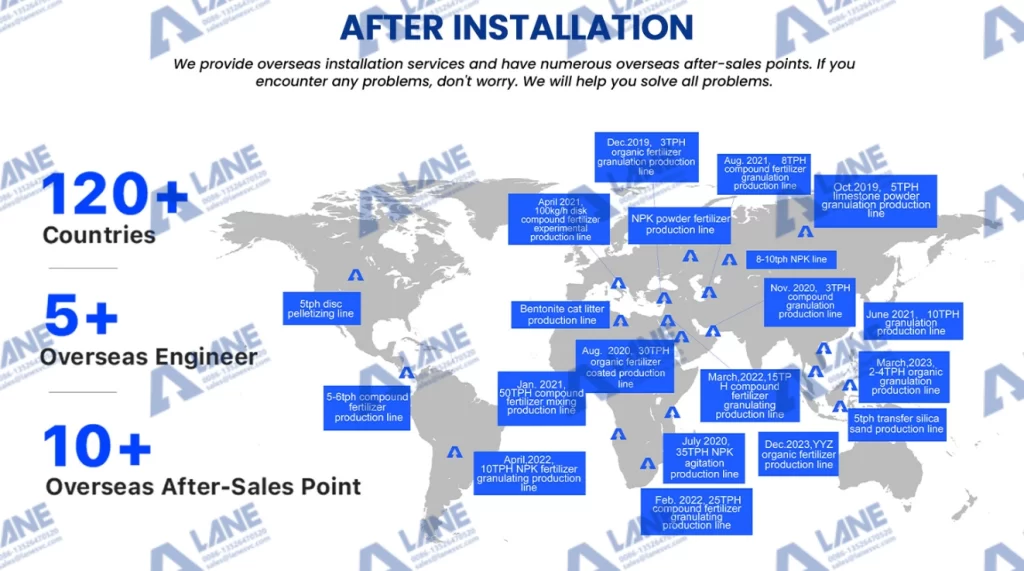
Henan Lane Heavy Industry Machinery Technology Co., Ltd. is a fertilizer equipment manufacturer with more than 20 years of engineering experience. LANE has delivered equipment and production lines to clients in more than 50 countries and supplied machines for a 100,000 tons per year national fertilizer project in Africa.
LANE provides one-stop service from packaging line layout and machine selection to overseas installation, commissioning, operator training, remote video guidance, and after-sales support. Our engineers review your container size, cap type, closure torque, line speed, and plant environment, then recommend the correct capping configuration.
What types of caps can the automatic capping machine handle?
The machine can handle screw caps, snap-on caps, press-on plugs, and tamper-evident closures. Cap size, orientation, and closure method are matched to your container, and change parts allow different cap types on the same machine.
Can one machine cap both bottles and drums?
Yes. Quick-change tooling allows one platform to handle bottles, jerry cans, and drums. The capping head, guides, and conveyor settings are stored in the PLC for each container format.
How is capping torque controlled?
Servo-driven spindles provide a defined final torque for every container. Friction clutch models protect against over-tightening when torque control is not required. Torque monitoring and data logging are available for quality records.
What happens if a cap is missing or the container is not positioned?
The machine stops the capping cycle when the cap or container is not detected. On automatic lines, the flagged container can be rejected so it does not continue as a finished package.
Can the capping machine be connected to an existing filling line?
Yes. The machine connects to the filling machine, conveyor, labeling machine, and coding machine through PLC signals. Line speed is synchronized so containers, caps, and closures stay in sequence.
How long does a changeover take?
Changeover time depends on the container and cap difference. A typical format change requires replacing the capping tooling, adjusting guides, and selecting the PLC recipe. LANE confirms the expected changeover time with your production plan.
How is the machine cleaned between different fertilizer formulas?
Contact parts are accessible for manual rinsing, and quick-release tooling speeds up cleaning. For automated lines, CIP connections can be provided. Material selection is matched to your product so cleaning does not damage seals or spindles.
What support does LANE provide?
LANE provides a five-year warranty under the equipment contract, spare parts support, operator training, and overseas installation and commissioning services. Remote video guidance is available during commissioning and after-sales troubleshooting.
Tell LANE your container size, cap type, closure torque, line speed, and packaging line layout. Our engineering team will recommend the capping configuration, change parts, and integration plan, then provide a technical data sheet and quotation.


Everything you need to know when looking at different types of organic fertilizer equipment, all in one place.
Copyright © 2026. LANE All rights reserved.