LANE Machinery manufactures high-precision vibrating screeners for fertilizer powder and granule classification. Linear and circular motion options. Anti-blinding, low-noise, multi-deck designs. Request a quotation.
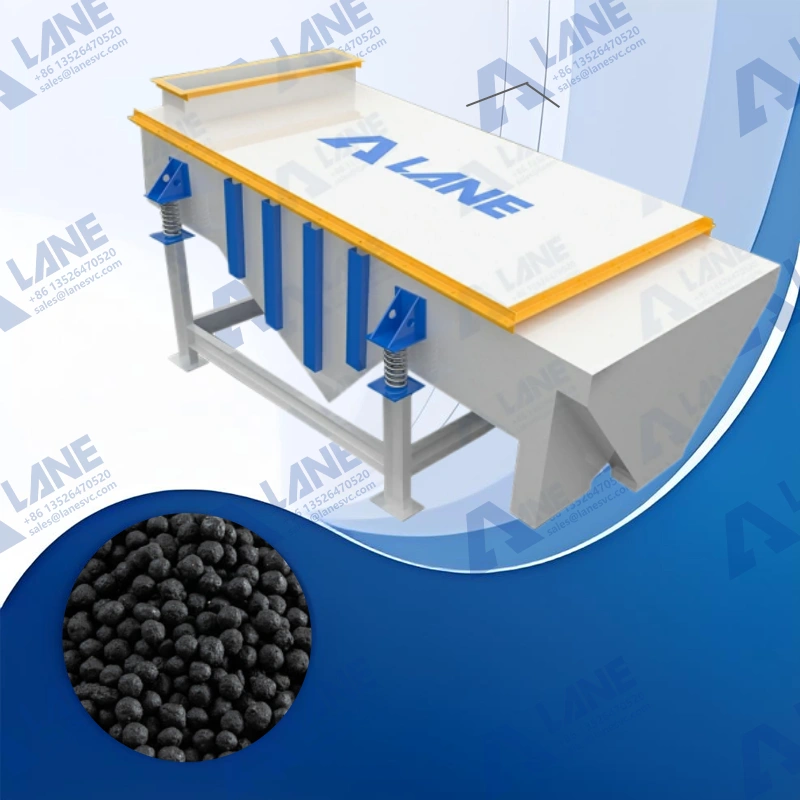
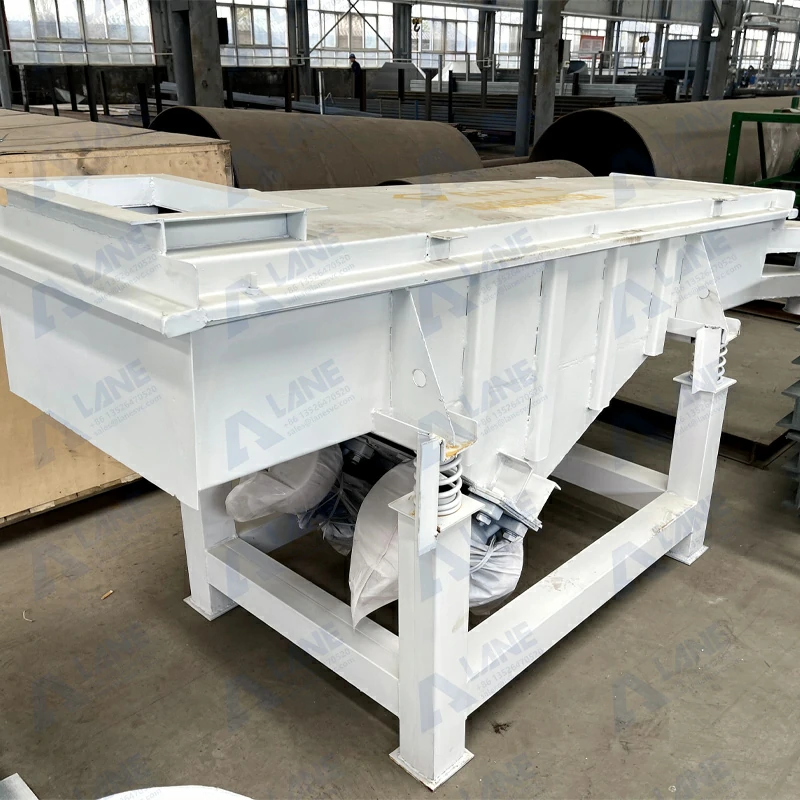
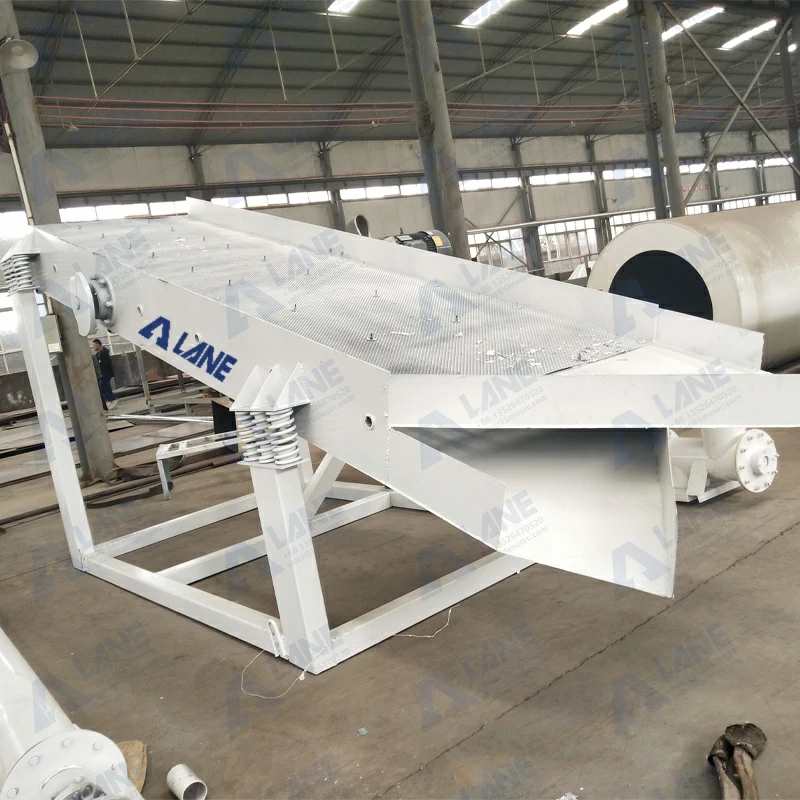
The vibrating screener (also referred to as a vibrating screen, vibratory sieve, or oscillating screen separator) is a high-efficiency screening machine that uses controlled mechanical vibration to separate fertilizer materials into precise particle size fractions. Manufactured by LANE Machinery, our vibrating screeners are purpose-built for the demanding conditions of fertilizer production — from fine powder classification to finished granule grading.
Where rotary drum screeners excel at high-volume, gentle tumbling separation, the vibrating screener delivers superior precision for fine-particle cuts and multi-deck classification. It is the preferred choice for fertilizer manufacturers who require tight particle size distribution control, especially for powder-form fertilizers (MAP, DAP, SOP, SSP, TSP), water-soluble fertilizers, and micronutrient products.
Primary function: Use high-frequency mechanical vibration to stratify and separate dry or wet materials across one or multiple screen decks, producing 2–5 precisely graded size fractions in a continuous operation.
The vibrating screener achieves sharp particle size separation through controlled vibration amplitude (2–10 mm) and frequency (up to 960 RPM for circular motion; up to 3,000 RPM for high-frequency linear motion). Mesh apertures range from 0.075 mm (200 mesh) to 50 mm, covering everything from ultra-fine powder to coarse granules.
Stack up to 4 screen decks in a single machine to produce 5 distinct size fractions simultaneously. Each deck is fitted with a different mesh aperture, allowing complete size grading from a single feed stream. This replaces multiple single-deck machines and reduces plant footprint, energy consumption, and material handling complexity.
LANE vibrating screeners incorporate multiple anti-blinding mechanisms to maintain screening efficiency with moist or sticky fertilizers:
Standard models feature a bolted or quick-clamp sealed cover with integrated dust extraction flanges. This contains airborne dust, protects the product from environmental contamination, and enables connection to a central dust collection system for a clean, OSHA-compliant workplace.
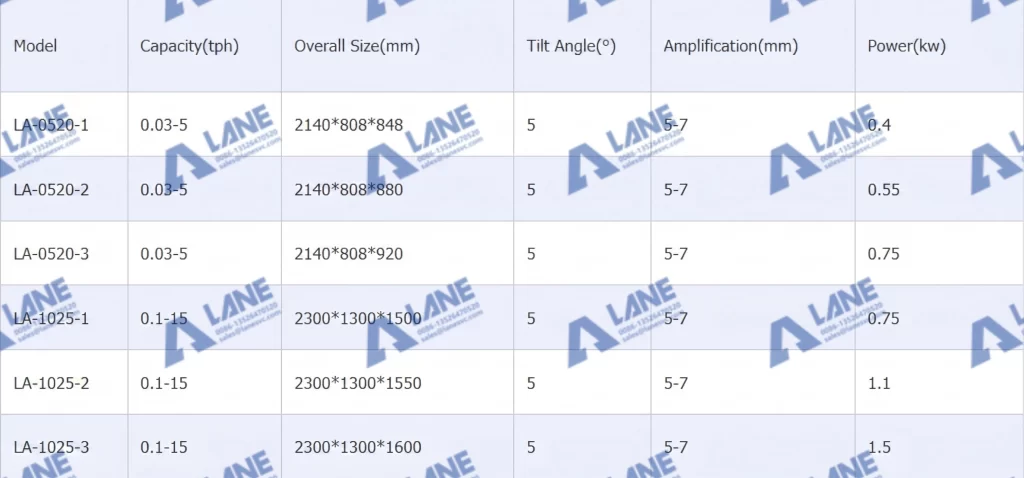
The vibrating screener serves critical roles across all categories of fertilizer manufacturing:
A vibrating screener handling NPK granules faces very different demands than one screening food powder or mining ore. LANE understands these distinctions:
LANE’s patented quick-change screen deck system allows one operator to swap a mesh panel in under 10 minutes without tools. Screen frames are laser-cut for precise tensioning, eliminating the common problem of loose mesh that reduces screening accuracy.
Every LANE vibrating screener undergoes dynamic balancing before shipment. The eccentric shaft assembly is balanced to ISO 1940 G2.5 standards — the same grade used for precision machine tool spindles. This translates to:
As a complete fertilizer plant solution provider, LANE handles every aspect of screener integration:
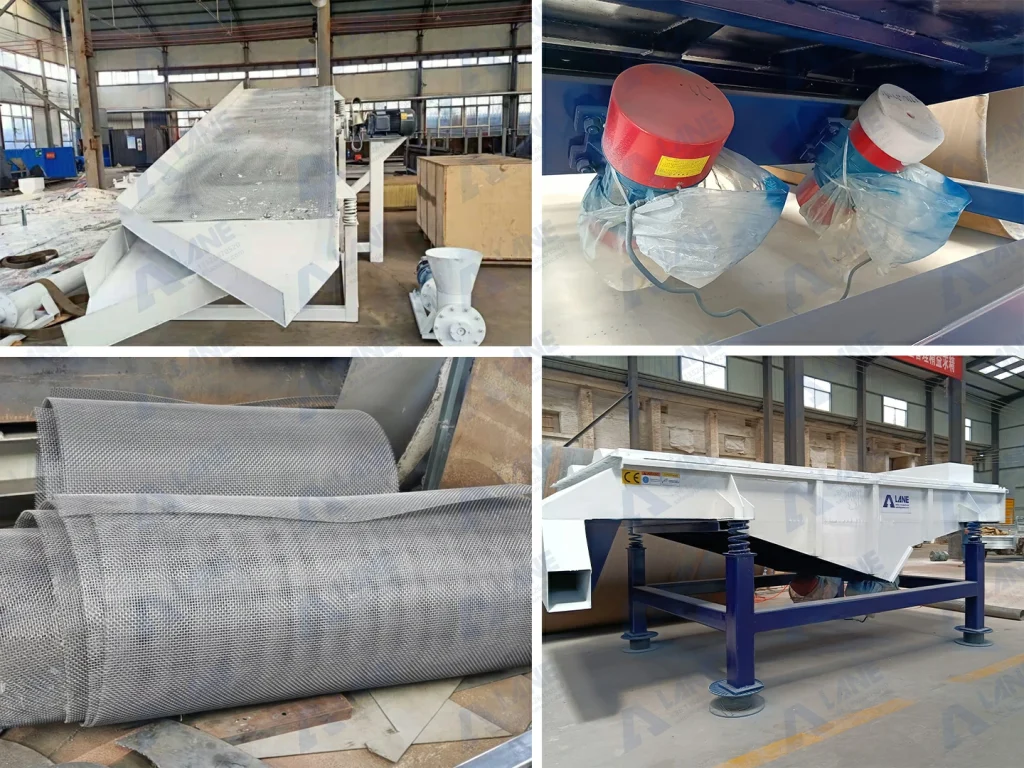
Vibrating screener: Uses high-frequency vibration on flat screen decks. Best for precise particle size cuts, fine powder screening, and multi-deck classification. Higher energy input at the screen surface means sharper separation but potentially more granule breakage.
Rotary drum screener: Uses a slowly rotating cylindrical drum to tumble material. Best for high-capacity bulk screening with gentle product handling and minimal granule breakage.
For most fertilizer plants, both machines have their place — a rotary drum screener for primary bulk screening and a vibrating screener for final precision grading. See our Rotary Drum Screener for bulk screening applications.
Several strategies depending on moisture level:
For water-soluble fertilizers (which are hygroscopic), we recommend stainless steel construction with heated screen decks to prevent moisture absorption and caking.
Screen mesh life depends heavily on material abrasiveness, operating hours, and tension maintenance. Typical service life:
We recommend keeping one spare set of screen meshes per machine in inventory to minimize downtime.
Yes. LANE vibrating screeners are designed for PLC integration. We provide:
Our controls engineers will work with your automation team to ensure seamless integration.
A vibrating screener typically uses 2 × 0.75 kW to 2 × 5.5 kW (1.5–11 kW total), making it significantly more energy-efficient than a rotary drum screener of equivalent capacity (which typically uses 3–15 kW). However, the rotary drum screener often achieves higher throughput per unit of floor space. The choice should be based on your screening precision requirements and material characteristics rather than power consumption alone.
Every fertilizer production line has unique screening requirements. LANE Machinery’s application engineers will work with you to specify the optimal vibrating screener configuration for your material, capacity, and plant layout.
When you inquire, please share:
Precision screening. Reliable production. That’s the LANE difference.
© 2026 Henan Lane Heavy Industry Machinery Technology Co., Ltd. (LANE Machinery). All rights reserved.


Everything you need to know when looking at different types of organic fertilizer equipment, all in one place.
Copyright © 2026. LANE All rights reserved.