Automatic granular fertilizer filling machine for 5-50kg bags. Net weigh & gross weigh models with ±0.1-0.2% accuracy. Handles NPK, urea, DAP, organic granules. Dust-free filling, CE & ISO certified. Factory direct pricing.
Fill 4–12 bags per minute with ±0.1–0.2% weighing accuracy. LANE Machinery’s granular fertilizer filling machines combine two-stage net weigh or gross weigh technology with dust-suppressing filling spouts to deliver precise, clean bagging for NPK, urea, DAP, potash, and organic granules. Reduce product giveaway by 80–90% while freeing 3–4 workers per shift.
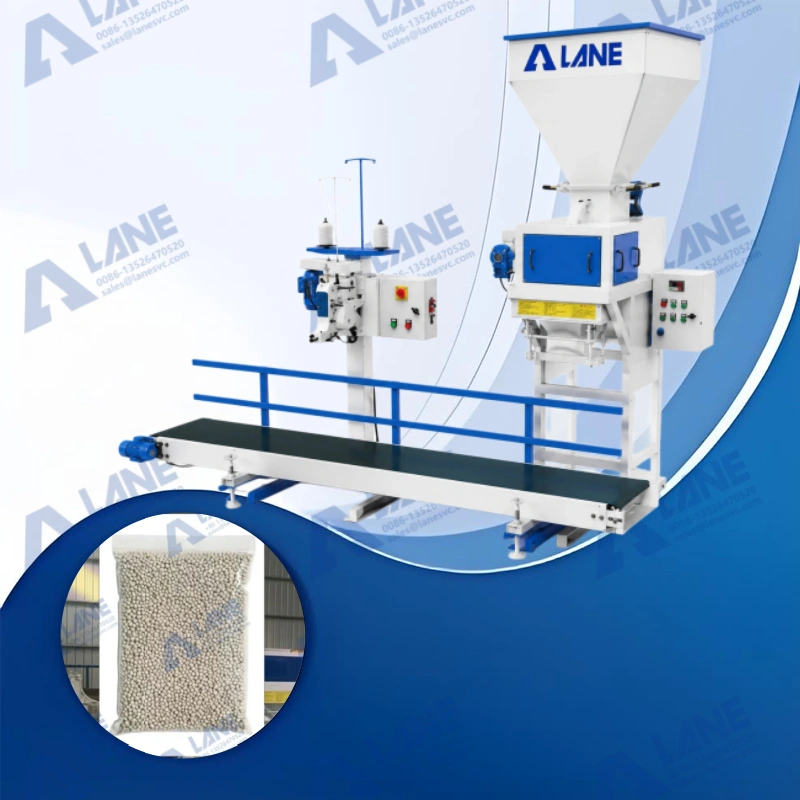
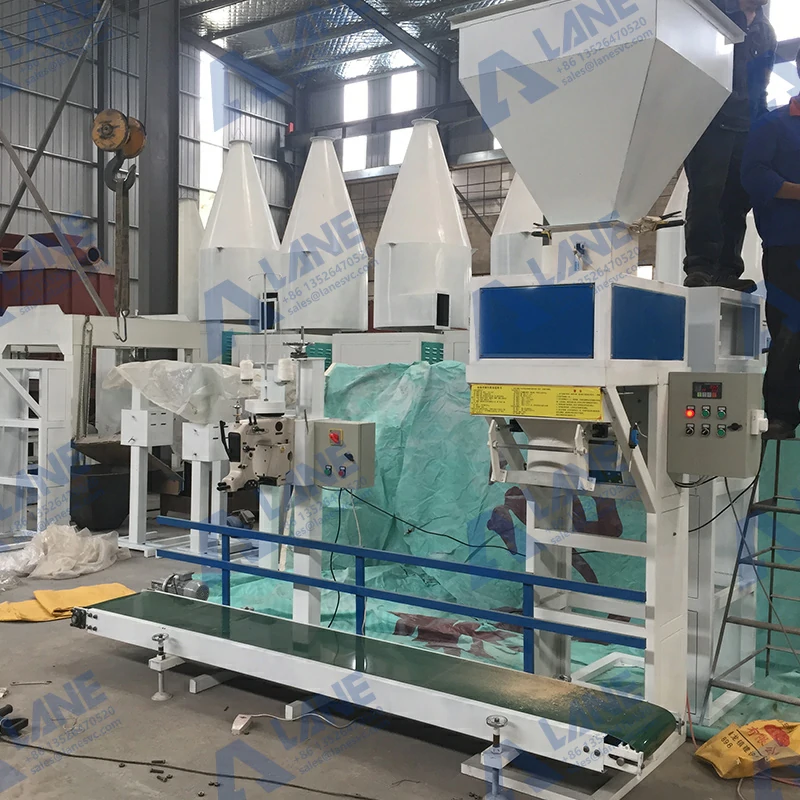
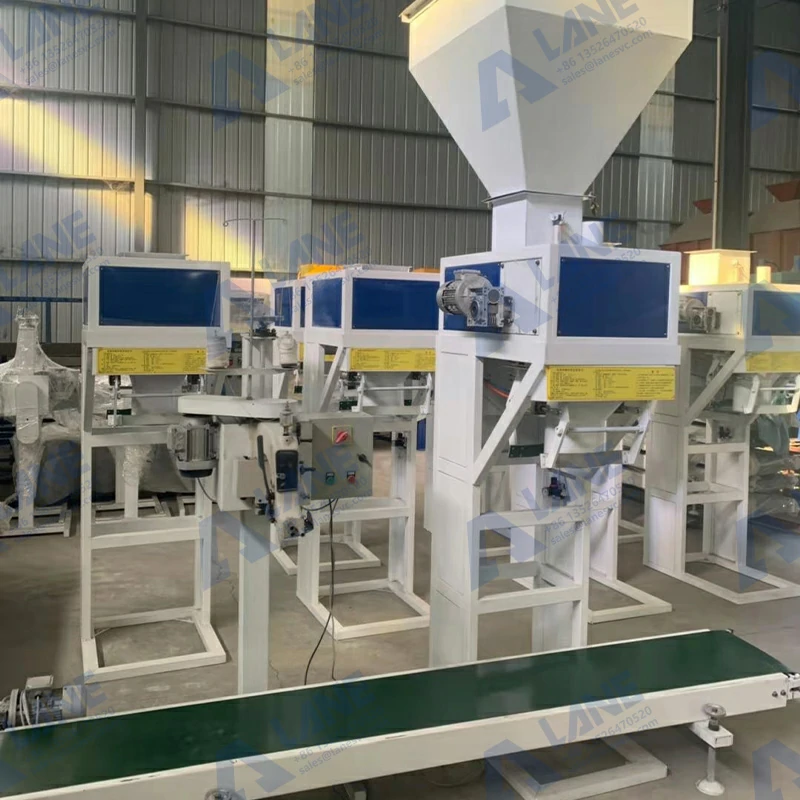
A granular fertilizer filling machine is an automated weighing and bagging system that dispenses free-flowing granular fertilizer into open-mouth, valve, or FFS (Form-Fill-Seal) bags at controlled speeds with high precision. It sits at the critical transition point in your production line — where bulk finished fertilizer becomes packaged, saleable product.
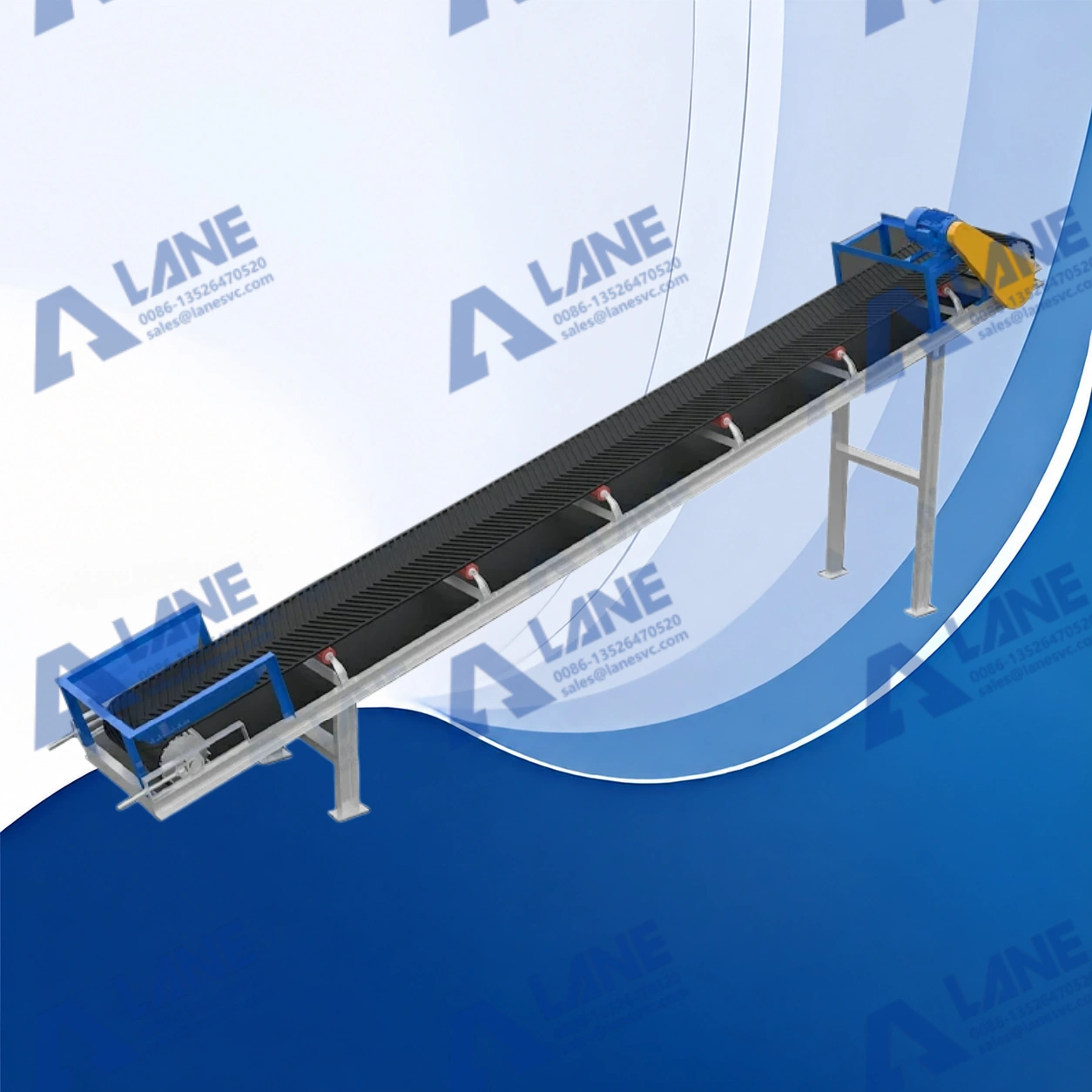
In a complete fertilizer plant, the filling machine receives material from an overhead surge hopper fed by the screening, coating, and cooling stages. Using precision load cells and a two-stage (bulk-and-dribble) feeding mechanism, it dispenses the target weight into each bag. The filled bag is then released to a closing station (sewing machine or heat sealer) and conveyed downstream to checkweighing, metal detection, and palletizing.
The filling machine directly determines your profitability. Every gram of overfill is product you gave away for free. Every second of cycle time is throughput you didn’t capture. For a mid-sized NPK plant producing 100,000 tons per year, improving filling accuracy from ±0.5% to ±0.15% saves approximately 350 tons of product giveaway annually — worth $70,000–$140,000 depending on fertilizer grade.
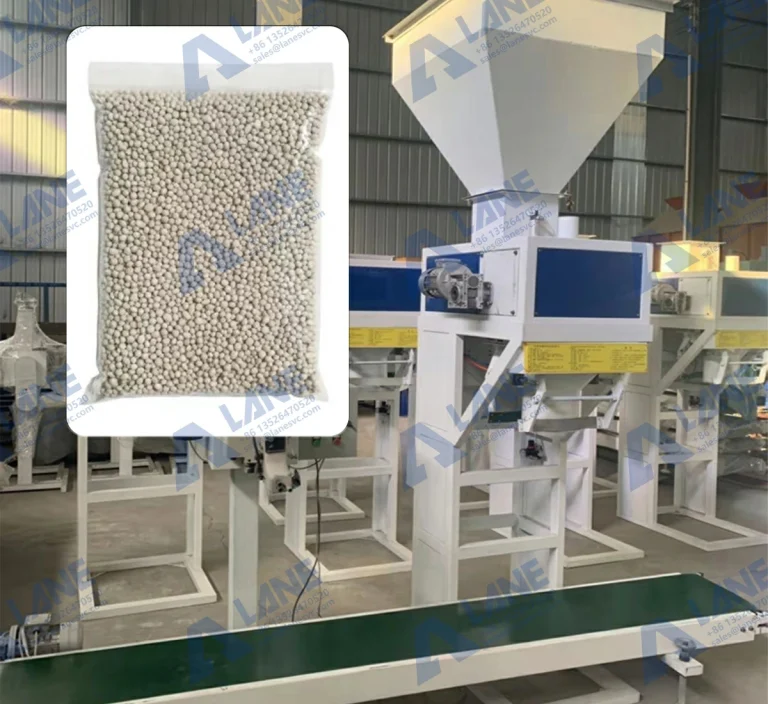
LANE Machinery offers multiple filling technologies. The right choice depends on your bag type, throughput requirements, accuracy targets, and budget.
| Machine Type | Weighing Method | Best For | Speed (bags/min) | Accuracy | Bag Types |
|---|---|---|---|---|---|
| Net Weigh Filler | Weighs in hopper before bag | High accuracy, free-flowing granules | 6–12 | ±0.1–0.2% | Open-mouth, valve |
| Gross Weigh Filler | Weighs bag + product together | Simple design, lower cost | 4–8 | ±0.2–0.5% | Open-mouth |
| Valve Bag Filler | Fills through valve opening | Dust-free, self-sealing bags | 3–8 | ±0.2–0.3% | Valve bags only |
| FFS (Form-Fill-Seal) | Forms bag from film reel | Fully automatic, high speed | 8–24 | ±0.15–0.3% | PE tubular film |
| Bulk Bag / FIBC Filler | Fills 500–2,000 kg bags | Jumbo bag dispatch | 5–20 bags/hr | ±0.1–0.2% | FIBC bulk bags |
| Factor | Net Weigh Filler | Gross Weigh Filler |
|---|---|---|
| How it works | Product is weighed in a dedicated hopper above the bag, then discharged | The bag hangs on the filling spout and is weighed together with the product |
| Accuracy | Higher (±0.1–0.2%) — bag weight is not part of measurement | Lower (±0.2–0.5%) — bag weight variation affects reading |
| Speed | Faster — next batch can weigh while bag is being changed | Slower — weighing stops during bag change |
| Cost | Higher — requires weigh hopper and additional structure | Lower — simpler design, fewer components |
| Best for | Premium fertilizers, export-grade products, high-value NPK grades | Economy fertilizers, local market distribution, smaller plants |
| Bag materials | Woven PP, PE, kraft paper, laminated | Woven PP, PE, kraft paper |
Recommendation: For most commercial fertilizer operations, the net weigh filling machine delivers the best balance of accuracy, speed, and lifetime value. The 0.1–0.3% accuracy improvement over gross weigh typically pays for the price difference within the first 6–12 months of operation through reduced product giveaway alone.
FFS technology forms the bag from a flat roll of PE tubular film, fills it, and seals it — all in one continuous machine. It reaches 1,200–2,000+ bags per hour and eliminates the need for pre-made bags and separate sewing/heat-sealing stations.
FFS is the right choice when:
LANE Machinery can supply FFS-integrated filling lines from single-source accountability, including film unwind, bag forming, filling, sealing, and downstream conveying. Contact us for a custom configuration.
At the heart of every LANE filling machine is a two-stage fast/dribble feeding system controlled by a high-speed weighing controller:
The result: typical accuracy of ±20–30 grams on a 25 kg bag (±0.1%) and ±50–75 grams on a 50 kg bag (±0.15%). This represents an 80–90% reduction in product giveaway compared to manual filling or basic timed-dispense systems.
Granular fertilizer — especially NPK, DAP, and potash — generates dust during filling. LANE’s filling machines integrate dust control at the source:
Dust control is not just about cleanliness. For urea, ammonium sulfate, and other hygroscopic fertilizers, airborne dust absorbs moisture from the air, forming corrosive deposits on equipment. Effective dust extraction extends the service life of every machine downstream.
| Bag Type | Material | Weight Range | Filling Method |
|---|---|---|---|
| Open-mouth bags | Woven PP, PE, kraft paper | 5–50 kg | Net weigh or gross weigh, bag clamp with inflatable seal |
| Valve bags | Kraft paper, PE, woven PP with valve | 10–50 kg | Horizontal or vertical valve filling spout |
| FFS bags | PE tubular film (from roll) | 5–50 kg | Form, fill, and seal in one continuous motion |
| FIBC / Bulk bags | Woven PP with lifting loops | 500–2,000 kg | Dedicated bulk bag filling frame with load cell platform |
Changeover between bag sizes is handled through the HMI recipe system — select the product, and the machine automatically adjusts target weight, feed parameters, and fill timing. Mechanical adjustments for different bag widths take 5–10 minutes.
Fertilizer materials are chemically aggressive. LANE builds for it:
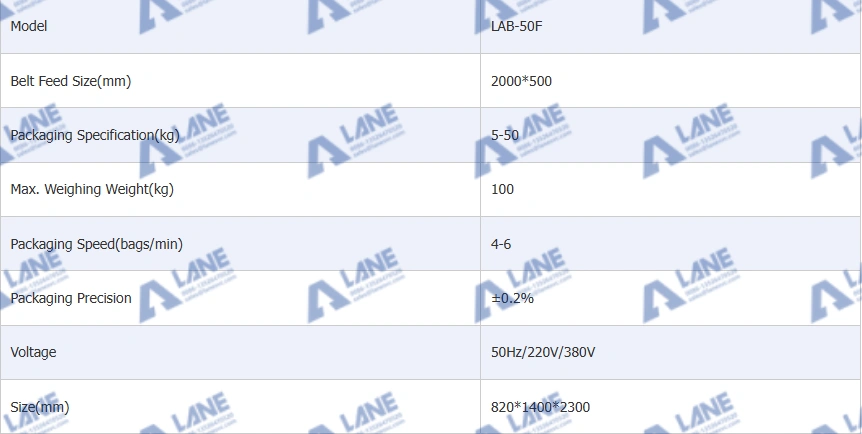
Custom specifications are available. LANE Machinery engineers configure each filling machine to your specific fertilizer type, bag format, and throughput requirement.
| Fertilizer Type | Examples | Key Handling Considerations | Recommended Configuration |
|---|---|---|---|
| NPK Compound | 15-15-15, 17-17-17, 20-10-10 | Granules 1–4 mm; free-flowing; moderately dusty; moisture-sensitive in some grades | Net weigh, gravity feed, dust extraction, AISI 304 |
| Urea (Prills/Granules) | 46-0-0 | Highly hygroscopic (CRH ~45%); dissolves in humid air; highly corrosive to carbon steel | Net weigh, AISI 316L product-contact, climate-controlled feed hopper |
| DAP (Diammonium Phosphate) | 18-46-0 | Hard granules; moderately dusty; slightly corrosive; abrasive over time | Net weigh, ceramic/UHMWPE wear liners, dust extraction |
| TSP / SSP (Phosphate) | 0-46-0, 0-20-0 | Similar to DAP; SSP may be finer and more dusty | Net weigh or gross weigh, AISI 304, dust extraction |
| MOP / SOP (Potash) | 0-0-60, 0-0-50 | Abrasive crystals/powder; less chemically aggressive; heavier density | Net weigh, wear-resistant feed gate, reinforced frame |
| Organic Granular | Compost pellets, manure-based, bio-organic | Variable granule size; may contain fibers and irregular particles; lower density; dusty | Vibratory feed assist, larger hopper, frequent clean-out access |
| BB Blended Fertilizer | Custom NPK physical blends | Mixed granule sizes (1–5 mm); segregation risk during filling | Net weigh, gentle gravity feed, minimized drop height |
| Ammonium Sulfate | 21-0-0-24S | Crystalline; corrosive; can cake in humid conditions | AISI 316L, heated hopper (optional for humid climates) |
| CAN (Calcium Ammonium Nitrate) | 27-0-0 | Granular; regulated; hygroscopic; dust may be combustible | ATEX-compliant electricals, AISI 316L, dust monitoring |
How does a granular fertilizer filling machine work?
The machine receives granular fertilizer from an overhead hopper and dispenses it into bags using a two-stage weighing process. In the bulk stage, material flows rapidly into a weigh hopper to approximately 90–95% of target weight. In the dribble stage, flow slows to a trickle for precise final cutoff. The weighed batch is then discharged into a waiting bag clamped to the filling spout. The entire cycle for a 50 kg bag takes 5–10 seconds with a net weigh system.
How accurate is a fertilizer bag filling machine?
LANE Machinery’s net weigh filling machines achieve ±0.1–0.2% accuracy (±20–30 g on a 25 kg bag; ±50–75 g on a 50 kg bag). Gross weigh models achieve ±0.2–0.5%. For comparison, manual filling typically varies by ±1–3%. This precision translates directly to bottom-line savings — reducing product giveaway by 80–90%.
What is the difference between net weigh and gross weigh filling?
Net weigh systems weigh the product in a dedicated hopper before discharging into the bag. The bag weight is excluded from measurement, delivering higher accuracy. Gross weigh systems weigh the bag and product together on the filling spout. The design is simpler and lower cost, but accuracy is affected by bag weight variation (woven PP bags can vary by ±20–40 grams). For most commercial fertilizer operations, net weigh is recommended.
How much does a fertilizer bagging machine cost?
LANE Machinery fertilizer filling machines range from approximately $8,000–$15,000 USD for a single-spout semi-automatic gross weigh filler to $30,000–$80,000+ USD for a fully automatic dual-spout net weigh system or FFS machine. A complete bagging line — including filling, closing, checkweighing, metal detection, and conveying — typically ranges from $50,000–$150,000 USD. All prices are factory-direct FOB China.
How many workers are needed to operate the filling machine?
A semi-automatic filling machine requires one operator to place bags on the filling spout (replacing 3–4 workers doing manual weighing and filling). A fully automatic system with auto bag placer or FFS requires zero direct operators for the filling station — one supervisor can oversee the entire bagging-to-palletizing line. Labor savings alone typically recover the machine investment within 12–18 months.
Can one machine handle different fertilizer types and bag sizes?
Yes. Recipe management on the PLC/HMI stores separate parameter sets for each product: target weight, bulk/dribble cutoff points, feed gate positions, and in-flight compensation values. Switching between NPK 15-15-15 in 50 kg bags and urea in 25 kg bags takes seconds on the touchscreen. Mechanical adjustments for different bag widths add 5–10 minutes.
Is the machine suitable for dusty fertilizer materials?
Absolutely. LANE filling machines are designed for dusty environments: the bottom-up filling spout minimizes drop height, the inflatable bag clamp creates a sealed filling chamber, and the integrated dust extraction hood captures airborne particles at the source. Closed-loop filtration systems return collected dust to the production process. For particularly dusty materials (DAP, organic fertilizers, potash fines), enhanced extraction and ATEX-compliant electricals are available.
What maintenance does a fertilizer filling machine require?
Routine maintenance is straightforward: weekly cleaning of load cell mounting points to prevent material buildup affecting accuracy, monthly inspection of pneumatic seals and bag clamp inflatable gaskets, quarterly verification of weigh hopper discharge gate alignment, and annual load cell calibration check. LANE Machinery provides a detailed maintenance manual, spare parts catalog, and recommended spare parts inventory list with every machine. Remote diagnostic support helps resolve issues without waiting for an on-site visit.
How does the filling machine integrate with my existing production line?
The filling machine is designed for drop-in integration. It connects to your upstream surge hopper (we specify the flange pattern and minimum head height required) and downstream bag closing and conveyor equipment (we provide the discharge height and interface dimensions). The PLC communicates with your plant control system via standard industrial protocols (Ethernet/IP, PROFINET, Modbus TCP). LANE Machinery provides full integration engineering support, including interface drawings and control signal mapping.
What are the space and utility requirements?
A single-spout net weigh filling station typically requires approximately 2.5 m × 3 m of floor space with 3.5–4.5 m of overhead clearance for the surge hopper. Utilities needed: 380–480 VAC 3-phase power (3–7 kW), compressed air at 0.5–0.8 MPa (typically 0.5–1 m³/min consumption), and a dust extraction connection point. Detailed site preparation drawings are provided before shipment.
| Trust Signal | What It Means for You |
|---|---|
| Fertilizer Equipment Specialist | We don’t build general packaging machines. Every filling machine we produce is engineered specifically for granular fertilizers — with materials, coatings, and dust controls matched to fertilizer chemistry. Our engineers understand NPK, urea, DAP, and organic fertilizer handling from thousands of real-world installations. |
| Proven Accuracy That Pays Back | Our net weigh filling machines consistently deliver ±0.1–0.2% accuracy in fertilizer service. For a 100,000-ton/year plant, this accuracy improvement over manual or basic timed filling saves approximately $70,000–$140,000 annually in product giveaway. The machine often pays for itself within the first year on this saving alone, before accounting for labor reduction. |
| Factory-Direct Pricing | You purchase directly from our manufacturing facility in Henan, China. There are no distributor margins, no agent commissions, and no hidden fees. Competitive pricing with full factory warranty and direct engineering support. |
| CE & ISO 9001 Certified | International quality and safety certifications with full documentation packages to support import clearance in your country. |
| Global Turnkey Capability | Need more than a filling machine? LANE Machinery delivers complete fertilizer production lines — granulation, drying, cooling, screening, coating, bagging, palletizing, and wrapping — from a single supplier with single-point accountability. |
| After-Sales Support Across Time Zones | Remote VPN diagnostics resolve most issues within hours. Comprehensive spare parts inventory with global express dispatch. Optional annual maintenance contracts for proactive equipment management. |
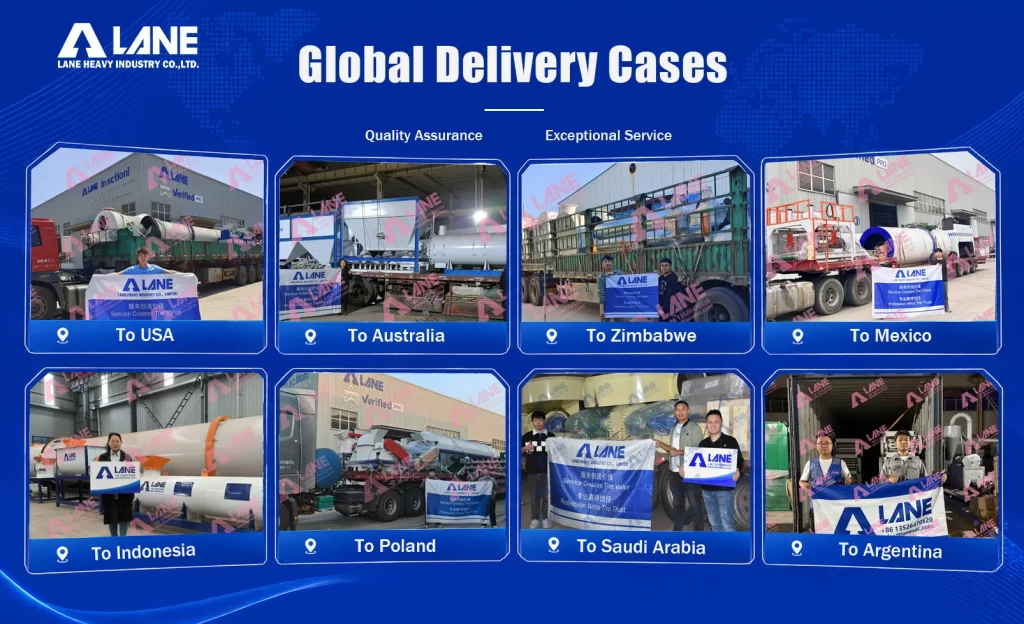
Tell us about your product and production targets, and we’ll recommend the optimal filling machine configuration with a detailed quotation.
To prepare your quotation, we’ll need to know:
We respond to all quotation requests within 24 hours (business days).


Everything you need to know when looking at different types of organic fertilizer equipment, all in one place.
Copyright © 2026. LANE All rights reserved.