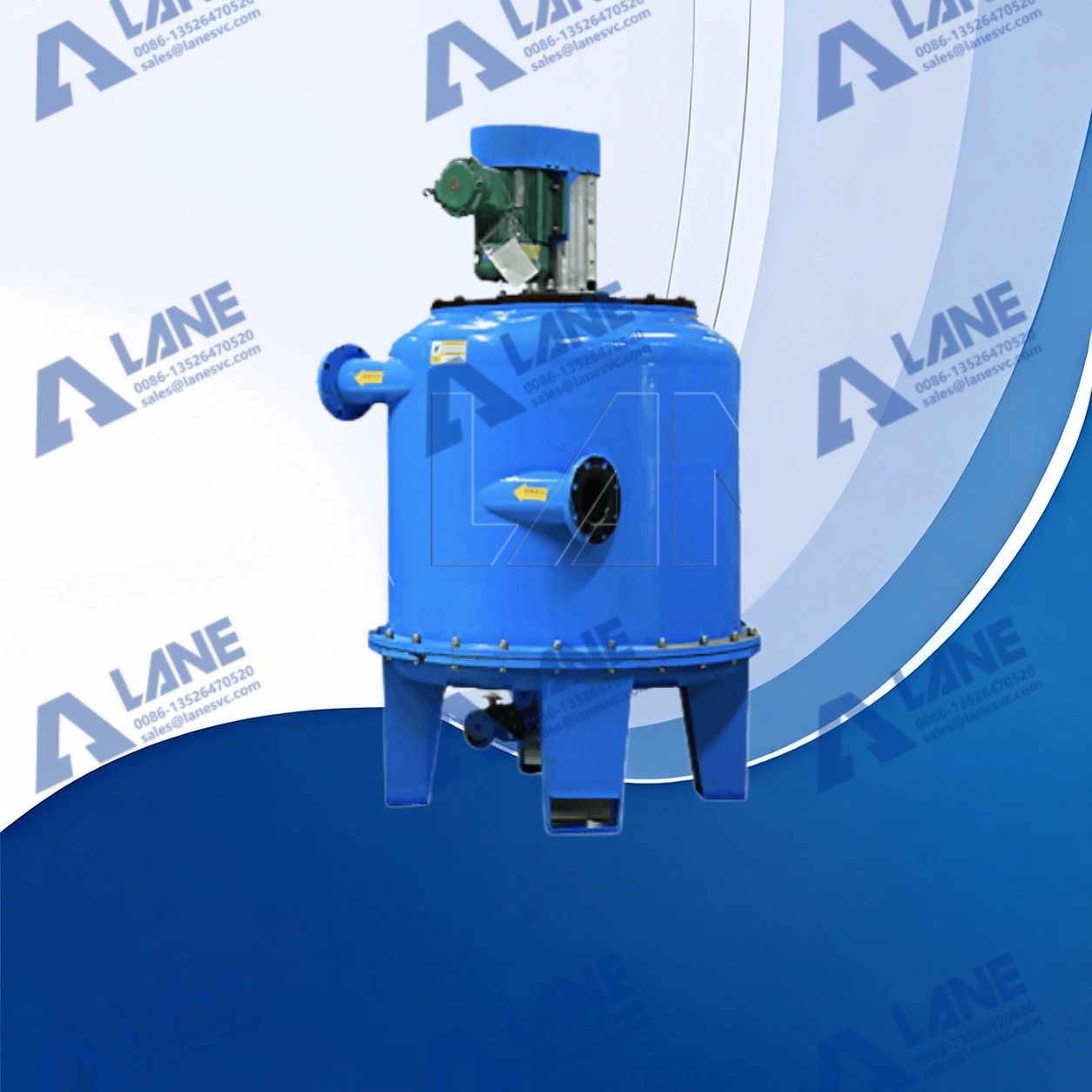
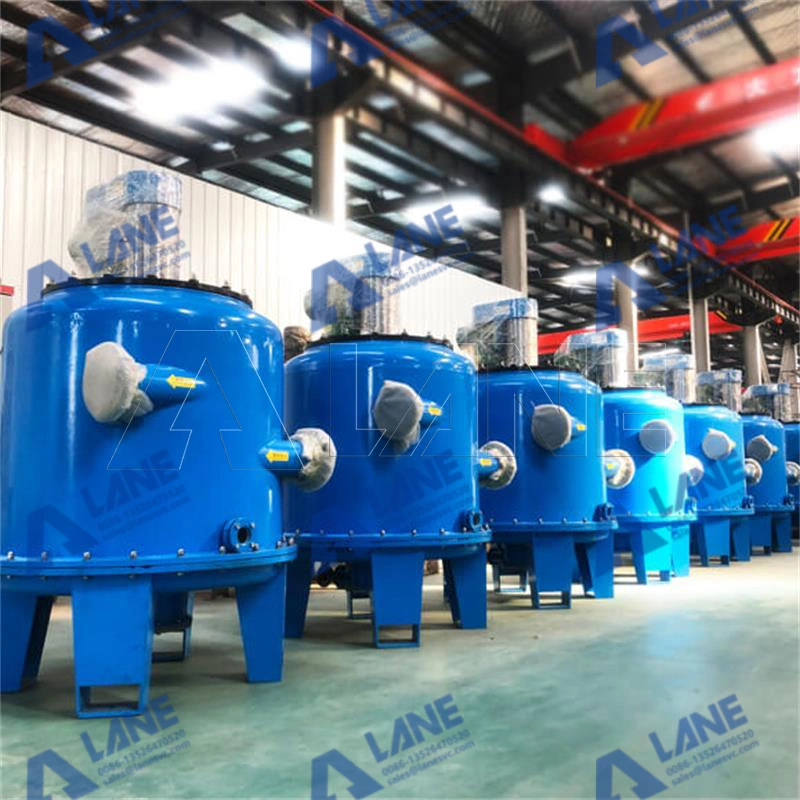
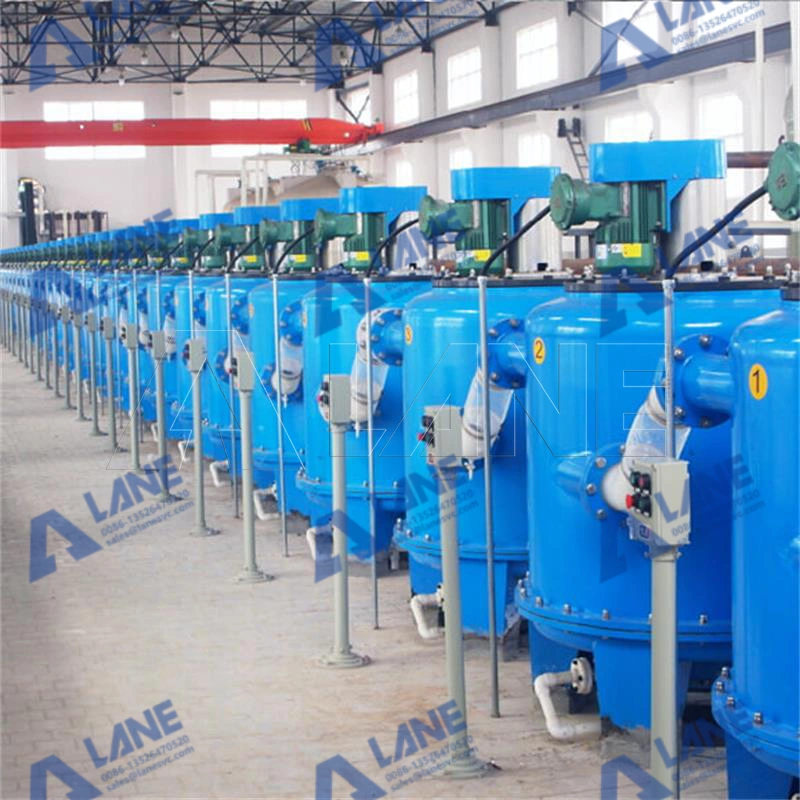
Continuous centrifugal separator for liquid fertilizer and manure, 5 to 25 m3/h, SS304/SS316L, fine solids removal, CE and 5-year warranty.
A centrifugal separator uses high-speed rotation to remove fine solids from liquid fertilizer, manure, digestate, and fermentation broth. It produces a clarified liquid stream and a concentrated solids stream without the long settling time of gravity tanks or the pressure limits of a filter.
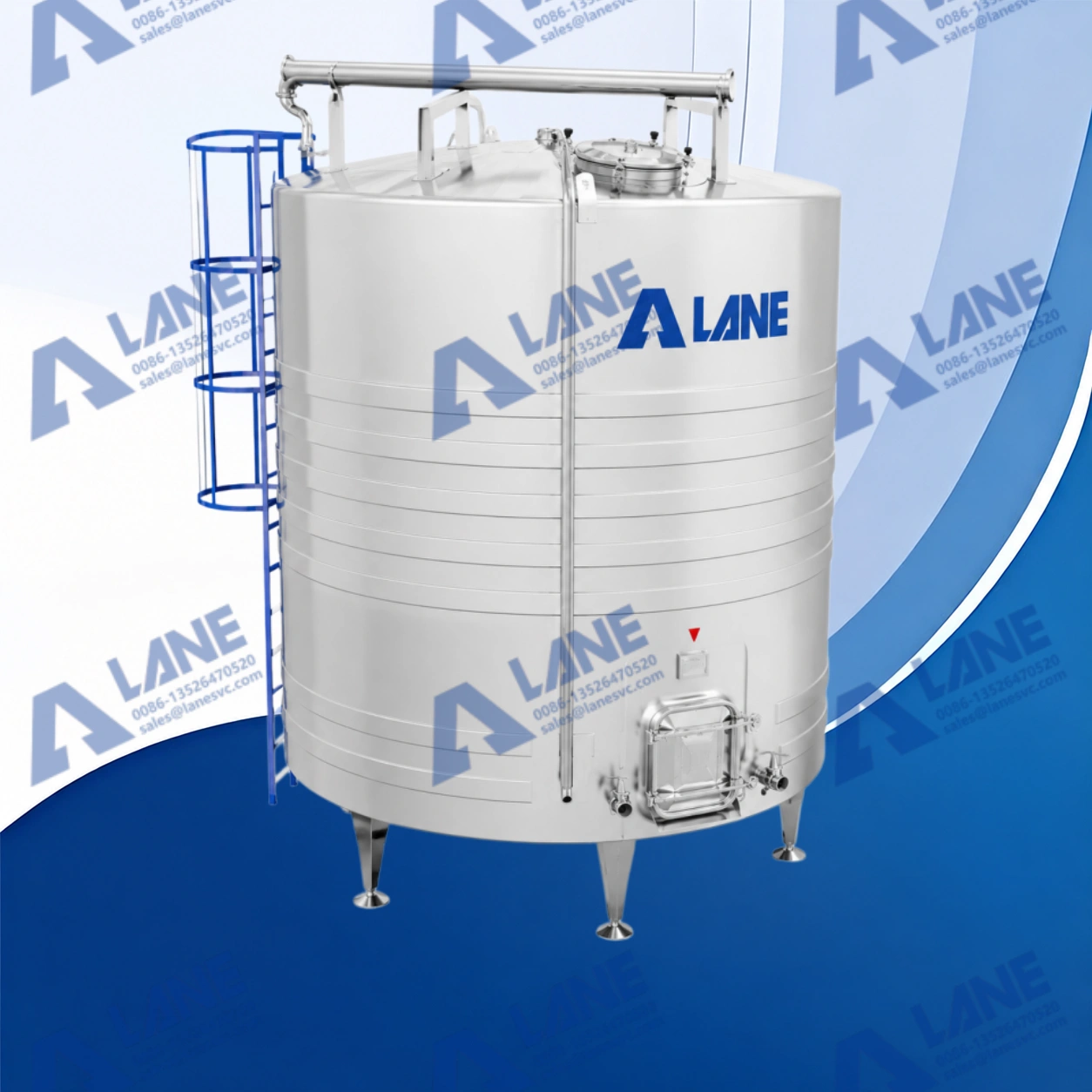
LANE Machinery supplies continuous centrifugal separators with processing capacities from 5 to 25 m3/h, SS304 or SS316L contact parts, decanter and disc stack configurations, vibration monitoring, and PLC-ready control. The separator can be supplied as a single unit or integrated into a complete liquid or organic fertilizer production line.
The LANE centrifugal separator is designed for applications where the liquid and solids have a small density difference, the solids are fine, or the plant needs a smaller footprint than a settling basin. It removes suspended particles that can clog drip emitters, spray nozzles, filling valves, and pumps.
Two configurations are available:
Both configurations use stainless steel contact parts, balanced rotating assemblies, and safety covers with interlocks. The separator can run continuously and requires less operator attention than manual filtration.
The working principle of the centrifugal separator is based on density difference under high rotational force.
The separator can be combined with a screw press or inclined dewatering machine upstream and a stainless steel duplex filter downstream. The screw press removes coarse solids, the centrifuge removes fine suspended solids, and the duplex filter provides final polishing before filling.
The centrifugal separator sits between primary separation and final filtration:
Raw material -> Screw press or inclined dewatering machine -> Centrifugal separator -> Stainless steel duplex filter -> Storage tank -> Filling machine
In this configuration:
LANE supplies the centrifugal separator as a single unit or as part of a complete liquid or organic fertilizer production line with dewatering, filtration, storage, filling, and CIP systems.
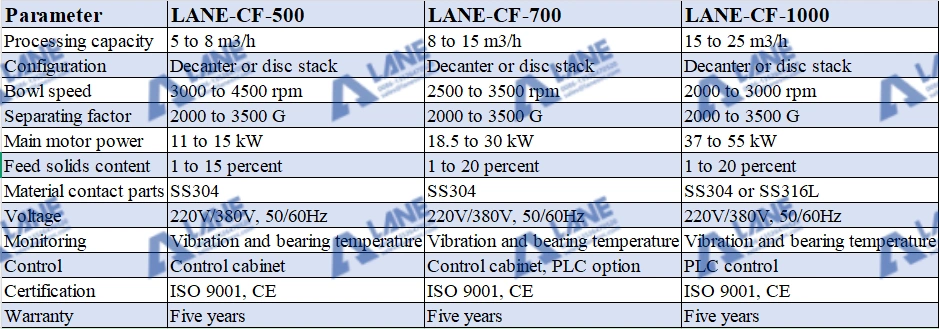
The table shows standard configurations. LANE confirms capacity, separation performance, and automation level after testing the actual feedstock or product.
LANE manufactures centrifugal separators under an ISO 9001 quality management system and can supply CE-certified equipment with material certificates for stainless steel bowls, housings, and contact parts.
High-speed rotating equipment is supplied with safety covers, interlocks, vibration monitoring, and operating documentation. For pressure-rated applications, the design can follow customer-specified codes including PED or GB/T 150. Hydrostatic testing and third-party inspection by SGS or BV are available.
For fertilizer products exported to the European Union, the final product must meet Regulation (EU) 2019/1009. The centrifugal separator supports contaminant control and product consistency, and we recommend independent certification of the final product by the relevant authority.
Henan Lane Heavy Industry Machinery Technology Co., Ltd. is a fertilizer equipment manufacturer with more than 20 years of engineering experience. LANE has delivered equipment and production lines to clients in more than 50 countries and supplied machines for a 100,000 tons per year national fertilizer project in Africa.
LANE provides one-stop service from machine selection and process design to overseas installation, commissioning, operator training, remote video guidance, and after-sales support. For liquid fertilizer projects, our engineers review the feedstock, solids content, particle size, viscosity, and flow rate, then recommend the correct separator type, model, and line configuration.
What is a centrifugal separator used for in fertilizer production?
It removes fine suspended solids from liquid fertilizer, manure, digestate, and fermentation broth. The clarified liquid can be stored or filled, and the concentrated solids can be used for composting or blending.
What is the difference between a decanter centrifuge and a disc stack centrifuge?
A decanter centrifuge handles higher-solids streams such as manure, digestate, and sludge. A disc stack centrifuge is better for fine clarification of lower-solids liquids such as mother liquor and chelated solutions.
How does a centrifugal separator compare with a screw press?
A screw press removes coarse solids by mechanical compression and works well on high-moisture fibrous material. A centrifugal separator uses high-speed rotation to remove fine suspended solids and produces a clearer liquid fraction.
Can the separator process manure and biogas slurry?
Yes. Decanter centrifuges are commonly used for manure and digestate separation because they handle fine solids and produce a drier, more concentrated solids stream than gravity screens.
What is the solids content of the feed?
Standard models handle feed solids from 1 to 20 percent. LANE confirms the actual range after a sample test, because particle size and viscosity affect separation performance.
How much maintenance does the separator need?
Routine checks include bearings, seals, belts, bowl balance, and vibration sensors. Safety covers and interlocks must stay in place during operation. LANE supplies spare parts and overseas maintenance support.
Can the separator be automated?
Yes. Feed pumps, discharge valves, vibration alarms, and bearing temperature can be controlled by the PLC. The separator can be integrated with upstream dewatering and downstream filtration equipment.
What is the warranty?
LANE provides a five-year warranty, spare parts support, and overseas installation and commissioning services.
Tell LANE your feedstock, solids content, particle size, viscosity, flow rate, and target product. Our engineering team will recommend the correct separator type, model, and line integration, then provide a technical data sheet and quotation.


Everything you need to know when looking at different types of organic fertilizer equipment, all in one place.
Copyright © 2026. LANE All rights reserved.