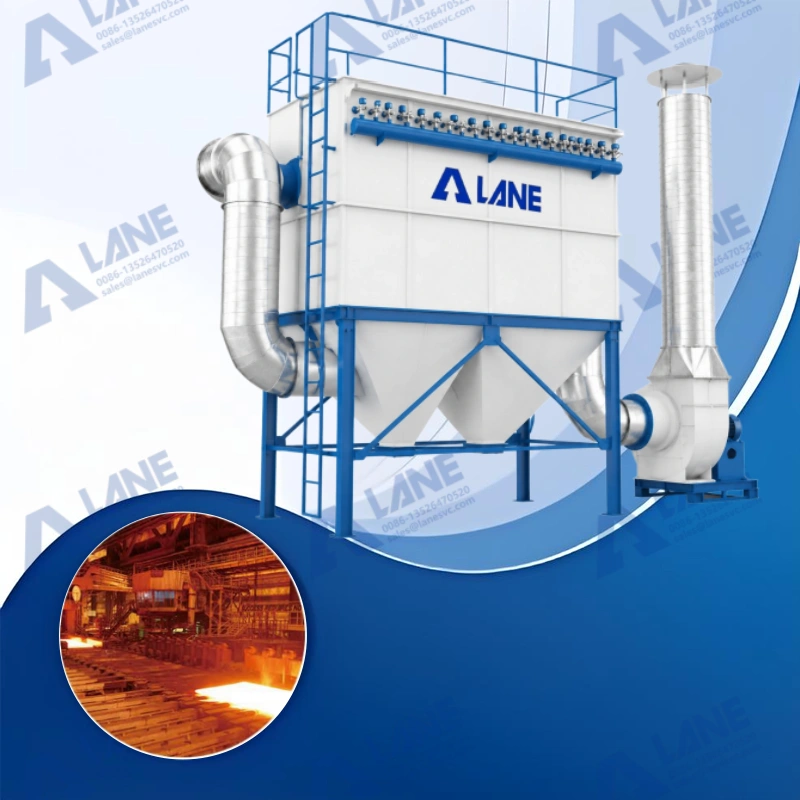
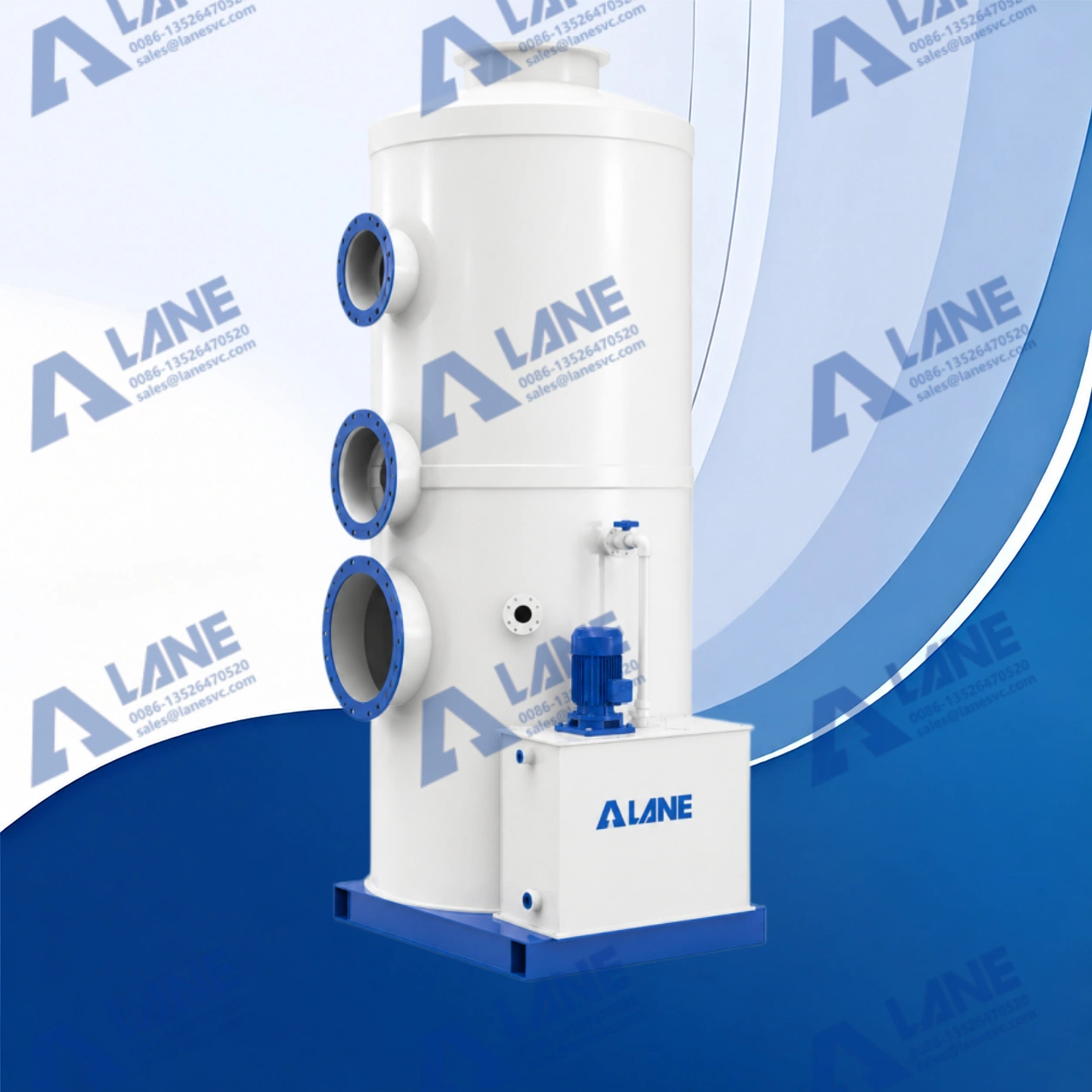
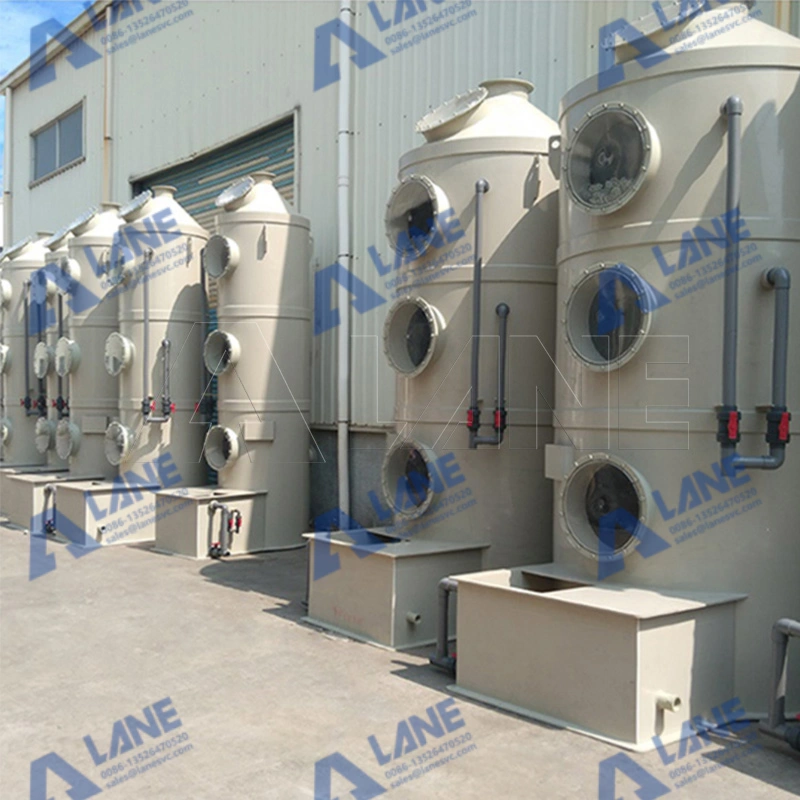
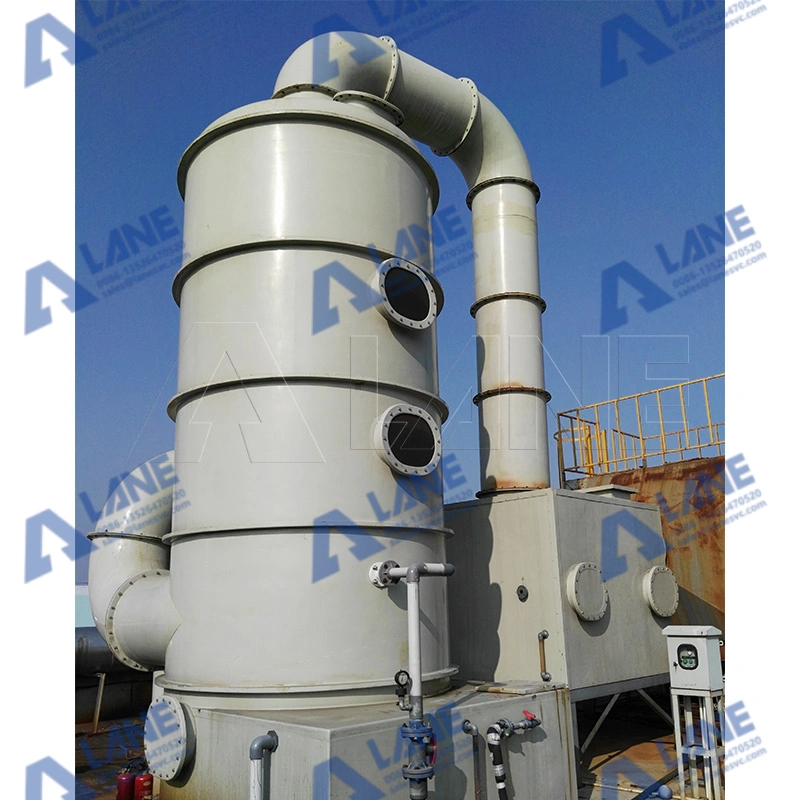
LANE Machinery fertilizer spray towers produce uniform NPK, ammonium sulfate, urea, and MAP/DAP granules at 1 to 30 TPH. PLC-controlled atomization, multi-zone temperature monitoring, cyclone fines recovery, and integrated wet scrubber. Diameter 2 to 15 meters, height 8 to 30 meters.
Spray granulation produces some of the highest-quality fertilizer granules in the industry: uniform spheres, controlled particle size distribution, high crush strength, and low dust. The core of the process is the spray tower, also called a prilling tower or spray drying tower depending on configuration.
The LANE Machinery fertilizer spray tower converts liquid slurry (molten urea, ammonium sulfate solution, NPK slurry, MAP/DAP melt) into solid granules through controlled atomization and thermal processing inside a vertical cylindrical tower. Droplets form at the top, fall through a precisely controlled hot air stream, and solidify or crystallize by the time they reach the bottom discharge.
We engineer spray towers from 2 to 15 meters in diameter, 8 to 30 meters in height, with production capacity from 1 to 30 tonnes per hour. Every tower is a custom design built around your slurry chemistry, target granule size, production rate, and site constraints. The tower is the tallest single piece of equipment in most fertilizer plants. Getting the design right the first time matters because you cannot easily modify tower height later.
Key spec range: Diameter 2 to 15 m. Height 8 to 30 m. Capacity 1 to 30 TPH. Material: stainless steel or coated carbon steel. Includes atomizer system, hot air distribution, cyclone recovery, wet scrubber.
PLC-controlled atomization with recipe management
The spray parameter set (slurry pressure, atomizer RPM for rotary atomizers, nozzle orifice size, and spray angle) determines granule size distribution more than any other variable. Our PLC system stores these parameters as named recipes. Switch from NPK 15-15-15 to ammonium sulfate, load the saved recipe, and the system adjusts automatically. Operators are not re-tuning from scratch on every product changeover. The PLC logs temperature at each zone, slurry feed rate, atomizer status, exhaust temperature, and scrubber pressure drop. Trending these variables over weeks of production reveals patterns: the nozzle that drifts slightly in flow rate, the temperature zone that creeps up as buildup accumulates.
Nozzle types matched to slurry viscosity
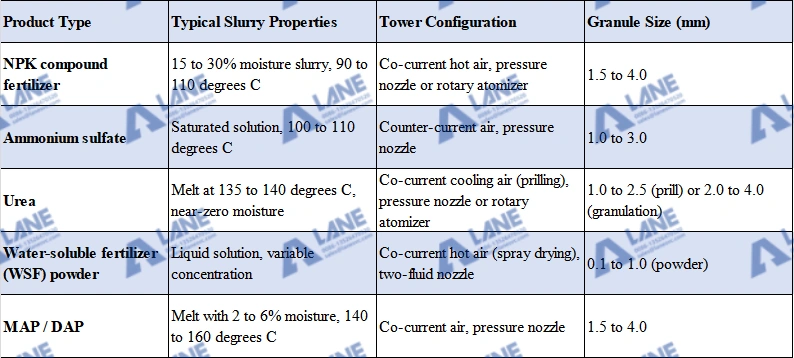
Slurries are not all the same. A thin urea melt at 140 degrees C flows like water and atomizes easily through a pressure nozzle. A viscous NPK slurry with high solids content needs a different approach. We offer and configure three atomizer types:
We specify the atomizer type during engineering based on your slurry sample. A bench test in our lab with your actual material confirms the selection.
Uniform hot air distribution plenum
Hot air enters the top of the tower through a distribution plenum that surrounds the atomizer. The design challenge: air must enter evenly around the full circumference at uniform velocity and temperature. A poorly designed plenum creates hot spots and cold spots, which produce irregular granules, tower wall buildup, and scorched product. Our plenum uses perforated distribution plates with precisely sized holes, modeled in CFD for your specific tower diameter and airflow. The result is a near-uniform downward air curtain that contacts droplets symmetrically.
Internal non-stick coating on product contact surfaces
Fertilizer slurry sticks to steel. Period. When it sticks and builds up on the tower wall, chunks eventually break off and contaminate the product. Our internal coating (typically PTFE-based or a specialized epoxy with release properties) reduces adhesion significantly. Combined with the uniform air distribution that keeps droplets centered in the tower, wall buildup is kept to a manageable level. Observation ports at each tower level let operators inspect wall condition without opening the tower.
Multi-zone temperature monitoring and control
A spray tower is not one uniform temperature zone. The top zone near the atomizer runs hottest (typically 180 to 300 degrees C inlet air) for rapid initial drying or cooling of droplets. The middle zone is where most mass transfer happens. The bottom zone near the discharge is cooler as the air has transferred most of its heat to the product. We divide the tower into 3 to 5 temperature monitoring zones with thermocouples at each level. The PLC adjusts inlet air temperature, airflow rate, and slurry feed rate to maintain the temperature profile that produces the target granule properties.
Cyclone fines recovery with return to process
Not every droplet becomes a saleable granule. Some fine particles are carried out with the exhaust air. A cyclone separator (or pair of cyclones in parallel on larger towers) captures these fines, which then feed back into the slurry tank or directly into the tower. This recovers product that would otherwise be lost and improves yield. The cyclone is sized for the exhaust airflow with a cut point typically around 10 to 20 microns.
Integrated wet scrubber for exhaust treatment
Exhaust air from the top of the tower carries not just fine particulates but also ammonia, water vapor, and other gaseous compounds depending on the slurry chemistry. A wet scrubber (typically a packed-bed or venturi type) treats the exhaust before atmospheric discharge. Scrubbing liquid (water or a weak acid solution for ammonia capture) circulates through the scrubber, absorbing gases and capturing residual dust. The scrubbing liquid can be recycled back into the slurry preparation system, recovering dissolved nutrients.
Step 1: Slurry delivery. The prepared slurry (melt, solution, or suspension) is pumped to the atomizer at controlled pressure and flow rate. Slurry temperature, solids content, and viscosity are maintained within tight ranges by the upstream preparation system.
Step 2: Droplet formation. The atomizer breaks the slurry stream into millions of droplets. Droplet size distribution is set by the atomizer type, orifice size, rotation speed, and slurry properties. Target droplet diameter is typically 1 to 3 mm for granulation, smaller for drying applications.
Step 3: Free-fall through hot air. Droplets fall through the tower at terminal velocity, typically 5 to 10 meters per second depending on droplet size. Hot air flows downward (co-current) or upward (counter-current) around the droplets. In co-current flow, the hottest air contacts the wettest droplets at the top, which is the most efficient arrangement for drying. Counter-current flow provides longer residence time and is used when slower crystallization is needed.
Step 4: Solidification and cooling. As droplets fall and lose moisture (or cool below melting point for melt granulation), they form solid granules. The tower height is calculated to provide sufficient residence time (typically 3 to 8 seconds of free-fall) for complete solidification before the granules hit the bottom cone.
Step 5: Product discharge. Solidified granules collect in the conical bottom of the tower and discharge through a rotary valve. The valve meters product out while maintaining the tower’s pressure balance.
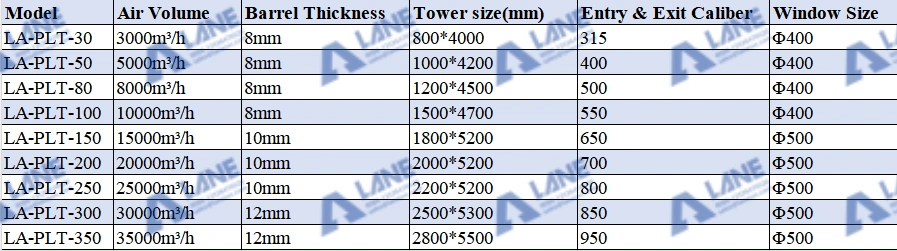
Capacity depends on slurry solids content, target granule size, and required residual moisture. Contact our engineering team with your specific product and throughput target for a detailed process design.
1. Which atomizer type should I choose?
Depends on your slurry. Pressure nozzles work well for thin, clean slurries like urea melt and some ammonium sulfate solutions. They are simple and low-maintenance. Rotary atomizers handle thicker, higher-solids NPK slurries that would clog a pressure nozzle. The spinning disk also produces a slightly wider droplet size distribution, which can be an advantage for granulation. Two-fluid nozzles are the choice for the highest-viscosity slurries and spray drying to powder. Our recommendation: send us a 5-liter slurry sample. We run it through each atomizer type in our lab and show you the droplet size distribution results. Data beats speculation.
2. How does tower height relate to granule size?
Taller tower = longer free-fall residence time = larger granules can fully solidify before hitting bottom. For a 1 to 2 mm prill, 8 to 12 meters of height is typically enough. For 3 to 4 mm NPK granules, you usually need 16 to 22 meters. The relationship is not quite linear because larger droplets fall faster (higher terminal velocity), so doubling the droplet diameter might need only 40 to 60% more height rather than 100%. These calculations run via our process model using your specific slurry density, droplet target size, and required solidification time.
3. What is the strategy for temperature control?
The inlet air temperature is your primary control variable. Too hot and droplets dry on the outside before the inside, creating hollow or fractured granules. Too cool and granules are still wet at the bottom discharge. We target a temperature profile where the top zone removes surface moisture quickly, the middle zone drives internal moisture diffusion at a moderate rate, and the bottom zone provides final cooling. The PLC adjusts inlet air temperature dynamically based on exhaust air temperature and, on more advanced setups, on product moisture measured at discharge. A 5-degree shift in inlet temperature is noticeable in product quality. Operators learn to read the temperature trend lines the way a baker reads an oven.
4. How do I prevent material buildup on the tower wall?
Wall buildup has three root causes. First: uneven air distribution pushing droplets toward one side of the tower. Fixed by proper plenum design and CFD verification. Second: droplets that are too large or too wet when they reach the wall. Fixed by adjusting atomizer parameters, tower height, or inlet temperature. Third: sticky slurry chemistry that adheres regardless. Fixed by the internal non-stick coating and, in some cases, by vibrating panels on the tower wall in the buildup-prone zone. Regular inspection through the observation ports catches buildup early. A scheduled cleaning shutdown every 2 to 4 weeks, depending on product, keeps buildup from reaching thickness where chunks break off.
5. What determines capacity versus tower diameter?
Tower diameter sets the maximum slurry feed rate. Too much slurry through too small a diameter and droplets collide mid-air, forming agglomerates and irregular product. The limiting factor is the droplet curtain density: droplets per cubic meter of tower volume. Our design rule: droplet spacing should be at least 10 to 15 times the droplet diameter to keep collision probability under roughly 1%. For a given atomizer type and droplet size distribution, this sets the required tower cross-sectional area for the target throughput.
6. What is the startup and shutdown procedure?
Startup sequence: start the exhaust fan and wet scrubber, then the hot air system to preheat the tower. Bring the tower to operating temperature over 30 to 60 minutes. Ramp rate matters, especially on larger towers where thermal expansion of the steel shell needs to be gradual. Once tower temperature is stable, start the atomizer and slurry feed at reduced rate. Ramp to full production rate over 15 to 30 minutes while adjusting hot air temperature to maintain the target profile. Shutdown sequence: stop slurry feed first, continue hot air for 10 to 15 minutes to dry residual material coating internal surfaces, then shut down hot air, allow the tower to cool to below 80 degrees C, stop the exhaust fan, and open inspection ports if cleaning is scheduled.
7. How is exhaust emission treated?
The exhaust treatment train has two stages. Stage one: cyclone separator captures coarse and medium fines (above 10 to 20 microns) for product recovery. Stage two: wet scrubber captures fine dust and absorbs gaseous compounds like ammonia. The scrubber uses circulating water or, for ammonia-laden exhaust, a weak sulfuric acid solution that converts ammonia to ammonium sulfate, which can be recycled into the slurry system. Final emission levels depend on scrubber design, but we guarantee below 30 mg/Nm3 particulate and below 50 mg/Nm3 ammonia for standard configurations. Lower limits are achievable with a higher-efficiency scrubber design.
| Attribute | LANE Machinery Commitment |
|---|---|
| Bench-tested atomizer selection | We test your actual slurry on multiple atomizer types before specifying equipment |
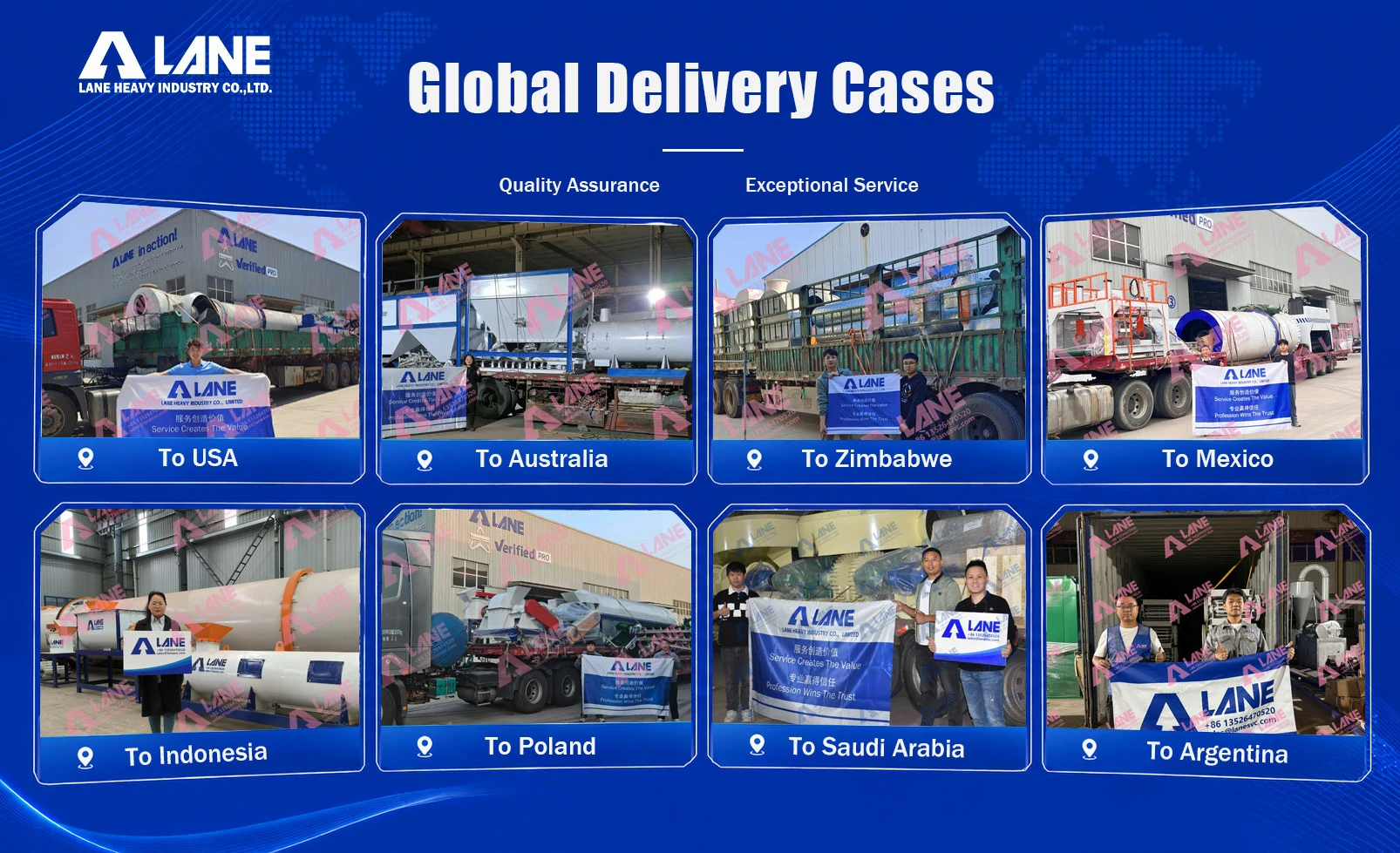
| Turnkey spray tower delivery | Tower fabrication, internals, air system, cyclone, scrubber, controls, and installation supervision from one supplier |
| CFD-verified air distribution | Every tower design goes through computational fluid dynamics modeling to confirm uniform airflow before fabrication starts |
| After-installation optimization | Our process engineers stay on site through the first product runs to tune atomizer parameters, temperature profiles, and cleaning schedules |
Share your product and throughput requirements with our process engineering team.
What to include for a spray tower proposal:
LANE Machinery: Spray Tower Engineering for High-Quality Fertilizer Granulation.

Everything you need to know when looking at different types of organic fertilizer equipment, all in one place.
Copyright © 2026. LANE All rights reserved.