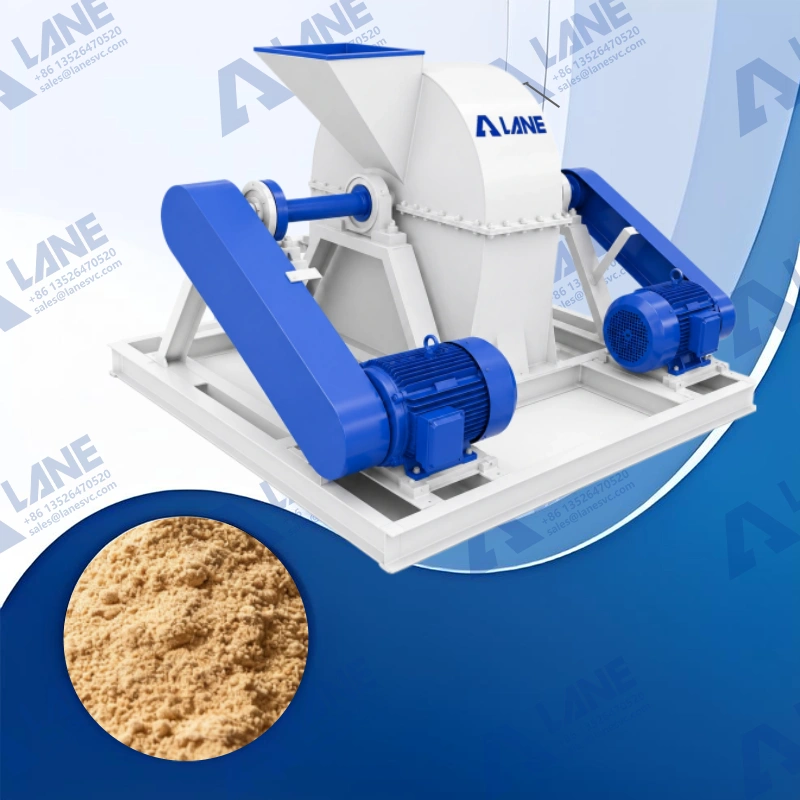
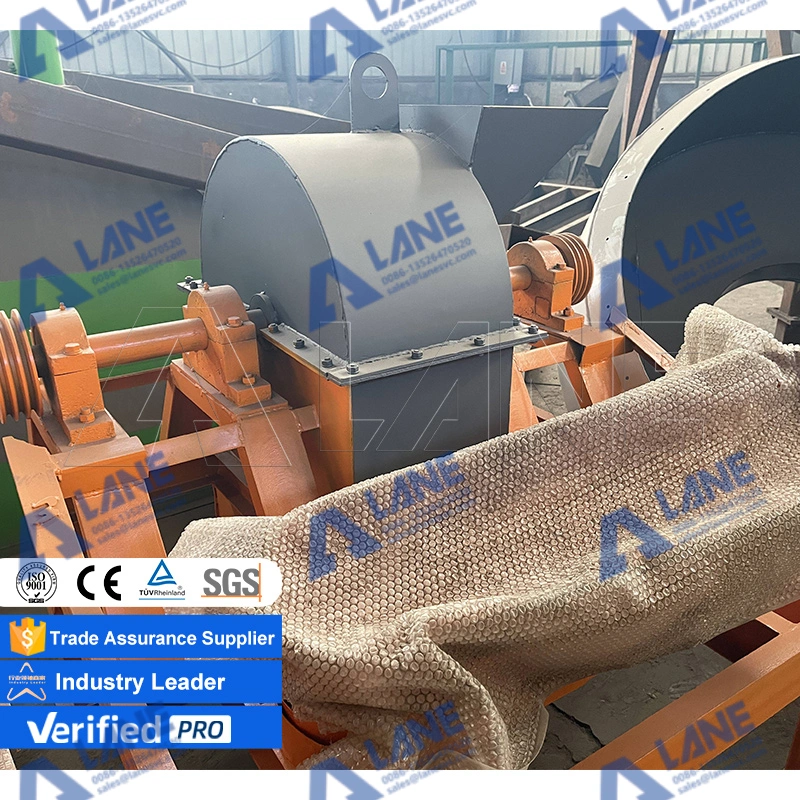
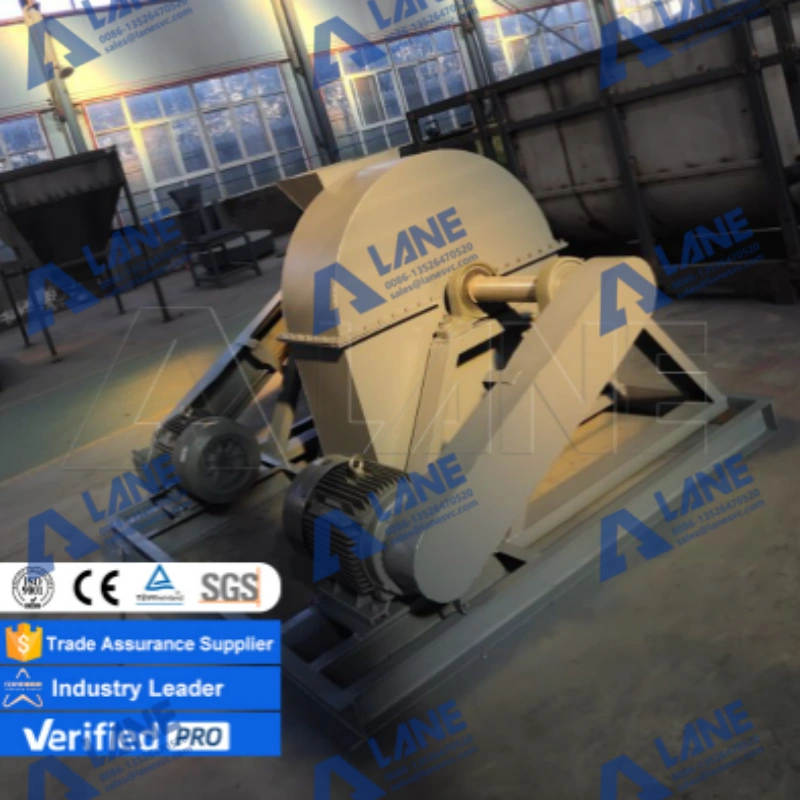
Cage Crusher for crushing compound fertilizer raw materials and fertilizer lumps. Processes urea, DAP, MAP, NPK fertilizer, and other bulk materials into fine particles. High-speed cage rotor design ensures efficient crushing for fertilizer production and granulation.
When your granulation recipe needs raw materials ground fine and consistent, impact quality matters more than brute force. The LANE cage crusher uses two counter-rotating cage assemblies — material is struck repeatedly from opposite directions as it passes outward through the cage rings, producing a fine, uniform powder that blends and granulates cleanly.
It’s a workhorse of compound fertilizer batching sections, and equally at home grinding brittle minerals and chemical lumps.
Email sales@lanesvc.com with your raw material list and capacity — we’ll confirm fit and send a quotation within 24 hours.
Material entering the center is flung outward through 2–3 rings of steel bars spinning in opposite directions. Each ring strikes it again, at higher relative speed. The result is finer, more uniform output than single-rotor crushers can achieve in one pass.
Consistent particle size means consistent moisture absorption and binder behavior in the granulator — fewer oversize rejects, less recycle load, more sellable product per shift.
No screens, no hammers to re-pin. The cage assemblies are the main wear item, and the housing opens for straightforward access. Fewer parts, fewer surprises.
Designed for materials where impact crushing shines: fertilizer salts, limestone, gypsum, coal, clay lumps — crushed efficiently at moderate power consumption.
The enclosed crushing chamber with dust-collection ports keeps fine powder inside the process, protecting both product yield and workshop air quality.
The whole action takes a fraction of a second per particle — throughput is continuous and stable.
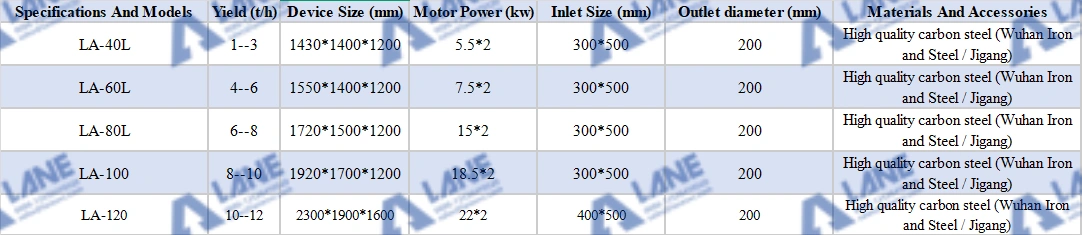
Material hardness recommendation: medium-hard and below (Mohs ≤5 approx.). Motors configurable for export voltage/frequency.
Both serve fertilizer plants — the difference is the job:
Many complete lines use both, at different stages. Email us your process flow and we’ll mark where each belongs.
Q: What fineness can it achieve?
A: Typically 0.5–3 mm depending on material and cage configuration. If you have a strict fineness spec, send it with a material description and we’ll confirm achievable results.
Q: Can it handle moist material?
A: It’s designed for dry, brittle feedstock (≤10% moisture as a guide). Wet or fibrous materials belong on our semi-wet material crusher or straw crusher instead.
Q: How long do the cage bars last?
A: Cage bars are hardened wear parts; lifetime depends on material abrasiveness and running hours. Replacement is a bolt-on job with the housing opened — no special tools required.
Q: Is it suitable for hard rock?
A: No — cage mills are for medium-hard, brittle materials. For hard rock you’d need jaw/impact crushing equipment, which is outside this machine’s design duty. We’d rather tell you that now than sell you the wrong machine.
Email (1) your raw materials, (2) feed size, (3) target fineness and capacity — we’ll match the model and quote directly from the factory.
Get Your Cage Crusher Solution


Everything you need to know when looking at different types of organic fertilizer equipment, all in one place.
Copyright © 2026. LANE All rights reserved.