Shafted and shaftless fertilizer screw conveyors for metered feeding and powder transport. 1-100 TPH, U-trough or tubular housing, replaceable wear liners. Custom inlet/outlet layouts.
Some materials do not flow. They clump. They bridge across openings. They pack down into a solid mass that laughs at a standard belt conveyor. Powders like ground phosphate rock, filter cake from organic fertilizer pressing, and fine dust from baghouse hoppers all share this trait. A screw conveyor handles them without drama.
We build screw conveyors in two configurations: shafted and shaftless. The right choice depends entirely on what you are moving. Get it wrong and you spend every shift clearing blockages. Get it right and the conveyor runs unattended for months.
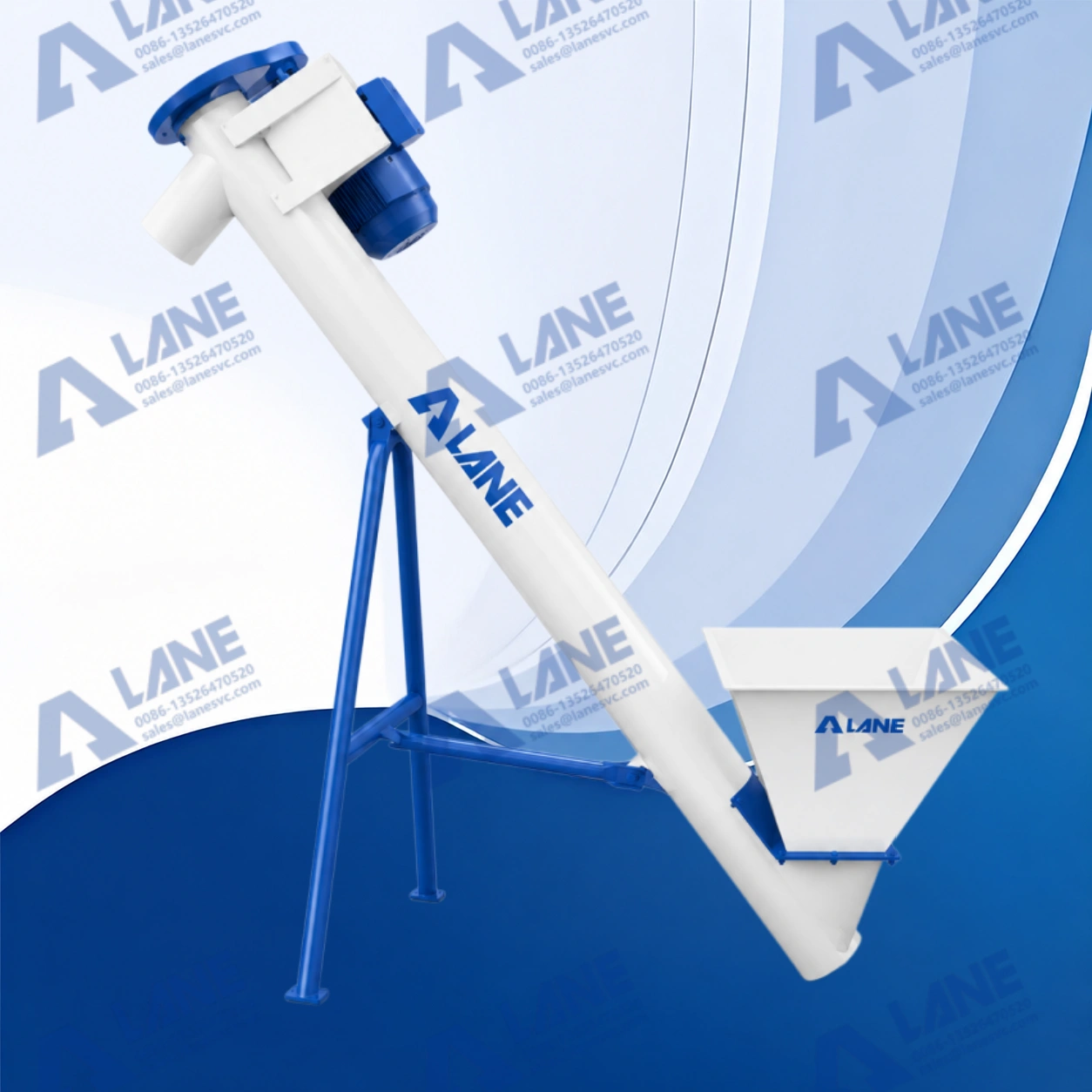
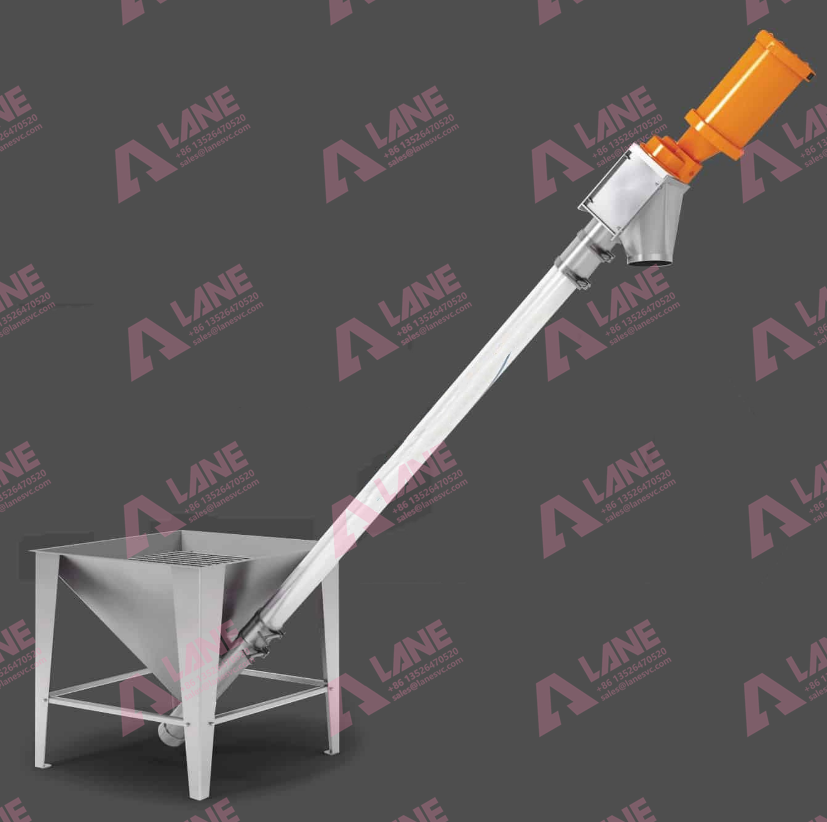
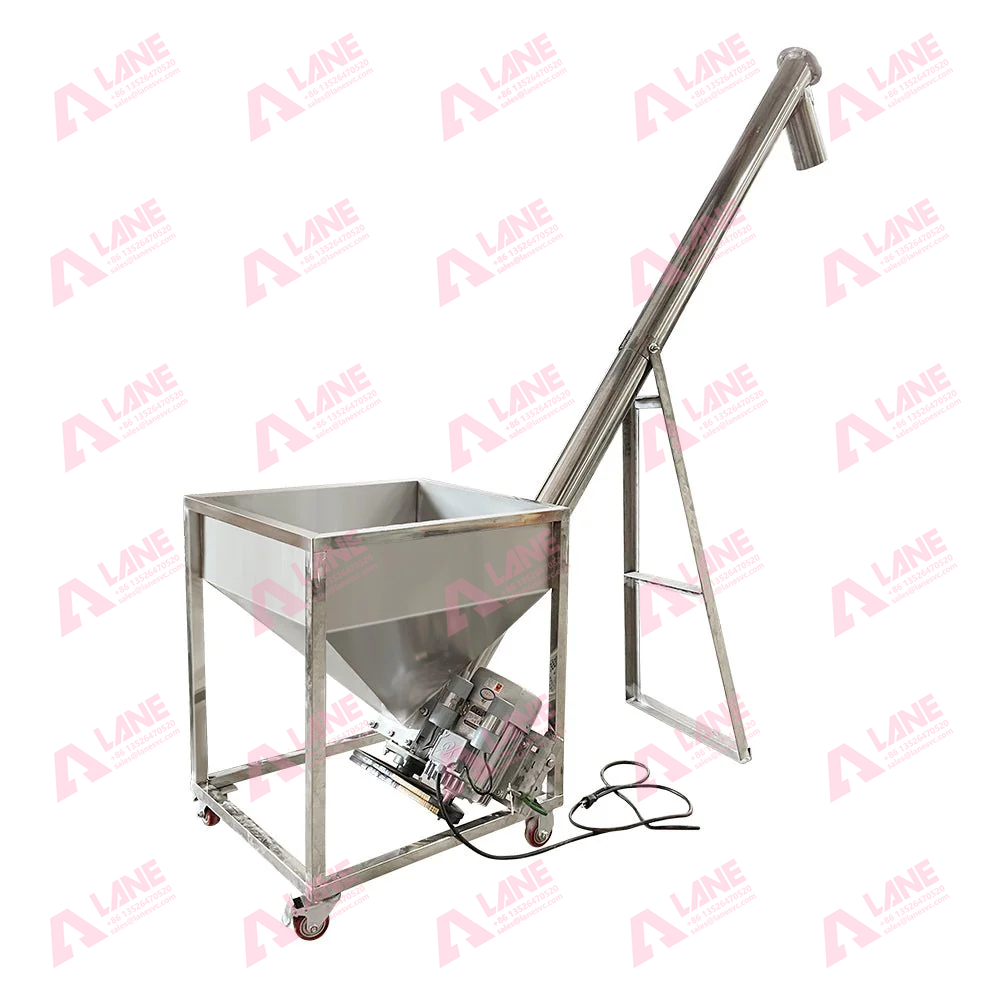
Diameter from 150 mm to 800 mm. Length up to 30 meters in a single section. Capacity from 1 to 100 TPH. U-trough or tubular housing, carbon or stainless steel. Variable pitch screws for metering applications where you need to control feed rate, not just move material from A to B.
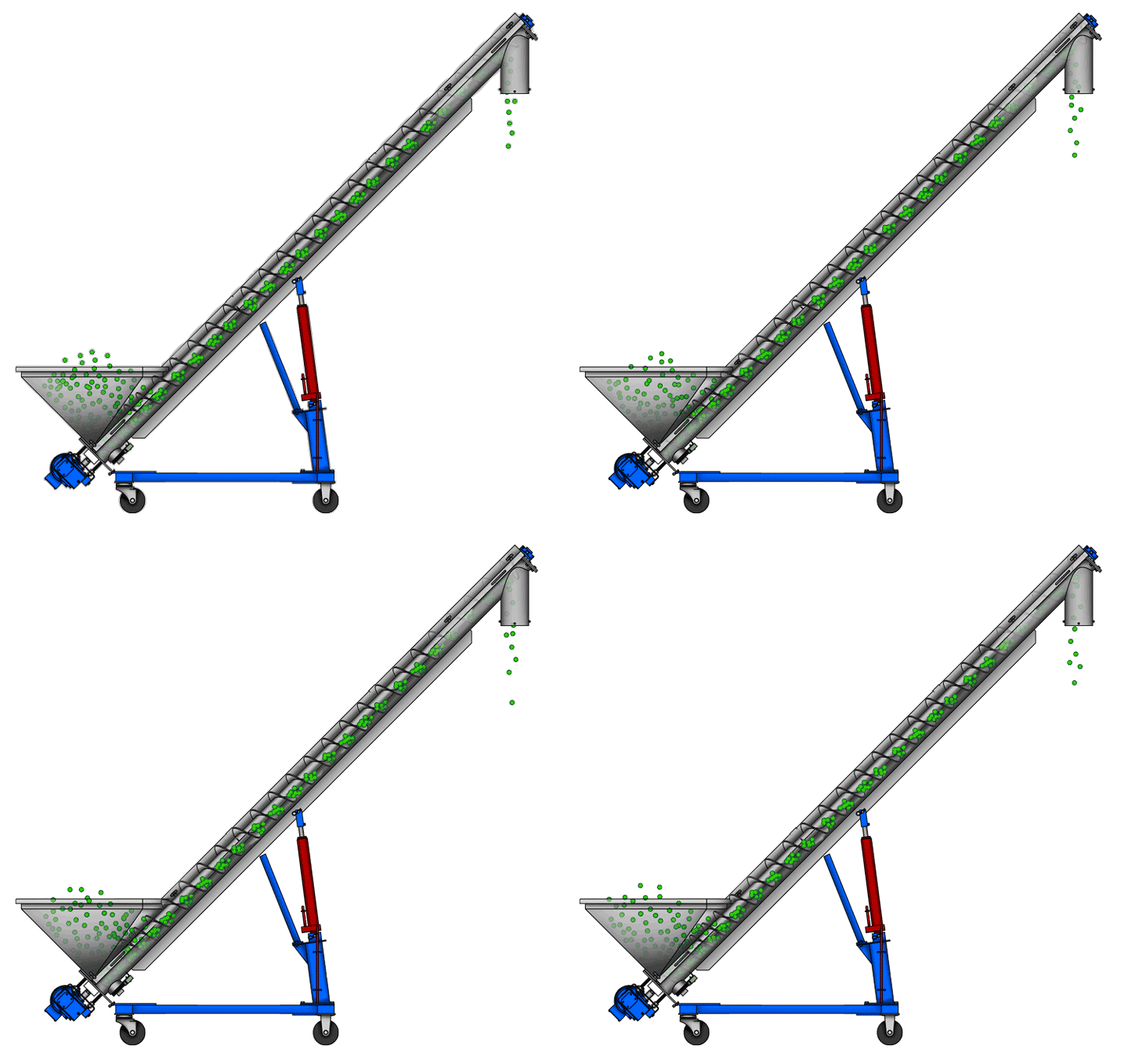
The shaftless design is the standout for sticky materials. A shafted screw gives wet, fibrous organic fertilizer a surface to wrap around. Within hours, the screw diameter doubles and the trough clogs. A shaftless spiral has no center shaft. Material cannot wrap around what is not there. We have plants running shaftless screws on filter cake at 30 percent moisture with no buildup. The operators check them once a shift and go on with their day.
For dry granular fertilizers and free-flowing powders, a shafted screw works fine and costs less. The center shaft adds rigidity for longer spans and higher speeds. Pitch selection determines the transport behavior: standard pitch (equal to the screw diameter) moves material efficiently. Half pitch slows it down for metering. Variable pitch (tightening toward the discharge) creates back-pressure for feeding a pressurized vessel or preventing flood feeding into a granulator.
Replaceable wear liners in the trough bottom are a small detail that saves big money. The screw flight rides on the material bed, and abrasive powders eventually wear through the trough. Liners swap out in under two hours. Replacing the entire trough is a week of downtime. We spec them on every conveyor handling phosphate rock or mineral-based fertilizers.
Gasketed covers seal the trough. Multiple inlet and outlet ports let you feed and discharge at several points along the conveyor length. Combined with slide gates at each discharge point, one screw can serve multiple downstream machines. This cuts equipment count and simplifies plant layout.
Variable speed drives give you turn-down capability from 10 to 100 percent of rated speed. For screw feeders that meter material into a granulator or mixer, we can hold feed rate accuracy within 2 percent. That matters for product consistency.
A rotating helical screw flight inside an enclosed trough or tube pushes material along the conveyor axis. Material enters through one or more inlet ports and advances to the discharge point(s). The trough cover contains dust and prevents contamination. Intermediate hanger bearings support the screw shaft on longer units, keeping it centered in the trough and preventing metal-on-metal contact with the housing.
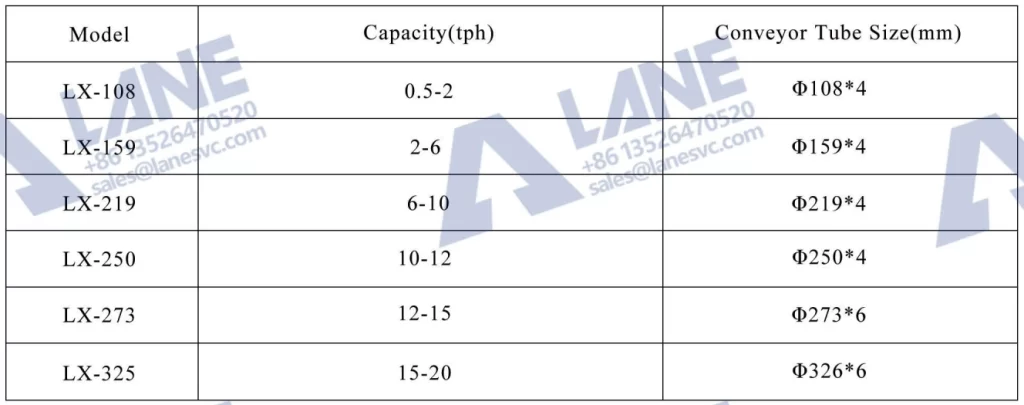
Every screw conveyor is sized to your material properties. Bulk density, particle size, moisture content, and abrasiveness all factor into the screw diameter, speed, and power calculation.
Shafted or shaftless — how do I decide?
Shaftless for anything sticky, fibrous, or high-moisture. If you can squeeze a handful of your material and it holds its shape, use shaftless. Shafted for dry, free-flowing powders and granules. The center shaft adds rigidity and the material does not stick to it. Still not sure? Send us a 2 kg sample. We will test it on both configurations and tell you which one actually works.
How do I choose the right pitch for metering?
Half pitch for accurate volumetric feeding, where you care about grams per second, not tons per hour. Variable pitch for applications where you need to build material pressure at the discharge (feeding into a pressurized line or preventing air leakage). Standard pitch for transport-only applications where metering accuracy is not required. We can also add a variable speed drive to a standard-pitch screw for moderate metering accuracy.
What about material buildup inside the trough?
Sticky materials build up in two places: on the screw shaft (fixed by going shaftless) and in the trough corners (worse in U-troughs than tubular). For materials prone to buildup, we recommend a tubular housing with a shaftless spiral. The circular cross-section leaves no corners for material to pack into. If you are already running a U-trough and getting buildup, check your moisture content. A 2 percent reduction often solves the problem without changing equipment.
How long do the wear liners last?
In phosphate rock service, typically 8,000 to 12,000 hours. In less abrasive materials like urea powder, 20,000 hours or more. We track liner wear across our installed base and can give you a realistic estimate for your specific material.
Can a screw conveyor run on an incline?
Yes, up to about 45 degrees. Beyond that, material tends to fall back over the screw flight and capacity drops sharply. For vertical lifts, a bucket elevator is the right tool. For moderate inclines, a screw conveyor handles it fine with a slight capacity de-rating factor.
How do I replace a screw section?
Remove the trough cover. Unbolt the coupling at the nearest hanger bearing. Slide the worn section out through the end of the trough or through the open top if you have a U-trough design. Reverse the process with the new section. On a U-trough conveyor, two people can replace a 3-meter screw section in under two hours. Tubular housings take longer because you need to pull the entire screw from the end.
What about explosion risks with organic fertilizer dust?
Organic fertilizer dust at sufficient concentration is combustible. For these applications, we supply explosion vent panels that bolt into the trough cover. If an ignition occurs inside the conveyor, the vent panel releases pressure rather than letting the trough rupture. Combined with grounding straps to prevent static buildup, this meets ATEX requirements for organic fertilizer handling.
Tell us your material, required throughput, conveyor length, and whether you need transport or metering duty. We will spec the right screw conveyor with a dimensional drawing, typically within 48 hours.

Everything you need to know when looking at different types of organic fertilizer equipment, all in one place.
Copyright © 2026. LANE All rights reserved.