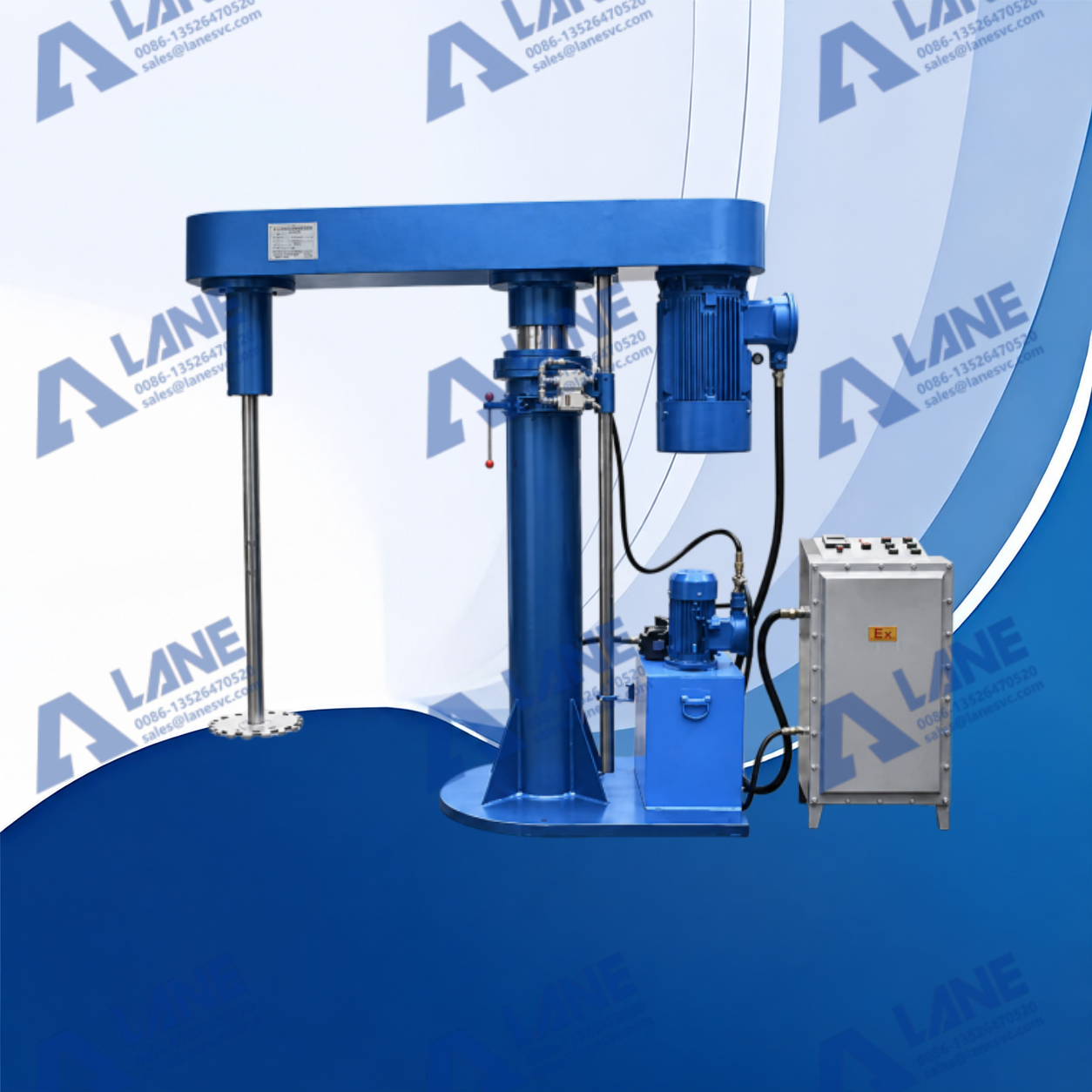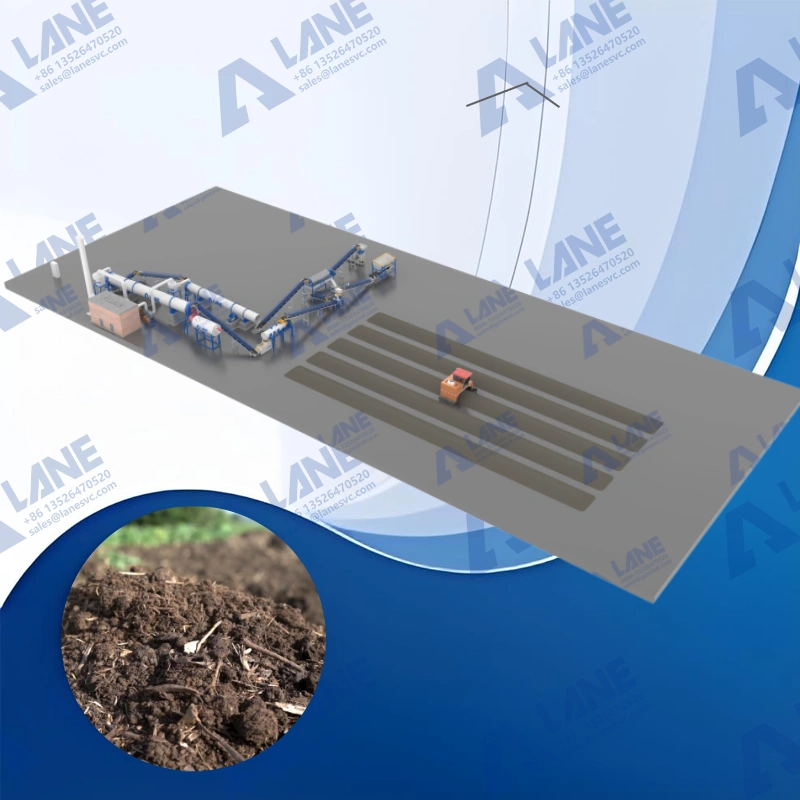
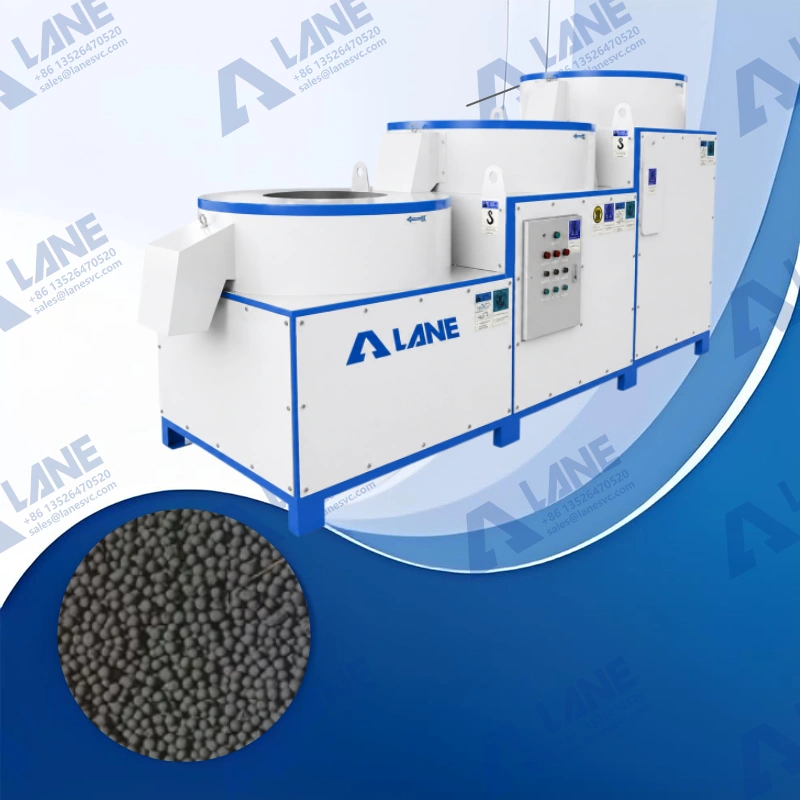
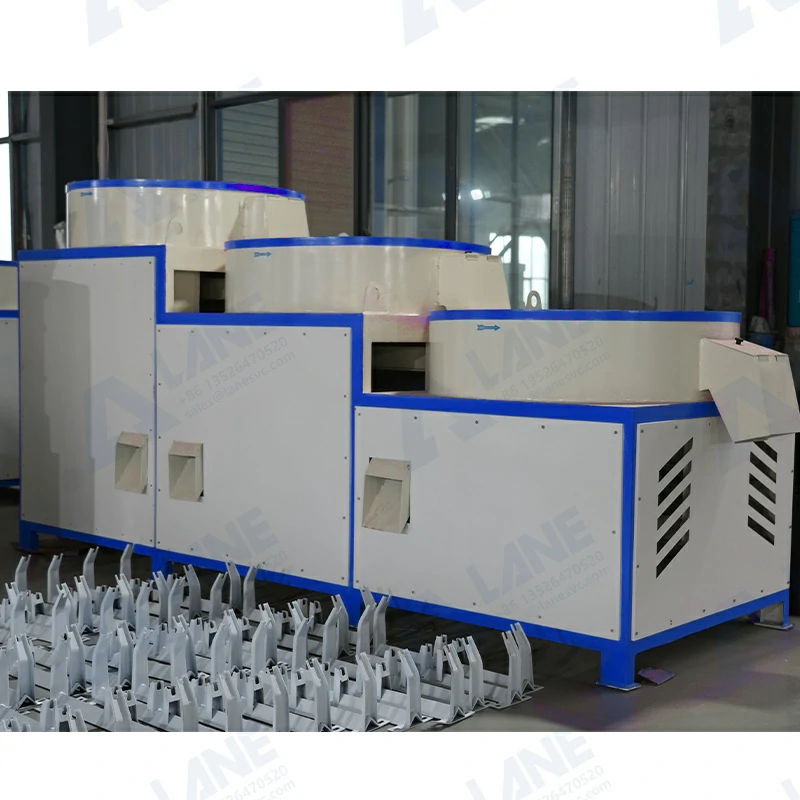
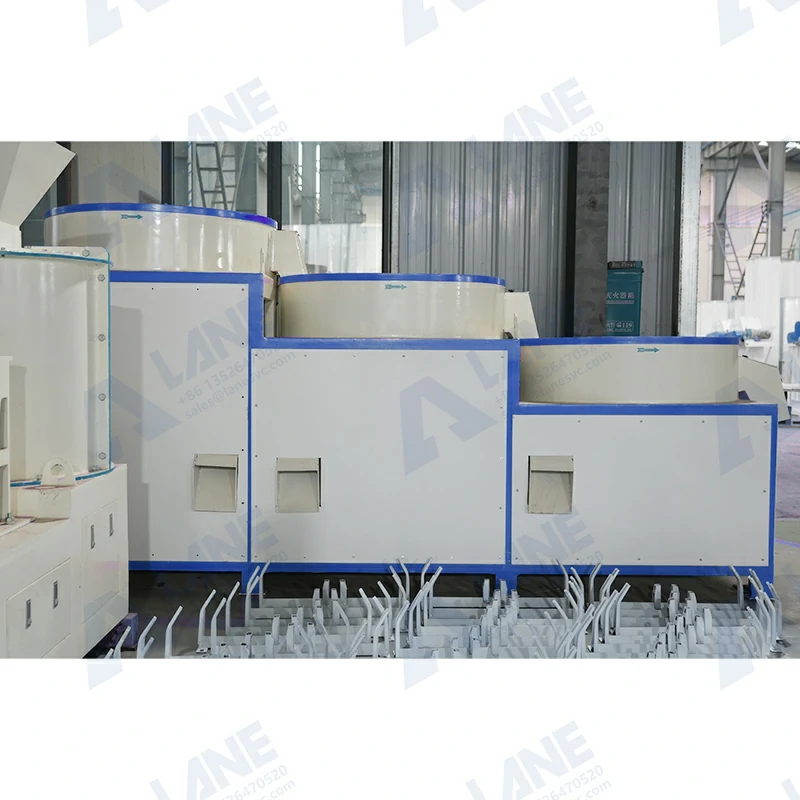
Fertilizer polishing machine for rounding and smoothing granular fertilizer. Processes 1–10 TPH of NPK, organic, and compound fertilizer granules. Improves granule appearance, reduces dust content, and boosts product marketability.
Granulation, drying, cooling, screening — each step shapes your product. But granules fresh from the screener have sharp edges, surface roughness, and loose dust clinging to their surface. They’re functional. They’re just not finished.
A fertilizer polishing machine takes those rough, angular granules and rounds them into smooth, dust-free spheres. Two horizontal rotating shafts with spiral paddles or brushes tumble the granules against each other inside a U-shaped trough. Edge-to-edge friction rounds off corners. Loose dust gets knocked off and collected. The granules that come out the discharge end look like they came from a tower prilling process at a much higher cost — because the polishing step bridges the gap between economical drum or disc granulation and the visual quality of premium spherical products.
For compound NPK fertilizer producers who want to charge a product premium without investing in tower prilling, the polishing machine is the most cost-effective upgrade path. Capital cost: $8,000–$25,000 depending on capacity. Return: $3–$8 per ton price premium for round, dust-free granules in most markets — the machine pays for itself within a production year.
The polishing machine is conceptually two counter-rotating shafts with intermeshing paddles or nylon brushes, housed in a horizontal trough. Granules feed in at one end and are propelled forward by the spiral arrangement of the paddles.
Inside the trough, three things happen simultaneously:
Rounding. The paddles create a dense, fluidized rolling bed. Granules collide and abrade against each other thousands of times during the 3–8 minute residence time. Sharp edges and surface irregularities wear down. The result: granule roundness improves from ~0.7 (typical drum output) to ~0.9+ (near-spherical). Measured objectively with a sphericity tester, but visually obvious to anyone who has handled both products side by side.
Dust removal. Loose surface dust — generated during screening and conveying — is abraded off and captured by a dust extraction hood connected to the plant’s cyclone or baghouse system. The finished granules are clean to the touch. No dusty residue on hands when sampling, which matters more than you’d think for product perception at trade shows and distributor open houses.
Surface compaction. The repeated low-force impacts (not crushing — this is a polishing action, not a grinding action) lightly compact the granule surface layer. This marginally increases hardness by 2–5 N and seals the surface against moisture absorption. It’s not a replacement for proper coating — anti-caking agent is still needed — but the combined surface compaction + coating effect measurably improves storage stability.
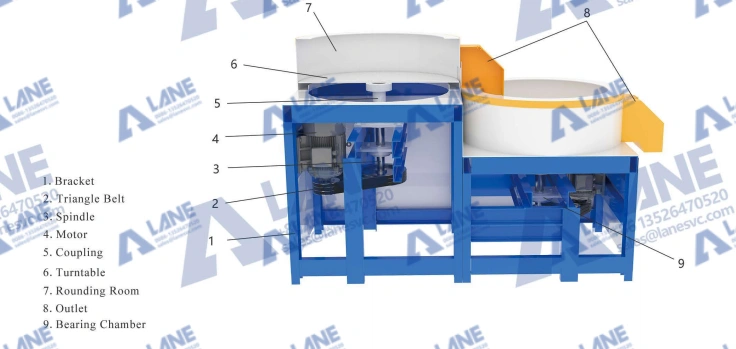
Transforms angular extrusion granules into visually round product. This is the highest-impact application. Double-roller extrusion produces angular, irregular granules that some markets discount heavily. Running those granules through a polishing machine doesn’t change the chemistry — same NPK analysis — but it transforms the appearance. The polishing step alone can close 50–70% of the price gap between extrusion and drum granules.
Low capital cost relative to the premium it enables. A 5 TPH polishing machine costs $12,000–$18,000. If it enables a $4/ton price increase on 15,000 tons/year of production, that’s $60,000/year in additional revenue against an $18,000 one-time capital cost. Even with conservative assumptions ($2/ton premium, 50% capacity utilization), the payback is under 18 months.
Low operating cost. Installed power: 7.5–22 kW depending on capacity. That’s $0.30–$0.90 per ton in electricity. No consumables except occasional paddle replacement (every 12–18 months). No binder. No steam. It’s about as close to a “turn it on and forget it” machine as exists in the fertilizer equipment lineup.
Improves coating effectiveness. Smooth, round granules have less surface area per gram than rough, irregular granules of the same volume. That means the anti-caking coating is applied more evenly and uses slightly less coating agent (0.1–0.3% saved) to achieve the same shelf life. Minor per-ton, but meaningful at scale.
Reduces packaging and transport dust. Dust generation inside bags during transport and handling is a real customer complaint — it creates product loss, respiratory hazards, and the perception of low quality. Polished granules shed virtually no dust in transit. Less waste. Fewer returns. Better margin.
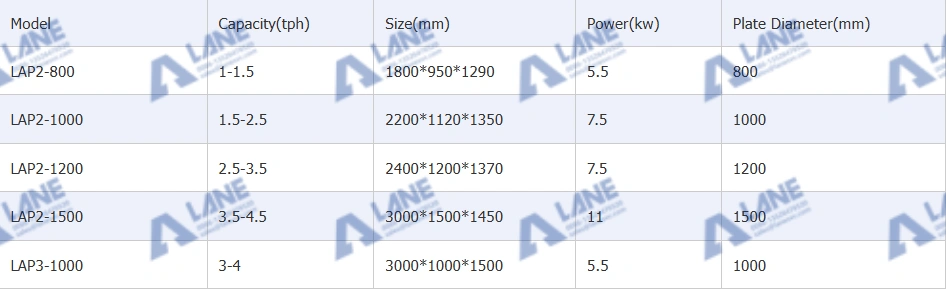
Throughput depends on granule hardness and target finish quality. Softer granules polish faster but generate more fines. Hard granules (20+ N) require longer residence time — spec one model up from your actual throughput for high-hardness material.
The polishing machine sits between the screener and the coating machine (or between coating and packing, depending on your preference):
Screener → Polishing Machine → Coating Machine → Packing Machine
     (on-size granules)   (rounded + dust-free)    (anti-cake applied)
Alternative position:
Screener → Coating Machine → Polishing Machine → Packing Machine
Pros and cons of each: placing the polisher before coating means the coating is applied to already-smooth granules for maximum coating effectiveness. Placing it after coating means the polishing action can help distribute the coating evenly across the granule surface. Most plants run polisher-then-coater; we can run a test with your specific material to confirm which sequence produces the best finished product.
Not for: ring die pellets (cylindrical shape — polishing won’t make them spherical; market them as pellets, not granules), granules below 1 mm or above 8 mm (outside the machine’s effective size range).
Q: How much granule weight is lost during polishing?
A: Typically 0.5–1.5% of input weight — the dust that gets knocked off and extracted. This is product recovered as dust (bagged separately or returned to the granulator), not product lost. Factor it into your mass balance: a 5 TPH polisher generates roughly 25–75 kg/hour of recoverable dust.
Q: Can the polishing machine be retrofitted into an existing production line?
A: Yes. The machine has standard flange connections for inlet and outlet chutes. Retrofit installation takes 2–3 days including conveyor routing adjustments and dust extraction hookup. It’s one of the easiest post-commissioning upgrades to add to a running fertilizer line.
Q: Is the polishing step worth it for organic fertilizer?
A: It depends on your market. Organic fertilizer tends to be more price-sensitive, and the visual premium for round granules is smaller than for NPK. The main benefit for organic is dust reduction — if your customers complain about dusty bags or if you’re exporting long-distance, the polisher earns its keep through reduced returns alone. For domestic bulk organic fertilizer sold by the truckload, skip it.
Want to see the visual difference polishing makes on your product? Send us a 2 kg sample of your granules. We’ll run them through our test polisher and send before/after photos plus a roundness measurement report — free of charge.

Everything you need to know when looking at different types of organic fertilizer equipment, all in one place.
Copyright © 2026. LANE All rights reserved.