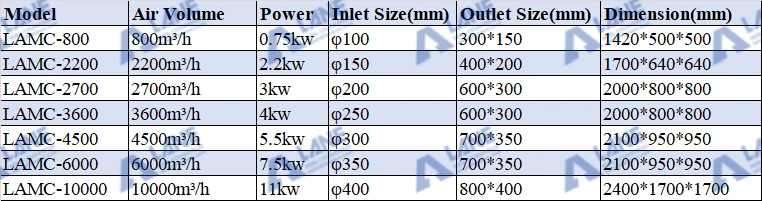
Industrial fertilizer dust collection systems. Pulse-jet baghouse collectors, 3,000-200,000 m³/h, emission below 10 mg/Nm³. ATEX-compliant. For crushers, mixers, dryers, packaging lines.
A fertilizer plant runs on dust. Crushers make it. Mixers stir it up. Dryers generate it by the ton. Granulators and screens constantly shed fine particles. If your dust collection system is undersized or the filter bags are the wrong material, you find out fast: visible emissions from the stack, dust accumulating on every horizontal surface in the building, operators complaining about breathing conditions, and eventually a visit from the local environmental authority.
We design dust collection systems for fertilizer plants as an integrated part of the production line, not an accessory bolted on after commissioning. Every system is sized to the actual dust load of your process, with bag material selected for the specific chemistry and temperature of the gas stream.
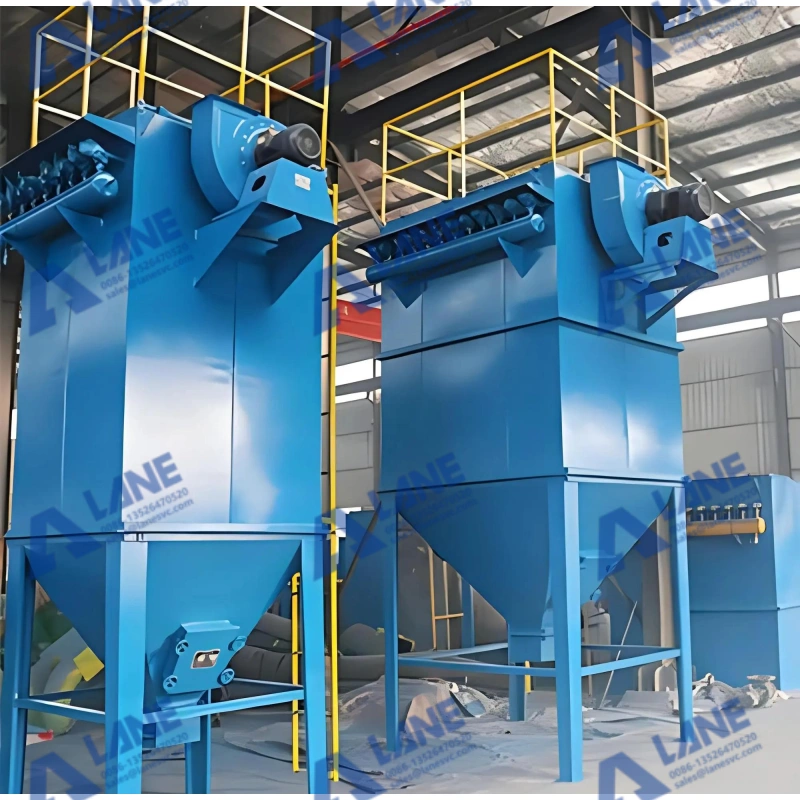
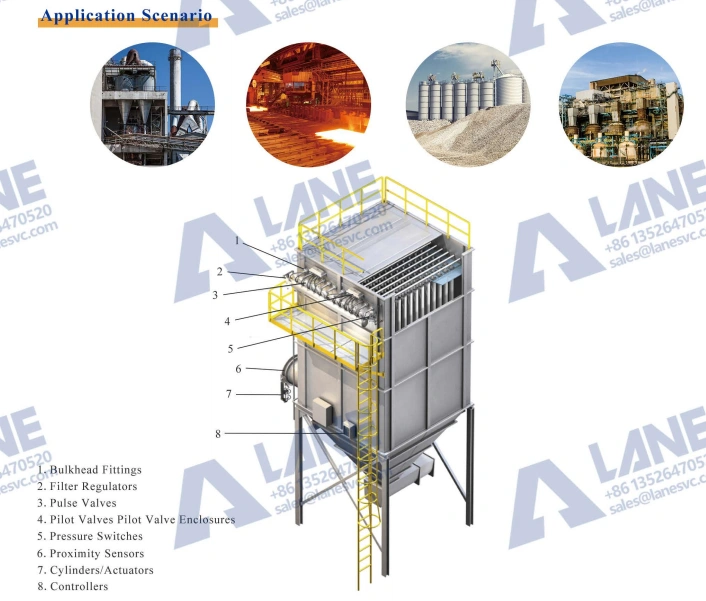
Pulse-jet cleaning extends bag life and maintains airflow. Compressed air pulses fire in sequence through venturi nozzles above each filter bag. The shock wave flexes the bag, dislodging the dust cake. Online cleaning means the collector keeps filtering during the pulse cycle. Offline cleaning isolates a compartment for more aggressive cleaning. We default to online for fertilizer dust, with offline available for sticky or hygroscopic materials.
Differential pressure control with automatic cleaning trigger. The PLC monitors pressure drop across the tube sheet. When ΔP hits the high setpoint, cleaning pulses start. When ΔP drops to the low setpoint, they stop. This prevents over-cleaning (which wears bags prematurely) and under-cleaning (which chokes airflow). A plant operator can look at the ΔP trend on the HMI and know immediately if a compartment has a problem.
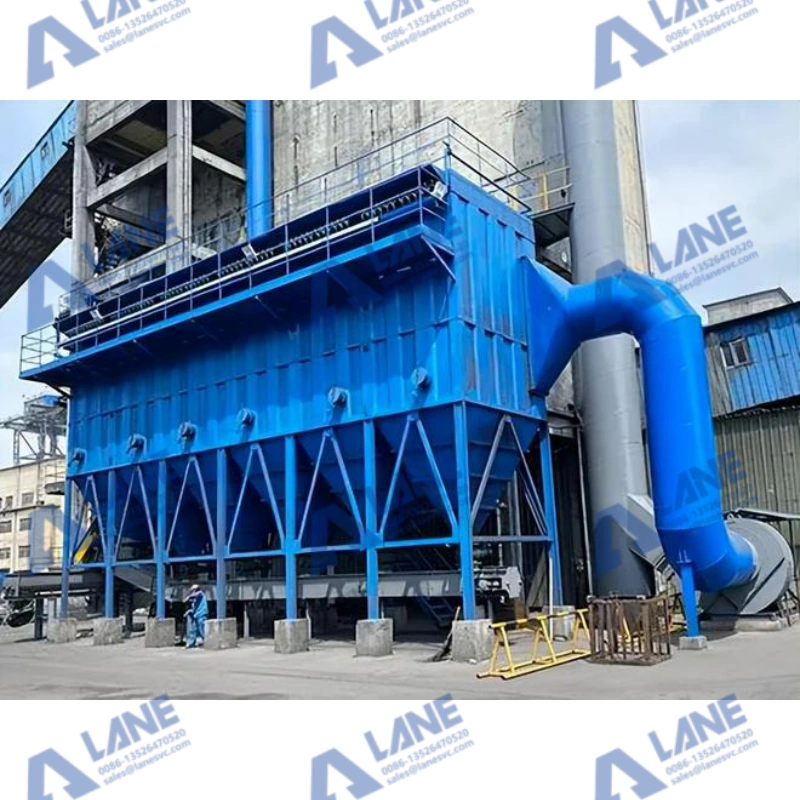
Walk-in plenum design on larger collectors. Anything above 500 m2 of filter area gets a walk-in clean air plenum. You change bags from the clean side, standing up, without entering the dirty air housing. Bag replacement on a collector without a walk-in plenum takes two shifts. With one, it takes four hours.
Filter bag material selection by application. This is where most generic dust collector quotes go wrong. Polyester bags work for ambient-temperature dust from crushers, screens, and packaging areas. They fail within weeks on a dryer exhaust at 150 C. Nomex (aramid) handles continuous temperatures to 200 C. PPS (polyphenylene sulfide) resists acid gases from urea-based and ammonium-based fertilizer dust. PTFE membrane laminate adds surface filtration, which is essential for sticky or hygroscopic dust that will blind a standard felt bag.
Explosion protection per ATEX and NFPA standards. Organic fertilizer dust, particularly from composted manure, straw, and biomass, is combustible. The collector needs explosion vent panels sized to relieve the calculated Kst and Pmax of your specific dust. We include the vent sizing calculation with every quote. For installations inside a building, flameless venting or a flameless vent duct to outdoors is required.
Hopper heating for moisture-prone dust. If your plant is in a humid climate or handles material with residual moisture, the dust collector hopper will eventually bridge if not heated. Electric heat tracing on the hopper walls, plus insulation, keeps the dust flowing to the rotary airlock. Without it, you will be hammering on the hopper at 3 AM.
Modular design for expandability. The collector housing is built in modules. You can add filter area later by bolting on additional compartments. We have customers who started with a 200 m2 collector for a 5 TPH line and expanded to 600 m2 when they doubled capacity three years later.
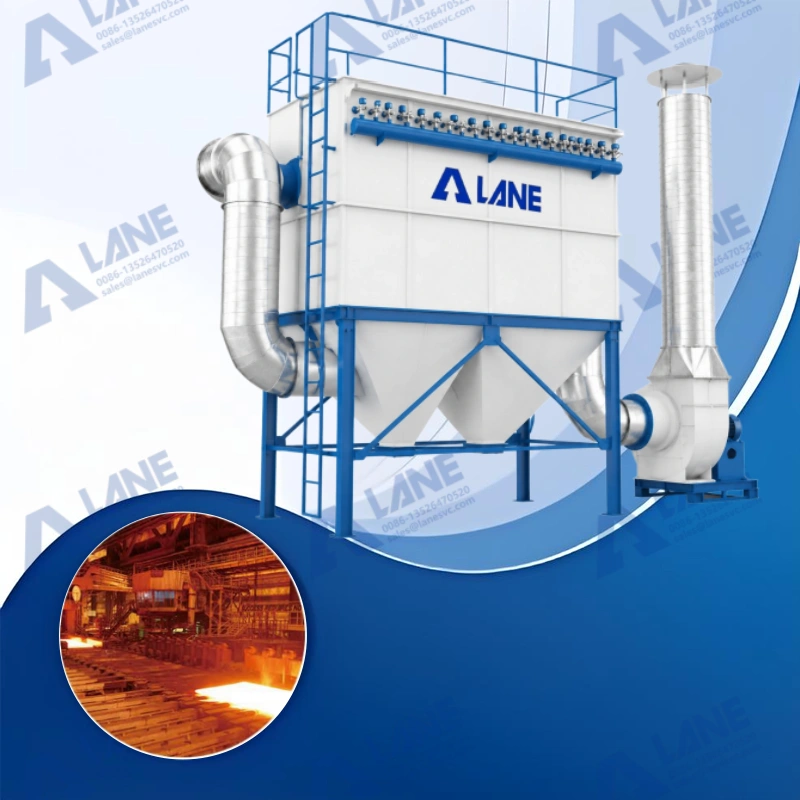
Dust-laden air enters the collector housing, typically through a baffled inlet that drops out the heaviest particles before they reach the filter bags. Air passes through the bags from outside to inside. Dust deposits on the outer bag surface, forming a filter cake that actually improves filtration efficiency. Clean air exits through the top plenum to the exhaust fan and stack.
At programmed intervals or on ΔP trigger, a pulse of compressed air fires down through each bag from a nozzle above the tube sheet. The pulse briefly inflates the bag, cracking the dust cake. Dislodged dust falls into the hopper and exits through a rotary airlock. The bags stay in service. The fan keeps running.
How do I know what bag material to use?
Three questions: what is the gas temperature at the collector inlet, what is the chemical composition of the dust (especially pH and any hygroscopic salts), and is there any oil or moisture in the gas stream? Answer those three and we can select the right bag material. Guessing wrong means bag failure in weeks, not years.
How often do filter bags need replacement?
Polyester bags in a well-operated crusher dust collector: 24 to 36 months. Nomex bags on a dryer exhaust at 180 C: 18 to 24 months. PPS bags handling acidic urea dust: 24 to 30 months. The biggest factor in bag life is not the bag material. It is whether the cleaning pulse pressure is set correctly and whether the inlet gas temperature stays within the bag’s rating.
What emission levels can I achieve?
A properly sized pulse-jet baghouse with PTFE membrane bags can reliably achieve below 10 mg/Nm3. Standard felt bags typically deliver 20 to 30 mg/Nm3. The actual emission target depends on your local regulations. In the EU, the IED (Industrial Emissions Directive) typically requires below 20 mg/Nm3 for fertilizer plants. Some Chinese provinces now require below 10 mg/Nm3. We design to your permit limit.
Do I need explosion protection?
If you handle organic fertilizer dust (manure, compost, straw-based), powdered ammonium nitrate, or any dust with a Kst above zero: yes. The question is not whether you need it. It is what vent area and what vent panel type your specific dust requires. We run the calculation per EN 14491 or NFPA 68 and include it in the quote.
Online or offline cleaning?
Online for most fertilizer applications. The collector keeps filtering during cleaning pulses. Offline (compartment isolation) for sticky dust that needs a harder cleaning shock to dislodge, or for applications where you cannot tolerate any momentary emission spike during cleaning.
What is the typical energy consumption?
The exhaust fan is the main load. A collector handling 50,000 m3/h at 2,500 Pa draws about 55 to 75 kW at the fan motor. Compressed air for pulse cleaning adds about 1 to 3 Nm3/min at 6 bar. Hopper heating adds 2 to 5 kW per hopper.
Tell us your dust source, gas temperature, and target emission limit. We size the collector, select the bag material, and deliver a system that meets your permit and keeps your plant floor clean.

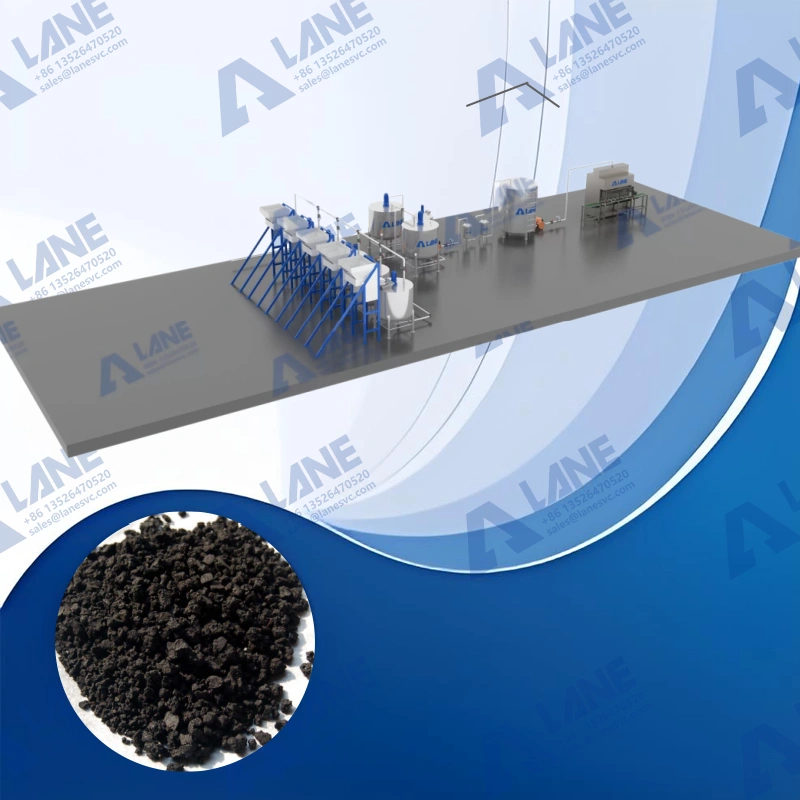
Everything you need to know when looking at different types of organic fertilizer equipment, all in one place.
Copyright © 2026. LANE All rights reserved.