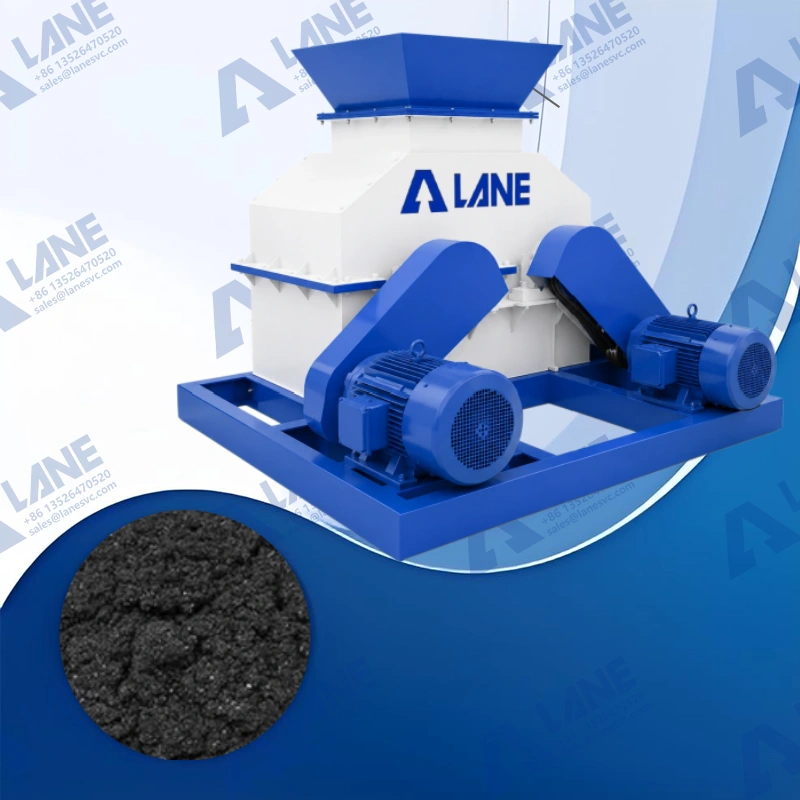
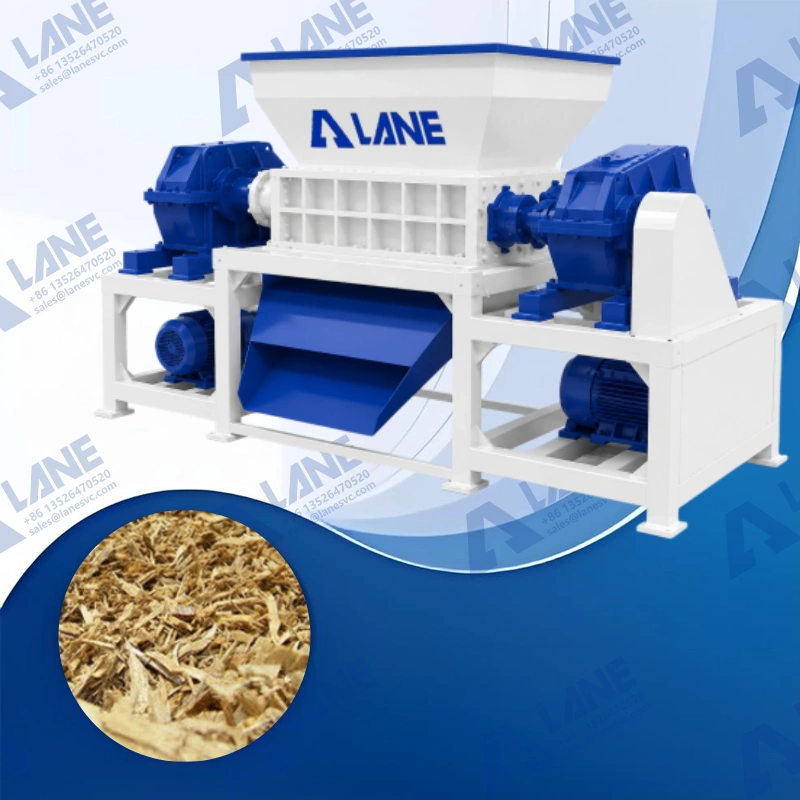
Dual-Shaft Shredder for shredding organic fertilizer materials, bulky agricultural waste, and industrial biomass. Processes livestock manure, crop straw, compost, packaging waste, and fertilizer bags into uniform pieces. Dual-shaft low-speed cutting design delivers high shredding efficiency, stable operation, and reliable pre-processing for fertilizer production lines.
Some materials can’t be crushed — they have to be torn. Pallets, bundled straw bales, root stumps, plastic drums, textile bales, mixed municipal waste: too bulky, too tough, or too contaminated for impact crushers. The LANE dual-shaft shredder grips them between two slow-turning, high-torque blade shafts and shears them down to conveyable size, quietly and without the dust storm of high-speed machines.
Email sales@lanesvc.com with your material and target output size — get a blade configuration and quotation within 24 hours.
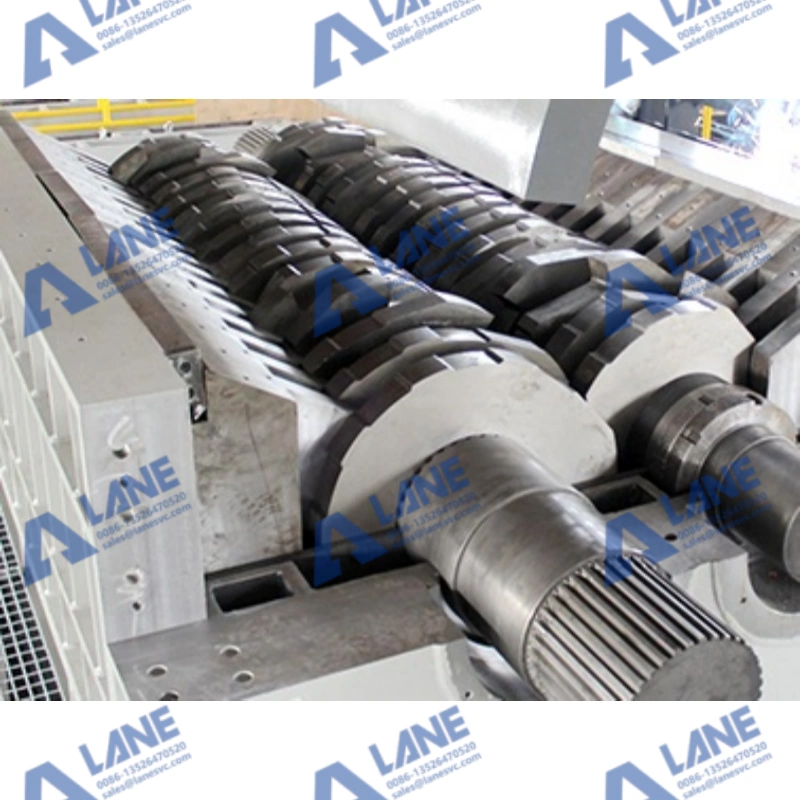
The counter-rotating shafts turn slowly but with massive shear force. Material is gripped, drawn in, and torn apart rather than smashed — the right physics for tough, fibrous, and composite materials.
Occasional nails in pallets or grit in waste bales won’t wreck the machine the way they chip high-speed knives. For dirty, mixed feedstock, this is the survivable choice.
Hit something too hard to shear, and the PLC automatically reverses the shafts to clear the jam, then resumes. Fewer manual interventions, fewer stalled shifts.
Slow-speed shearing generates far less dust and noise than high-speed crushing — friendlier for enclosed workshops and urban waste facilities.
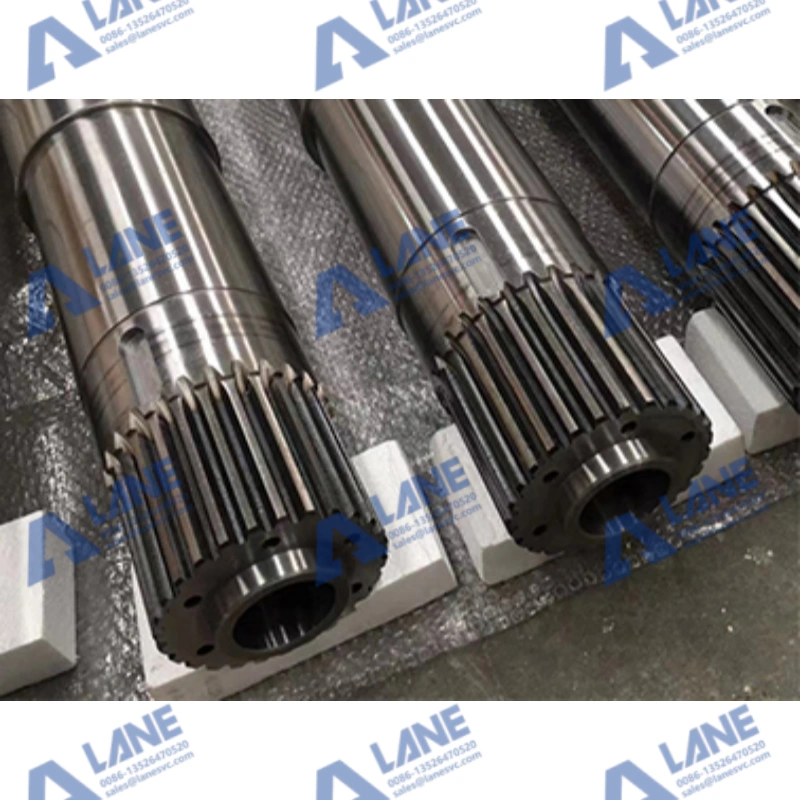
Blade thickness, hook count and shaft speed are selected per application — thick blades and coarse output for pallets and stumps, thinner blades for films and textiles. Blades are individually replaceable segments, not a monolithic rotor.

Capacity varies significantly with material — figures shown are indicative for mixed wood waste. Tell us your material for a realistic throughput estimate.
A common line design: dual-shaft shredder first, crusher second.
If your material already fits in a crusher inlet and is clean, you may not need a shredder at all. Send us photos of your feedstock — we’ll design the minimal setup that works.
Q: What determines the output size?
A: Primarily blade thickness and hook design. Dual-shaft shredders produce strips/chunks (30–120 mm), not fine powder — for finer output, add a downstream crusher, which we can quote as a package.
Q: Can it handle metal contamination?
A: Incidental nails and light metal, yes — that’s a core strength versus knife chippers. Heavy steel (solid bars, engine blocks) should be sorted out first.
Q: How are jams handled?
A: The control system detects overload and auto-reverses the shafts to clear it, then resumes. Persistent oversize objects trigger a stop and alarm rather than forcing damage.
Q: How long do blades last, and how are they replaced?
A: Blades are individually replaceable hardened segments; life depends on material abrasiveness. You swap only the worn segments — far cheaper than re-bladed rotors.
Email (1) your material (photos help), (2) largest piece size, (3) required output size and capacity — we’ll propose the blade configuration and quote factory-direct.

Everything you need to know when looking at different types of organic fertilizer equipment, all in one place.
Copyright © 2026. LANE All rights reserved.