Plate and frame filter presses for fertilizer and manure slurry dewatering: PP or SS316L plates, 1 to 200 m2, hydraulic closure, PLC control.
A plate and frame filter press separates solids from liquids by pumping slurry into sealed filter chambers formed by alternating plates and frames. The liquid passes through the filter cloth, and the solids collect as a cake that can be discharged, composted, or recovered.
For fertilizer producers, the filter press serves three practical purposes: dewatering high-moisture manure slurry, removing suspended solids from process streams, and producing a cleaner liquid for reuse or discharge. LANE Machinery supplies plate and frame filter presses with polypropylene or stainless steel plates, hydraulic closure, automatic control, and filter areas from 1 to 200 square meters.
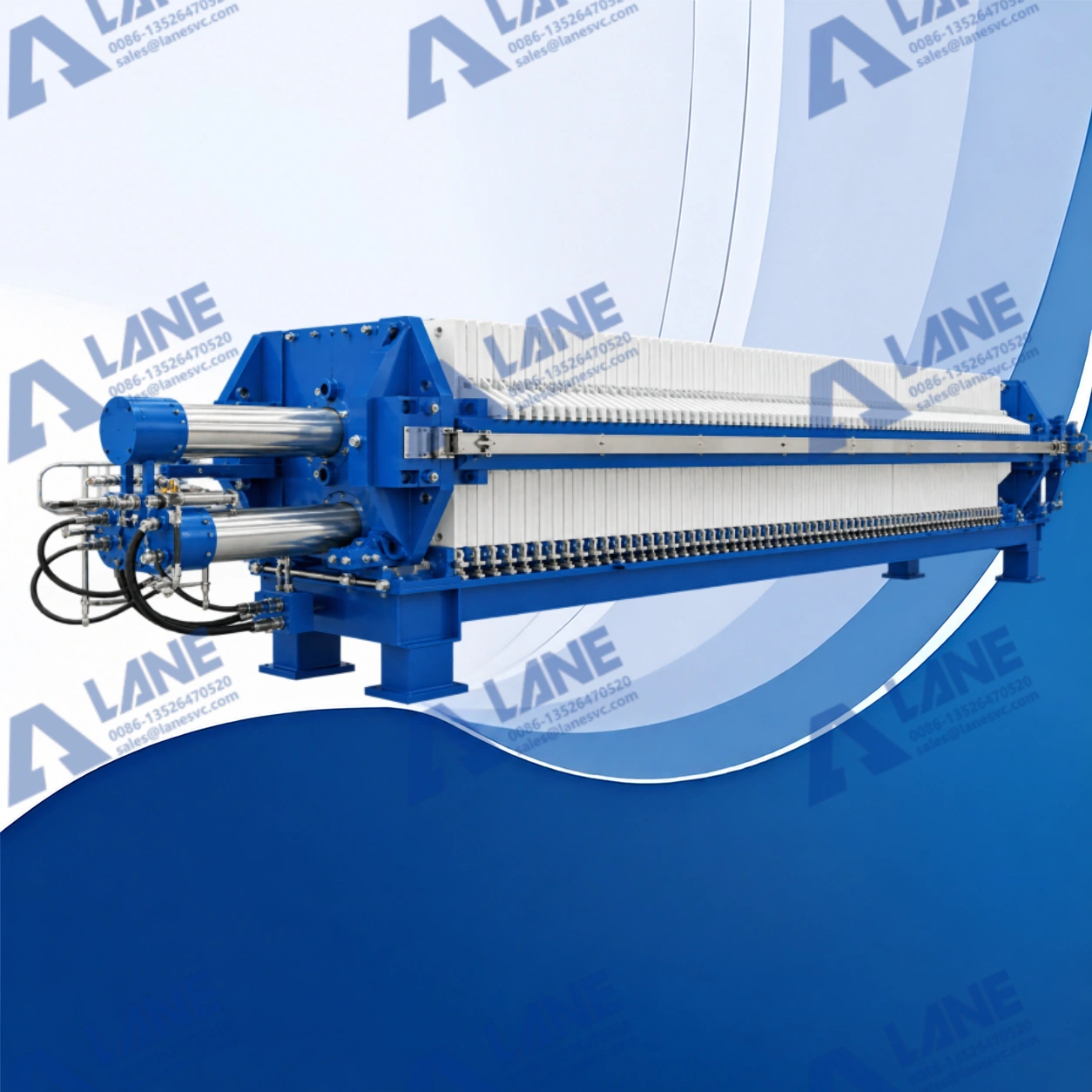
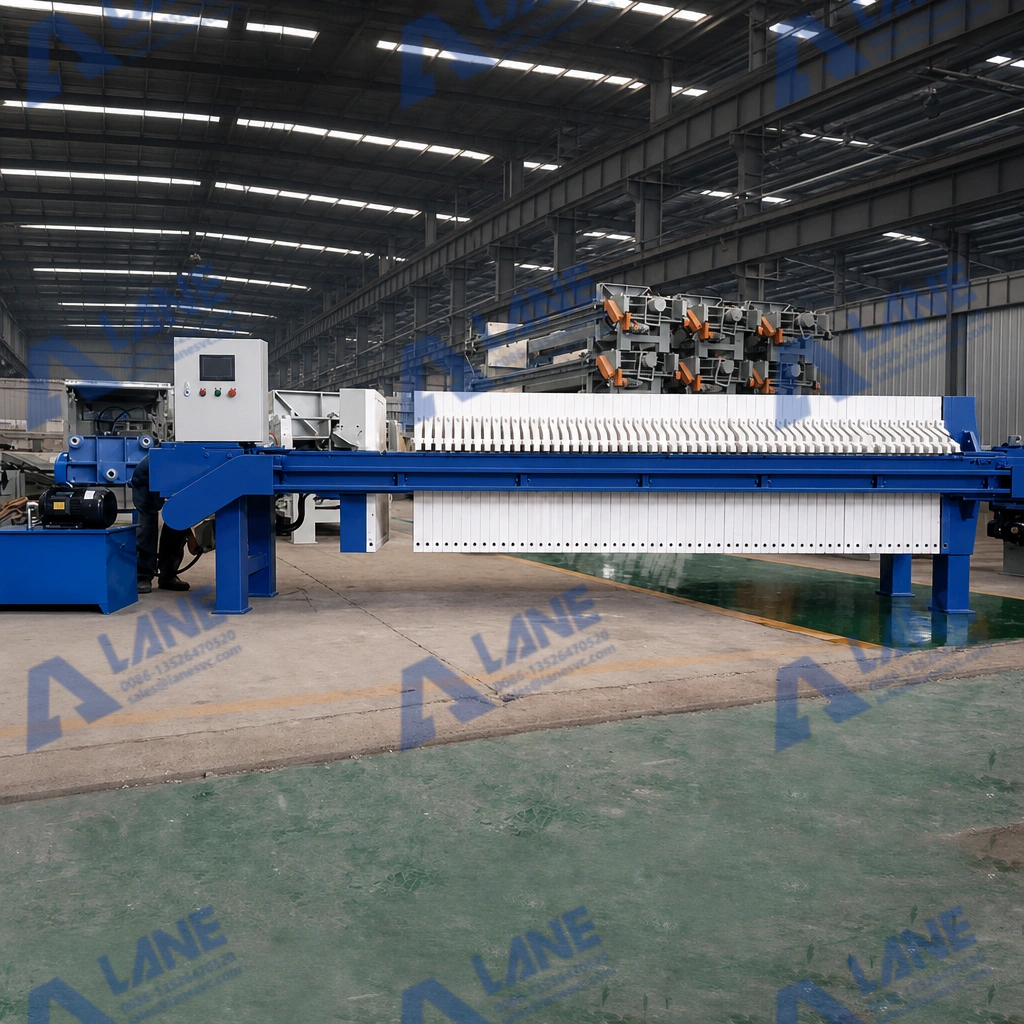
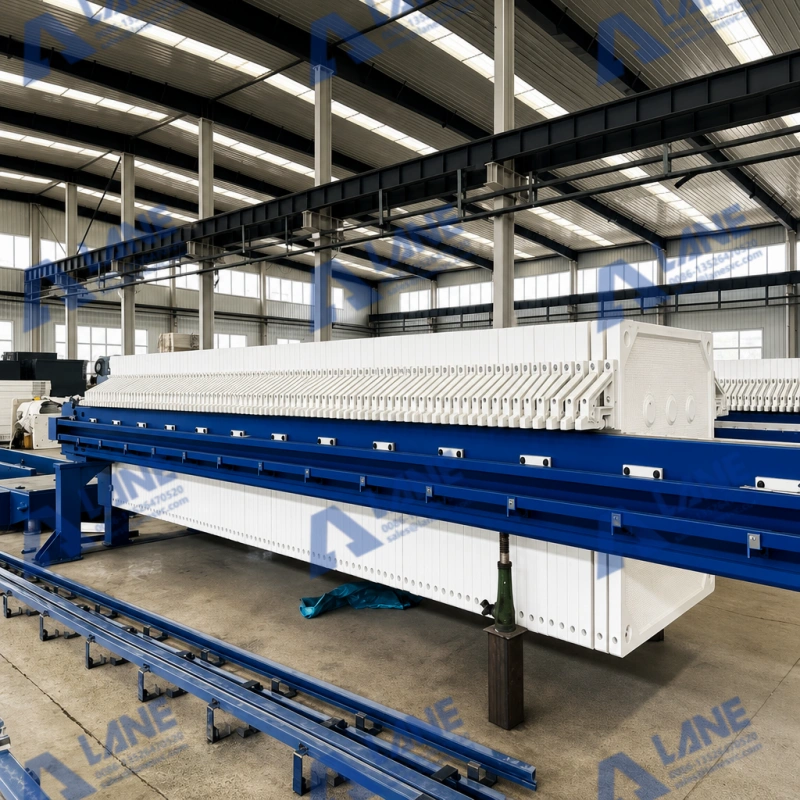
The LANE plate and frame filter press is a pressure-driven solid-liquid separation machine designed for continuous fertilizer plant operation.
The standard system includes:
The machine can be supplied as a single unit or integrated into a complete fertilizer production line with dewatering, composting, granulation, and wastewater treatment systems.
The working principle of a plate and frame filter press is physical separation under pressure.
The filtration pressure, feed concentration, and cake thickness determine the cycle time and the final cake moisture.
The filter press is most often installed at three points in a fertilizer plant.
For manure and organic raw material dewatering:
Poultry or livestock manure slurry -> Plate and frame filter press -> Solid cake -> Composting
                                                     |
                                                     -> Liquid -> Treatment or reuse
For process stream separation:
Reactor or process tank -> Plate and frame filter press -> Clean liquid -> Storage or filling
                                                     |
                                                     -> Filter cake -> Recovery or disposal
In these configurations:
LANE supplies the filter press as a single machine or as part of a complete line with dewatering, fermentation, granulation, and filling systems.
| Parameter | LANE Standard | Available Options |
|---|---|---|
| Filter type | Plate and frame | Recessed chamber, membrane, automatic |
| Plate material | Polypropylene | SS316L, cast iron |
| Filter area | 10 m2 | 1 to 200 m2, customized |
| Plate size | 800 by 800 mm | 320 to 2000 mm |
| Plate and frame quantity | Per application | Modular plate packs |
| Chamber volume | Per application | Customized |
| Filtration pressure | 0.5 MPa | 0.3 to 1.6 MPa depending on model |
| Cake thickness | 30 mm | 16 to 80 mm depending on frame |
| Closure | Hydraulic | Manual screw, automatic |
| Control | Manual push button | PLC, automatic plate shifter, cloth washing |
| Feed pump | External customer supply | Corrosion-resistant pump package |
| Certifications | ISO 9001, CE | Material certificates, third-party inspection |
| Warranty | Five years | Service contract extension |
LANE manufactures plate and frame filter presses under an ISO 9001 quality management system and can supply CE-certified equipment with stainless steel material certificates.
For pressure-rated applications, the filter press and piping design can follow customer-specified codes including ASME Section VIII, PED, or GB/T 150. Hydrostatic testing and third-party inspection by SGS or BV are available.
For liquid fertilizer products exported to the European Union, the final product must meet Regulation (EU) 2019/1009. The filter press supports contaminant control and product consistency, and we recommend independent certification of the final product by the relevant authority.
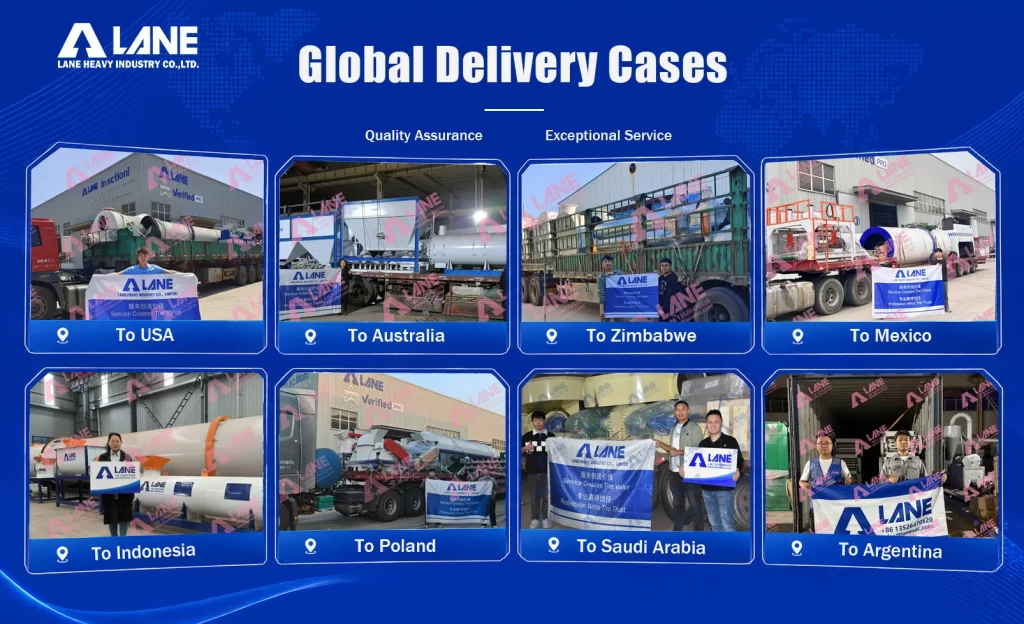
Henan Lane Heavy Industry Machinery Technology Co., Ltd. is a fertilizer equipment manufacturer with more than 20 years of engineering experience. LANE has delivered equipment and production lines to clients in more than 50 countries and supplied machines for a 100,000 tons per year national fertilizer project in Africa.
For filter press projects, our engineers review the slurry type, solids content, particle size, chemical compatibility, and target cake moisture, then recommend the correct plate material, cloth, filter area, and automation level. LANE provides one-stop service from selection and process design to overseas installation, commissioning, operator training, remote video guidance, and after-sales support.
What does a plate and frame filter press do?
A plate and frame filter press separates solids from liquids by pumping slurry into sealed filter chambers. The liquid passes through the filter cloth, and the solids collect as a cake that can be discharged or recovered.
Can it dewater chicken and livestock manure?
Yes. Manure slurry with high moisture can be conditioned and pumped into the filter press, producing a drier cake and a cleaner liquid. The cake is easier to handle, compost, or transport.
What is the difference between a plate and frame and a membrane filter press?
A plate and frame filter press forms a cake by pressure filtration. A membrane filter press adds a flexible membrane that squeezes the cake after filtration, which can reduce moisture further. LANE recommends the type based on the slurry and target cake.
How do I choose the filter area?
Filter area is selected from the slurry volume, solids content, cycle time, and target cake dryness. LANE engineers calculate the required area from the process data before recommending a model.
What materials are suitable for the plates?
Polypropylene is suitable for most fertilizer and manure applications. SS316L is recommended for chloride, acid, and aggressive chemical streams. The filter cloth is selected based on particle size and chemical compatibility.
Can the filter press be automated?
Yes. PLC control, automatic plate shifting, pressure monitoring, and optional cloth washing reduce manual labor and improve cycle consistency.
What is the warranty?
LANE provides a five-year warranty, spare parts support, and overseas installation and commissioning services.
Tell LANE your slurry type, solids content, flow rate, particle size, temperature, and target cake moisture. Our engineering team will recommend the correct plate material, filter cloth, filter area, and automation level, then provide a technical data sheet and quotation.


Everything you need to know when looking at different types of organic fertilizer equipment, all in one place.
Copyright © 2026. LANE All rights reserved.