SS304/SS316L liquid fertilizer mixing tanks from 500 L to 50,000 L with variable-speed agitators, jacket heating/cooling, PLC control and a 5-year warranty.
The liquid fertilizer mixing tank is the core material preparation unit of a liquid fertilizer plant. It dissolves, blends, homogenizes, heats, and cools water-soluble fertilizers, liquid NPK, foliar concentrates, suspension fertilizers, and organic liquid products before they move to reaction, filtration, storage, or filling.
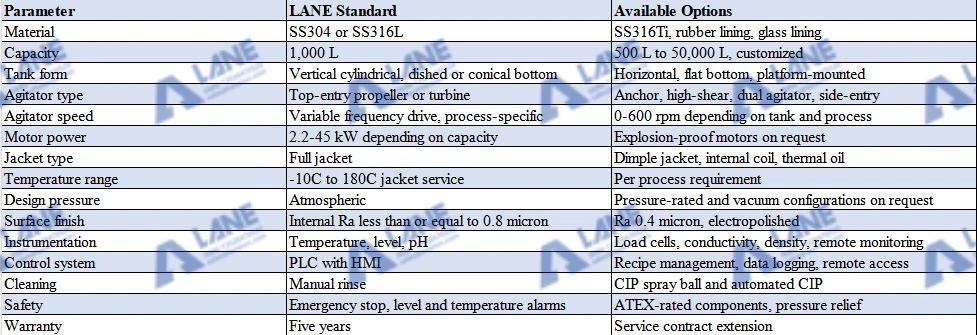
LANE Machinery designs liquid fertilizer mixing tanks from 500 L to 50,000 L in SS304 or SS316L, with application-matched agitators, jacket temperature control, PLC automation, and the same engineering and commissioning support used across our complete fertilizer production lines.
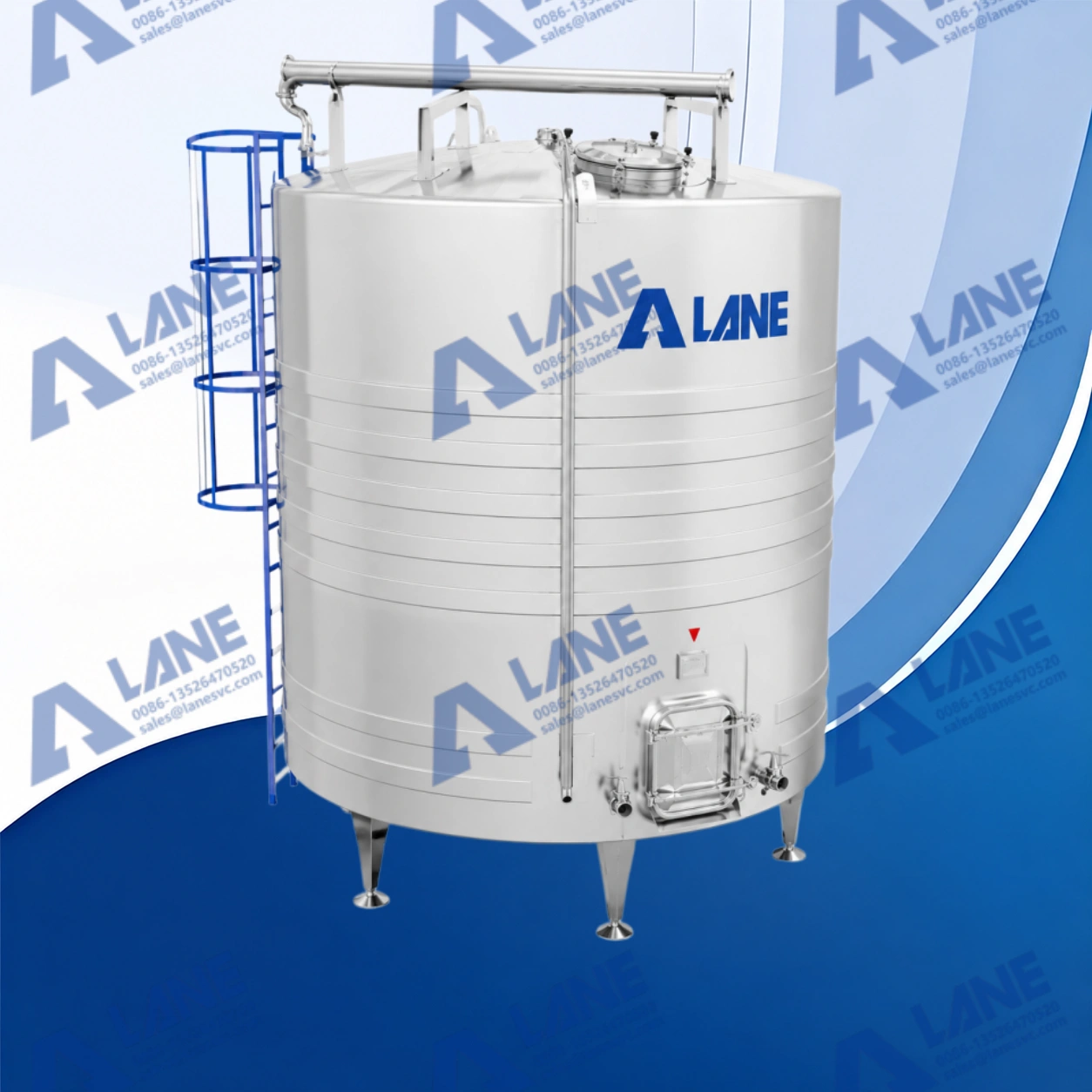
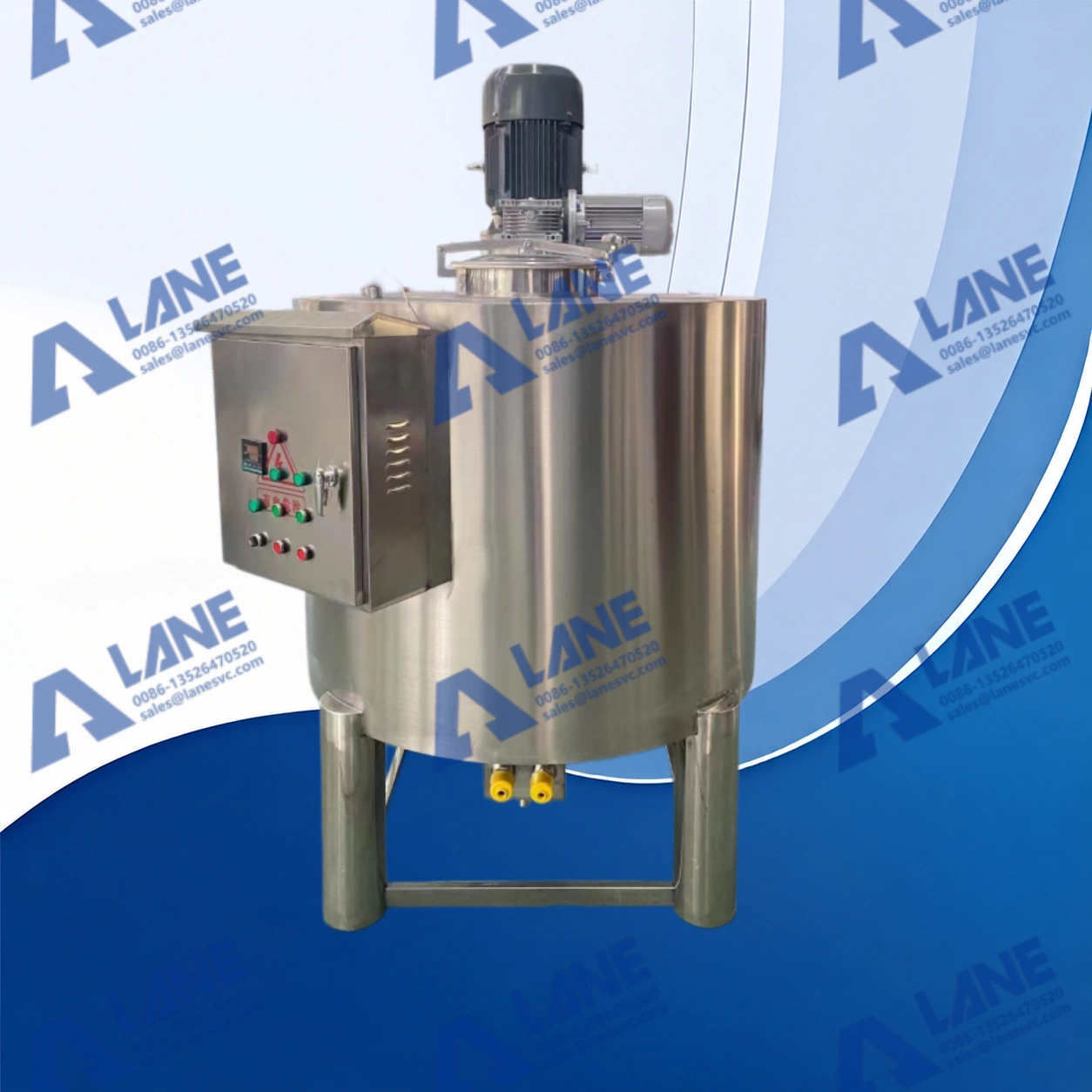
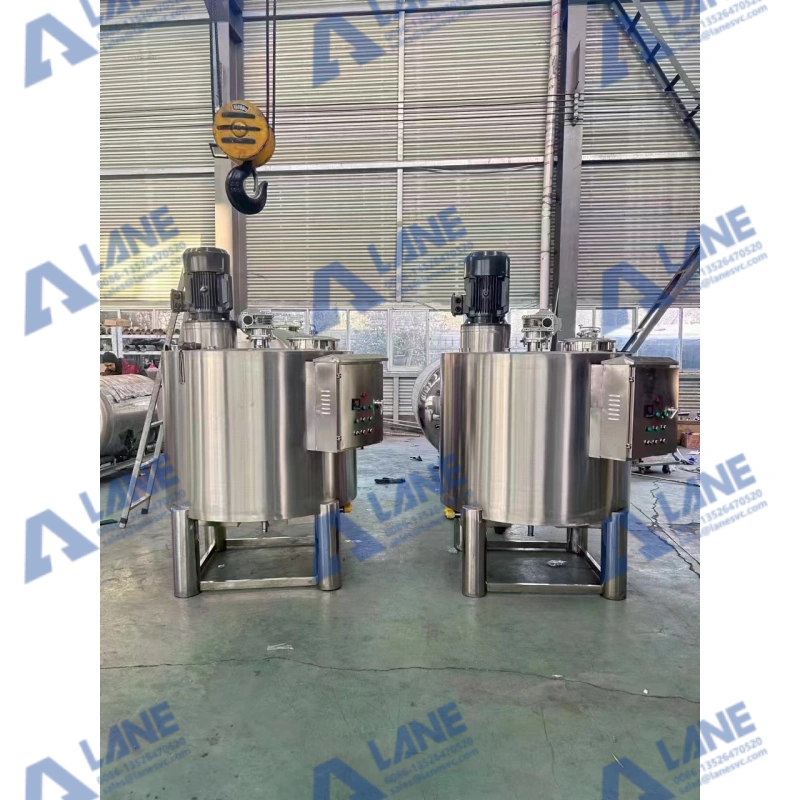
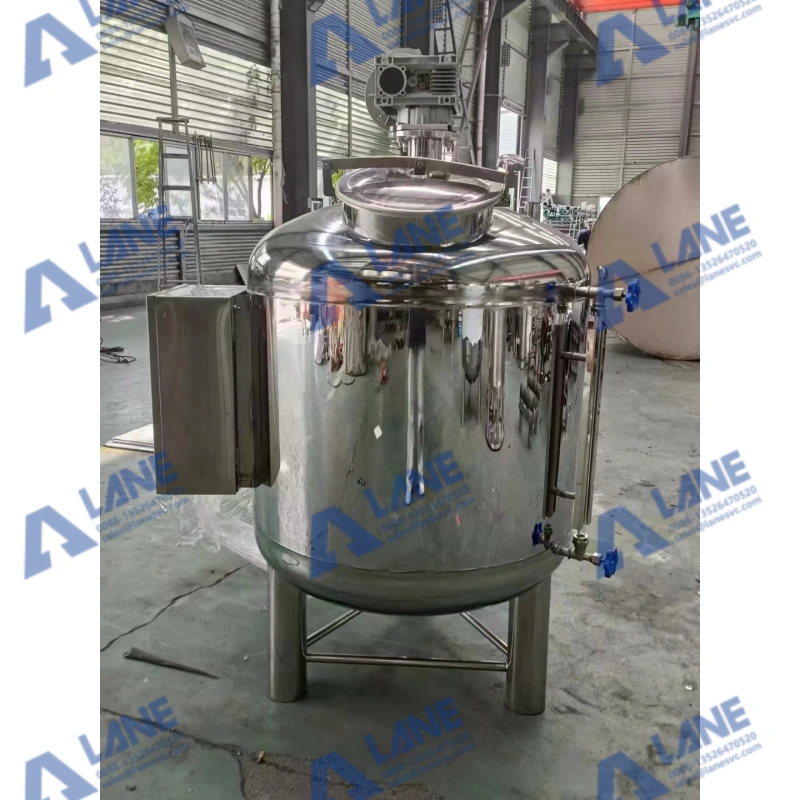
The LANE liquid fertilizer mixing tank is a vertical, top-entry agitated vessel engineered for fertilizer service. It is used as a dissolving tank, mother liquor tank, formulation tank, additive dosing tank, and intermediate blending tank.
The tank body and all wetted parts are fabricated from stainless steel. SS316L is recommended for formulas that contain chloride, phosphoric acid, organic acids, or aggressive micronutrient salts. Internal surfaces are polished to reduce buildup, improve cleaning, and prevent material shedding, which is essential for product consistency in water-soluble, foliar, and suspension fertilizer production.
Every mixing tank is customized by capacity, agitator design, heating and cooling method, instrumentation, and automation level so it matches the raw materials and target products of your plant.
Corrosion-resistant construction
Application-matched agitation
Precise temperature control
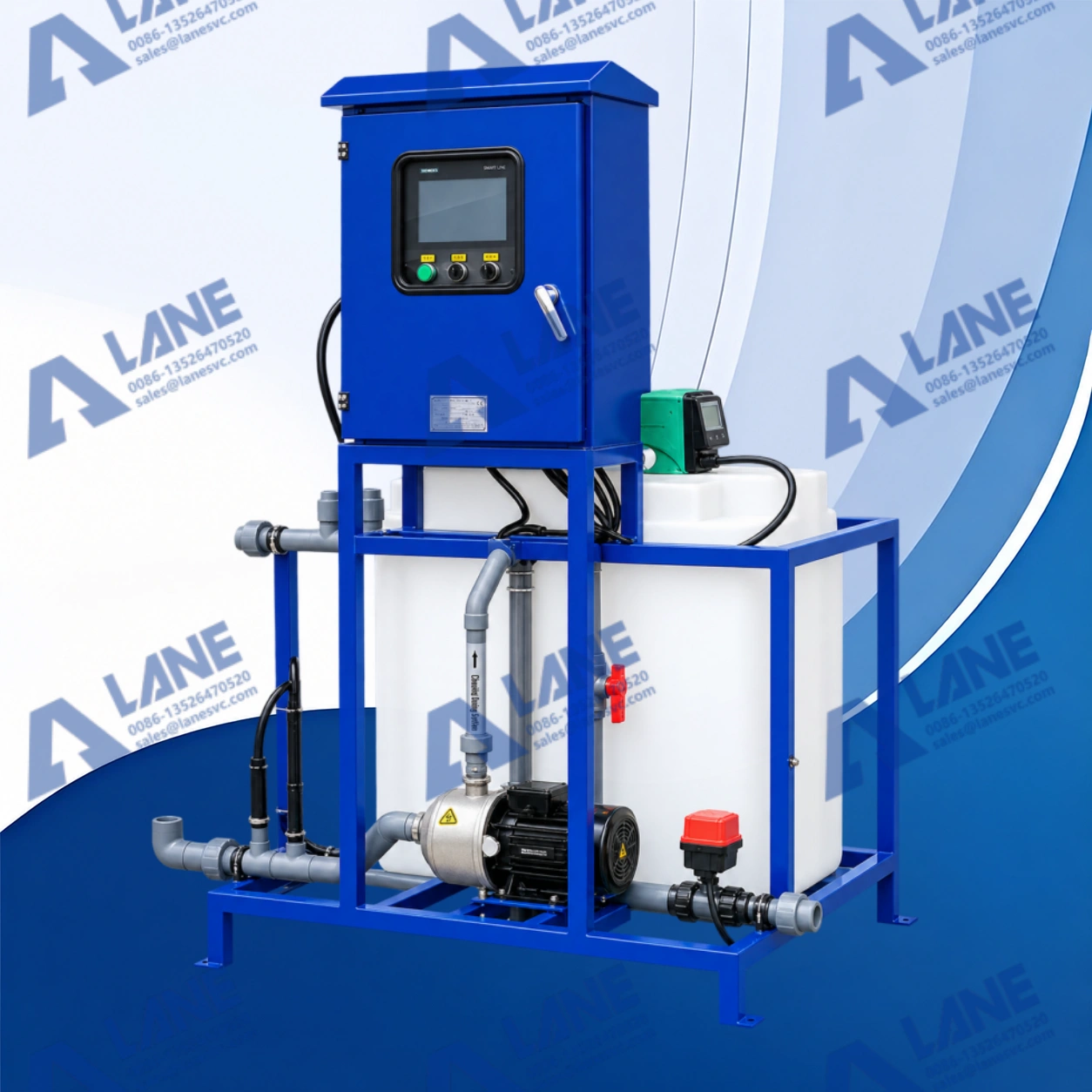
Weighing, dosing, and PLC automation
Cleanable and maintainable design
Long service life and warranty
The working principle of a liquid fertilizer mixing tank is straightforward: the motor drives an agitator inside the sealed tank, creating axial and radial flow that moves the material through repeated shear, diffusion, and bulk circulation until the batch is uniform.
A typical batch cycle works as follows:
For suspension fertilizers and formulas with poorly soluble solids, a high-shear agitator or recirculation loop keeps particles suspended until the product is packaged.
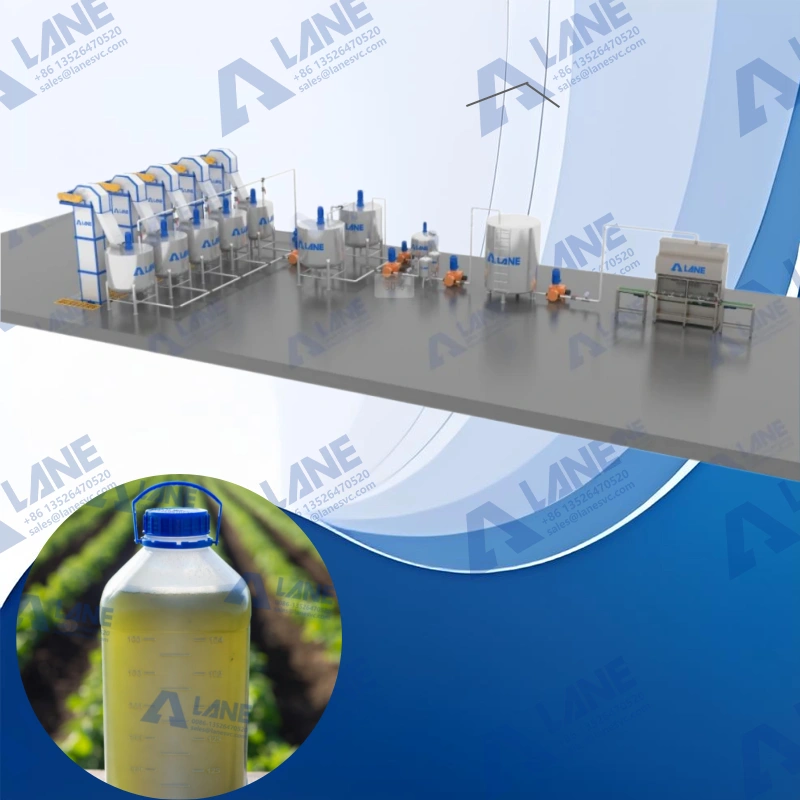
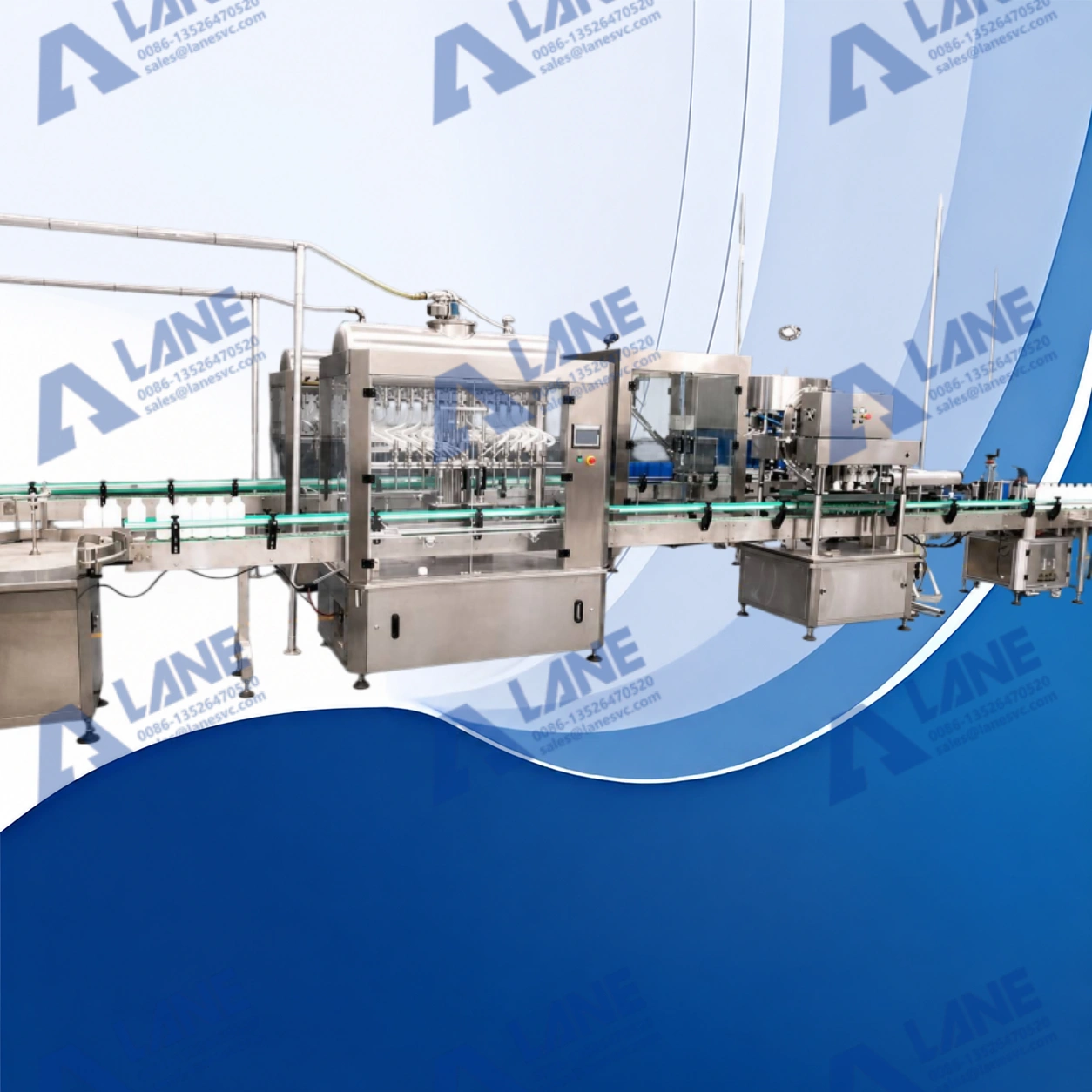
The mixing tank is not a standalone machine. It is the core material preparation unit inside a complete liquid fertilizer production line:
Water treatment -> Raw material batching -> Mixing tank -> Reactor or chelation tank -> Filtration -> Homogenization -> Storage tank -> Filling
Depending on your product range, the same tank can serve as:
LANE supplies the mixing tank as a single machine or as part of a complete liquid fertilizer production line with batching, fermentation, reaction, filtration, storage, filling, and CIP systems.
LANE designs and fabricates liquid fertilizer mixing tanks under an ISO 9001 quality management system. Equipment can be supplied with CE certification and material certificates for stainless steel plates, pipes, and fittings.
For projects that require pressure-rated or sanitary vessels, tank design and fabrication can follow customer-specified codes including ASME Section VIII, PED, GB/T 150, or ASME BPE surface and welding requirements. Hydrostatic or pneumatic testing, weld inspection, and third-party inspection by SGS or BV are available.
Because the final fertilizer product may need to meet market regulations such as Regulation (EU) 2019/1009, LANE’s process design supports contaminant control, clean changeover, labeling, and batch traceability. We confirm applicable compliance requirements with you before fabrication and recommend independent certification of the final product by the relevant authority.
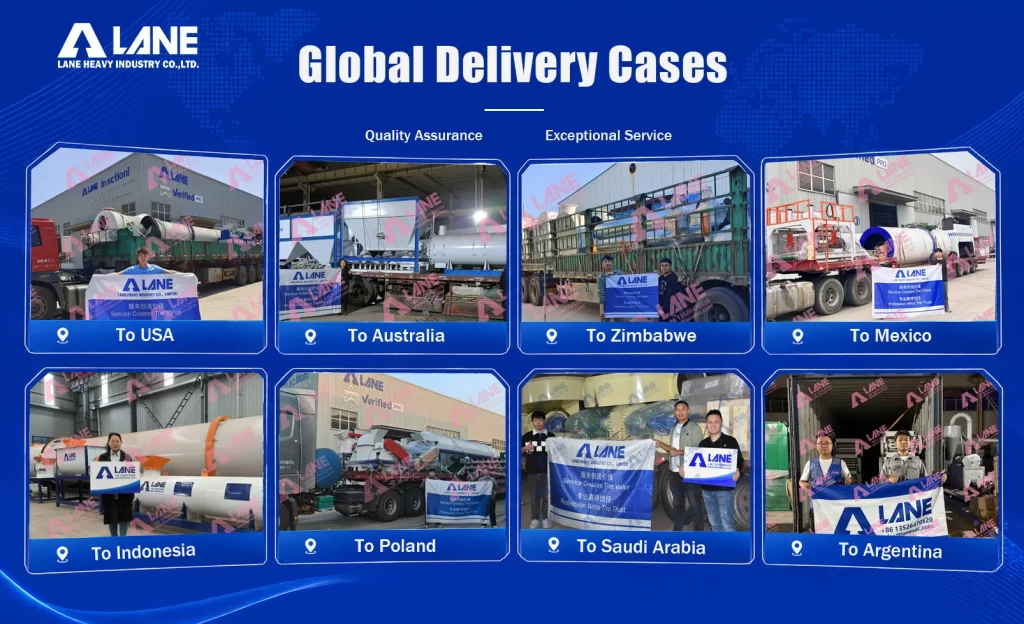
Henan Lane Heavy Industry Machinery Technology Co., Ltd. is a fertilizer equipment manufacturer, not a trading company. Since 2005, LANE has designed, fabricated, and commissioned fertilizer production equipment for plants in more than 50 countries, including a 100,000 tons per year national fertilizer project in Africa.
For liquid fertilizer plants, LANE supplies individual mixing tanks and complete production lines with engineering, installation, commissioning, operator training, and after-sales support. Our engineers review your raw materials, formula targets, and production capacity, then recommend the right tank size, agitator, material grade, and automation level before you commit capital.
What is the difference between SS304 and SS316L mixing tanks?
SS304 is suitable for many water-soluble fertilizer formulas and organic liquid products. SS316L contains molybdenum, which provides better resistance to chloride ions, acid fertilizers, and organic acids. We recommend SS316L for formulas that contain potassium chloride, phosphoric acid, sulfuric acid, or chelated micronutrient solutions stored for long periods.
Can one mixing tank produce multiple fertilizer formulas?
Yes. With PLC recipe management, dosing control, and a CIP system, one tank can switch between water-soluble NPK, foliar concentrates, chelated micronutrient solutions, and other formulas. A clean changeover between batches prevents cross-contamination.
What agitator should I use for my fertilizer formula?
The correct agitator depends on viscosity, solids content, and whether the product is a true solution, suspension, or emulsion. Propeller and turbine agitators are common for dissolving; anchor agitators suit viscous liquids; high-shear agitators suit suspensions, emulsions, and poorly soluble powders. LANE selects the agitator based on your actual formula and tests the configuration before finalizing the equipment.
How do I prevent salt precipitation or phase separation?
Precipitation and separation are usually controlled by the order of raw material addition, temperature, pH, chelation, and continuous agitation until discharge. LANE reviews the formula with you and configures heating, cooling, recirculation, and high-shear mixing to keep the product stable through the filling stage.
Can the tank be used for heating and cooling?
Yes. Full jacket, dimple jacket, and internal coil configurations support steam, hot water, chilled water, and thermal oil. The temperature control range and heating rate are matched to your process.
What is the delivery time?
Standard mixing tanks can be produced in about 7 days. Custom tanks and complete liquid fertilizer production lines are scheduled by project, and LANE confirms the production and delivery plan before manufacturing begins.
What certificates and warranty do you provide?
Equipment can be supplied with ISO 9001 certification, CE marking, material certificates, and third-party inspection reports. LANE provides a five-year warranty, spare parts support, and overseas installation and commissioning services.
Tell us your raw materials, target formulas, batch capacity, and automation requirements. LANE will send a technical data sheet, process recommendation, and quotation based on your actual production plan.

Everything you need to know when looking at different types of organic fertilizer equipment, all in one place.
Copyright © 2026. LANE All rights reserved.