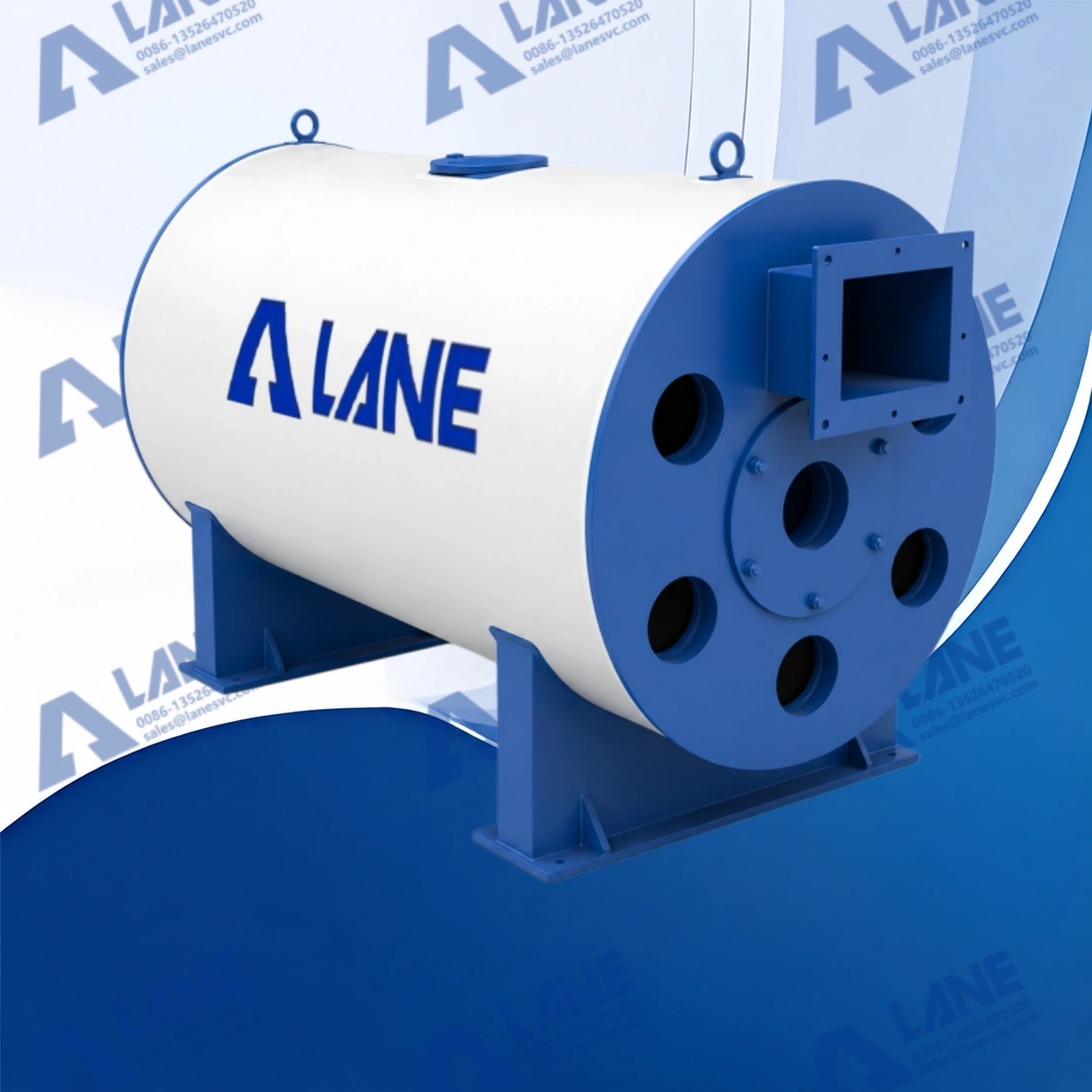
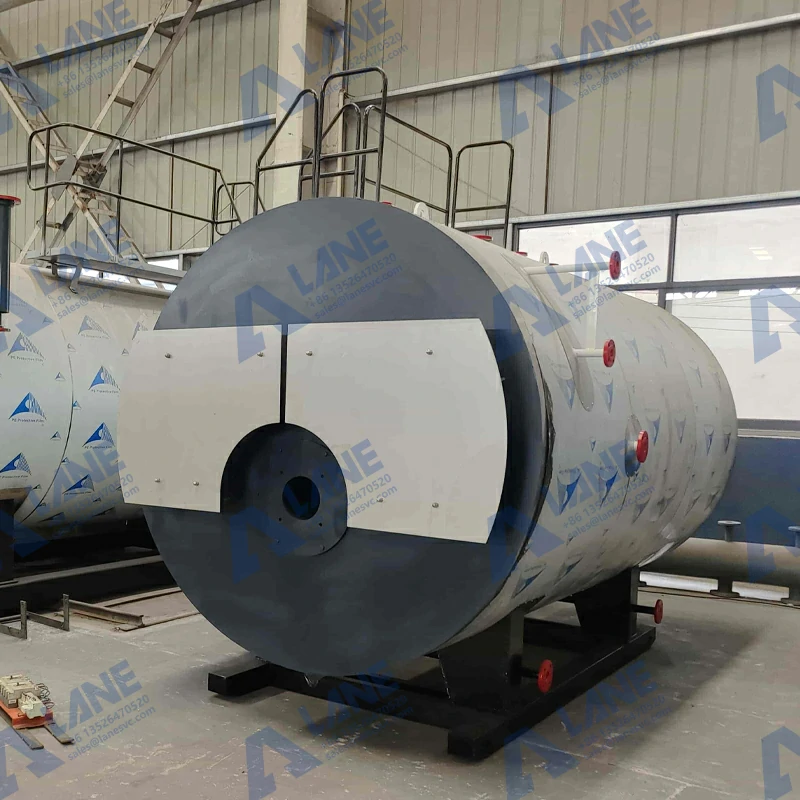
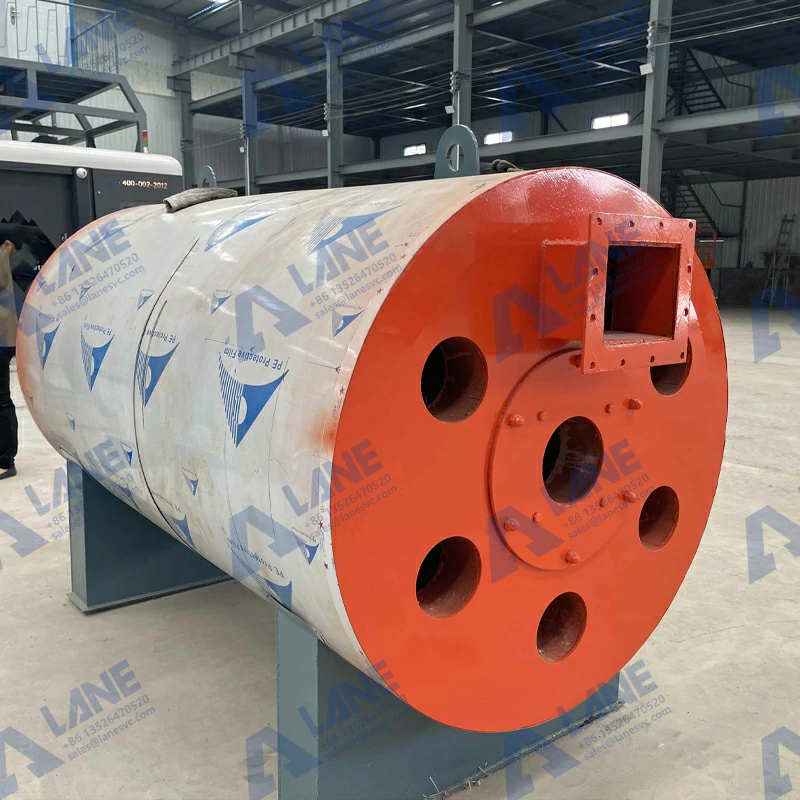
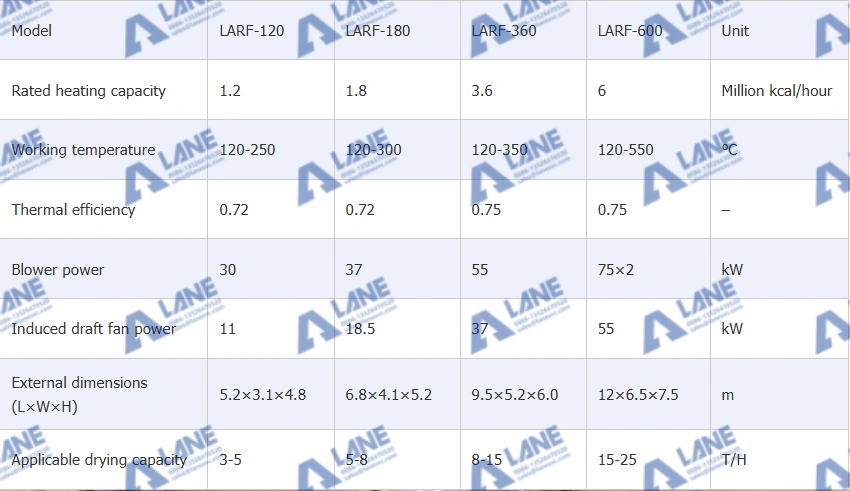
LANE Machinery manufactures direct and indirect hot air furnaces for fertilizer rotary dryer systems. Coal, biomass, gas, and oil-fired models. Thermal efficiency ≥95%, 25–2,000 ×10⁴ kcal/h. ISO certified, global supply.
The hot air furnace is the thermal backbone of every fertilizer drying operation — it converts fuel energy into clean, precisely temperature-controlled hot air to power rotary drum dryers. LANE Machinery (Henan LANE Heavy Industry Machinery Technology Co., Ltd.) designs and manufactures a comprehensive range of hot air furnaces to match every scale of fertilizer production, fuel type, and process requirement.
Unlike a standalone burner — which produces a concentrated, ultra-high-temperature flame unsuitable for direct material contact — a hot air furnace provides a complete combustion + air mixing system that delivers large volumes of uniformly heated, clean air at precisely the target temperature (typically 120–800°C for fertilizer drying applications). With thermal efficiency exceeding 95% on direct-fired models and rugged refractory-lined construction for 24/7 industrial use, LANE Machinery hot air furnaces are the preferred heat source for fertilizer plants across Asia, Africa, the Middle East, and beyond.
Key Capability: Rated heat output from 25 ×10⁴ to 2,000 ×10⁴ kcal/h; compatible with coal, biomass pellets, natural gas, diesel, heavy oil, and multi-fuel configurations.
| Furnace Type | Fuel Options | Best For |
|---|---|---|
| Coal-Fired Direct | Bituminous coal, anthracite | Lowest fuel cost regions; large-scale operations; established coal supply chain |
| Biomass-Fired Direct | Wood pellets, rice husk, bagasse, straw briquettes | Regions with agricultural waste resources; carbon-neutral operations; green certification |
| Gas/Oil-Fired Direct | Natural gas, LPG, diesel, heavy oil (with integrated burner) | Clean operation; precise temperature control; regions with gas infrastructure |
| Indirect (Heat Exchanger) | Any fuel | When product must be isolated from combustion gases (e.g., food-grade, sensitive chemicals) |
Advanced combustion chamber geometry with optimized refractory lining and secondary air injection ensures complete fuel burnout. The multi-stage mixing chamber blends high-temperature combustion gases (1,200–1,600°C) with precisely controlled ambient air to deliver hot air at the exact target temperature — minimizing heat loss and maximizing fuel-to-useful-heat conversion.
The hot air furnace’s large thermal mass and multi-stage mixing design act as a thermal buffer, smoothing out fluctuations from fuel feed variations or burner modulation. Combined with PLC-based temperature control (thermocouple feedback → air damper modulation), outlet air temperature remains stable within ±5°C — critical for maintaining consistent fertilizer granule quality.
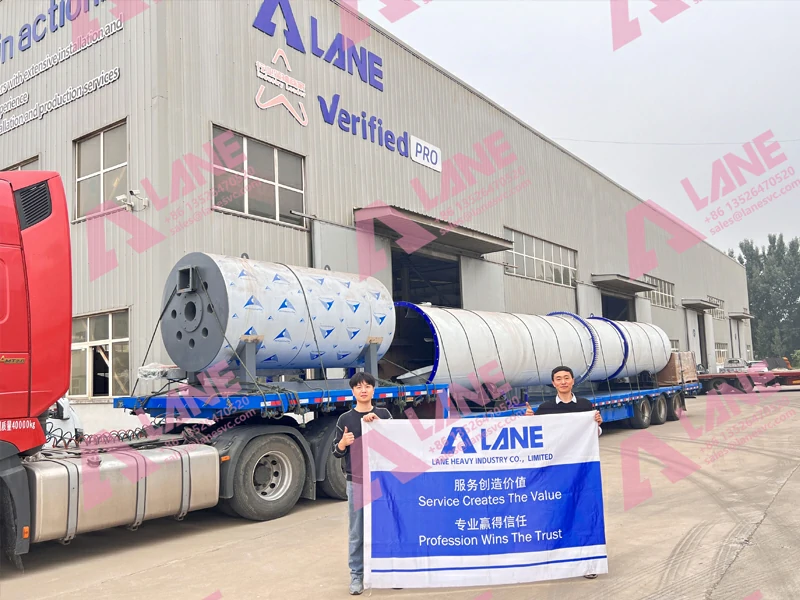
Large furnaces are designed in modular sections for containerized shipping and rapid on-site assembly. LANE Machinery provides detailed installation drawings, on-site supervision, and commissioning support.
The LANE Machinery hot air furnace operates on a staged combustion + air dilution principle:
[Fuel Feed] → [Combustion Chamber: High-Temp Burnout] → [Settling/Dust Removal Zone] → [Mixing Chamber: Secondary Air Dilution] → [Clean Hot Air @ Target Temp] → [Rotary Drum Dryer]
Step 1 — Fuel Feeding:
Step 2 — Primary Combustion: Fuel ignites and burns inside the refractory-lined combustion chamber at 1,200–1,600°C. Primary combustion air is supplied by a forced-draft fan. Secondary air is injected above the fuel bed or flame to ensure complete burnout of volatile gases and minimize CO and soot formation. Residence time at high temperature is designed to exceed 2 seconds for complete combustion.
Step 3 — Dust & Ash Separation: Hot combustion gases pass through a settling zone where heavier ash particles drop out by gravity. Ash is collected and removed via a wet scraper conveyor (coal models) or dry auger (biomass models). For applications requiring cleaner air, a cyclone separator or ceramic filter may be integrated downstream of the settling zone.
Step 4 — Secondary Air Mixing: The now particle-reduced hot gases enter the mixing chamber, where a controlled volume of ambient secondary air (from a separate blower fan) is injected. Adjustable dampers regulate the mixing ratio to achieve the precise target outlet temperature. The large mixing chamber volume ensures uniform temperature distribution.
Step 5 — Hot Air Delivery: Clean, uniformly heated air at the target temperature (typically 120–800°C for fertilizer drying) exits the furnace and flows directly into the connected rotary drum dryer inlet hood.
Step 6 — Ash Handling (Solid Fuels): Ash and clinker are continuously or periodically extracted from the base of the furnace. Wet slag removal systems quench hot ash and convey it to a collection bin. Dry systems use a screw conveyor for ash that will be landfilled or sold as a soil amendment (wood ash).
The hot air furnace is the central component in a complete fertilizer drying thermal system:
                    ┌─────────────────────┐
[Fuel Storage] →    │   HOT AIR FURNACE   │    → [Rotary Drum Dryer] → [Rotary Drum Cooler]
[Fuel Handling] →   │                      │
                    │ [Combustion Chamber] │         ↑
                    │ [Settling Zone]      │    [Waste Heat Recovery
                    │ [Mixing Chamber]     │     (Optional)]
                    │ [Control System]     │
                    └─────────────────────┘
                           ↓
                    [Ash Handling System]
                    [Dust Collection]
System integration benefits with LANE Machinery:
It depends entirely on your location. A quick cost comparison framework:
| Fuel | Typical Cost per 10⁴ kcal | Capital Cost (Furnace) | Maintenance | Emissions |
|---|---|---|---|---|
| Coal | ★★★★★ (cheapest) | ★★★ (moderate) | Higher | Higher |
| Biomass | ★★★★ | ★★★ | Moderate | Moderate (CO₂-neutral) |
| Natural Gas | ★★★ | ★★ (lower) | Lowest | Lowest |
| Diesel/Oil | ★★ | ★★ | Moderate | Moderate |
| Heavy Oil | ★★★ | ★★★★ (higher) | Higher | Higher |
LANE Machinery’s recommendation: Request a fuel-cost comparison from our sales engineers. We’ll analyze your local fuel prices, calculate annual operating costs for each option, and help you select the most economical configuration over the equipment’s 10–15 year lifespan.
The furnace heat output (kcal/h) must match your dryer’s thermal demand, which depends on: feedstock moisture content, target moisture content, production capacity (t/h), and ambient conditions. LANE Machinery engineers perform this calculation as part of our turnkey plant design service. As a general reference: a 10 TPH NPK dryer (15% → 1.5% moisture) requires approximately 200–300 ×10⁴ kcal/h heat input.
Yes, in most cases. Coal furnaces with chain grate stokers can often be converted to biomass by modifying the fuel feeding system (screw feeder vs. grate), adjusting combustion air distribution, and potentially upgrading the dust collection system. Contact us with your existing furnace model for a retrofit feasibility assessment.
Standard configuration includes: dust settling chamber (integrated in furnace), cyclone dust separator at hot air outlet, and induced draft fan. Optional upgrades: baghouse filter (PM <30 mg/Nm³), wet flue gas desulfurization (FGD for SO₂ control), selective non-catalytic reduction (SNCR for NOx control), and continuous emission monitoring system (CEMS).
For 24/7 continuous operations, furnaces are typically kept at a low-fire holding condition during short production pauses to enable rapid ramp-up.
The high-alumina refractory brick lining in the combustion chamber typically lasts 3–5 years under continuous operation before requiring partial relining. Service life depends on fuel type (coal ash is more aggressive than gas), operating temperature cycles, and whether the furnace is kept warm during shutdowns. LANE Machinery supplies spare refractory bricks and can arrange relining supervision.
| Attribute | LANE Machinery Commitment |
|---|---|
| Thermal Engineering Expertise | Furnace sizing based on detailed heat and mass balance calculations — not guesswork |
| Fuel-Agnostic Design | Same engineering team handles coal, biomass, gas, oil, and multi-fuel — unbiased recommendation |
| Complete System Supply | Furnace + burner + dryer + cooler + controls — one partner, one warranty |
| Manufacturing Quality | ISO 9001 certified; refractory installation by certified specialists; full hot-commissioning test available |
| Global Installation | On-site assembly supervision, commissioning, and operator training available worldwide |
| Environmental Compliance | Furnace configured to meet your local emission regulations |
Please provide:
LANE Machinery — Complete Thermal Solutions for World-Class Fertilizer Manufacturing.


Everything you need to know when looking at different types of organic fertilizer equipment, all in one place.
Copyright © 2026. LANE All rights reserved.