Reliable fertilizer bucket elevators built for 5-200 TPH vertical lifting. Belt or chain type, dust-tight casing, heights up to 60m. Get a quote for your fertilizer plant today.
Moving bulk material upward in a multi-story fertilizer plant is not the place for guesswork. A single bucket elevator failure stops the line. Not “slows it down.” Stops it. We have seen plants lose entire shifts because an undersized elevator could not keep up with the mixer discharge rate.
We build bucket elevators that handle the specific demands of fertilizer production: abrasive granules, corrosive raw materials, dust that gets into everything, and operators who need to inspect internals without an hour of disassembly time.
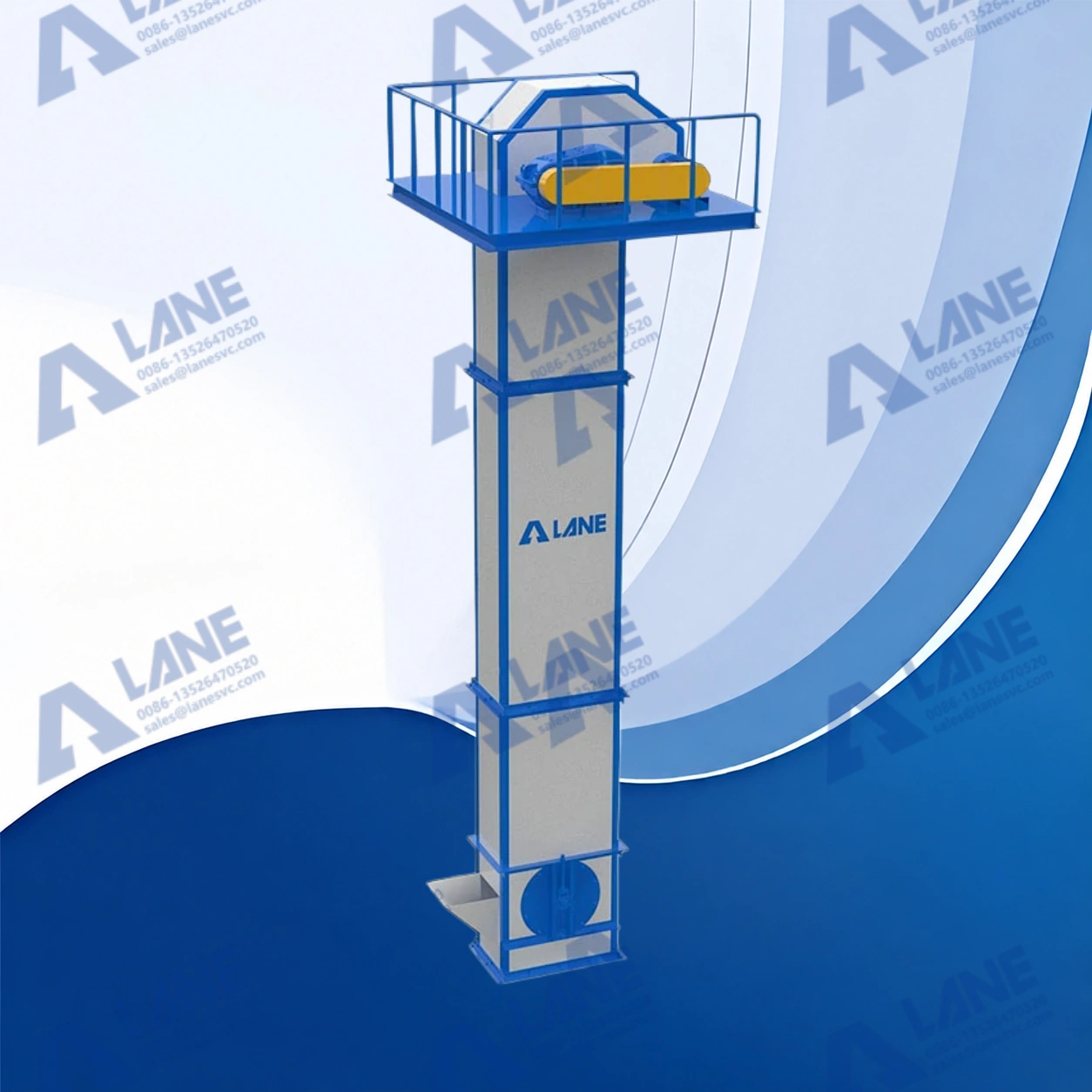
Every unit ships with sealed casing, automatic belt tensioning, and an anti-runback device as standard. Not optional. Standard.
The deep bucket profile is the first thing plant managers notice. Standard buckets on a generic elevator spill material on the up-leg, especially with irregular granules like compound fertilizer. Our deep buckets hold more and keep it in, even at belt speeds above 1.5 m/s. You get rated capacity at the discharge chute, not a percentage of it scattered across the boot section floor.
Belt or chain? We supply both. Rubber belts for fertilizer with low abrasiveness and moderate temperatures. Steel chain assemblies for hot material coming off a dryer, or for capacities pushing above 100 TPH where belt stretch becomes a maintenance headache. If you are not sure which fits your material, send us a sample. We test it.
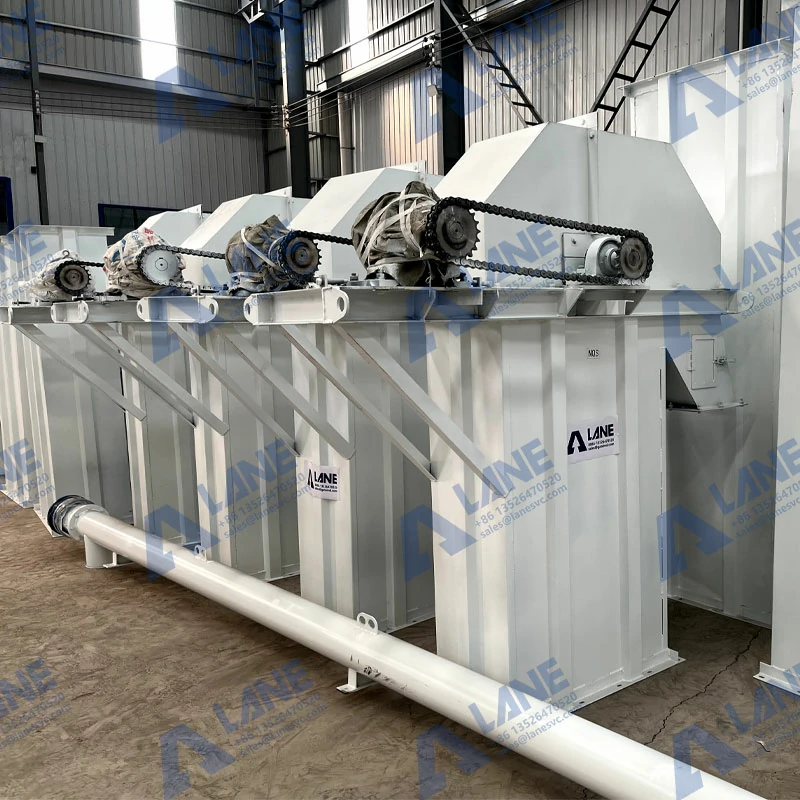
The casing is fully sealed with gasketed inspection windows spaced every 3 meters. You can check bucket condition and belt tracking without shutting down or breaking a seal. On fertilizer lines handling urea or ammonium-based materials, we offer stainless steel internals to stop corrosion before it starts.
Explosion-proof motor packages are available for plants processing organic fertilizers where dust concentrations hit combustible levels. ATEX-rated, correctly sized for your lift height and capacity.
Material feeds into the boot section at the elevator base. Buckets mounted on a belt or chain scoop it up and carry it vertically inside the enclosed casing. At the head section, centrifugal force or gravity (depending on belt speed and bucket design) discharges the material through the outlet chute. The empty buckets return down the down-leg side of the casing.
An automatic tensioning system in the boot section keeps belt or chain slack within operating range. No manual adjustment needed between maintenance intervals. The anti-runback device on the head shaft prevents the loaded belt from reversing if power cuts out.
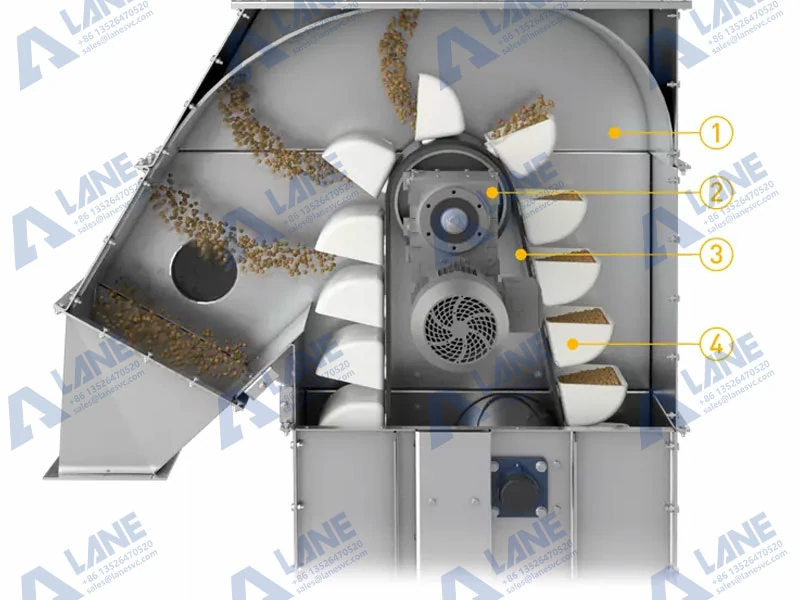
These elevators show up in a lot of places on a fertilizer line, but here are the most common:
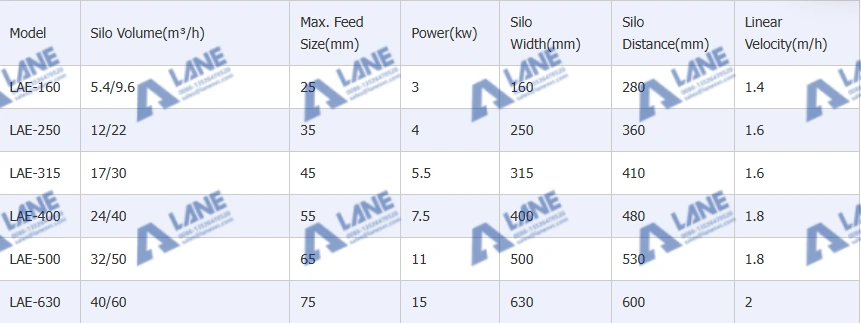
Belt or chain — which one for my material?
Belt for free-flowing, non-abrasive granules at moderate temperatures (under 80 C continuous). Chain for hot material, abrasive material, or anything above 100 TPH where the belt would need replacement too often. If your material is sticky (some organic fertilizers get this way above 25% moisture), go chain. The buckets bolt directly to the chain links and sticky buildup matters less.
How high can a single elevator go?
60 meters with a single drive. Beyond that, we recommend splitting the lift into two stages. The belt tension and motor power required for a single 80-meter lift make the economics worse than two shorter elevators, and maintenance access gets complicated.
How do you calculate the right capacity?
Bucket volume times bucket spacing times belt speed times material density times a fill factor (typically 0.75 for fertilizer granules). We run this calculation during the quoting process. The fill factor is the part people guess wrong most often: irregular granules do not pack into buckets the way round pellets do. Send us your material density and particle size distribution and we will give you an honest number.
What is the maintenance interval?
Inspection: weekly visual check through the inspection windows, 10 minutes. Bearing lubrication: every 500 operating hours. Bucket replacement: typically every 8,000 to 12,000 hours depending on material abrasiveness. Belt replacement: 15,000 to 25,000 hours for rubber belts in normal service. Chain assemblies last longer but individual links can be replaced without removing the full chain.
How do you prevent material spillage?
Deep bucket design is the first line. The sealed casing catches what the buckets do not. Inlet shrouding at the feed point directs material into the bucket path, not onto the floor. The tight bolted casing joints keep dust from escaping, which matters if you are running indoors.
How long does bucket replacement take?
With our bolted casing design, you open the access panels on one side of the elevator, rotate the belt to bring each bucket into position, and unbolt/replace. A crew of two can replace all buckets on a 30-meter elevator in one shift. No cutting, no welding, no pulling the entire belt.
How do you size the motor?
Lifting height, capacity, belt weight, bucket weight, material weight in the up-leg, and friction losses through the drive system. Plus a 15% service factor. We calculate this for every order. Undersized motors burn out. Oversized motors waste electricity. We size it right.
Tell us your material type, required capacity (TPH), and lifting height. We will spec the right elevator and send you a drawing within 48 hours.

Everything you need to know when looking at different types of organic fertilizer equipment, all in one place.
Copyright © 2026. LANE All rights reserved.